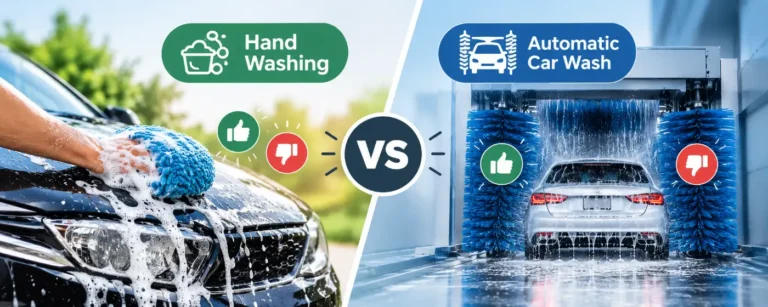
Hand washing gives you more control over paint protection and detailing, while automatic car washes save time and cost less per visit, so the better choice depends on how much you value convenience versus long-term paint condition. Neither method is universally superior, since each carries real trade-offs regarding swirl marks, cost, water usage, and how thoroughly the vehicle is actually cleaned.
This guide breaks down both methods side by side, covering swirl mark risk, cost over time, water and time efficiency, and which situations favor each approach.
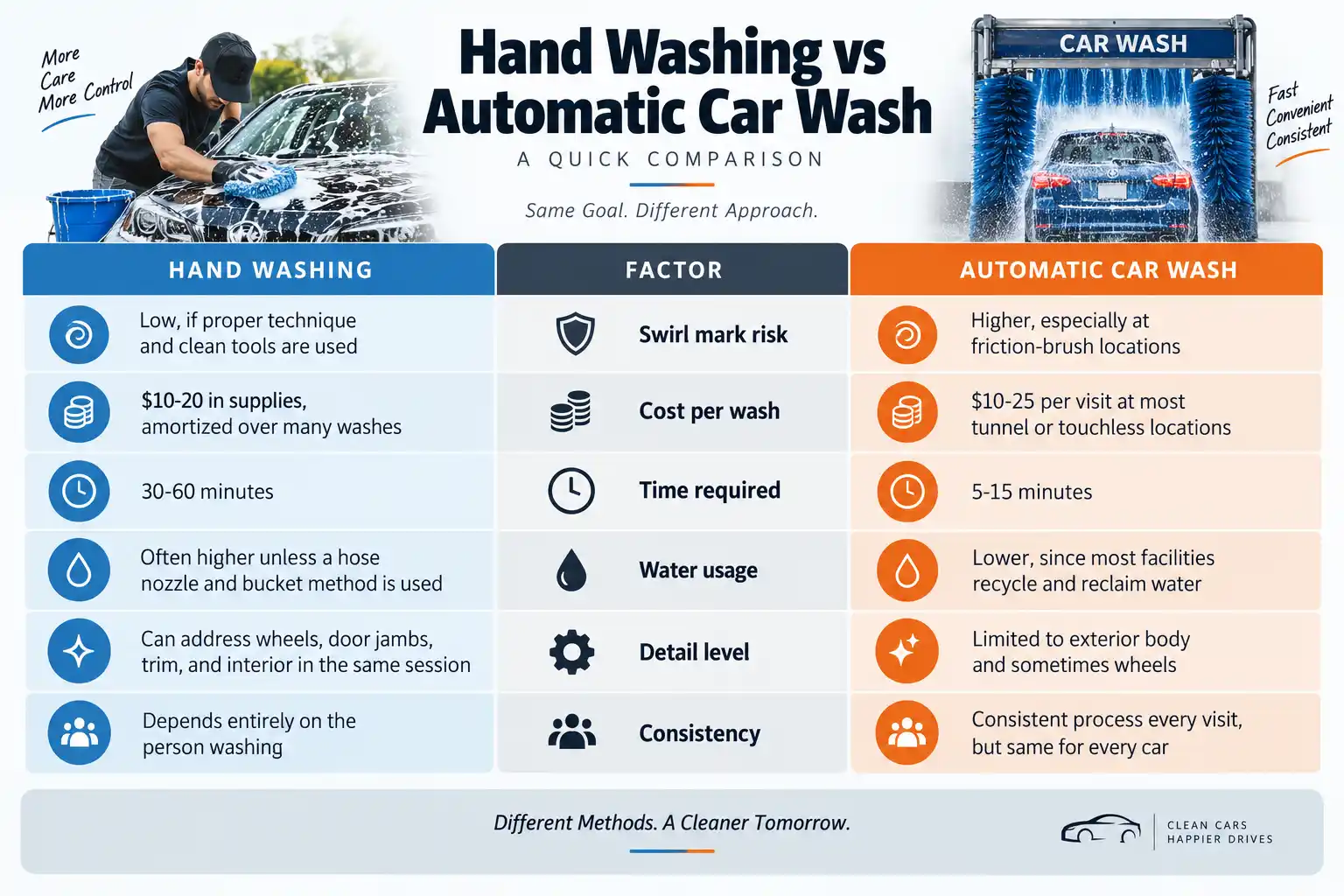
Quick Comparison: Hand Washing vs Automatic Car Wash
| Factor | Hand Washing | Automatic Car Wash |
| Swirl mark risk | Low, if proper technique and clean tools are used | Higher, especially at friction-brush locations |
| Cost per wash | $10-20 in supplies, amortized over many washes | $10-25 per visit at most tunnel or touchless locations |
| Time required | 30-60 minutes | 5-15 minutes |
| Water usage | Often higher unless a hose nozzle and bucket method is used | Lower, since most facilities recycle and reclaim water |
| Detail level | Can address wheels, door jambs, trim, and interior in the same session | Limited to exterior body and sometimes wheels |
| Consistency | Depends entirely on the person washing | Consistent process every visit, but same for every car |
What Are the Pros of Hand Washing Your Car?
Hand washing lets you control every part of the process, from water temperature to how much attention a heavily soiled wheel or trim panel gets. This level of control is the main reason detailing enthusiasts and anyone protecting a newer or higher-value vehicle tend to prefer it.
- Lower swirl mark risk with proper technique using the two-bucket method, a clean microfiber mitt, and a grit guard avoids dragging dirt across the paint that causes fine scratches.
- Ability to spot-treat problem areas: bug splatter, tar spots, and bird droppings can be addressed individually rather than relying on a standardized wash cycle.
- Simultaneous interior and detail work: wiping down door jambs, cleaning wheel wells, and vacuuming can happen in the same session without extra cost.
- Lower cost per wash over time: a bucket, mitt, and quality car soap cost roughly $30-50 upfront but last for dozens of washes.
- No exposure to shared equipment: brushes and cloths at commercial washes are reused across many vehicles, which can transfer grit from a dirtier car to yours.
What Are the Cons of Hand Washing Your Car?
Hand washing has real downsides that make it impractical for some drivers, particularly around time and technique.
- Time commitment: a thorough hand wash, including wheels, typically takes 30 to 60 minutes, far longer than a commercial wash cycle.
- Technique-dependent results: improper technique, like using a single bucket or a dirty sponge, can actually cause more swirl marks than a well-run automatic wash.
- Water access requirements: hand washing needs a hose, water source, and often a driveway or garage, which isn’t available to every driver, particularly in apartments or condos.
- Weather dependency: washing in direct sunlight or freezing temperatures causes soap to dry into spots or water to freeze on the vehicle before it can be dried.
- Some municipalities restrict driveway washing: runoff regulations in certain areas prohibit washing at home due to soap and chemical runoff entering storm drains.
What Are the Pros of Automatic Car Washes?
Automatic car washes solve the time and convenience problem that hand washing can’t, while modern touchless and soft-cloth systems have improved significantly over older brush-style equipment.
- Speed: most automatic washes take 5 to 15 minutes from entry to exit, a fraction of the time a hand wash requires.
- No equipment or storage needed: there’s no bucket, mitt, or soap to buy and store between washes.
- Consistent process: every vehicle goes through the same wash cycle, which removes variability in operator skill or attention.
- Water reclamation: most commercial car washes recycle and treat wastewater, using less fresh water per vehicle than an average driveway hand wash.
- Touchless options available: touchless automatic washes use high-pressure water and chemical cleaners instead of physical brushes, eliminating the friction-based swirl mark risk entirely.
What Are the Cons of Automatic Car Washes?
The convenience of automatic washes comes with tradeoffs that matter more for some vehicles and owners than others.
- Swirl mark risk at brush-style facilities: traditional soft-cloth and especially older brush-style tunnels can introduce fine scratches, particularly if the equipment isn’t well maintained or previous customers’ vehicles left grit on the brushes.
- Limited attention to detail: wheels, door jambs, and interior surfaces often aren’t addressed at all, or only receive a basic rinse.
- Cost adds up over frequent use: washing weekly at $15-25 per visit costs more annually than hand washing supplies that last months.
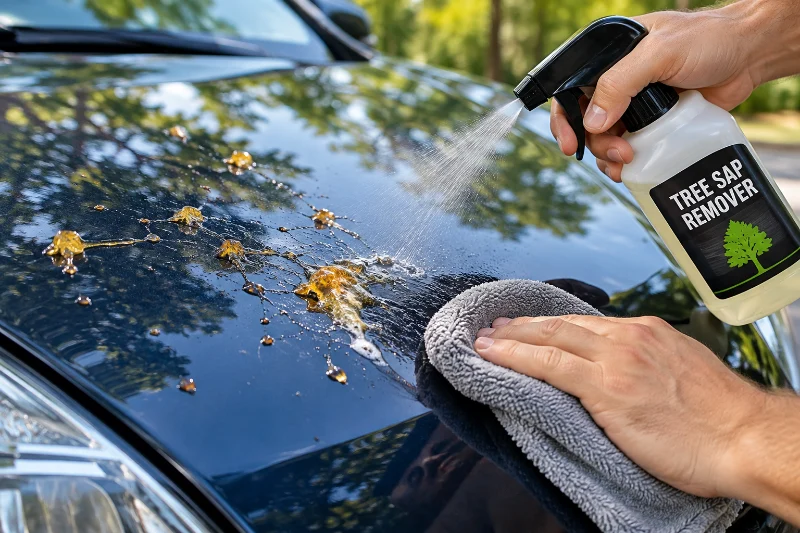
- Less effective on heavy soiling: dried mud, tree sap, or heavy road grime sometimes needs manual pre-treatment that an automatic wash cycle won’t provide.
- Facility quality varies significantly: a well-maintained touchless facility and a poorly maintained old brush tunnel produce very different results, making the “automatic wash” category inconsistent across locations.
Does Touchless Automatic Washing Solve the Swirl Mark Problem?
Touchless washing removes the physical brush contact that causes most swirl marks at traditional automatic car washes, relying instead on high-pressure water jets and stronger detergents to lift dirt. This makes touchless washes meaningfully safer for paint than brush-style tunnels, closing much of the gap with hand washing on this specific concern.
The tradeoff is that touchless washes sometimes struggle with heavily soiled vehicles, since there’s no physical agitation to help dislodge stubborn grime, occasionally requiring a second pass or leaving some residue behind. For a regularly washed vehicle that doesn’t accumulate heavy buildup between visits, touchless automatic washing is a reasonable middle ground between full hand washing and brush-style convenience.
Which Method Is Better for a New or High-Value Vehicle?
Hand washing is generally the better choice for a new or high-value vehicle because even small swirl marks and scratches are more noticeable on darker paint colors and premium finishes. The additional time and effort are often worthwhile when protecting the vehicle’s appearance, resale value, or a finish the owner particularly cares about. In contrast, for an older daily driver or a vehicle used mainly for utility, the convenience and time savings of an automatic wash may outweigh the relatively small benefit of hand washing.
| Factor | Hand Washing | Automatic Washing |
| New or high-value vehicle | Better choice for preserving the finish | More likely to cause minor paint defects, depending on the system |
| Older daily driver | Provides better paint care but requires more time | Better for convenience and speed |
| Dark-colored paint | Recommended because swirl marks are more visible | Greater risk of visible imperfections with abrasive systems |
| Premium finishes | Preferred for careful maintenance | May be less suitable, especially with brush-based systems |
| Time required | Higher | Lower |
| Resale value | Helps maintain overall appearance | Convenient, but paint condition may suffer over time |
| Overall priority | Best when paint condition matters most | Best when convenience matters most |
Ultimately, neither method is universally better. The right choice depends on how much you value your vehicle’s finish, how new or expensive it is, and how much time you are willing to spend maintaining it.
How Often Should You Wash Your Car With Either Method?
Washing every one to two weeks under normal conditions keeps contaminants like road salt, bird droppings, and tree sap from sitting on the paint long enough to cause etching or staining. Vehicles driven in coastal areas, winter road-salt regions, or under trees that drop sap need more frequent washing regardless of which method you choose.
Waiting too long between washes increases the risk of paint damage from whatever method you use next, since heavier, drier contamination requires more aggressive cleaning to remove. A consistent schedule matters more for long-term paint condition than which method you pick for any individual wash.
Frequently Asked Questions
Is hand washing always safer for paint than an automatic car wash?
No, hand washing is only safer when done correctly, using clean tools, the two-bucket method, and proper drying technique. A poorly executed hand wash with a dirty sponge or towel can cause more swirl marks than a well-maintained touchless automatic wash.
Are touchless car washes as effective as brush-style washes?
Touchless washes are generally gentler on paint but can be less effective on heavy dirt or dried mud without some form of pre-treatment. For routine maintenance washing on a vehicle that isn’t heavily soiled, touchless washes clean effectively while avoiding brush-related swirl mark risk.
Does washing my car at home waste more water than an automatic wash?
It can, since most commercial car washes recycle and treat their water, while a hose running continuously during a driveway wash uses more fresh water per vehicle. Using a shut-off nozzle and a bucket method reduces water use significantly compared to leaving a hose running throughout the wash.
Can I hand wash my car in any city, or are there restrictions?
Some municipalities restrict or prohibit washing vehicles in driveways or on streets due to soap and chemical runoff entering storm drains untreated. Checking local regulations, or using a commercial self-serve bay with a drain system, avoids this issue entirely.
How much does an automatic car wash membership typically cost compared to hand washing supplies?
Unlimited monthly memberships at automatic car washes typically run $20-40 per month, which can be cost-competitive with hand washing supplies if you wash weekly or more. For less frequent washing, buying supplies once and hand washing usually costs less over a year.