Preparing your car for a long road trip is one of the most important steps you can take to ensure a safe, reliable, and stress-free journey. A thorough pre-trip inspection helps identify potential problems before they become costly breakdowns on the highway. Checking essential components such as engine oil, coolant, tires, battery, brakes, lights, and windshield wipers can significantly reduce the risk of unexpected mechanical failures while improving your vehicle’s performance and fuel efficiency.
Whether you’re heading out on a weekend getaway, a family vacation, or a cross-country adventure, investing a little time in vehicle preparation can save you money, prevent travel delays, and provide greater peace of mind. It’s also a good opportunity to confirm that your emergency kit, spare tire, and roadside tools are ready if an unexpected situation arises.
This guide explains how to prepare your car for a long road trip with a step-by-step checklist covering essential maintenance, safety inspections, emergency supplies, and practical driving tips. By following these recommendations, you’ll improve your vehicle’s reliability, enhance road safety, and enjoy a smoother, more confident travel experience from start to finish.
How Far in Advance Should You Start Prepping?
Starting your pre-trip checks about a week before departure gives you enough time to schedule a repair if something needs attention, rather than discovering a problem the morning you’re supposed to leave. This buffer matters most for anything requiring parts or a shop appointment, like brake pads or a battery replacement.
Simple checks like tire pressure and fluid levels can reasonably be done the day before or even the morning of departure, since they take only minutes and rarely reveal a problem urgent enough to delay a well-planned trip.
What Fluids Should You Check Before a Long Drive?
Checking fluid levels before a long trip protects against the kind of gradual issue that’s easy to miss during everyday short drives but becomes a real risk over hundreds of highway miles.
- Engine oil – confirm it’s at the correct level and not overdue for a change, since sustained highway speeds put more continuous strain on oil than stop-and-go driving.
- Coolant – check the level in the overflow reservoir and look for any discoloration that might indicate contamination.
- Brake fluid – verify it sits between the minimum and maximum marks, since low fluid can point to worn brake pads or a leak.
- Windshield washer fluid – top off completely, since road trips often mean more bug splatter and road grime than typical driving.
- Power steering fluid – check the reservoir if your vehicle uses a hydraulic system, since low fluid can cause steering difficulty at highway speeds.
Catching a low or dirty fluid before departure is far easier to address than discovering it hundreds of miles from home.
How Do You Check Your Tires Before a Road Trip?
Tires are one of the most common causes of road trip breakdowns, and a thorough check goes beyond a quick glance.
- Check the tread depth using a tread depth gauge or the penny test, replacing any tire below 2/32 of an inch.
- Inspect each tire for uneven wear patterns, which can indicate an alignment or suspension issue worth addressing before a long drive.
- Check tire pressure, including the spare, using the specification listed on the driver’s door jamb rather than the number printed on the tire itself.
- Look for any visible bulges, cracks, or embedded objects like nails that might not be causing a leak yet but could fail under sustained highway heat.
- Confirm you have a functional spare tire and the tools needed to change it, including a jack and lug wrench.
Tires that look fine for daily commuting can still be marginal for the sustained heat and speed of a long highway drive, so this check deserves more attention than a routine glance.
Should You Have Your Battery Tested Before a Trip?
Yes, having your battery tested before a long trip is worth the five minutes it takes, especially if the battery is more than three years old or you’ve noticed slower cranking recently. Many auto parts stores offer free battery testing, making this an easy box to check even if you’re not confident doing it yourself.
A battery that’s borderline but still starting the car reliably at home can fail unexpectedly after a full day of highway driving, especially if it also needs to power air conditioning, phone chargers, and other accessories continuously. Replacing a weak battery before departure costs far less in money and stress than a jump-start or tow in an unfamiliar area.
What Should You Check on Your Brakes and Lights?
Brakes and lights are both safety-critical systems that are easy to overlook until something goes wrong at highway speed.
- Brake pad thickness – if you’re due or close to due for a brake service, it’s worth completing before a long trip rather than pushing the mileage further.
- Brake pedal feel – a soft or spongy pedal should be addressed before departure, not monitored during the trip.
- Headlights, taillights, brake lights, and turn signals – have someone walk around the car while you cycle through each function, or check reflections in a garage door or window at night.
- License plate light – often overlooked, but it’s a common reason for getting pulled over during a night drive through an unfamiliar area.
A quick lights check takes less than five minutes and can prevent both a safety issue and an avoidable traffic stop far from home.
What Should You Pack in Case of a Breakdown?
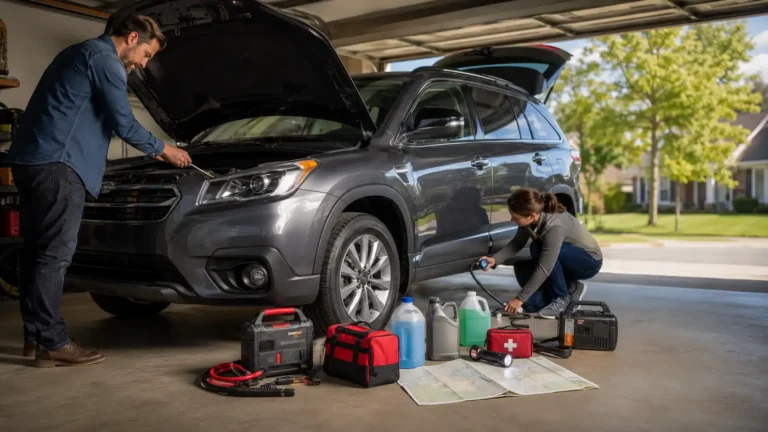
Even a well-prepped car can run into unexpected trouble, so packing a basic emergency kit adds a layer of protection for the unpredictable parts of a long trip.
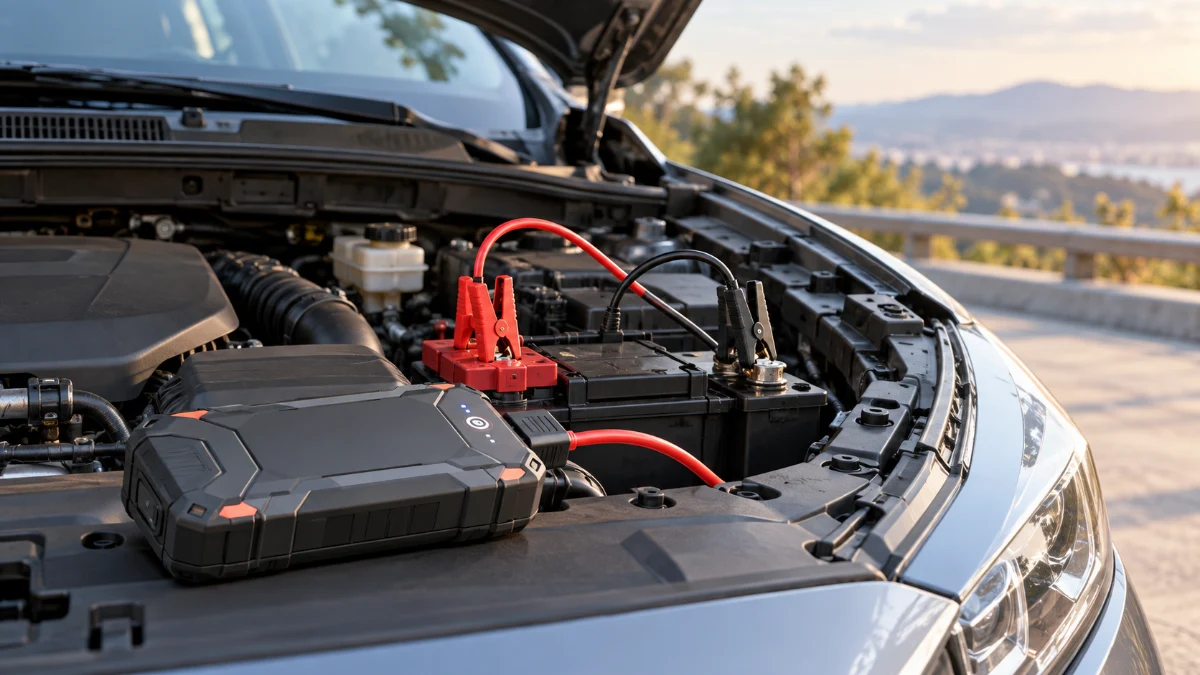
- Jumper cables or a portable jump starter – covers the most common roadside issue, a dead battery.
- A basic tool kit and tire plug kit – handles small repairs without needing to wait for roadside assistance.
- A flashlight with extra batteries – essential for any nighttime breakdown or inspection.
- Reflective triangles or road flares – improves visibility if you’re stopped on the shoulder, especially at night or in poor weather.
- A phone charger and printed or downloaded offline maps – keeps you connected and oriented even in areas with weak cell signal.
- Water and non-perishable snacks – useful for delays, whether from a breakdown or simply heavy traffic.
This kit doesn’t need to be elaborate, but having these basics on hand turns a potential emergency into a minor inconvenience.
Are There Extra Steps Worth Taking for Very Long Trips?
Trips spanning multiple days or crossing into significantly different climates benefit from a few additional considerations beyond the standard pre-trip checklist. Checking your insurance coverage and roadside assistance details before leaving ensures you know exactly what’s covered if something does go wrong far from home.
Planning fuel and rest stops in advance, particularly through remote stretches with fewer services, reduces the risk of running low on fuel in an area without options nearby. If you’re driving through mountainous terrain or significant elevation changes, it’s also worth confirming your cooling system is in good condition, since climbing puts additional strain on the engine.
How Does Loading the Car Affect Handling and Tire Wear?
Overloading a vehicle beyond its rated capacity affects handling, braking distance, and tire wear, especially over the sustained mileage of a long trip. Check your vehicle’s door jamb sticker for the maximum load rating, and keep in mind that this figure includes passengers, luggage, and any cargo combined.
Distributing weight evenly and keeping heavier items low and centered helps maintain stable handling, particularly during sudden lane changes or braking. Roof-mounted cargo carriers add wind resistance and raise the vehicle’s center of gravity, both of which are worth factoring into your driving style on a heavily loaded trip.
Conclusion
Preparing your car for a long road trip is one of the simplest ways to reduce the risk of unexpected breakdowns and travel delays. Spending less than an hour checking your fluids, tires, battery, brakes, and lights can prevent many of the most common roadside problems before they happen.
Packing a basic emergency kit, avoiding vehicle overload, and planning your fuel and rest stops also make long-distance driving safer and more comfortable. If your vehicle is due for maintenance or you’ve noticed unusual noises, warning lights, or handling issues, it’s best to address them before you leave rather than during the trip.
With a properly prepared vehicle, you can focus less on mechanical concerns and more on enjoying the journey, whether you’re traveling across the state or across the country.
Frequently Asked Questions
What should I check on my car before a long road trip?
Before a long road trip, check your engine oil, coolant, brake fluid, windshield washer fluid, tire pressure, tire tread, battery condition, brakes, lights, windshield wipers, and spare tire. Also inspect belts, hoses, and make sure your emergency kit is fully stocked.
How far in advance should I prepare my car for a road trip?
Ideally, inspect your vehicle about one week before departure. This gives you enough time to schedule repairs or maintenance if any issues are discovered. Final checks like tire pressure and fluid levels can be completed the day before or the morning of your trip.
Is it safe to drive long distances without servicing my car?
Yes, if your vehicle is already up to date on maintenance and has no mechanical issues. However, if your next service is due soon or you notice warning lights, unusual noises, fluid leaks, or worn tires, it’s safer to have the vehicle inspected before traveling.
Should I get my battery tested before a road trip?
Yes. A battery test takes only a few minutes and can identify a weak battery before it fails. This is especially recommended if your battery is more than three years old or your engine has recently been slow to start.
What tire pressure should I use for a road trip?
Use the tire pressure recommended by your vehicle manufacturer, which is typically listed on the driver’s door jamb sticker. Check the pressure when the tires are cold, including the spare tire, rather than using the maximum pressure printed on the tire sidewall.
What emergency items should I keep in my car for a long drive?
A basic emergency kit should include:
- Jumper cables or a portable jump starter
- Tire inflator or repair kit
- Flashlight with spare batteries
- First aid kit
- Reflective warning triangles
- Basic hand tools
- Phone charger
- Drinking water
- Non-perishable snacks
- Blanket
- Work gloves
These items can help you handle common roadside emergencies safely.
Is it worth changing the oil before a long road trip?
If your next oil change is due within the next few hundred miles, changing it before your trip is usually a smart decision. Fresh engine oil provides better protection during extended highway driving and helps you avoid servicing the vehicle while traveling.
How can I reduce the chances of breaking down during a road trip?
You can greatly reduce the risk of a breakdown by:
- Checking all fluid levels
- Inspecting tire condition and pressure
- Testing the battery
- Ensuring brakes are in good condition
- Verifying all exterior lights work
- Carrying an emergency roadside kit
- Avoiding overloading your vehicle
- Following your vehicle’s maintenance schedule
Should I check my spare tire before leaving?
Yes. Make sure the spare tire is properly inflated and inspect it for cracks, dry rot, or visible damage. Also confirm that your jack, lug wrench, and wheel lock key (if equipped) are in the vehicle and in working condition.
Does carrying heavy luggage affect fuel economy and handling?
Yes. Extra weight increases fuel consumption, lengthens braking distances, and affects vehicle handling. Keep heavy items low and centered inside the vehicle, and avoid exceeding your vehicle’s maximum payload capacity listed on the driver’s door jamb.