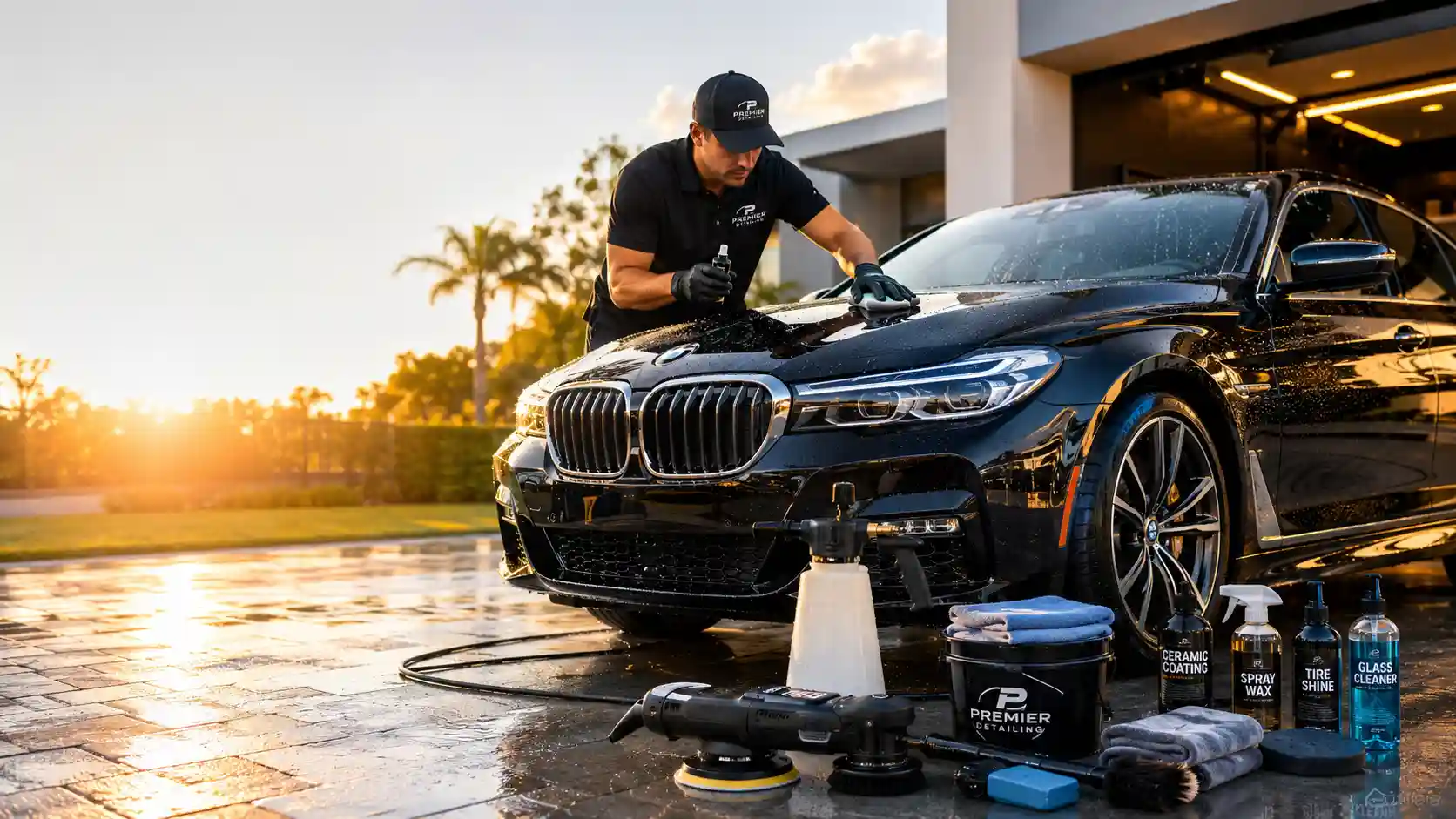
To protect car wheels, clean them fully, remove bonded iron with an iron remover, dry them, then apply a wheel wax, sealant or ceramic coating. The coating creates a smooth barrier that stops brake dust and road grime from sticking, so wheels stay cleaner and the finish lasts longer.
Wheels take more abuse than any other part of the car. This guide shows what damages them, the five steps that protect them, how wax, sealant and ceramic compare, how to avoid curb rash, and how often to reapply.
What Damages Car Wheels?
Brake dust, bonded iron particles, road salt, heat and curb scrapes damage car wheels. Brake dust is the biggest everyday problem. It forms when brake pads and rotors wear as you slow down, then settles on warm wheels nearby.
The metal bits in brake dust tend to oxidize, which means they can corrode and stain the finish if left on. Road salt makes winter worse, and a scrape against a curb can expose bare aluminum. Once the clear coat is broken, corrosion starts quickly. Protection works best when you stop this damage before it begins.
How to Protect Car Wheels, Step by Step
Protect wheels in five steps: clean, remove iron, dry, apply protection and let it cure. The order matters because protection only bonds well to a clean, dry, contamination-free surface. Skipping the prep seals dirt in and wastes the product.
Step 1: Clean the Face, Barrel and Spokes
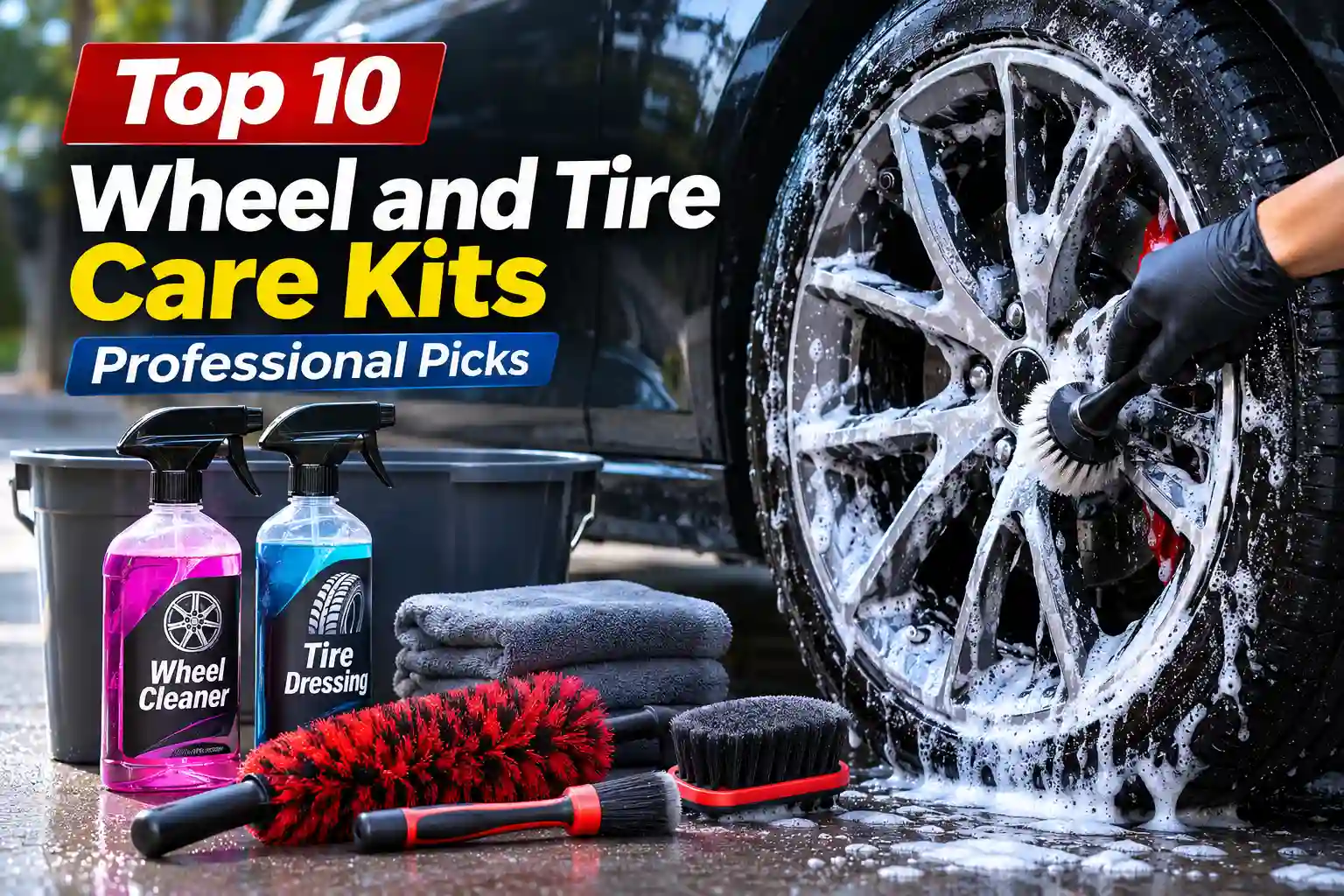
Start by cooling the wheels, then clean the wheels by working on the face, the spokes and the inner barrel with a wheel cleaner and soft brushes. Never wash a hot wheel, because cleaner dries fast and can stain. Reach behind the spokes, where brake dust piles up.
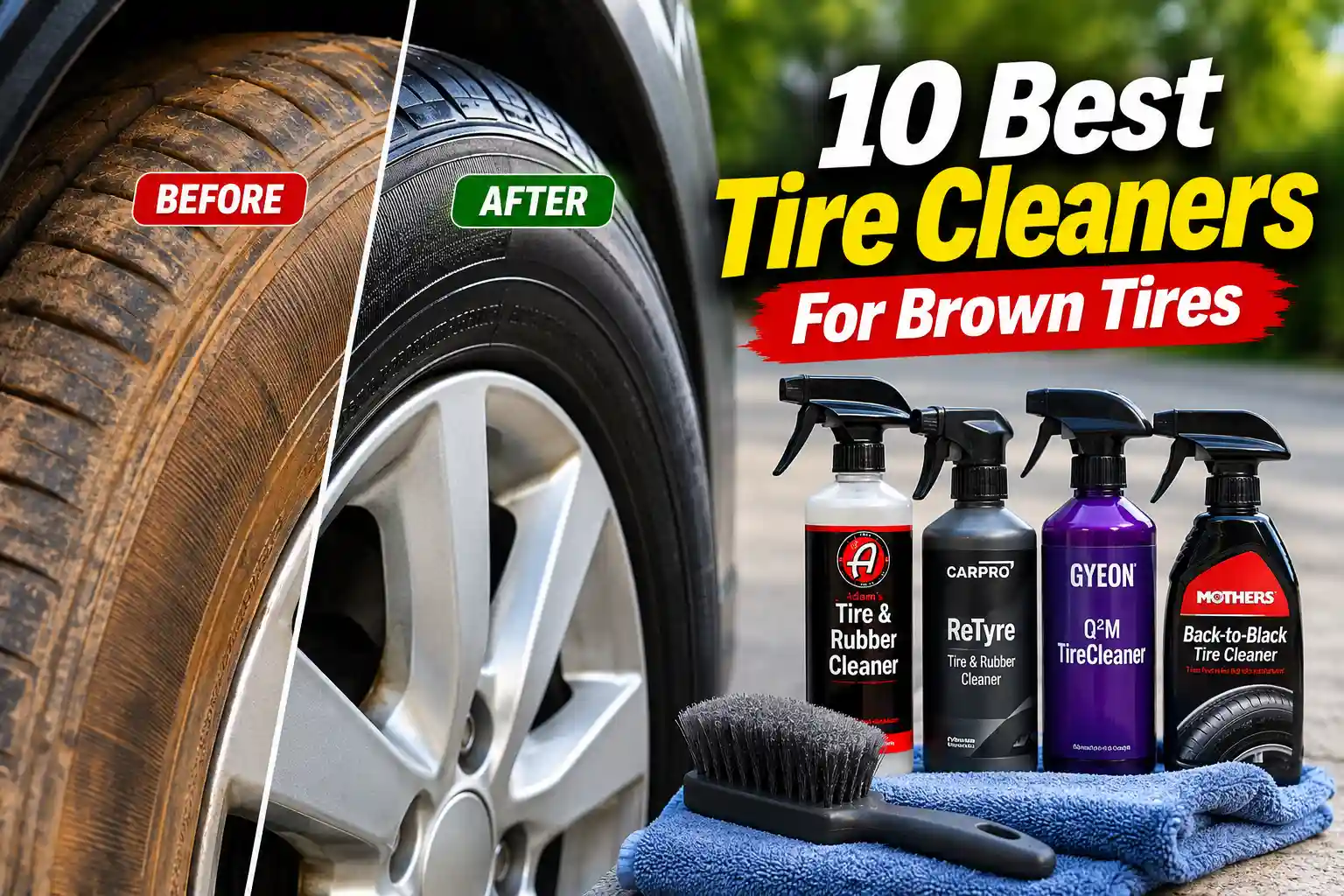
Use a separate mitt and brushes for the wheels, and never reuse them on paint. Clean the tires with a good tire cleaner too, so dirty sidewalls do not splash onto your fresh wheels. Rinse everything well before moving on.
Step 2: Remove Bonded Iron With an Iron Remover
Spray an iron remover on the wheels to dissolve metal particles that a normal wheel cleaner leaves behind. These products are non-acidic and react with iron, often turning purple as they work. They are the deep-clean step before protection.
Let the product sit for the time on the label, agitate lightly with a soft brush and rinse thoroughly. Use a wheel cleaner for regular upkeep and an iron remover for a periodic deep clean, such as monthly or before you apply a new coating. Doing it every wash is too aggressive.
Step 3: Rinse and Dry the Wheels Fully
Rinse off all cleaner and dry the wheels completely with a clean microfiber towel or an air blower. Water in the spokes and around the lug nuts can leave spots and block the coating from bonding. A dry surface is needed for every protection product.
Wipe the barrel and spokes, then let the wheel sit for a few minutes so hidden water can drip out. A leaf blower or compressed air helps in tight spots.
Step 4: Apply Wheel Wax, Sealant or Ceramic Coating
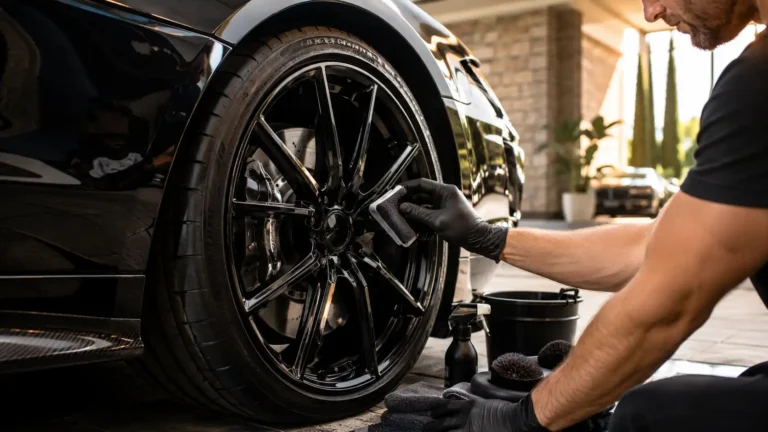
Apply a thin, even coat of wheel wax, sealant or ceramic coating to the clean wheel, using the pad or applicator the product recommends. This layer is the protection. It leaves the surface smoother, so brake dust is easier to rinse off.
Work one wheel at a time and cover the face, spokes and as much of the barrel as you can reach. Buff off any residue with a clean microfiber towel if the label says so. Use a product made for wheels, since wheels run hotter than paint and need more heat resistance.
Step 5: Let the Protection Cure
Let the coating cure for the time on the label before you drive through water or wash the wheels. Curing lets the product bond and harden. A liquid ceramic can take four to five days to fully set, while a spray coating often needs about a day.
Keep the car dry and out of rain during this window if you can. Skip wheel cleaner and heavy scrubbing until the cure time passes.
Wheel Wax vs Sealant vs Ceramic Coating: Which Is Best?
Ceramic coating usually lasts longest and handles heat best, a synthetic sealant sits in the middle, and wheel wax is the easiest and shortest-lasting. The best choice depends on how much time you have and how much brake dust your car makes.
Wheel wax is cheap and quick, but it needs more frequent reapplication. Carnauba wax in particular has low heat resistance, so avoid it on wheels. A synthetic sealant is built to handle more heat and lasts longer. Ceramic coatings need the most prep and cure time, but they make washing easier and hold up longest. Some makers claim up to a year for certain coatings, but results vary with the product, your brakes and your washing habits.
How Do You Protect Wheels From Curb Rash?
Protect wheels from curb rash by driving and parking carefully, using rim protector strips and touching up small scrapes early. Curb rash is more than a looks issue, because deep scratches expose bare aluminum and corrosion can start fast.
Rim protector strips are rubber guards that sit on the edge of the wheel and take the hit instead of the metal. They do not stop every scrape, but they help in tight parking spots. If you do scrape a wheel, clean the spot and use a paint pen or touch-up kit to seal it before water and salt get in. For deep or wide damage, a wheel repair shop is the safer option.
How Often Should You Clean and Reapply Wheel Protection?
Clean the wheels every week or at every wash, and reapply wax or sealant about every two to three months. Ceramic coatings can last longer, but they still need regular washing. In winter or in heavy-brake driving, reapply sooner because salt and brake dust build up faster.
A simple routine works well: a quick wheel wash each time you wash the car, an iron remover once in a while, and a fresh protection coat on your schedule. Check how water behaves on the wheel. If it stops beading and dust starts sticking, it is time to reapply.
What Mistakes Damage Car Wheels?
The biggest mistakes are using acidic cleaners on the wrong finish, washing hot wheels, using carnauba wax, reusing the paint mitt on wheels and applying protection over dirty metal. Each one either strips the finish or weakens the coating.
Acidic cleaners can permanently damage polished, chrome or split-rim wheels. Washing a hot wheel makes cleaner dry too fast and stain the surface. Using the same mitt on paint and wheels drags brake dust onto your paint. Always check your wheel finish first, and choose products that say they are safe for it.
Frequently Asked Questions
Can I use the same cleaner on every wheel finish?
No. Painted, machined, polished, chrome and matte wheels each need different care. A mild pH-balanced wheel cleaner is the safest start, but acidic products can damage polished and chrome finishes, and matte wheels need matte-safe products. Check the label and your wheel maker’s advice before using a new product.
Do ceramic or low-dust brake pads reduce brake dust?
Yes, they can. Switching to ceramic or low-dust brake pads is one of the easiest ways to cut brake dust, though no pad removes it completely. Pair them with regular washing and a wheel coating for the best results.
Can I ceramic coat polished aluminum wheels?
Yes, ceramic coatings can be used on polished aluminum wheels. Polish and clean the metal first, then follow the product’s cure time. Use a coating made for wheels so it handles brake heat, and avoid harsh acidic cleaners during prep.
Conclusion
Protecting wheels is a simple routine: clean, deep clean with an iron remover when needed, dry, apply protection and let it cure. Choose wax for quick results, sealant for a middle path or ceramic for the longest lasting layer.
Guard against curb rash, avoid acidic cleaners on delicate finishes and reapply on schedule. A little prep keeps brake dust from eating into the finish and makes every wash easier.