Car cleaning is part of regular vehicle maintenance because dirt, brake dust, road salt, bird droppings, and UV exposure can affect paint, wheels, glass, trim, and metal parts over time. Regular washing helps remove harmful buildup before it causes stains, corrosion, dull paint, or long-term surface damage.
The car care products market is valued at USD 13.40 billion in 2025 and is projected to reach USD 18.38 billion by 2034, showing rising demand for cleaning and protection products.
This article explains how to clean a car using the best car cleaning kits. It covers the step-by-step cleaning process, exterior cleaning, interior cleaning, cleaning frequency, kit maintenance, common mistakes, essential tools, and how to choose the right car cleaning kit.
How to Clean a Car Using a Car Cleaning Kit Step by Step
Cleaning a car with a car cleaning kit works best when the process follows the correct order. A structured cleaning flow removes heavy dirt first, protects the paint from scratches, and helps each product work on the right surface.
Below is the correct serial order for cleaning a car with a car cleaning kit:
- Prepare the car
- Rinse off loose dirt
- Clean the wheels and tires
- Wash the exterior
- Dry the car properly
- Clean the interior
- Clean the glass
- Apply protection
Step 1: Prepare the Car
Park the car in a shaded area before cleaning. Direct sunlight dries soap and water too quickly, which can leave water spots, streaks, and soap marks on the paint.
Remove loose items from the interior, take out the floor mats, and keep all cleaning products, microfiber towels, brushes, and wash tools ready before starting.
Step 2: Rinse Off Loose Dirt
Rinse the full exterior with clean water before applying soap. This removes loose dust, mud, sand, and road debris from the paint surface.
A proper rinse reduces friction during washing. This step is important because dragging dirt across the paint with a sponge or mitt can create light scratches and swirl marks.
Step 3: Clean the Wheels and Tires
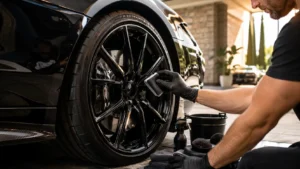
Clean the wheels and tires before washing the body. Wheels collect brake dust, road grime, grease, and mud, so they need stronger cleaning than painted panels.
Use a dedicated wheel cleaner, tire cleaner, and brush from the car cleaning kit. Clean one wheel at a time, then rinse it properly before the cleaner dries.
Step 4: Wash the Exterior
Mix car wash shampoo with clean water according to the product instructions. Use a microfiber wash mitt instead of a rough sponge.
Wash the car from top to bottom. Start with the roof, windows, hood, and upper panels, then move to the lower doors, bumpers, and side skirts. Lower sections usually hold more dirt, so cleaning them last helps protect the paint.
Step 5: Dry the Car Properly
Dry the car immediately after rinsing. Leaving water to air dry can create water spots, especially on dark paint and glass.
Use a clean microfiber drying towel. Gently blot or drag the towel across the surface with light pressure. Avoid circular rubbing because trapped particles may mark the paint.
Step 6: Clean the Interior
Start the interior by removing trash, dust, and loose items. Vacuum the seats, carpets, floor mats, cup holders, and tight gaps between seats.
Use an interior cleaner for the dashboard, center console, door panels, and plastic or vinyl surfaces. Use a leather cleaner or conditioner only if the car has leather seats. Fabric seats may need an upholstery cleaner and soft brush.
Step 7: Clean the Glass
Clean the windows, windshield, mirrors, and rear glass with an automotive glass cleaner. Use a separate microfiber towel for glass to avoid smears from wax, interior cleaner, or dressing residue.
Clean the inside and outside of the glass. Clear glass improves visibility and gives the car a cleaner finished look.
Step 8: Apply Protection
Finish the process with wax, spray sealant, or ceramic spray if your kit includes one. Paint protection adds shine and helps reduce dirt buildup after cleaning.
Apply the product on clean, dry paint only. Follow the product instructions for application and buffing time. Avoid applying wax or ceramic spray on hot panels, rubber trims, or dirty surfaces.
Step-by-Step Exterior Cleaning Process
Exterior cleaning removes road dirt, brake dust, bugs, tar, and surface grime from the visible parts of the car. A proper exterior process protects the paint, reduces swirl marks, and helps the vehicle stay clean for longer.
1. Rinse the Exterior First
Start by rinsing the full car with clean water. This removes loose dust, sand, mud, and road debris before you touch the paint.
Rinsing first is important because dry dirt can scratch the surface when rubbed with a sponge or wash mitt.
2. Clean the Wheels and Tires
Clean the wheels and tires before washing the paint. Wheels collect brake dust, mud, grease, and road grime, so they need stronger cleaning than the car body.
Use a dedicated wheel cleaner, tire cleaner, and soft brush. Clean one wheel at a time and rinse properly before the cleaner dries.
3. Wash the Paint Safely
Use car wash shampoo and a soft microfiber wash mitt. Wash from top to bottom because the lower panels usually carry more dirt.
Avoid dish soap, rough sponges, and heavy pressure. These can damage the paint, remove protection, or create swirl marks.
4. Remove Bugs, Tar, and Heavy Grime
Use a bug remover, tar remover, or all-purpose automotive cleaner for stubborn dirt. These products help break down sticky residue that normal shampoo may not remove.
Apply the cleaner only on the affected area and follow the product instructions. Do not scrub aggressively because bugs and tar can drag across the paint and leave marks.
5. Rinse and Dry the Car
Rinse the car thoroughly after washing. Make sure no soap remains on the paint, glass, wheels, or trim.
Dry the car with a clean microfiber drying towel. Do not let the car air dry because water spots can form on paint and glass.
6. Apply Wax or Ceramic Protection
Apply wax, spray sealant, or ceramic spray after the car is fully clean and dry. This adds shine and creates a protective layer over the paint.
Paint protection helps reduce dirt buildup, water spots, UV damage, and makes the next wash easier.
Step-by-Step Interior Cleaning Process
Interior cleaning removes dust, crumbs, stains, odor, and buildup from the cabin. A clean interior improves comfort, visibility, hygiene, and long-term vehicle value.
1. Remove Trash and Loose Items
Start by removing bottles, papers, food wrappers, coins, and personal items from the car. Take out the floor mats before vacuuming.
This step makes the cleaning process faster and helps you reach hidden dirt under the seats and mats.
2. Vacuum Seats, Mats, and Carpets
Vacuum the seats, carpets, floor mats, trunk area, and gaps between the seats. Use narrow vacuum tools for corners and tight spaces.
Vacuuming first removes dry dirt before using liquid cleaners. This prevents dust from turning into mud on fabric or carpet surfaces.
3. Clean the Dashboard and Console
Use an interior cleaner with a microfiber cloth to clean the dashboard, center console, door panels, steering wheel, and gear area.
Avoid using too much liquid near buttons, screens, vents, and electrical controls. Spray the cleaner on the cloth first, then wipe the surface.
4. Clean Leather or Fabric Seats
Use the correct cleaner based on seat material. Leather seats need leather cleaner and conditioner to reduce dryness and cracking.
Fabric seats need upholstery cleaner and a soft brush for stains, sweat marks, and food spills. Always test the product on a small hidden area first.
5. Clean Vents, Cup Holders, and Tight Corners
Use detailing brushes, cotton swabs, or compressed air to clean air vents, cup holders, seat rails, door pockets, and small gaps.
These areas collect dust and sticky buildup, so they need more detailed cleaning than open surfaces.
6. Finish with Interior Glass Cleaning
Clean the inside of the windshield, side windows, mirrors, and rear glass with automotive glass cleaner.
Use a separate microfiber towel for glass only. Clean glass improves visibility, reduces glare, and gives the interior a polished finish.
How Often Should You Clean Your Car?
Regular cleaning keeps your car in good condition and protects it from long-term damage. The ideal frequency depends on how often you drive and the environment your car is exposed to.
Weekly cleaning routine
Light cleaning once a week helps maintain your car’s appearance. It removes surface dust, dirt, and contaminants before they build up and become harder to clean.
Monthly deep cleaning routine
A thorough cleaning once a month targets hidden dirt and grime. This includes detailed interior cleaning, exterior washing, and applying protective treatments if needed.
Seasonal cleaning tips
During winter or rainy seasons, more frequent cleaning is necessary. Road salt, mud, and moisture can damage paint and metal surfaces if not removed in time.
How to Maintain Your Car Cleaning Kit
Maintaining your cleaning kit is just as important as cleaning the car itself. Well-kept tools and products ensure better performance and longer usability.
Store products properly
Keep all cleaning products in a cool, dry place. Proper storage prevents leakage, spoilage, and damage caused by heat or humidity.
Replace worn towels and tools
Over time, towels, sponges, and brushes wear out and lose effectiveness. Replacing them regularly helps avoid scratches and improves cleaning results.
Keep your kit organized
An organized cleaning kit saves time and effort. It also helps you quickly find the right tools and prevents misplacing important items.
4 Common Mistakes to Avoid
Avoiding common mistakes is essential for protecting your car’s surfaces and achieving better cleaning results. Even small errors can lead to scratches, fading, or long-term damage.
- Using dish soap or household cleaners
Dish soap and regular household cleaners are not designed for car paint. They can strip away protective layers like wax, leaving the surface exposed and dull. Always use car-specific cleaning products for safe results. - Using dirty towels or rough cloths
Dirty or rough materials can easily scratch the paint and interior surfaces. Always use clean, soft microfiber towels and wash them regularly to maintain their effectiveness. - Skipping the undercarriage
The undercarriage is one of the most exposed parts of a vehicle. It collects salt, mud, and debris, especially during rainy or winter seasons. Ignoring this area can lead to rust and corrosion over time. - Using the wrong product on the wrong surface
Different parts of a car require different cleaning solutions. Using glass cleaner on leather or harsh chemicals on plastic can cause damage. Always match the product to the specific surface for the best results.
5 Ways to Choose the Best Car Cleaning Kit
Choosing the best car cleaning kit depends on your cleaning goal, car condition, experience level, and budget. A good kit should include the right products for paint, wheels, glass, interior surfaces, and drying without adding items that are rarely used.
1. Choose a Beginner-Friendly Car Cleaning Kit
A beginner car cleaning kit should include simple, safe, and easy-to-use products. Basic items like car wash shampoo, microfiber towels, a wash mitt, glass cleaner, and wheel cleaner are enough for routine car cleaning.
Beginners should avoid advanced products like cutting compounds, polishers, and ceramic coatings unless they understand how to use them. Soft microfiber towels and wash mitts are important because rough cloths and dirty sponges can leave swirl marks on the paint.
2. Choose an Exterior Car Cleaning Kit for Paint, Wheels, and Glass
An exterior car cleaning kit should focus on the outside surfaces of the vehicle. A strong exterior kit usually includes pH-balanced car wash soap, a microfiber wash mitt, drying towels, wheel cleaner, tire cleaner, glass cleaner, and wax or spray sealant.
Car owners who wash their vehicle regularly should choose a kit with paint-safe formulas. Wheel cleaners should also match the wheel finish because some strong cleaners may damage sensitive coatings, chrome, or polished metal.
3. Choose an Interior Car Cleaning Kit for Seats, Dashboard, and Carpets
An interior car cleaning kit should include products for dashboard panels, door trims, seats, carpets, floor mats, and air vents. A good kit usually includes interior cleaner, upholstery cleaner, leather cleaner or conditioner, detailing brushes, microfiber towels, and odor remover.
Cars with leather seats need dedicated leather care products. Cars with fabric seats need upholstery cleaners and brushes. Interior kits are useful for removing dust, stains, food marks, pet hair, and everyday dirt from cabin surfaces.
4. Choose a Budget Car Cleaning Kit with Essential Products First
A budget-friendly car cleaning kit should cover the most important cleaning tasks first. Car wash shampoo, microfiber towels, a wash mitt, wheel cleaner, glass cleaner, and interior cleaner are the basic products most car owners need.
Car owners do not need to buy a large kit at the beginning. A smaller kit with high-use products gives better value than a large kit filled with low-quality or duplicate items. Extra products like wax, tire shine, clay bars, and protectants can be added later.
5. Choose a Professional Car Cleaning Kit for Deeper Detailing
A professional-grade car cleaning kit is better for car owners who want deeper cleaning, paint correction, or long-lasting protection. These kits may include clay bars, polish, compound, foam cannon, dual-action polisher, ceramic spray, tire dressing, and advanced interior cleaners.
Professional kits are useful for detailers, car enthusiasts, and vehicles that need more than regular washing. These kits require more skill because incorrect use of polishers, compounds, or ceramic coatings can damage the finish or create uneven results.
Best Car Cleaning Kit Tools You Need
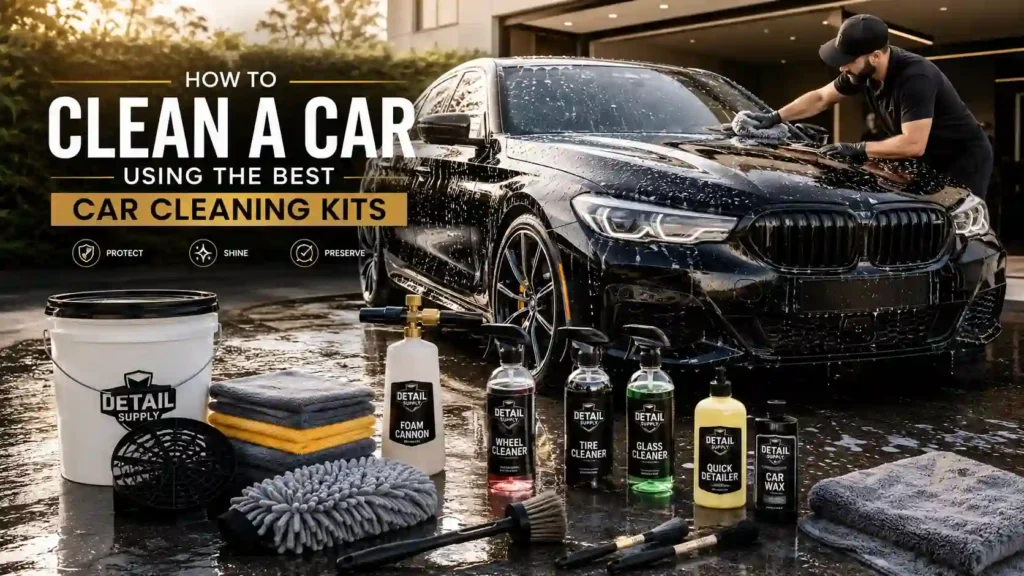
A good car cleaning kit should include tools for washing, drying, wheel cleaning, interior cleaning, glass cleaning, and paint protection. Each tool has a specific job, so choosing the right items helps clean the car safely without damaging paint, trim, glass, or interior materials.
Car Wash Soap
Car wash soap removes dust, mud, and road grime from the exterior surface. A proper automotive shampoo creates foam that helps lift dirt away from the paint.
Avoid dish soap or household detergent because these products can remove wax, dry out trim, and reduce paint protection. A pH-balanced car wash soap is the safer choice for regular washing.
Microfiber Wash Mitt
A microfiber wash mitt helps clean the paint with less friction than a rough sponge. The soft fibers hold soap and trap dirt during washing.
Use the wash mitt from top to bottom. Keep a separate mitt or brush for lower panels and wheels because these areas collect heavier dirt.
Microfiber Towels
Microfiber towels are used for drying, wiping, glass cleaning, and interior cleaning. They absorb water well and reduce the risk of swirl marks when used properly.
Keep separate towels for each task. One towel should not be used for paint, wheels, interior surfaces, and glass because dirt or chemical residue can transfer between areas.
Wheel Cleaner
Wheel cleaner removes brake dust, grease, mud, and road grime from wheels. These contaminants are stronger than normal surface dirt, so regular car shampoo may not clean them properly.
Choose a wheel cleaner that matches the wheel finish. Some strong cleaners are not suitable for chrome, polished aluminum, or sensitive coated wheels.
Tire Cleaner and Tire Brush
Tire cleaner removes brown buildup, old tire dressing, mud, and road film from rubber surfaces. A tire brush helps scrub the sidewall without damaging the tire.
Clean tires before applying tire shine or dressing. A clean tire surface helps the dressing spread evenly and last longer.
Interior Cleaner
Interior cleaner is used for dashboard panels, door trims, center consoles, cup holders, and plastic or vinyl surfaces. A good interior cleaner removes dust, fingerprints, light stains, and body oil buildup.
Spray the cleaner onto a microfiber cloth first instead of spraying directly on buttons, screens, or electrical parts.
Upholstery or Leather Cleaner
Fabric seats need upholstery cleaner to remove stains, sweat marks, food spills, and trapped dirt. Leather seats need leather cleaner and conditioner to reduce dryness, fading, and cracking.
Use the correct cleaner based on the seat material. The wrong product can leave stains, sticky residue, or surface damage.
Glass Cleaner
Glass cleaner removes fingerprints, haze, dust, and water spots from windows, mirrors, and windshields. Clean glass improves visibility and gives the car a sharper finished look.
Use a dedicated microfiber towel for glass only. Towels with wax or interior cleaner residue can leave streaks.
Vacuum Cleaner
A vacuum cleaner removes dust, crumbs, pet hair, sand, and debris from seats, carpets, floor mats, and trunk areas. Small nozzle attachments help reach under seats and between narrow gaps.
Vacuuming should come before liquid interior cleaning. This prevents dry dust from turning into mud on fabric or carpet.
Detailing Brushes
Detailing brushes clean tight areas that towels cannot reach. These include air vents, logos, seams, cup holders, seat rails, buttons, and wheel details.
Use soft brushes for interior surfaces and stronger brushes for wheels and tires. Do not use the same brush for dirty wheels and delicate interior panels.
Wax or Ceramic Spray
Wax or ceramic spray adds a protective layer after washing and drying. These products improve shine, repel water, and make future cleaning easier.
Wax is usually easier for beginners. Ceramic spray generally lasts longer, but it needs cleaner paint and more careful application for best results.
Conclusion
Cleaning your car with the best car cleaning kits does not have to be difficult. When you follow the right steps and use the proper tools, the process becomes simple, effective, and even enjoyable over time.
Regular cleaning plays a key role in maintaining your car’s appearance while also protecting its surfaces from long-term damage. From preserving the shine of the paint to keeping the interior fresh and comfortable, consistent care makes a noticeable difference.
The most important factor is consistency. By using the right products and applying proper techniques, you can achieve better results with less effort. Over time, this not only keeps your car looking like new but also helps you save money by preventing costly repairs and wear.
Frequently ask Question
What car care product should I buy first?
Start with car wash soap, microfiber towels, and a microfiber wash mitt. These three products clean the exterior safely and reduce the risk of scratches. After that, add wheel cleaner, glass cleaner, interior cleaner, and wax or ceramic spray.
How often should I wash my car?
Wash your car every one to three weeks. Cars driven daily, parked outside, or exposed to rain, mud, road salt, bird droppings, or dust need more frequent washing. Regular washing helps protect paint, glass, wheels, and trim from long-term buildup.
Is ceramic coating better than wax?
Ceramic coating lasts longer than wax and gives stronger protection against water, dirt, UV exposure, and chemical stains. Wax is easier to apply and costs less, but it wears off faster and needs more frequent reapplication.
Can I use dish soap to wash my car?
No, dish soap is not safe for regular car washing. Dish soap can strip wax, sealant, and protective oils from the paint surface. Use a pH-balanced car wash soap because it is made for automotive paint, plastic trim, rubber, and exterior finishes.
What is the difference between car washing and detailing?
Car washing removes loose dirt, dust, mud, and grime from the exterior. Car detailing is a deeper cleaning process that cleans, restores, and protects the exterior and interior. Detailing may include polishing, waxing, stain removal, glass cleaning, and deep interior cleaning.
Is a microfiber towel necessary for car cleaning?
Yes, microfiber towels are necessary for safe car cleaning. Microfiber is soft, absorbent, and less likely to scratch paint than rough cloth or old towels. Use separate microfiber towels for paint, wheels, glass, and interior surfaces to avoid dirt transfer.