You clean car glass without streaks by using an ammonia-free automotive glass cleaner, one microfiber towel to clean, and a second dry towel to buff. You protect it by removing bonded dirt and water spots first, then applying a glass sealant or ceramic glass coating so rain beads and rolls away.
Clean glass is a safety issue, not just a looks issue. Film on the inside of the windshield and mineral spots on the outside cause glare at night and in low sun, and they hide things you need to see. This guide walks you through the tools, the streak-free method, how to remove water spots and haze, and how to protect your glass so it stays clear longer.
What Do You Need to Clean Car Glass?
You need an ammonia-free automotive glass cleaner and two clean microfiber towels. Those two items handle most dirty glass, and the right versions keep you from leaving streaks, lint, or damage to window tint.
Skip paper towels and plush, fluffy cloths. They leave lint behind and create more mess than they remove.
An Ammonia-Free Automotive Glass Cleaner
An ammonia-free automotive glass cleaner cuts through road film, bug splatter, and fingerprints without harming window tint or interior plastics. Ammonia can damage and discolor aftermarket tint and dashboards, and its fumes are harsh in a closed car.
Many household glass cleaners contain ammonia, so check the label first. Look for a cleaner that says “ammonia-free” and “safe for tint” on the bottle.
Use a cleaner with no added dyes or heavy scents, since those can leave a faint film behind.
Two Microfiber Towels (One to Clean, One to Buff)
You need two microfiber towels because one wipes away the dirt and the second buffs the glass dry. A single towel soaks up dirt and spreads it back across the glass, which is the main cause of streaks.
A waffle-weave glass towel works especially well, since it is lint-free and absorbs well. Wash your towels without fabric softener, and swap in a fresh towel as soon as one feels damp or dirty.
How to Clean Car Glass Without Streaks, Step by Step
To clean car glass without streaks, park in the shade, rinse off loose dirt, clean the outside, clean the inside, and buff each pane dry with a fresh towel. Work one window at a time and use a different wiping direction on each side.
The step-by-step method below works on a windshield, side windows, rear glass, and mirrors.
Step 1: Park in the Shade and Wash Off Loose Dirt
Park in a shaded spot or a garage and let the glass cool. Cleaner dries too fast on hot glass, and that leaves streaks before you can wipe it. Then rinse off loose dirt and dust, or wash the car first with shampoo and water.
Heavy bug splatter and tree sap need extra help. Spray a bug remover on the spots and let it soften, then rinse. Wiping hard, dried bugs with a dry towel can scratch the glass.
Step 2: Clean the Exterior Glass
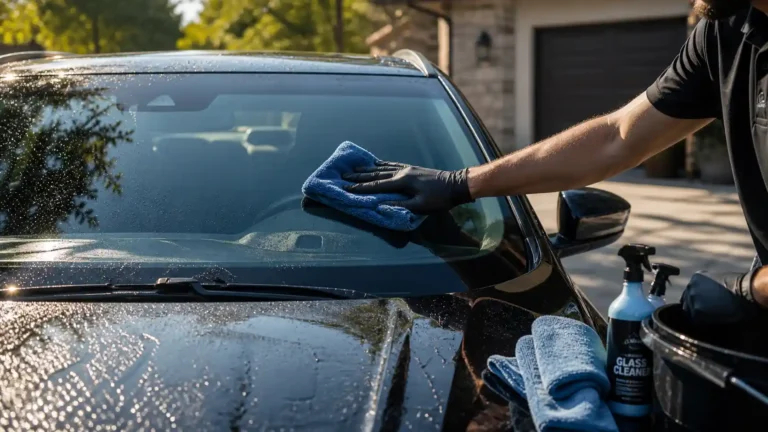
Spray the cleaner onto a towel or directly onto the exterior glass, then wipe in overlapping vertical strokes. Clean half of the windshield at a time so the cleaner never dries before you finish.
Roll each side window down about two inches and clean the top edge that hides inside the door seal. Then roll it back up and clean the rest. Flip your towel to a fresh side as it picks up dirt.
Step 3: Clean the Interior Glass
Spray the cleaner on the towel, not on the glass, when you clean the inside. Overspray runs down onto the dashboard, door panels, and screens, and it can stain them.
Wipe the inside of the glass with horizontal strokes, so you can tell which side of the glass any leftover streak is on. Use a folded towel to reach the base of the windshield, or a small glass tool for tight angles. Interior glass collects a hazy film from plastics and your breath, so it often takes more than one pass.
Step 4: Buff Dry With a Fresh Towel
Buff each window with the clean, dry second towel until the glass squeaks and shows no marks. The buffing towel pulls off the last bit of cleaner that causes streaks.
Check your work from a few angles and in different light. If you see streaks, buff again with a dry part of the towel. If streaks stay, there may be a film that cleaner can’t remove, and the next two sections cover that.
How to Remove Water Spots and Mineral Deposits
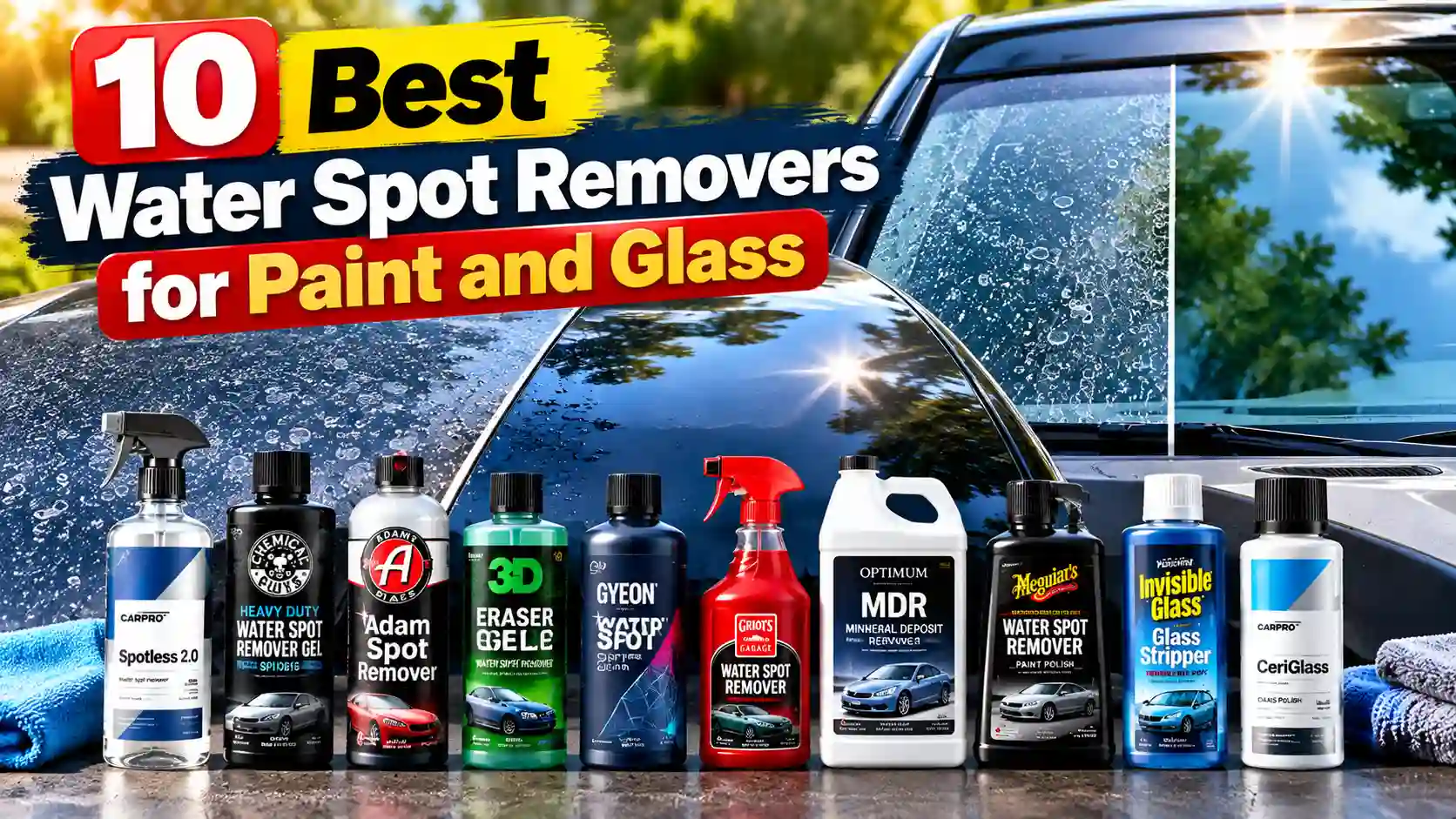
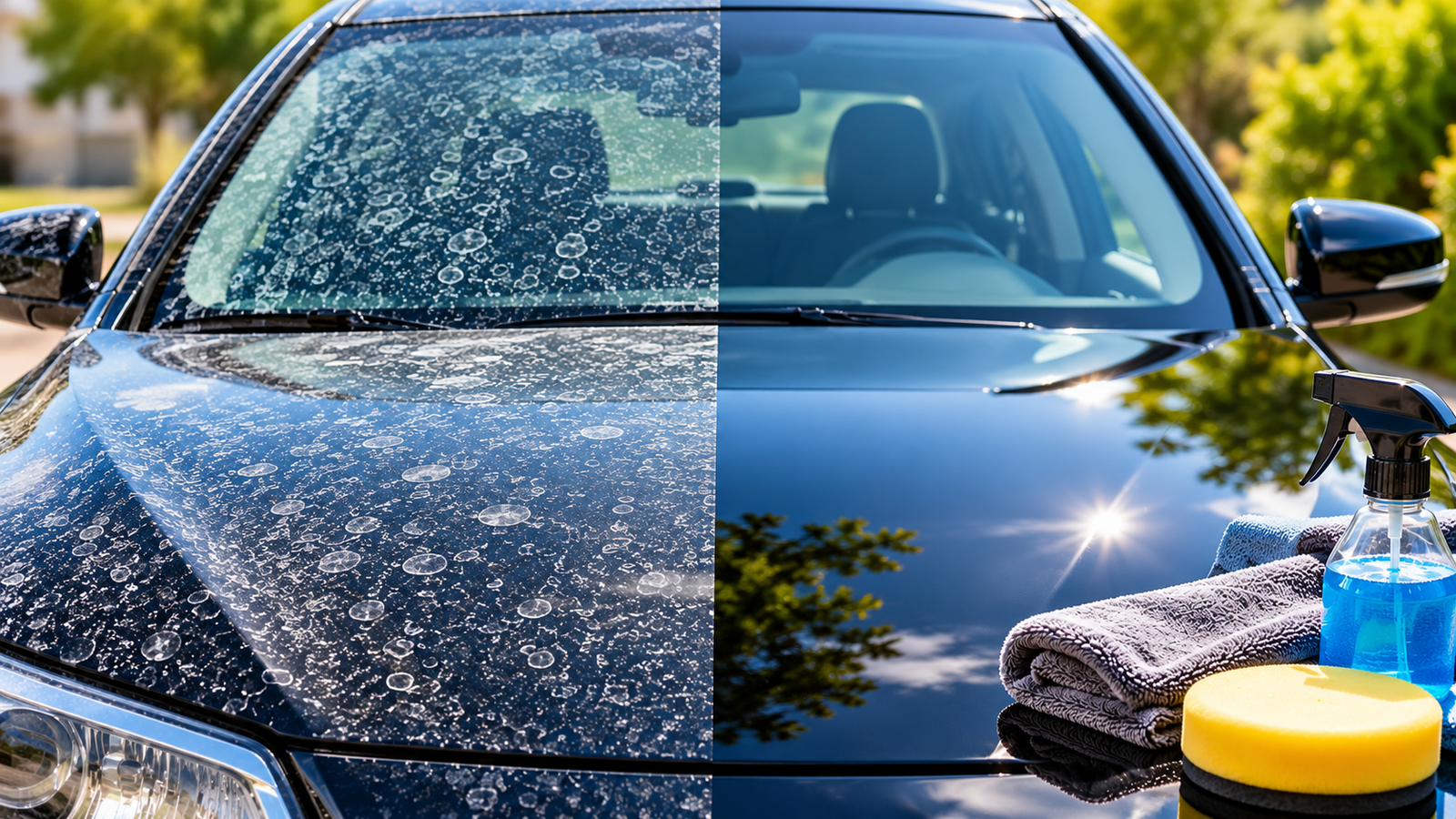
To remove water spots, use a glass polish or a dedicated water spot remover, because ordinary glass cleaner usually can’t lift them. Water spots are mineral deposits left when water dries on the glass, and over time they can etch into the surface.
Fresh spots wipe away with a cleaner and a good towel. Old, baked-on spots need more. Follow these steps:
- Clean the glass first so you work on bare spots.
- Apply the polish or remover to a foam pad or towel as the label says.
- Work in small sections with light pressure and overlapping strokes.
- Wipe off the residue and check the glass in good light.
- Repeat on stubborn spots, then clean the glass again.
Dedicated water spot removers work faster on heavy buildup.
How to Remove Bonded Contamination, Film and Wiper Haze
Bonded contamination is dirt that sticks to the glass and survives washing and normal cleaning. You remove it with a clay bar first and a glass polish second, and then you clean the glass again.
A good test is to run your fingers over clean, dry glass inside a plastic sandwich bag. If it feels rough or gritty, bonded contamination is still there. A hazy film that returns after cleaning, or a rainbow glare at night, points to the same problem.
Wiper blades add to this. Oxidized rubber leaves a thin film on the glass that shows up in low sun and in oncoming headlights. If the haze comes back soon after you clean, worn wipers may be the cause, so replace the wiper blades.
Clay the Glass
To clay the glass, spray a clay lubricant or quick detailer on a small area, then glide the clay bar across it in overlapping straight lines. The clay pulls out bonded dirt, bugs, and residue that cleaner can’t.
Work horizontally first, then flip the clay and work vertically. Knead the clay often to expose a clean surface. When the glass feels smooth, wipe it with a clean towel and clean it again with glass cleaner and a fresh towel.
Polish the Glass
Glass polish removes light haze, wiper film, and mineral spots, and it leaves the surface smooth and ready for a protective coating. It works like paint polish, but it’s made for glass.
Apply a small amount with a foam pad, work it into one section at a time, and wipe it clean. A dedicated glass polish for wiper haze is helpful if your wipers have left a film. Don’t use paint polish on glass, and don’t use polish on interior tinted windows unless the label says it’s safe.
How to Protect Car Glass With a Sealant or Ceramic Coating
To protect car glass, apply a glass sealant or a ceramic glass coating to clean, polished glass. The coating creates a slick, water-repelling surface, so rain beads up and rolls off and ice, bugs, and grime release more easily.
Glass Sealant vs. Ceramic Glass Coating
A glass sealant is an easy, affordable wipe-on product that lasts for months. A ceramic glass coating costs more, takes more prep, and usually lasts longer.
- Glass sealant: simple to apply, often a spray or wipe-on liquid, and good for regular use. Many makers suggest reapplying in spring and fall.
- Ceramic glass coating: forms a harder, longer-lasting layer. Some kits claim up to a year of protection with proper prep.
- Glass cleaner with ceramic ingredients: a quick option that adds light protection each time you clean.
Both types make water bead and roll off at speed, which helps rainy-day visibility and cuts how often you need your wipers.
How to Apply Glass Protection
Apply glass protection on clean, dry, decontaminated glass, in thin even coats, and buff it off as the label says. The cleaner the glass, the better the coating bonds and the longer it lasts.
- Wash and clean the glass thoroughly.
- Clay and polish if the glass feels rough, spotty, or hazy.
- Apply the product to an applicator pad and spread it in a thin, even layer. Work in small sections.
- Let it haze if the label says to, then buff with a clean, dry microfiber towel.
- Allow it to cure for the time on the label before you drive in rain.
Apply it only to exterior glass unless the label says it is safe inside. Many coatings are not meant for interior tinted windows.
Wiper Judder After a New Coating
Wipers can skip, chatter, or squeak the first time you use them on freshly coated glass. This judder is common, and some makers say it fades within one to two weeks as the wipers wear in.
If the judder stays, clean the wiper blade edges with a damp cloth or try new blades. Don’t wipe a dry windshield, since dry wiping increases friction.
How Often Should You Clean and Re-Protect Car Glass?
Clean your car glass every time you wash the car or whenever it looks hazy, and re-apply glass protection about every three to six months for a sealant, or as the label says for a coating. Water that stops beading is the sign that protection has worn off.
Use this simple routine:
- Every wash: clean the outside glass.
- Every few weeks: clean the inside glass, especially in winter and humid weather.
- Spring and fall: reapply glass sealant, or follow your coating’s schedule.
- When water stops beading: clean, polish if needed, and reapply.
Frequently Asked Questions
Can I use glass protection on tinted windows?
Use it only on exterior glass unless the label says it is safe for tint. Many glass coatings and polishes say they are not for use on the inside of tinted windows. Factory tint is usually inside the glass or on the outside surface, but aftermarket tint film sits on the inside, so avoid it when you’re unsure.
How long does glass protection last?
A glass sealant typically lasts a few months, and a ceramic glass coating can last from several months to about a year with good prep and care. Wipers, harsh cleaners, and automatic car washes wear it down faster. When water stops beading, it’s time to reapply.
What is the best way to prevent foggy windows?
Keep the inside glass clean, because a dirty film gives moisture something to cling to. Run the defrost with the A/C on to dry the air, and remove wet floor mats, snow, or damp items from the cabin. Don’t wipe fogged glass with your hand, since the oil makes the problem worse.
Conclusion
To clean and protect car glass, use an ammonia-free cleaner with two microfiber towels, work in the shade, and buff each window dry. Remove water spots with polish, pull bonded dirt off with a clay bar, and then seal the glass with a sealant or ceramic coating.
Clean glass takes only a few extra minutes at each wash, and it makes every drive safer, especially at night and in the rain.