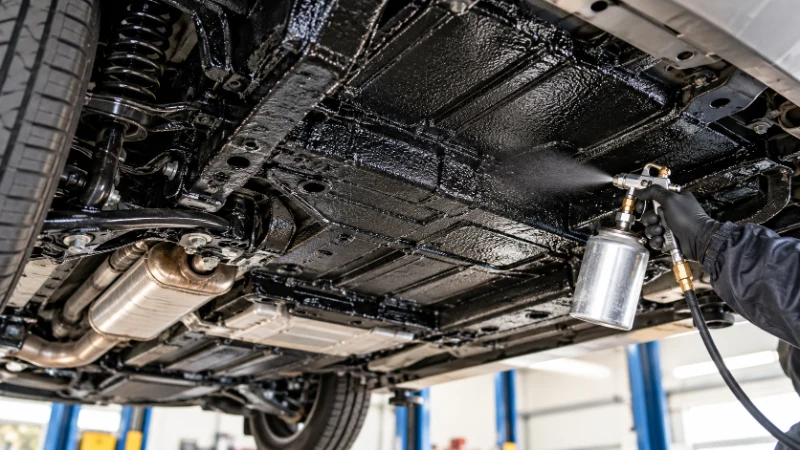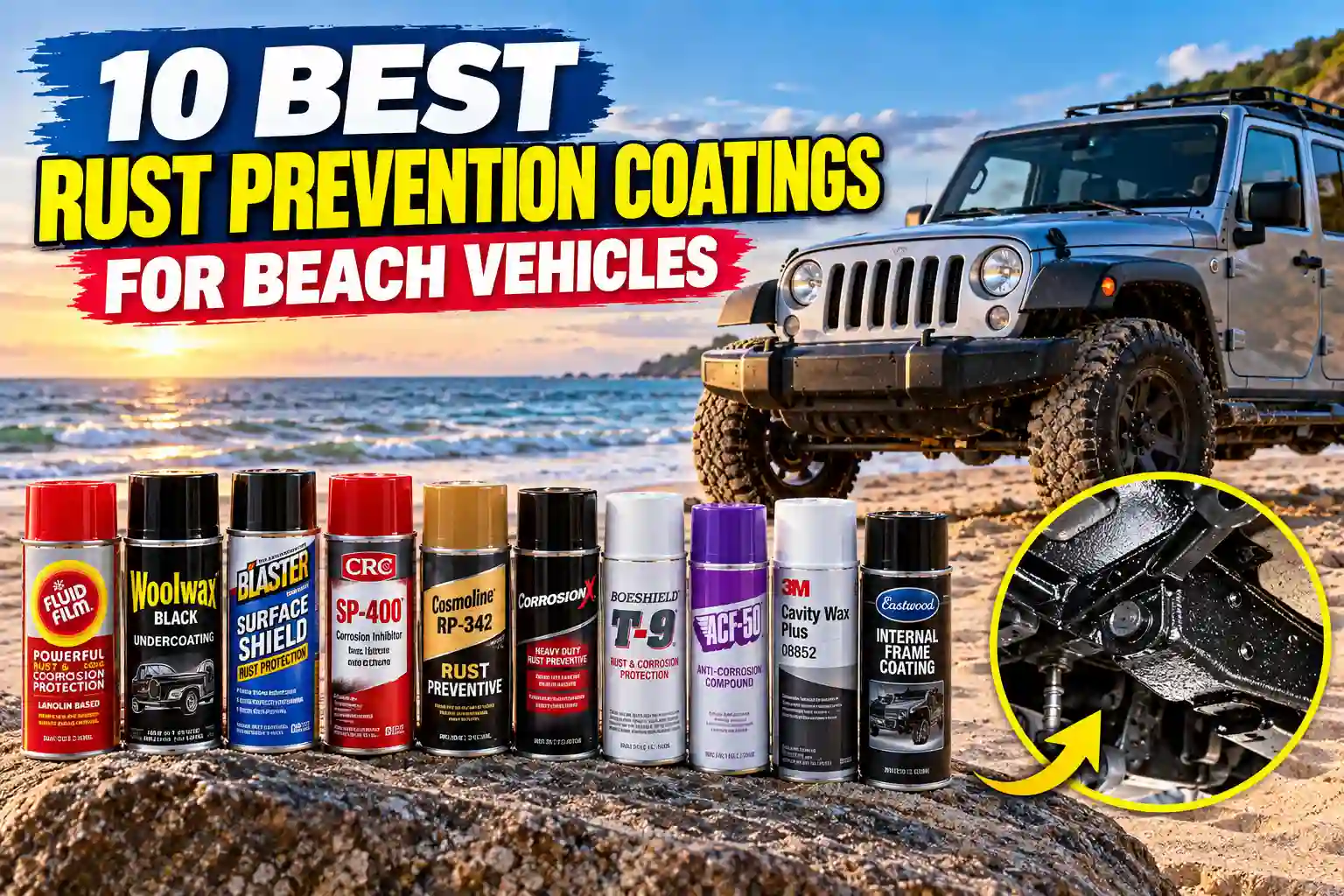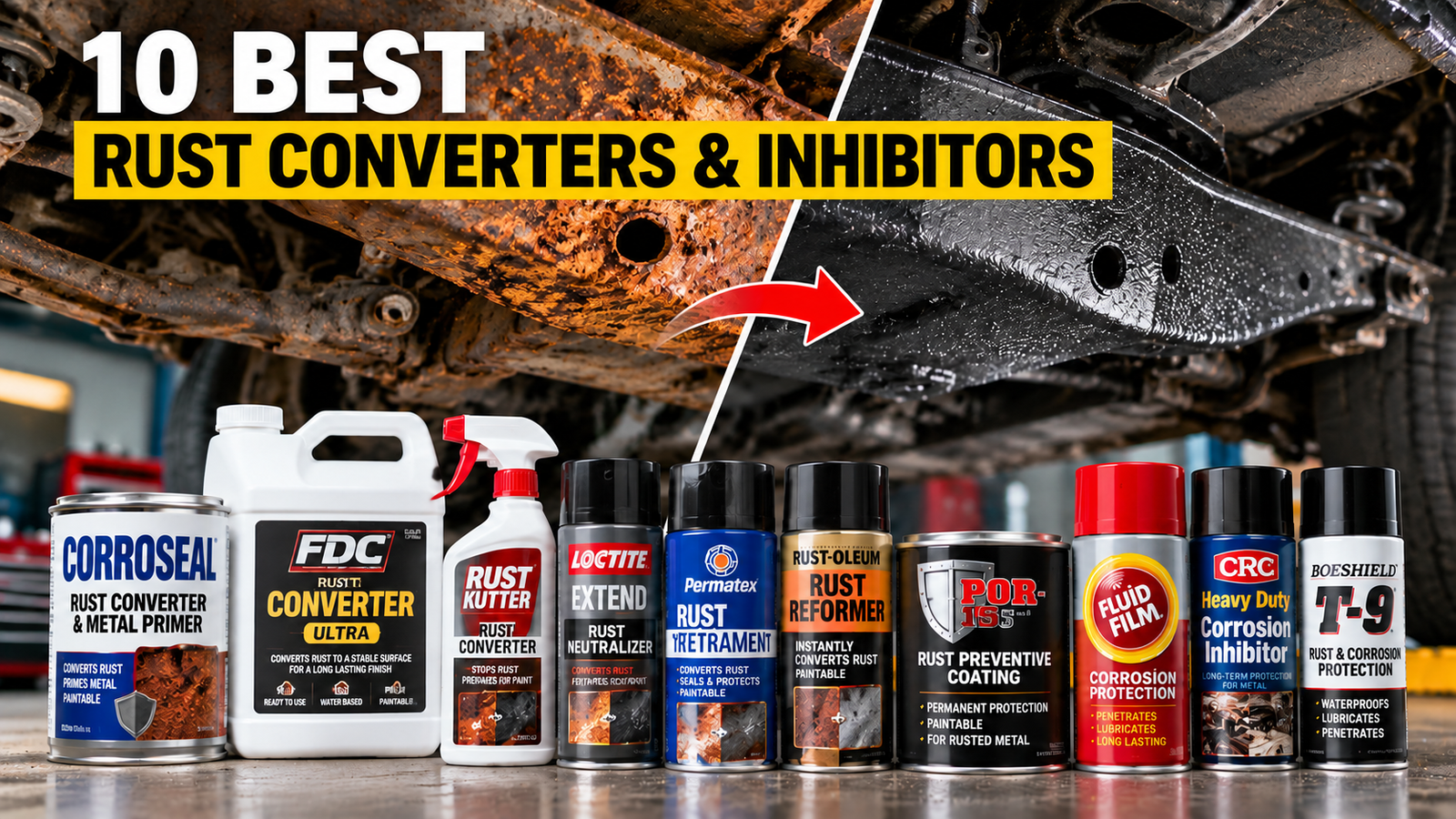
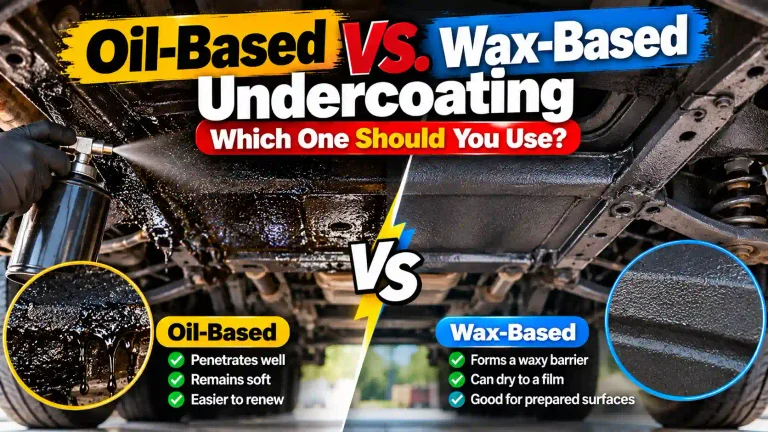
Oil-based vs. wax-based undercoating is a choice between protection systems, preparation requirements, and maintenance routines. A renewable soft film can suit a vehicle that needs regular corrosion-prevention attention. A suitable wax-based underbody coating can fit a more prepared barrier approach. Neither category automatically wins on every vehicle.
The names can also mislead. Some products contain combinations of oils, waxes, and corrosion inhibitors. Some wax coatings remain soft, while others dry into a more established film. Before buying, check what the exact product leaves behind and whether it is intended for exposed underbody surfaces or protected internal cavities.
This guide explains the practical differences, strengths, limitations, and buying decisions. It draws on manufacturer guidance rather than our own durability testing, with a focus on choosing protection for the actual condition and use of your car.
Oil-Based vs. Wax-Based Undercoating: Quick Comparison
The most useful undercoating comparison considers film behavior and application location rather than the ingredient name alone. Use this table to narrow the approach, then confirm the selected product’s technical instructions.
| Buying factor | Oil-based or soft-film treatment | Wax-based coating |
|---|---|---|
| Typical protection approach | Maintained film on approved surfaces | Waxy barrier; drying behavior varies by formula |
| Surface feel | Often remains oily, soft, or tacky | Can remain soft or become drier after application |
| Seams and cavities | Suitable penetrating products can support coverage | Dedicated cavity wax can also provide flow and wicking |
| Preparation | Cleaning, inspection, and removal of loose corrosion still matter | Many exposed-underbody products specify a carefully prepared substrate |
| Maintenance | Inspect film condition and renew as directed | Inspect coverage, damage, edges, and adhesion; repair as directed |
| Dirt and service work | Soft residue can collect dirt and transfer during handling | Residue and service access depend on film type and color |
| Future painting | Remove incompatible film before paint preparation | Paint compatibility varies; some wax coatings are non-paintable |
| Best purchasing question | Can I inspect and maintain this film? | Does this exact coating suit the substrate and application area? |
What Is Oil-Based Undercoating and How Does It Work?
Oil-based undercoating generally describes a corrosion-prevention treatment that leaves a maintained protective film on suitable surfaces. The exact formulation determines its penetration, moisture-displacement behavior, residue, compatibility, and renewal requirements.
Soft films protect through a maintained surface layer
A suitable corrosion-inhibiting film helps limit exposure at the treated surface. Some products are designed to penetrate seams or displace moisture, but the label should establish those functions. Do not assume an ordinary lubricant or household oil performs the same job as an automotive corrosion-prevention treatment.
The film is part of a maintenance plan. Areas exposed to road spray, washing, abrasion, or service work may lose coverage. Inspection tells you where protection needs attention instead of relying only on the date of the last application.
Oil-based and lanolin-based labels can overlap
Lanolin is wool-derived wax, yet familiar lanolin treatments are often discussed alongside soft oil-based rustproofing. Fluid Film, for example, describes a formulation involving wool wax, petroleum oils, and selected agents. Its place in a comparison depends on the resulting film and intended use, not one ingredient in isolation.
Check whether the chosen treatment remains non-drying and whether its directions support the area you want to protect. A soft lanolin film should not be grouped automatically with every drying wax underbody coating simply because both contain wax-related ingredients.
Penetration does not replace access and coverage
Even a product designed to creep needs to reach the area being treated. Spraying an opening does not prove complete protection inside a rail. Access, applicators, drain paths, and the vehicle’s construction affect coverage.
For enclosed areas, choose an approved cavity procedure rather than improvising with an exposed-underbody product. An applicator wand can help distribute material, but the right equipment still needs the right application plan.
What Is Wax-Based Undercoating and How Does It Work?
Wax-based undercoating uses a wax-containing film for corrosion protection, with different formulations for different locations. Exposed underbody wax, cavity wax, and thin waxy component protectants should not be treated as interchangeable products.
Exposed underbody wax requires a suitable foundation
Some wax-based underbody products are intended for clean, dry, properly prepared surfaces and need time to develop the specified film. Their instructions may define thickness, drying conditions, equipment, and any approved treatment over existing corrosion.
DINITROL’s 4941/CAR guidance, for example, specifies clean, dry, corrosion-free surfaces for direct application and describes a particular preliminary treatment when corrosion is present. That is a product-specific system, not permission to combine arbitrary oils and wax coatings.
Cavity wax is a separate application category
A cavity wax is intended for protected internal structures where access and flow matter. 3M describes Cavity Wax Plus as a non-hardening coating for appropriate inner body panels and structural enclosures. This is a clear example of why “wax” does not always mean a hard, brittle shell.
A cavity product’s suitability inside a rail does not automatically establish durability on an exposed wheel-well surface. Buy for the actual location. Where a vehicle repair procedure specifies cavity protection, use the required process and compatible material.
Wax films vary in color, residue, and paint compatibility
A wax-based coating may be clear, amber, beige, or black, depending on the formula. Color affects inspection and appearance but does not establish protection quality. An opaque finish can make the surface harder to inspect visually.
Paintability also varies. Some wax underbody products are explicitly non-paintable. If you expect future refinishing or repair, check removal and coating compatibility before application instead of discovering the limitation after spraying.
Oil-Based Undercoating Pros and Cons
Oil-based and other soft-film treatments make the most sense when you want a renewable corrosion-prevention approach and can maintain it. Their practical advantages come with residue, access, and renewal requirements that should influence the buying decision.
Advantages of a renewable soft-film treatment
- Suitable products can support maintenance on accessible metal without creating a hard cosmetic finish.
- Film condition can be reassessed and protection renewed under the product’s guidance.
- Approved penetrating formulations can be useful in seams and related locations.
- A recurring treatment routine can accommodate inspection after washing or service work.
These benefits depend on the exact formula and approved application. Choose a corrosion-protection product with documented directions rather than substituting an unrelated oil.
Limitations of oil-based and soft-film undercoating
- Oily or tacky residue can attract dirt and transfer during mechanical work.
- Dripping, odor, and overspray behavior vary by product and application amount.
- Exposed areas need inspection and may require renewal.
- Some materials, including certain non-oil-resistant rubber parts, may be incompatible.
- Future paintwork can require thorough film removal and preparation.
The strongest reason to skip this approach is an unwillingness to maintain it. A film chosen for renewability needs someone to inspect and renew it when necessary.
Wax-Based Undercoating Pros and Cons
Wax-based protection suits different jobs depending on whether the product is an exposed-underbody coating or a cavity treatment. Assess the actual film behavior, preparation, and location before deciding its benefits apply to your car.
Advantages of an appropriate wax-based coating
- A drying underbody wax can suit buyers who prefer a more established film after the required application period.
- Dedicated cavity wax can provide the specified flow and internal corrosion protection.
- Some product systems define preparation and layered treatment clearly.
- Available finishes let buyers consider appearance and inspectability alongside function.
These are reasons to investigate a suitable wax product, not proof that every wax outlasts every soft film. Coverage, exposure, and application quality still matter.
Limitations of wax-based undercoating
- Preparation and drying requirements can add time, equipment, and labor.
- Different wax products cannot be substituted freely between cavities and exposed surfaces.
- Damaged or poorly bonded film needs attention rather than another blind coat.
- Opaque finishes can make later visual inspection harder.
- Some wax coatings cannot be painted over and require a removal plan.
Choose the product only when its complete procedure fits your workspace or installer’s process. The bottle price is one part of the project cost.
Which Undercoating Is Better for Your Vehicle?
The best undercoating choice depends on metal condition, corrosion exposure, service access, and the maintenance you will actually perform. These common situations help turn the comparison into a practical purchase.
For a daily driver exposed to winter road salt
An approved soft-film program is worth considering if you want regular inspection and renewal. Ask how the installer treats seams, exposed areas, and protected cavities, and how maintenance follows washing and winter use.
A suitable wax system can also be considered when preparation and application are properly planned. Do not choose between the two solely on an advertised lifetime. Ask what areas are covered, what the product requires, and what follow-up inspection includes.
For a newer car with sound factory protection
Inspect the existing finish before adding anything. Confirm compatibility with factory coatings, vehicle materials, and manufacturer guidance. More material does not automatically improve protection if it creates poor adhesion, hides a problem, or obstructs drainage.
Choose a treatment that supports the existing system and addresses an identified exposure risk. A targeted plan may be more useful than coating every visible component because the car is new.
For an older vehicle with surface corrosion
Determine whether the corrosion is superficial or has weakened the metal. Remove unstable material and follow the chosen system’s preparation procedure. A soft film can fit a maintained protection approach on suitable components; a wax barrier needs the substrate and preliminary treatment specified by its maker.
Do not cover heavy scale, perforation, or suspect structural parts as a cosmetic fix. Protection starts after the vehicle’s condition has been assessed, not instead of that assessment.
For a restoration or refinishing project
Choose the repair and paint system first. Oil and wax residues can interfere with later finishing, so do not apply a maintenance inhibitor immediately before a planned coating job unless the system expressly supports it.
Ask the repairer how exposed underbody protection and internal cavity treatment will be restored after repairs. The answer may involve different products for different areas rather than one oil-or-wax decision for the entire vehicle.
Undercoating Buying Guide: Preparation, Cost, and Maintenance
A useful undercoating purchase includes the application process and follow-up care, not only the chemical. Compare these details before choosing a DIY product or paying for a professional service.
Ask what preparation is included
Find out whether the service removes dirt, loose scale, and incompatible old material. Ask how the surface is dried or otherwise prepared under the product instructions. A quick spray over contamination is a different job from a defined protection system.
If old coating is lifting, ask how that area will be assessed before new treatment is applied. Do not let an attractive black finish stand in for an explanation of what is underneath it.
Separate underbody coverage from cavity treatment
Ask which parts are included and which require separate access. Confirm that existing drain holes remain functional. For enclosed structures, ask how the installer follows the vehicle’s procedure and distributes the appropriate cavity material.
Do not drill access holes casually. Follow vehicle-specific repair guidance or use a qualified installer to plan access and sealing where permitted.
Compare complete costs rather than container prices
For DIY work, include applicators, masking, cleaning supplies, protective equipment, lifting arrangements, and the correct spray equipment. For professional work, compare preparation, coverage, material, inspection, and renewal—not just the starting quote.
A less expensive first application can become inconvenient if the maintenance plan does not fit your routine. A more involved coating job also needs justification through compatible preparation and coverage.
Get a specific inspection and renewal plan
There is no reliable universal interval for every oil or wax product. Krown recommends annual treatment within its own program; other systems have their own guidance. Use the selected product’s schedule together with inspection of its actual condition.
Ask what happens after underbody washing, off-road abrasion, or mechanical repairs. The useful plan explains when exposed areas need renewed coverage and how damaged film is repaired.
Common Undercoating Mistakes That Reduce Protection
Undercoating mistakes often involve preparation, compatibility, or coverage rather than choosing the wrong ingredient category. Avoid these errors so your purchase supports a maintainable protection system.
- Spraying over grease, loose rust, or lifting old coating without assessment.
- Assuming all wax coatings harden or all oil treatments behave alike.
- Using cavity wax as an automatic substitute for exposed-underbody protection.
- Layering unrelated products without documented compatibility.
- Coating brake friction surfaces, tires, belts, hot exhaust parts, sensors, or other excluded components.
- Blocking drains or applying excessive material around sensitive parts.
- Judging the result by color instead of coverage and substrate condition.
- Skipping follow-up inspection after application.
If working beneath the car, use properly rated lifting equipment and supports on a suitable surface. Never work under a vehicle held only by a jack. Follow the product’s ventilation, handling, and protective-equipment instructions during application.
Final Buying Decision: Oil-Based or Wax-Based Undercoating?
Choose an approved oil-based or other renewable soft-film treatment when you want an inspectable maintenance approach and will follow its renewal requirements. Choose a suitable wax-based underbody system when the substrate, preparation, drying process, and intended exposure support that coating.
For internal cavities, choose the correct cavity-treatment product and procedure separately. A non-hardening cavity wax and a drying exposed-underbody wax solve different application problems despite sharing the wax label.
Before buying, confirm the metal is sound, the product suits the location, and the complete process fits your budget. The better choice is the system you can apply correctly and maintain—not the category with the longest claim on the label.
Oil-Based vs. Wax-Based Undercoating FAQs
These undercoating FAQs address rust, preparation, renewal, and compatibility. Use them to narrow the decision, then follow the exact product and vehicle instructions for the job.
Is oil-based undercoating better than wax-based undercoating?
Neither is universally better. A renewable soft film can suit recurring maintenance, while an appropriate wax system can suit a prepared barrier or cavity application. Metal condition, location, and follow-up care determine which approach makes sense.
Does wax-based undercoating always harden?
No, some wax products remain non-hardening. Others form a drier film after application. Check the product’s technical information rather than assuming the ingredient name establishes its behavior.
Can I apply undercoating over rust?
Only when the exact product system allows it after the required preparation. Loose scale and contamination still need attention, and weakened metal requires assessment or repair. Coating does not restore missing metal or structural strength.
Can I apply wax undercoating over an oil-based treatment?
Do so only when the manufacturers approve the sequence. Residual oil can interfere with bonding or finishing. Some systems specify a particular preliminary treatment, but that does not authorize arbitrary product combinations.
How often should oil-based undercoating be renewed?
Follow the specific product or service program and inspect actual coverage. Exposure, washing, abrasion, and mechanical work affect the film. Do not assume every product shares the same annual or multi-year interval.
Is cavity wax the same as exposed underbody wax?
No, they are application categories with different demands. Cavity wax is designed for suitable internal structures, while exposed-underbody protection must suit road exposure. Confirm the exact product’s intended location.
Will undercoating stop rust permanently?
No coating should be treated as a permanent rust guarantee. Preparation, access, exposure, and maintenance affect results. Continue inspecting the vehicle and address new corrosion or coating damage when found.
Can undercoating damage rubber or plastic parts?
Some formulations can affect incompatible materials. For example, certain soft-film products warn about non-oil-resistant rubber. Follow material restrictions and keep treatment off prohibited components.