
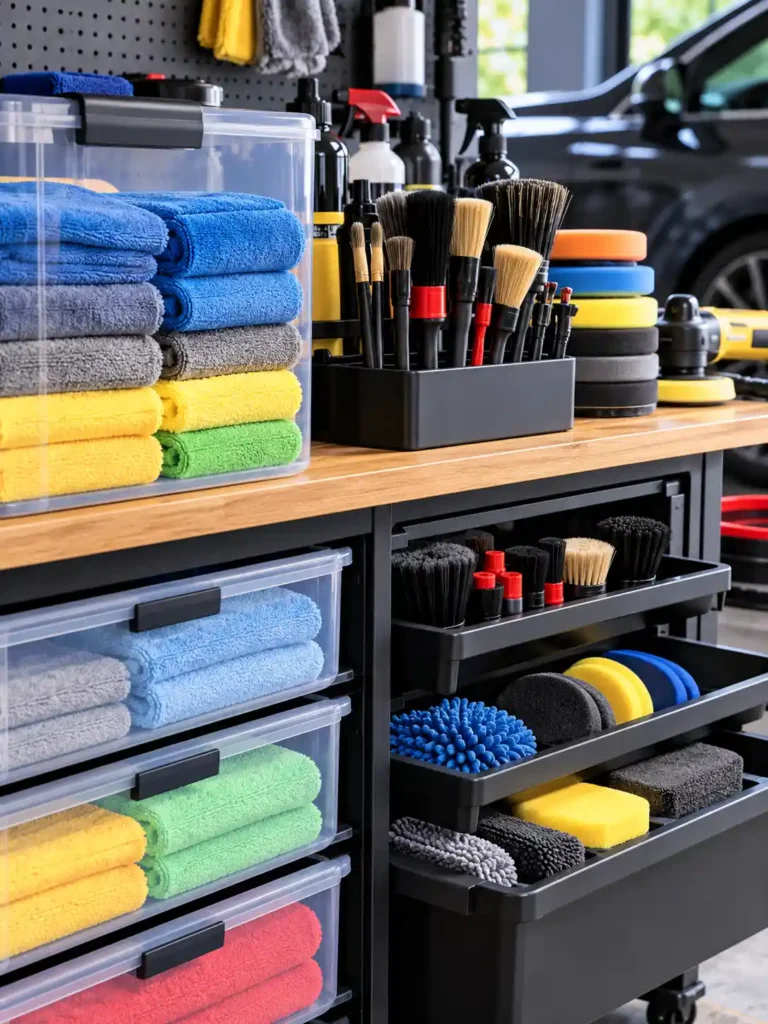
Knowing how to store detailing towels, brushes, and tools properly helps keep your supplies clean, organized, and ready for the detailing session. Proper storage reduces dust, moisture-related odors, damaged bristles, and cross-contamination between tools used on wheels, paint, glass, and interiors.
Start by washing reusable towels and cleaning brushes according to their manufacturers’ instructions. Let every item dry before placing it in a covered container or drawer. Store microfiber towels in separate groups for paint, glass, interiors, and wheels, and keep wheel-cleaning tools away from paint-safe accessories. Store brushes without bending their bristles, and keep polishing pads in clean, dry compartments that prevent compression.
You do not need a detailing workshop to organize supplies. A few labeled bins, a brush holder, and separate chemical storage can make your setup easier to maintain.
This guide explains how to protect each item, prevent contamination, and build a car detailing storage system.
Why Is Proper Storage Important for Car Detailing Supplies?
Proper storage protects your detailing equipment between uses and makes it easier to choose the right tool for each cleaning task. Even when supplies have been cleaned carefully, they can collect dust, become contaminated, or deteriorate if they are stored incorrectly.
Protect Microfiber Towels From Dust and Contamination
Microfiber towels are frequently used on delicate surfaces such as automotive paint, glass, and glossy interior trim. Dust, grit, and residue transferred from other cleaning tools can reduce their usefulness and potentially scratch a surface during wiping.
Storing clean towels in covered containers or clean drawers helps limit exposure to airborne dust and workshop debris.
Keep Tools Separate by Intended Use
A brush used on wheels and tires can collect brake dust, road grime, and other abrasive contamination. Using that same brush on delicate interior trim or painted surfaces can transfer unwanted dirt.
Separating tools by purpose makes it easier to avoid cross-contamination and maintain consistent detailing results.
Prevent Moisture-Related Problems
Damp towels, brushes, and applicators should not be placed directly into closed storage containers. Trapped moisture can contribute to unpleasant odors, mildew, and material deterioration.
Allow cleaned equipment to dry completely before storing it in covered containers. This is especially important in humid environments where towels and brush handles may take longer to dry.
Extend the Useful Life of Your Equipment
Microfiber fibers, brush bristles, foam applicators, and polishing pads can deteriorate when exposed to excessive heat, unsuitable chemicals, dirt, or unnecessary pressure.
Appropriate storage reduces avoidable damage and helps you get more use from the supplies you already own.
How to Prepare Detailing Towels, Brushes, and Tools Before Storage
The best storage system begins with proper preparation. Before putting your supplies away, determine whether each item is clean, dry, and suitable for reuse.
Step 1: Separate Clean and Used Supplies
Set aside clean items that are ready for the next detailing session. Place used towels, dirty brushes, contaminated applicators, and equipment requiring maintenance in separate areas.
Never put a dirty towel into a container of clean microfiber, even if the towel appears suitable for another task.
If a towel has been used on wheels, tires, or heavily contaminated surfaces, keep it separate from towels reserved for paintwork.
Step 2: Clean Items According to Their Material
Wash microfiber towels according to their manufacturer’s instructions. Remove dirt and residue from reusable brushes, applicators, and polishing pads using suitable cleaning methods.
Do not assume that every item can be cleaned with the same detergent or chemical. Some brush materials, foam pads, and detailing accessories require specific care.
For microfiber, The Rag Company recommends washing with suitable detergent, avoiding fabric softener and chlorine bleach, and drying at low heat or by air drying. Follow the instructions supplied with your own towels.
Step 3: Allow Everything to Dry Completely
Drying is essential before storage, particularly when using covered plastic bins or containers.
Hang towels or lay them out in a clean, well-ventilated area. Position cleaned brushes so moisture can drain away from the bristles and handles where appropriate.
Inspect seams, thick drying towels, foam pads, and brush bases carefully because these areas may retain moisture after the surface appears dry.
Step 4: Inspect Items for Damage
Before storing supplies, check for loose stitching, damaged microfiber fibers, cracked handles, bent bristles, deteriorated foam, and damaged electrical cords.
Separate any item that needs cleaning, repair, or retirement. Do not return a contaminated or damaged tool to a storage section reserved for paint-safe equipment.
How to Store Microfiber Detailing Towels
Microfiber towels need a clean, dry storage environment because they are used for tasks ranging from drying paint to cleaning glass and wiping away polish. The best system keeps towels protected while allowing you to identify the right towel quickly.
1. Sort Microfiber Towels by Purpose
Start by dividing your towels into groups according to their intended use. You do not need a separate container for every single towel type, but items with substantially different contamination risks should remain separated.
A practical towel organization system includes:
- Paint and exterior detailing towels.
- Car drying towels.
- Glass-cleaning towels.
- Interior cleaning towels.
- Wheel and tire towels.
- Polishing, wax, and sealant removal towels.
- General-purpose and heavily used utility towels.
The most important separation is between clean towels used on delicate surfaces and towels exposed to heavy contamination.
For example, a wheel towel should not be placed in the same loose stack as a premium paint-drying towel.
2. Make Sure Towels Are Completely Dry
Never put damp microfiber towels into a closed bin or airtight bag for storage.
Even a towel that feels dry on the surface may retain moisture in thicker sections or folded layers. In humid conditions, give towels extra drying time and inspect them before putting them away.
If a towel smells musty or shows visible contamination, do not place it with clean supplies. Rewash it if appropriate and inspect it before reuse.
3. Use Covered Storage Bins or Drawers
Covered plastic storage bins, clean cabinets, and drawers are practical options for storing microfiber towels. They help prevent dust, hair, workshop debris, and accidental spills from contaminating clean supplies.
Choose containers that are easy to clean and large enough to hold towels without excessive compression.
Transparent containers can be especially useful because you can identify the contents without opening every lid. In dusty garages or shared storage areas, fitted lids provide an additional layer of protection.
A tightly sealed container is suitable for fully dry towels when needed, but it should never be used to trap moisture inside recently washed or damp supplies.
4. Fold Towels Neatly Without Overpacking
Fold towels into manageable sections and place them in their designated storage area.
Avoid cramming too many towels into one container. Overpacked bins make it difficult to remove individual towels without disturbing or contaminating the rest.
For regularly used towels, arrange them so the cleanest or most frequently needed items are accessible near the top.
You can also store larger drying towels separately from smaller glass or interior towels to make selection faster.
5. Label Every Storage Container
Labels reduce the chance of picking the wrong towel during a detailing session.
Useful labels include:
- Paint Safe Towels.
- Drying Towels.
- Glass Towels.
- Interior Towels.
- Wheel and Tire Towels.
- Utility Towels.
- Used Towels to Wash.
Color coding can make the system even easier to use. For example, you might assign blue towels to glass, yellow towels to interiors, and darker towels to wheels.
These colors are only examples, not universal standards. Choose your own system and keep it consistent.
6. Store Microfiber Away From Household Laundry
Keep your car detailing microfiber separate from ordinary household towels, especially those that shed lint.
Lint can transfer to microfiber and interfere with cleaning glass or other surfaces where a lint-free finish is important.
If you use a dedicated cabinet or drawer for detailing supplies, store paint-safe microfiber in a clean section away from household cleaning materials.
7. Keep Clean Towels Away From Chemicals and Dusty Equipment
Never place clean towels next to leaking chemical bottles, oily tools, or dirty brush heads.
Store towels in a clean area where splashes, residue, and airborne debris are unlikely to reach them.
If a container becomes dusty or contaminated, clean and dry it before returning freshly washed towels.
How to Store Detailing Brushes Properly
Detailing brushes come in different shapes and materials for cleaning wheels, tires, upholstery, vents, emblems, and other areas. Proper storage protects their bristles and helps prevent contamination from spreading between surfaces.
1. Clean Brushes After Use
Remove dirt, dust, and product residue before putting brushes away.
Use a compatible cleaning method based on the brush material and the products it has contacted. Rinse reusable brushes when appropriate, and avoid leaving cleaning chemicals embedded in the bristles.
Brushes used with waxes, dressings, or sticky residue may require different care from brushes used for loose interior dust.
2. Dry the Bristles Completely
After cleaning, shake off excess water and allow the bristles to dry in a well-ventilated place.
Position the brush so moisture can drain away without collecting at the base of the bristles or inside the handle.
Do not put a wet brush into a closed drawer or sealed tool case. Trapped moisture may contribute to unpleasant odors and damage some handles or brush materials over time.
3. Store Brushes Without Bending the Bristles
Avoid putting heavy equipment on top of brushes or pushing their bristles tightly against cabinet walls.
Prolonged compression can deform some bristle types and make the brush less effective.
A brush rack, drawer organizer, wall-mounted holder, or compartmentalized storage box can help keep brushes in position.
For brushes that come with protective covers, follow the manufacturer’s instructions and make sure the brush is dry before covering it.
4. Keep Wheel Brushes Separate From Interior Brushes
Use clearly marked containers or separate rack sections for wheel and tire tools, exterior brushes, and interior detailing brushes.
Wheel-cleaning equipment may collect abrasive dirt, brake dust, and road grime. Keeping it away from interior brushes and paint-contact tools reduces the risk of cross-contamination.
A simple three-section system works well for many home detailers:
- Interior and delicate surface brushes.
- Exterior bodywork and general cleaning brushes.
- Wheel and tire brushes.
Adjust the categories to match your equipment and detailing routine.
5. Use a Dedicated Brush Holder
A brush holder keeps frequently used tools easy to reach and reduces clutter on your workbench.
For a small collection, a clean organizer with separate compartments may be enough. Larger collections may benefit from a wall-mounted rack or a dedicated drawer system.
Keep the holder itself clean and dry. A holder that collects dirt, chemical residue, or standing water can contaminate the brushes stored in it.
How to Store Polishing Pads and Applicators
Polishing pads and applicators require more care than ordinary hand tools because product residue, dust, and deformation can affect how they perform during paint correction or protection application.
Store these items only after cleaning them appropriately and allowing them to dry completely.
1. Separate Pads by Product and Purpose
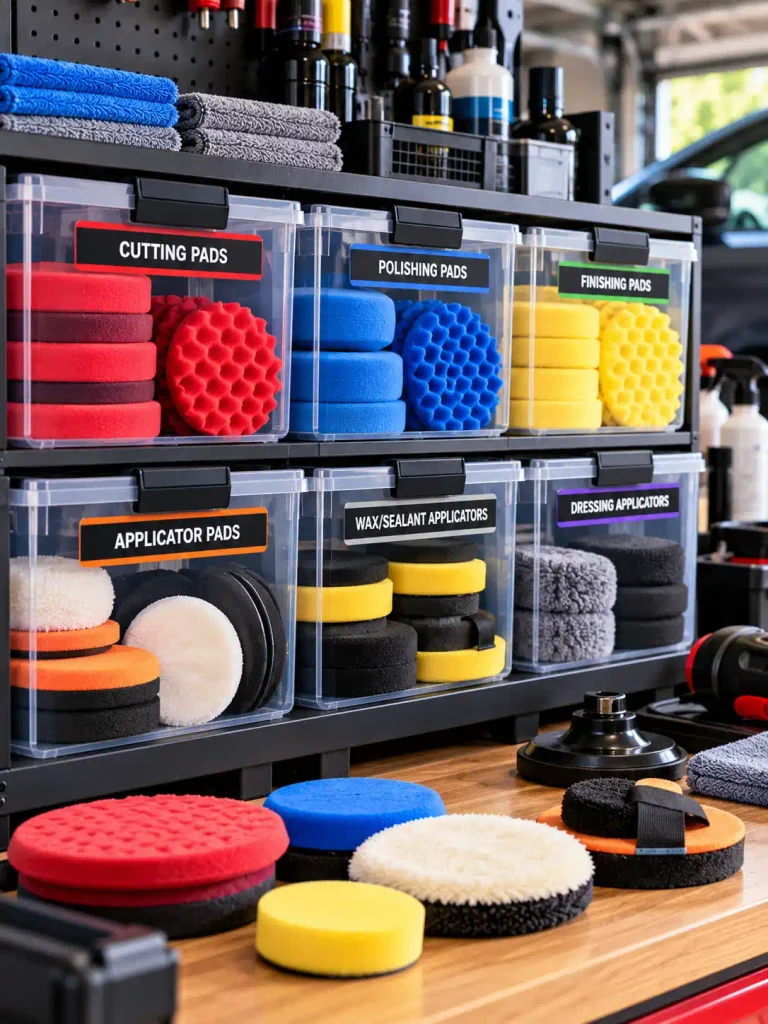
Create separate storage areas for cutting pads, polishing pads, finishing pads, and protective product applicators.
This makes it easier to choose the correct pad for a particular detailing stage and reduces accidental mixing of products.
Label storage compartments if you use several pad types with similar colors or shapes.
2. Remove Residue Before Storage
Clean reusable pads according to the manufacturer’s instructions.
Remove as much excess polish, compound, wax, or other product residue as the approved cleaning method permits. Avoid storing a pad covered in wet product residue when it can be cleaned and reused.
Some products, particularly certain ceramic coatings, can harden on applicators or towels. Follow the coating manufacturer’s directions for the safe handling, reuse, or disposal of contaminated materials.
3. Let Pads Dry in a Suitable Position
Dry reusable pads completely before placing them in closed containers.
Avoid stacking damp foam pads tightly because airflow between layers may be limited. Keep them away from direct heat and follow the equipment manufacturer’s guidance for drying.
4. Store Pads Flat or in Dedicated Compartments
Use clean pad organizers, shelves, or compartmentalized boxes to keep pads separated.
Avoid putting heavy items on top of foam pads, which may deform the material.
For machine polishing pads, keep the hook-and-loop backing clean and prevent it from collecting loose debris that could affect attachment during use.
How to Store Other Car Detailing Tools and Equipment
Larger tools such as polishers, vacuums, extractors, pressure washers, extension cords, and spray bottles also need an organized storage location. Their storage requirements depend on their construction, power source, and manufacturer instructions.
1. Store Polishers and Electrical Tools Safely
Wipe off product residue and dust after use. Inspect electrical cords, plugs, switches, attachments, and housings for damage.
Disconnect equipment from the power supply before cleaning or performing routine maintenance, following the manufacturer’s instructions.
Coil cables loosely rather than wrapping them tightly around equipment in a way that stresses the cable. Store polishers where they are unlikely to fall or have heavy equipment placed on top of them.
Remove and clean compatible backing plates or accessories when recommended.
2. Organize Vacuum Attachments
Keep vacuum hoses, crevice tools, brush attachments, and other accessories together in a designated drawer or storage compartment.
Remove hair, dust, and loose debris after use. Clean attachments as permitted by the vacuum manufacturer’s guidance, and dry any washed components before putting them away.
A compartmentalized container can prevent smaller attachments from disappearing among towels and other supplies.
3. Store Spray Bottles Upright
Keep reusable detailing spray bottles upright in a stable organizer or cabinet.
Make sure bottles are clearly labeled and that their caps, sprayers, and seals are in good condition.
Never store unidentified liquids in unmarked bottles. When transferring a product is permitted, follow the manufacturer’s labeling instructions and all relevant safety guidance.
If a bottle leaks, clean the storage area according to the product’s instructions before returning other supplies to that location.
4. Protect Tools From Dust and Impact
Cabinets, drawers, toolboxes, and storage cases can protect equipment from workshop dust and accidental impact.
Choose an arrangement that prevents delicate attachments from rubbing against sharp metal tools or heavy equipment.
For frequently used supplies, a small detailing cart can keep the equipment accessible while allowing you to move between the garage and the vehicle.
5. Follow Instructions for Water-Based Equipment
Pressure washers, wet-dry vacuums, and extractors require storage practices specific to their design.
Empty or drain reservoirs as directed, clean filters when appropriate, and allow washable components to dry according to the manufacturer’s instructions.
If the equipment will be exposed to freezing temperatures, check the manual for winter storage requirements. Water remaining inside some equipment can cause damage when it freezes.
How to Store Car Detailing Chemicals Safely
Detailing chemicals should be organized separately from clean towels, brushes, and applicators. Proper chemical storage helps prevent accidental spills, contamination, and exposure to products that may be incompatible with one another.
1. Follow the Product Label
Read the storage instructions on every cleaner, dressing, polish, coating, and other detailing product.
Temperature limits and storage requirements vary by formulation. Do not assume that all automotive chemicals can be stored in the same conditions.
Keep safety data sheets available for products that provide them, especially when handling concentrated or professional-use chemicals.
2. Keep Products in Properly Labeled Containers
Retain the original container and label whenever possible. If the manufacturer permits transferring a product, use an appropriate compatible container and follow labeling requirements.
Do not put detailing chemicals into food or drink containers.
Keep caps closed securely and inspect containers periodically for leakage, swelling, or deterioration.
3. Separate Chemicals From Clean Textile Storage
Do not store chemicals inside the same bin as paint-safe microfiber towels or clean applicators.
A leak or spill can contaminate fabrics and make them unsuitable for delicate detailing tasks.
Use a separate shelf, cabinet, or tray for chemicals, with appropriate spill containment where required.
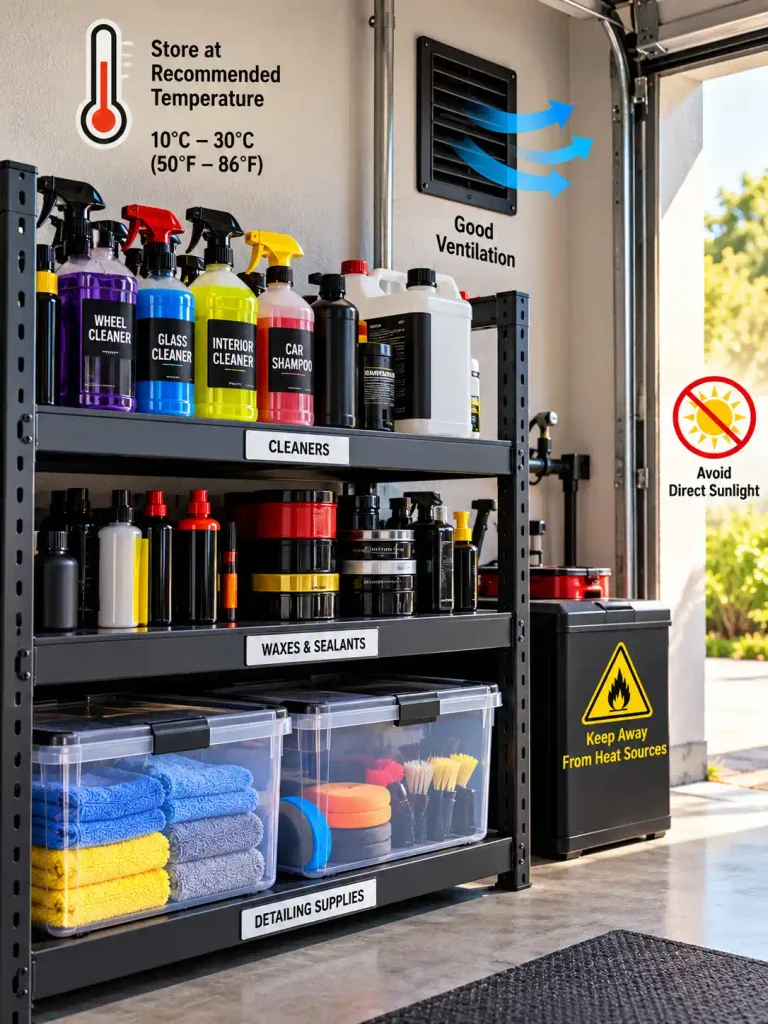
4. Control Heat, Sunlight, and Ventilation
Store products in the temperature range stated on the label, away from conditions that could degrade the product or container.
Avoid exposing chemicals to direct sunlight or excessive heat when the manufacturer advises against it. Products with special ventilation, ignition-control, or separation requirements should be handled accordingly.
Do not place flammable products near flames, sparks, or other ignition sources.
5. Keep Products Away From Children and Pets
Use a secure storage location that prevents unauthorized access to potentially hazardous chemicals.
Keep containers upright, close their lids after use, and clean spills promptly using the instructions supplied with the product.
A neat detailing shelf is useful, but safety and compatibility must take priority over appearance.
How to Set Up a Home Car Detailing Storage System
An effective home detailing station keeps supplies organized by task while providing separate areas for clean towels, dirty equipment, and chemicals. You can set up a useful system in a garage, workshop, utility area, or another suitable space without purchasing an expensive cabinet system.
For a more complete setup plan, read our guide on how to set up a home car detailing station.
Use a Dedicated Shelf or Cabinet for Clean Supplies
Reserve a clean cabinet, shelf, or drawer for dry microfiber towels and clean accessories.
Use covered containers for supplies that need additional protection from dust. Keep frequently used items accessible and less frequently used equipment in a separate section.
Create Separate Zones for Different Tasks
Divide the storage area according to the main detailing activities you perform.
A practical arrangement includes:
- Washing and drying supplies.
- Interior detailing tools.
- Wheel and tire cleaning tools.
- Paint correction and polishing equipment.
- Clean microfiber towels and applicators.
- Chemical storage.
- Used tools awaiting cleaning.
The purpose is not to create unnecessary complexity. It is to make the correct tool easy to find and reduce the chance of using contaminated supplies on delicate surfaces.
Add Labels and Visual Organization
Clearly marked bins and drawer labels reduce time spent searching for supplies.
Transparent containers allow you to see what is inside, while color-coded labels can distinguish different tool categories.
Choose a labeling system you can maintain consistently as your collection grows.
Choose Storage Based on Available Space
A small collection may need only a shelf, two or three covered bins, and a brush organizer.
A larger setup may benefit from a cabinet, rolling cart, pegboard, or dedicated tool drawers.
For ideas on which supplies to organize first, see our DIY car detailing checklist for beginners.
How to Store Detailing Supplies in a Humid Climate
Humidity deserves special attention when storing detailing supplies in garages, outdoor storage areas, or other spaces with limited climate control. Moisture can take longer to evaporate from towels, brush bases, and foam accessories in humid conditions.
Allow Extra Drying Time
Do not assume a towel is dry simply because the outer surface feels dry.
Check thick towels, folded sections, and brush bases before putting them into a covered container. If moisture remains, allow additional drying time in a well-ventilated area.
Choose a Clean, Dry Storage Location
Keep supplies away from leaking roofs, damp walls, standing water, and areas where rain can enter.
Avoid placing towel containers directly on a damp floor. Shelves or raised cabinets can help keep equipment away from floor moisture and dirt.
Use Closed Containers Only After Items Are Dry
A covered plastic bin helps prevent dust from entering, but it should not be used to conceal damp supplies.
Dry everything completely before closing the container. Opening the storage area occasionally to inspect its condition can also help you detect moisture problems early.
Desiccant products may be useful in some storage environments when used appropriately, but they are not a substitute for drying towels, brushes, and tools before storage.
Inspect Supplies Regularly
Check for musty odors, visible mold, damaged packaging, rust, and other signs of deterioration.
If a towel or tool appears contaminated, remove it from the clean storage area and assess whether it can be properly cleaned or should be discarded.
How to Store Detailing Supplies for Mobile or On-the-Go Work
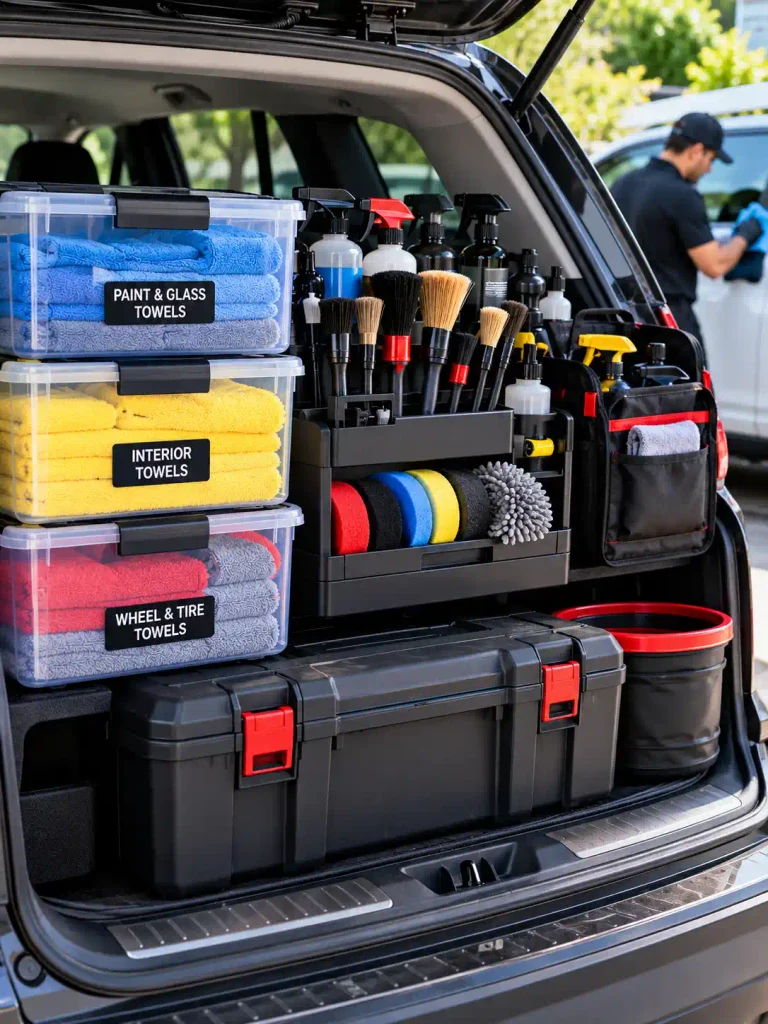
Mobile detailers and car owners who transport their own cleaning equipment need a storage system that protects supplies during movement. Containers should prevent tools from shifting, spilling, or contacting clean towels unnecessarily.
Use Lidded Bins for Towels
Keep fully dry towels in clean containers with secure lids.
Separate paint-safe towels from wheel towels and utility cloths, and secure the containers so they do not slide around during transport.
Secure Brushes and Small Tools
Use brush organizers, tool bags, or compartmentalized cases to prevent brush heads and delicate accessories from being crushed.
Make sure dirty tools are kept separate from clean ones during transport.
Keep Chemicals Upright and Secure
Transport chemicals according to their labels and applicable safety requirements.
Use a stable container or suitable organizer to reduce the risk of tipping and leakage. Keep chemicals separate from clean towels and applicators.
Before returning supplies to their home storage location, inspect for spills and allow any washed or wet equipment to dry completely.
Common Mistakes to Avoid When Storing Detailing Tools
A few simple storage mistakes can make even a well-equipped detailing setup harder to use. The following habits are worth avoiding if you want your supplies to remain clean and serviceable.
Storing Damp Towels in Closed Bins
Damp towels can develop unpleasant odors or other moisture-related problems when left in closed containers.
Always allow microfiber to dry completely before putting it away.
Mixing Wheel Towels With Paint-Safe Towels
Wheel and tire towels may contain abrasive contamination that you do not want on delicate paint or glass.
Keep them in separate, clearly labeled containers.
Leaving Brushes in a Wet Bucket
A brush left in standing dirty water may remain contaminated and difficult to dry properly.
Clean reusable brushes after use and store them in a suitable drying position.
Stacking Heavy Items on Foam Pads
Pressure from heavy tools or containers can deform some polishing pads and applicators.
Keep these items in dedicated compartments where they are not compressed by other equipment.
Leaving Chemicals Unlabeled
Unidentified liquids create unnecessary risks and make proper storage more difficult.
Retain product labels and follow the manufacturer’s instructions for containers and storage conditions.
Storing Everything in One Large Container
A single mixed storage box makes it harder to keep clean supplies separate from dirty or contaminated equipment.
Even a basic two-zone arrangement, with clean supplies in covered bins and used equipment in a separate area, is an improvement.
How Often Should You Clean and Reorganize Detailing Supplies?
The appropriate maintenance schedule depends on how frequently you detail vehicles and how much contamination your tools encounter. A simple routine makes it easier to keep supplies ready without allowing cleaning and organization to become a major task.
After Every Detailing Session
Separate used towels, clean reusable brushes as needed, remove product residue from tools, and inspect equipment for visible damage.
Allow wet equipment to dry before storing it.
During Routine Storage Checks
Inspect towel bins, brush organizers, and tool drawers for dust, moisture, chemical spills, and misplaced supplies.
Clean storage containers when necessary and return items to their designated locations.
When Supplies Become Heavily Contaminated
Review whether a towel, brush, or applicator can be safely cleaned and reused for its original purpose.
Some heavily contaminated items may need to be reassigned to less sensitive tasks. Others, particularly items with hardened coating residue or damage that cannot be corrected, may need to be retired.
The goal is to maintain a storage system that supports safe, consistent detailing instead of simply keeping everything out of sight.
Frequently Asked Questions About Storing Detailing Towels, Brushes, and Tools
1. What Is the Best Way to Store Microfiber Towels for Car Detailing?
The best way to store microfiber towels is to wash them properly, let them dry completely, and organize them in clean, covered bins or drawers. Keep paint-safe, glass, interior, and wheel towels separate to prevent cross-contamination and protect delicate car surfaces.
2. Can You Store Microfiber Towels in Airtight Containers?
Yes, you can store microfiber towels in airtight containers if they are completely clean and dry. Airtight storage helps protect them from dust and debris, but sealing damp towels can trap moisture and cause unpleasant odors.
3. How Should You Store Car Detailing Brushes?
Clean detailing brushes after use and allow their bristles to dry completely before storage. Keep them in a brush holder, organizer, or separate container where the bristles will not bend or become crushed. Store wheel brushes separately from interior and paint-safe brushes.
4. How Do You Keep Detailing Towels Clean and Dust-Free?
Store clean detailing towels in covered plastic bins, clean drawers, or closed cabinets. Keep them away from dusty workbenches, dirty tools, leaking chemical bottles, and household laundry that may shed lint. Clean the storage containers regularly to maintain a dust-free environment.
5. How Should You Store Polishing Pads After Use?
Clean reusable polishing pads according to the manufacturer’s instructions and allow them to dry completely. Store cutting, polishing, and finishing pads in separate compartments or a dedicated organizer. Avoid stacking heavy items on the pads because excessive pressure can deform the foam.
6. Can You Store Car Detailing Supplies in a Garage?
Yes, a garage is suitable for storing car detailing supplies if the area is clean, dry, and protected from excessive heat, dust, and moisture. Use covered containers for clean towels, keep chemicals separate, and allow all towels, brushes, and reusable accessories to dry completely before storage.
7. How Often Should You Replace Microfiber Detailing Towels?
Replace microfiber detailing towels when they become damaged, rough, persistently contaminated, or unsuitable for delicate surfaces. Towels that remain usable may be reassigned to general cleaning tasks, but heavily contaminated or damaged towels should not be used on automotive paint or glass.
Final Thoughts
Learning how to store detailing towels, brushes, and tools properly helps maintain an organized workspace and protects the equipment you depend on for car care.
Start by cleaning your reusable supplies and allowing them to dry completely. Sort microfiber towels by purpose, keep wheel-cleaning equipment separate from paint-safe tools, protect brush bristles from deformation, and store polishing pads in dedicated compartments.
Use covered bins and labeled drawers to protect clean supplies from dust. Store chemicals separately and follow their product-specific safety instructions. If you work in a humid environment, pay particular attention to drying and inspect your storage areas regularly for signs of moisture.
You do not need an expensive detailing workshop to put these habits into practice. A few clean storage bins, a suitable brush holder, and a consistent organization system can make your next detailing session easier and help keep your tools ready for use.