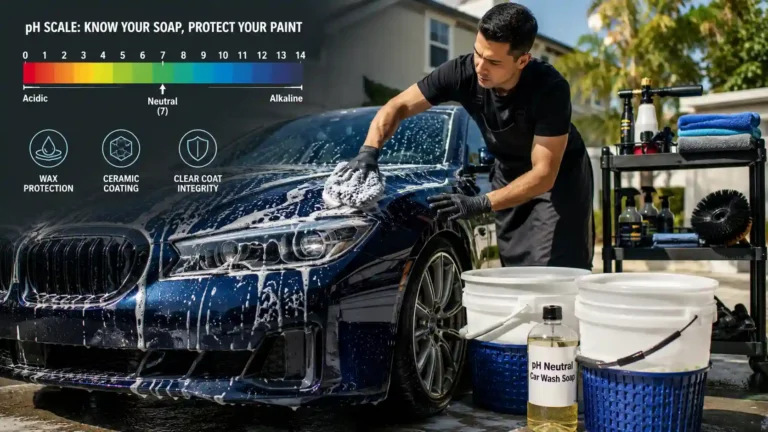
Keeping your car clean isn’t just about appearance it also helps protect the paint and preserve its value over time. One of the most overlooked factors in safe car washing is the pH of your car wash soap. The pH level determines how gently or aggressively a soap interacts with your vehicle’s clear coat, wax, paint sealant, or ceramic coating. A pH-neutral car wash soap, typically around pH 7, is considered the safest choice for routine washing because it effectively removes dirt, road grime, and contaminants without stripping away protective layers. In contrast, highly alkaline or acidic cleaners are designed for specialized detailing tasks and can shorten the lifespan of your paint protection if used too often. Understanding how soap pH works helps you choose the right product, avoid common mistakes like using dish soap, and maintain a glossy, well-protected finish.
In this guide: you’ll learn what car wash soap pH means, why it matters, and how to select the best option for your vehicle and detailing routine.
What Does pH Mean for a Car Wash Soap?
The pH of a car wash soap measures how acidic or alkaline the formula is on a scale of 0 to 14, where 7 is neutral. A pH-neutral car wash soap, with a pH close to 7, is designed to remove dirt, road grime, and contaminants while minimizing the impact on your vehicle’s wax, paint sealant, ceramic coating, and clear coat. This makes it the safest choice for regular maintenance washing.
In contrast, soaps with a high alkaline pH or a low acidic pH provide more aggressive cleaning power and are typically intended for specialized detailing tasks, such as removing heavy road film, grease, tar, or preparing the paint before polishing or applying a new protective coating. However, frequent use of these stronger formulas can strip away protective layers more quickly, leaving the paint more exposed to environmental damage.
Why Does pH Matter for Wax and Sealant Protection?
A pH-neutral soap is specifically designed to clean dirt and grime without breaking down the wax or synthetic sealant layer sitting on top of your clear coat. This matters because that protective layer is what’s actually shielding your paint from UV exposure, bird droppings, and minor environmental contaminants between washes.
Using a high-pH or heavily alkaline soap regularly strips this protection much faster than normal wear would, meaning you’d need to reapply wax or sealant more often just to maintain the same level of protection. For anyone who’s invested time or money into paint protection, sticking with pH-neutral car soap preserves that investment considerably longer.
Is Dish Soap Safe to Use on Your Car’s Paint?
Dish soap is not a safe substitute for dedicated car wash soap, despite being a common household suggestion, because it’s formulated specifically to cut through grease and strip oils, which includes the wax or sealant on your paint. A single wash with dish soap can noticeably reduce or completely remove a wax layer that took time to apply.
Beyond stripping protection, dish soap’s stronger alkaline formulation isn’t tested for long-term contact with automotive clear coat the way dedicated car soap is, creating unnecessary risk for a product that costs only marginally less. Reserving dish soap for genuine kitchen use and buying a proper pH-neutral car soap protects both your paint and your existing protection layer.
What 5 Types of Car Wash Soap Exist Beyond pH-Neutral?
While pH-neutral car wash soap is the best choice for routine maintenance, several other types of car wash soaps are designed for specific detailing tasks. Choosing the right type depends on your vehicle’s paint protection, contamination level, and cleaning goals.
1. pH-Neutral Maintenance Soap
A pH-neutral maintenance soap is the safest option for regular car washing. It effectively removes dirt, dust, and road grime while preserving wax, paint sealants, ceramic coatings, and the vehicle’s clear coat. This is the recommended choice for weekly or bi-weekly maintenance washes.
2. Ceramic-Safe or Coating-Safe Soap
Ceramic-safe car wash soaps are specially formulated to clean ceramic-coated vehicles without reducing the coating’s hydrophobic properties. Most are also pH-neutral and help maintain the performance and longevity of ceramic coatings.
3. Wax-Infused Car Wash Soap
Wax-infused soaps clean the vehicle while leaving behind a light layer of wax protection to temporarily boost gloss and water beading. Although convenient for maintenance, they should not replace a dedicated wax or paint sealant application.
4. Alkaline Car Wash Soap or Degreaser
High-pH or alkaline soaps are designed for heavy-duty cleaning tasks such as removing road film, grease, tar residue, bug splatter, or tree sap. They are also commonly used before paint correction or ceramic coating installation to strip existing wax or sealant. Because they can remove protective layers, they should only be used occasionally rather than for regular washing.
5. Snow Foam or Pre-Wash Soap
Snow foam is applied before contact washing to soften and loosen dirt, reducing the risk of swirl marks during the main wash. Most snow foam products are pH-neutral and are ideal for vehicles with wax, sealants, or ceramic coatings as part of a safe two-step washing process.
How Do You Know if a Soap Is Actually pH-Neutral?
Checking the product label or manufacturer’s website for an explicit pH-neutral claim is the most reliable way to confirm, since reputable car care brands list this information directly. Products marketed specifically for “wax-safe” or “coating-safe” washing are also generally formulated at or near neutral pH, since aggressive formulas would defeat the purpose of that claim.
Testing pH at home with basic pH strips is possible but rarely necessary for reputable branded products, since most established car soap manufacturers publish this information openly. Being cautious with unbranded or unusually cheap soap that doesn’t disclose pH information is a reasonable default, since the lack of disclosure often correlates with a stronger, less paint-friendly formulation.
When Should You Use a Stronger, Non-pH-Neutral Car Wash Soap?
A stronger alkaline or non-pH-neutral car wash soap should only be used for specialized detailing tasks not routine maintenance washes. These products are designed to remove stubborn contaminants and intentionally strip old wax or sealants when preparing the paint for further treatment.
Common situations where a stronger soap is appropriate include:
- Removing heavy road film, grease, tar, bug residue, or tree sap.
- Preparing the paint before polishing or paint correction.
- Stripping old wax or paint sealants before applying a new protective coating.
- Cleaning neglected vehicles with excessive dirt buildup.
Once the deep-cleaning process is complete, it’s important to reapply a quality wax, paint sealant, or ceramic coating to restore protection. For regular weekly or bi-weekly washes, switch back to a pH-neutral car wash soap to maintain your vehicle’s finish.
How Does Car Wash Soap pH Affect Older or Oxidized Paint?
Older or oxidized paint is significantly more sensitive to harsh cleaning chemicals than modern paint in good condition. Years of UV exposure, weather, and environmental contamination gradually weaken the clear coat, making the surface more vulnerable to aggressive alkaline or acidic soaps.
Using a high-pH cleaner on faded or oxidized paint can accelerate the loss of remaining protection, causing the finish to appear duller and increasing the risk of further oxidation. Vehicles with chalky, faded, or sun-damaged paint benefit most from gentle cleaning methods.
For aging vehicles, a pH-neutral car wash soap is the safest option because it cleans without unnecessarily stressing the weakened paint surface. Following each wash with a quality wax or paint sealant provides an additional protective barrier that helps slow future oxidation and improves gloss.
Can Water Quality Affect How Soap Performs on Your Paint?
Hard water, which contains higher mineral content, can interact with car wash soap in ways that leave mineral deposits or water spots behind even when the soap itself is properly formulated and pH-neutral. These spots form as hard water evaporates and leaves calcium and magnesium residue on the surface, sometimes etching lightly into the clear coat if left to dry repeatedly without being wiped down.
Using a deionized or filtered water rinse for the final pass, even if the wash itself uses regular tap water, significantly reduces water spotting regardless of which soap you’re using. This is a separate issue from soap pH, but the two often get confused since both can leave visible marks on paint if the wash process isn’t handled carefully.
Conclusion
Choosing the right car wash soap is about more than simply creating foam it’s about protecting your vehicle’s finish over the long term. A pH-neutral car wash soap provides the safest balance between cleaning performance and paint preservation, helping maintain wax, sealants, ceramic coatings, and your vehicle’s clear coat through regular maintenance washes.
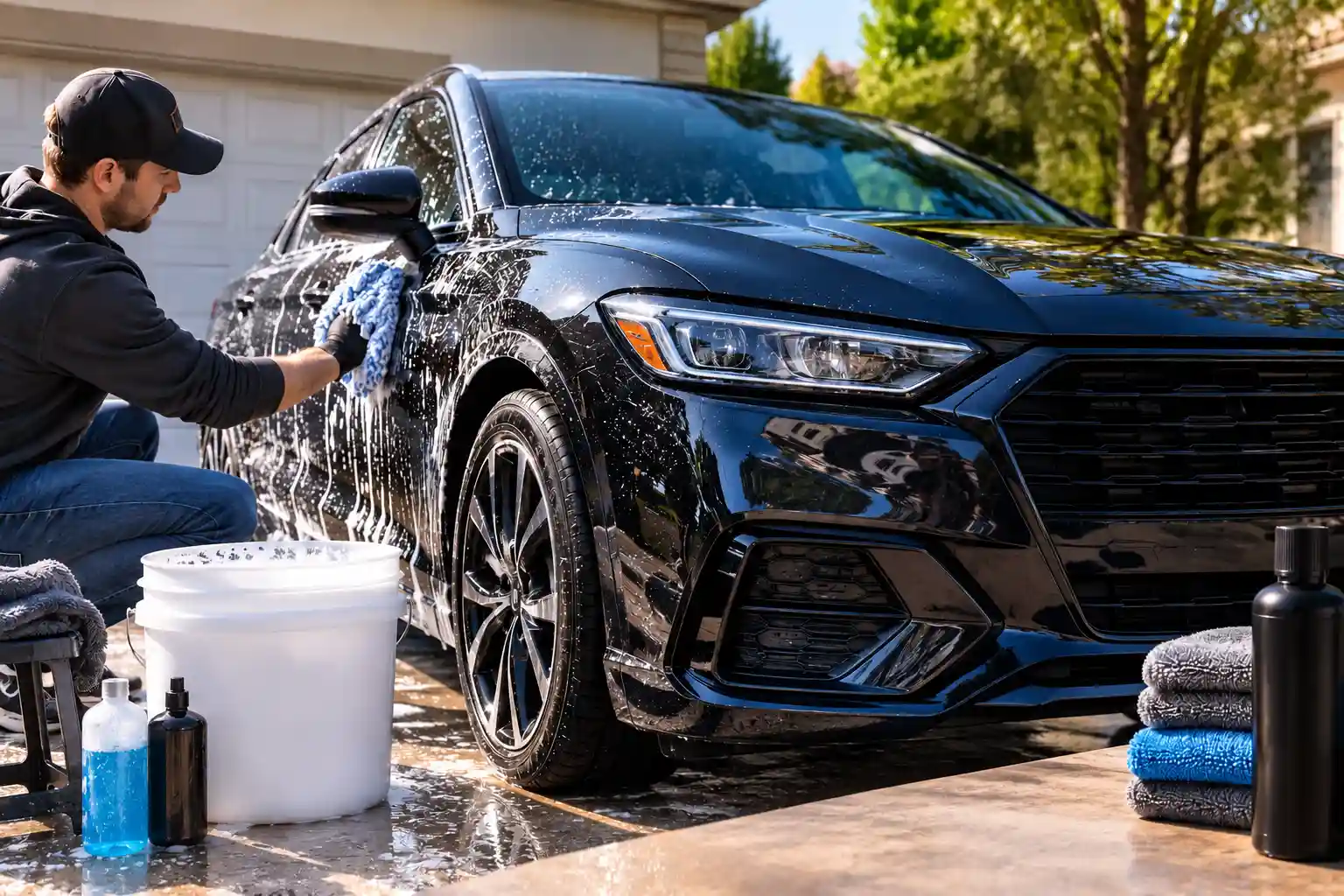
While stronger alkaline or acidic cleaners have their place for heavy contamination or paint preparation, they should be used only when necessary rather than as part of your normal wash routine. Pairing a high-quality pH-neutral shampoo with proper techniques such as the two-bucket wash method, quality microfiber wash mitts, and careful drying will significantly reduce the risk of swirl marks while keeping your paint looking glossy for years. By selecting the right soap and following safe washing practices, you can extend the life of your vehicle’s finish and reduce the need for frequent paint correction or reapplication of protective coatings.
Frequently Asked Questions
Is pH-neutral car wash soap the best choice for regular washing?
Yes. A pH-neutral car wash soap is the best choice for routine washing because it removes dirt and road grime while helping preserve your vehicle’s wax, paint sealant, ceramic coating, and clear coat. It’s designed to clean effectively without aggressively stripping protective layers.
What pH should a car wash soap have?
For regular maintenance, a car wash soap should be close to pH 7 (neutral). Neutral formulas provide an effective balance between cleaning performance and paint protection, making them suitable for frequent washes.
Can alkaline car wash soap damage car paint?
Occasional use of a stronger alkaline soap usually won’t cause immediate paint damage, but repeated use can strip wax and sealants more quickly. Without those protective layers, the clear coat becomes more exposed to UV rays, contaminants, and environmental wear.
Does pH-neutral car wash soap remove wax?
A quality pH-neutral soap is formulated to clean without significantly removing wax or paint sealants. While normal washing gradually wears protective coatings over time, neutral shampoos help maximize their lifespan compared with stronger cleaning products.
Is dish soap the same as car wash soap?
No. Dish soap is formulated to remove grease and oils, making it much more likely to strip wax and sealant from automotive paint. Dedicated car wash soap contains lubricants and surfactants specifically designed for safely cleaning painted vehicle surfaces.
Is pH-neutral soap safe for ceramic-coated cars?
Yes. Most ceramic coating manufacturers recommend using a pH-neutral or ceramic-safe car shampoo because it cleans without reducing the coating’s hydrophobic performance or leaving unnecessary chemical residue.
Can I use pH-neutral soap with a foam cannon?
Yes. Many pH-neutral shampoos are specifically designed to work in foam cannons and foam guns. Thick foam helps loosen dirt before contact washing, reducing the risk of swirl marks when used with proper washing techniques.
How often should I wash my car with pH-neutral soap?
For most vehicles, washing every one to two weeks with a pH-neutral car shampoo helps remove contaminants before they damage the paint while preserving existing wax, sealants, and ceramic coatings.