Winterizing your car for cold weather means preparing essential systems like the battery, tires, engine fluids, wiper blades, and cooling system before freezing temperatures arrive. Cold weather reduces battery performance, lowers tire pressure, thickens engine oil, and increases the risk of breakdowns, making seasonal maintenance essential for safe and reliable driving.
Whether you experience occasional frosty mornings or months of snow and ice, taking a few preventive steps before winter can improve traction, protect your engine, extend the life of your vehicle, and help you avoid costly roadside emergencies. In this guide, you’ll learn exactly how to winterize your car, which components to inspect, when to install winter tires, what supplies to keep in your vehicle, and practical winter driving tips to stay safe throughout the season.
Why Does Cold Weather Stress a Vehicle So Much?
Cold temperatures affect nearly every fluid and mechanical system in a car, thickening oil and other fluids, reducing battery chemical efficiency, and making rubber components like tires and belts less flexible. A battery that performs perfectly in summer can struggle to deliver enough current to start a cold engine, since battery chemistry slows down significantly as temperatures drop.
Engines also require more effort to start in the cold, since thicker oil doesn’t circulate as easily and gasoline vaporizes less readily at low temperatures. Combined, these factors mean a vehicle already showing minor weaknesses in summer is far more likely to reveal those weaknesses during the first genuinely cold week of the year.
How Do You Prepare the Battery for Winter?
A healthy battery is essential for reliable winter starting because cold temperatures reduce a battery’s ability to deliver power while increasing the energy needed to crank the engine. If your battery is already weakened by age or wear, freezing weather can push it past the point of failure, making battery maintenance one of the most important steps when winterizing your car.
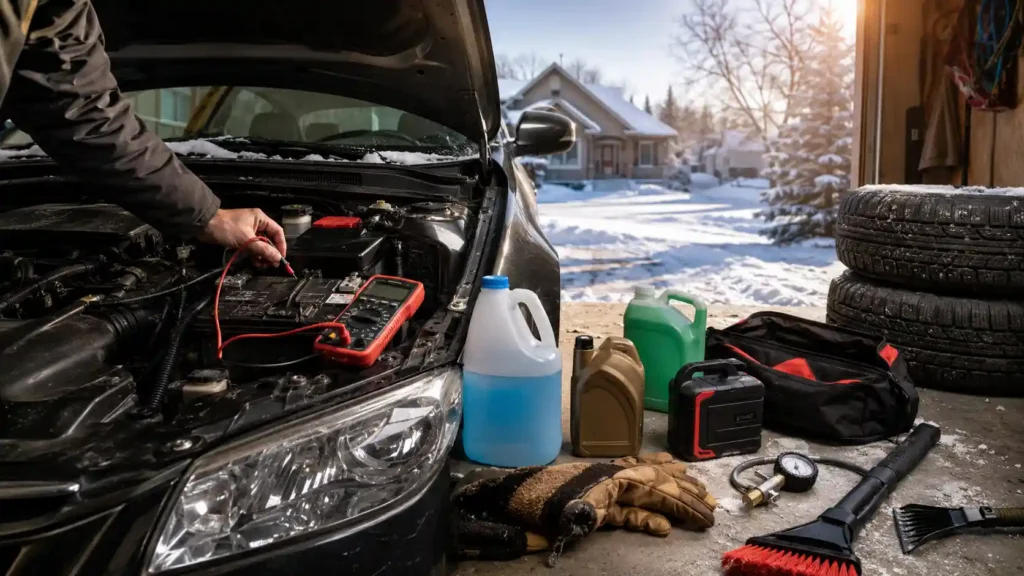
Before winter arrives, test your battery using a digital multimeter or have it checked at an auto parts store. A fully charged battery should typically measure 12.4 to 12.7 volts with the engine off. If the voltage is consistently below this range or the battery is more than three to five years old, consider replacing it before cold weather causes a no-start condition.
Also inspect the battery terminals and cables for corrosion, loose connections, or damaged clamps. Clean any corrosion using a battery terminal cleaner or a baking soda and water solution, then tighten the connections securely. Good electrical contact helps the battery deliver maximum starting power during freezing temperatures.
Winter Battery Checklist
- Test battery voltage before the first freeze.
- Clean corrosion from battery terminals.
- Tighten loose battery cable connections.
- Inspect the battery case for cracks or leaks.
- Replace an aging or weak battery before winter.
- Keep a portable jump starter or jumper cables in your vehicle for emergencies.
Proactively checking your battery before winter greatly reduces the risk of unexpected breakdowns and helps ensure your vehicle starts reliably throughout the cold-weather season.
What Fluids Should You Check Before Winter?
Checking your vehicle’s essential fluids before winter helps protect the engine, improve reliability, and prevent cold-weather damage. Freezing temperatures can thicken engine oil, reduce fluid performance, and cause certain fluids to freeze if they aren’t designed for winter conditions. Inspecting and replacing the right fluids before temperatures drop is a simple way to avoid expensive repairs and improve overall vehicle performance.
Essential Fluids to Check Before Winter
- Engine Oil – Use the oil viscosity recommended in your owner’s manual for cold-weather driving. Lower winter-grade oils flow more easily during cold starts, helping reduce engine wear and improve lubrication.
- Coolant (Antifreeze) – Check the coolant level and antifreeze concentration to ensure it provides adequate freeze protection for your local climate. Coolant that is too diluted can freeze, overheat the engine, or even cause severe engine damage.
- Windshield Washer Fluid – Replace standard washer fluid with a winter-rated formula designed for sub-freezing temperatures. Winter washer fluid helps remove road salt, slush, and grime while preventing the reservoir and washer lines from freezing.
- Brake Fluid – Inspect the condition of the brake fluid and replace it if it is overdue for service. Brake fluid absorbs moisture over time, which can reduce braking performance and increase the risk of corrosion in cold weather.
- Transmission Fluid (if applicable) – Verify the transmission fluid level and condition according to your manufacturer’s maintenance schedule. Proper fluid helps ensure smoother shifting during cold starts.
- Power Steering Fluid (if equipped) – Check the fluid level and inspect for leaks. Adequate power steering fluid helps maintain consistent steering performance during freezing temperatures.
Winter Fluid Maintenance Checklist
- Check engine oil level and winter viscosity.
- Test coolant strength with an antifreeze tester.
- Top off or replace winter windshield washer fluid.
- Inspect brake fluid condition and service interval.
- Check transmission and power steering fluid levels if applicable.
- Repair any fluid leaks before winter begins.
Taking a few minutes to inspect these fluids before winter helps improve cold-weather reliability, protects major vehicle components, and reduces the likelihood of unexpected mechanical problems.
Should You Switch to Winter Tires?
If you regularly drive in temperatures below 45°F (7°C) or encounter snow and ice, switching to winter tires is one of the most effective ways to improve safety. Unlike all-season tires, winter tires are made from a specialized rubber compound that remains flexible in freezing temperatures, providing better grip, shorter stopping distances, and improved handling on cold, snowy, and icy roads.
Drivers in regions with frequent snowfall and extended winter conditions benefit the most from dedicated winter tires. In areas with mild winters and only occasional freezing temperatures, quality all-season tires may provide sufficient performance. Regardless of the type of tire you use, maintaining proper tire pressure and adequate tread depth is essential because cold weather naturally lowers tire pressure and reduces traction.
Benefits of Winter Tires
- Maintain flexibility in temperatures below 45°F (7°C).
- Provide better traction on snow, ice, and slush.
- Improve braking performance on slippery roads.
- Enhance cornering and steering control in winter conditions.
- Reduce the likelihood of skidding during acceleration and braking.
Winter Tire Checklist
- Install winter tires before the first major freeze or snowfall.
- Check tire pressure regularly, as it drops in cold weather.
- Ensure tread depth is sufficient for safe winter traction.
- Rotate tires according to the manufacturer’s recommendations.
- Inspect tires for uneven wear, cracks, or damage.
- Replace worn tires before winter driving begins.
Using the right tires and maintaining them properly gives your vehicle the traction and control needed for safer winter driving, reducing the risk of accidents and improving confidence on snow-covered and icy roads.
How Do You Prepare for Driving on Snow and Ice?
Preparing to drive safely in winter conditions goes beyond vehicle maintenance and includes adjusting driving habits for reduced traction and visibility.
- Increase following distance significantly beyond normal dry-road spacing, since stopping distances on snow and ice can be two to three times longer than on dry pavement.
- Accelerate and brake more gradually than usual, since sudden inputs are far more likely to cause a loss of traction on slippery surfaces.
- Clear all snow and ice from windows, mirrors, lights, and the roof before driving, since snow sliding off the roof during braking can obstruct your rearview or a following driver’s visibility.
- Keep the fuel tank at least half full during winter months, both to prevent fuel line freezing and to add weight over the drive wheels for better traction.
- Familiarize yourself with how your vehicle’s traction and stability control systems behave, since practicing gentle maneuvers in an empty parking lot after a snowfall builds useful reflexes.
Adjusting your driving style before you’re forced to react to a slippery situation makes a meaningful difference in how safely you handle winter roads.
What Should You Keep in Your Car During Winter?
A winter emergency kit adds a layer of protection specifically suited to cold-weather breakdowns or getting stuck.
- A blanket and warm clothing – protects against hypothermia risk if you’re stranded for an extended period.
- A small shovel and traction aids like sand or cat litter – helps you dig out and gain traction if you get stuck in snow.
- An ice scraper and snow brush – keeps windows and lights clear for safe visibility.
- Jumper cables or a portable jump starter – addresses the most common winter breakdown cause, a dead battery.
- A phone charger and extra water – useful for any extended delay, whether from a breakdown or road closure.
This kit doesn’t need to be elaborate, but having these basics specifically suited to cold weather turns a winter breakdown from a potentially dangerous situation into a manageable inconvenience.
Do You Need to Prepare Belts, Hoses, and Wipers for Winter?
Yes, cold temperatures make rubber components like belts, hoses, and wiper blades stiffer and more prone to cracking, which is why a visual inspection before winter is worth adding to your checklist. A belt or hose that was showing minor wear in summer can crack or fail outright once cold weather adds extra stiffness on top of existing deterioration.
Wiper blades in particular take a beating during winter, since they’re regularly used to clear snow and ice, a much harsher job than typical rain clearing. Replacing wiper blades at the start of the season, along with checking that washer fluid nozzles aren’t clogged or frozen, ensures you’ll have reliable visibility during the season’s first storm rather than discovering a problem mid-drive.
Conclusion
Preparing your car for winter is one of the simplest ways to improve reliability, safety, and overall driving confidence during cold weather. By inspecting the battery, maintaining proper tire pressure, checking essential fluids, replacing worn wiper blades, and carrying a basic winter emergency kit, you can reduce the likelihood of unexpected breakdowns and handle snow and icy roads more safely.
Most winter maintenance tasks require only a few hours but can prevent expensive repairs and inconvenient roadside emergencies later in the season. Completing this checklist before temperatures drop ensures your vehicle is ready to perform reliably throughout the winter months, whether you’re commuting daily or taking longer trips in cold-weather conditions.
Frequently Asked Questions
How do you winterize a car for cold weather?
Winterizing a car involves checking the battery, testing the antifreeze, inspecting tire pressure and tread, replacing worn wiper blades, switching to winter windshield washer fluid, and inspecting belts and hoses. Preparing these systems before freezing temperatures reduces the risk of breakdowns and improves traction and safety during winter driving.
What is the most important thing to check before winter?
The battery is the most important system to inspect before winter because cold temperatures significantly reduce battery performance while increasing the power needed to start the engine. Testing the battery before freezing weather helps prevent one of the most common causes of winter breakdowns.
Should I warm up my car before driving in winter?
Modern fuel-injected vehicles only need about 30 seconds to one minute of idling before driving. Instead of letting the engine idle for several minutes, drive gently until the engine reaches normal operating temperature. This warms the engine more efficiently while reducing fuel consumption.
Should I use winter tires instead of all-season tires?
Winter tires are recommended in areas that regularly experience snow, ice, or temperatures below 45°F (7°C). Their softer rubber compound remains flexible in cold weather, providing significantly better grip, shorter braking distances, and improved handling than all-season tires.
What fluids should be checked before winter?
Before winter, inspect engine oil, coolant (antifreeze), windshield washer fluid, and brake fluid. Using the correct oil viscosity, maintaining the proper coolant concentration, and filling the reservoir with winter-rated washer fluid help protect the engine and improve vehicle reliability in freezing temperatures.
How does cold weather affect tire pressure?
Cold air reduces tire pressure by approximately 1 to 2 PSI for every 10°F drop in temperature. Underinflated tires reduce traction, increase tire wear, and can trigger the tire pressure monitoring system (TPMS) warning light. Check tire pressure regularly throughout the winter season.
What should every winter emergency kit include?
A basic winter emergency kit should include:
- Blanket and warm clothing
- Ice scraper and snow brush
- Portable jump starter or jumper cables
- Small shovel
- Sand or cat litter for traction
- Flashlight
- Phone charger
- Drinking water
- First aid kit
These items help you stay safe if your vehicle becomes stranded during severe winter weather.
Can freezing temperatures damage my car?
Yes. Extremely cold temperatures can weaken the battery, thicken engine oil, lower tire pressure, freeze washer fluid, stiffen belts and hoses, and reduce overall vehicle performance. Proper winter maintenance minimizes these risks and helps prevent unexpected mechanical failures.
Is winter windshield washer fluid necessary?
Yes. Winter windshield washer fluid is formulated to resist freezing and effectively remove road salt, slush, and grime. Standard washer fluid can freeze inside the reservoir or washer lines, reducing visibility when you need it most.
How often should I inspect my vehicle during winter?
Inspect your vehicle every one to two weeks during the winter. Regularly check the battery, tire pressure, fluid levels, windshield wipers, and lights. Frequent inspections help identify small issues before they become costly or leave you stranded.