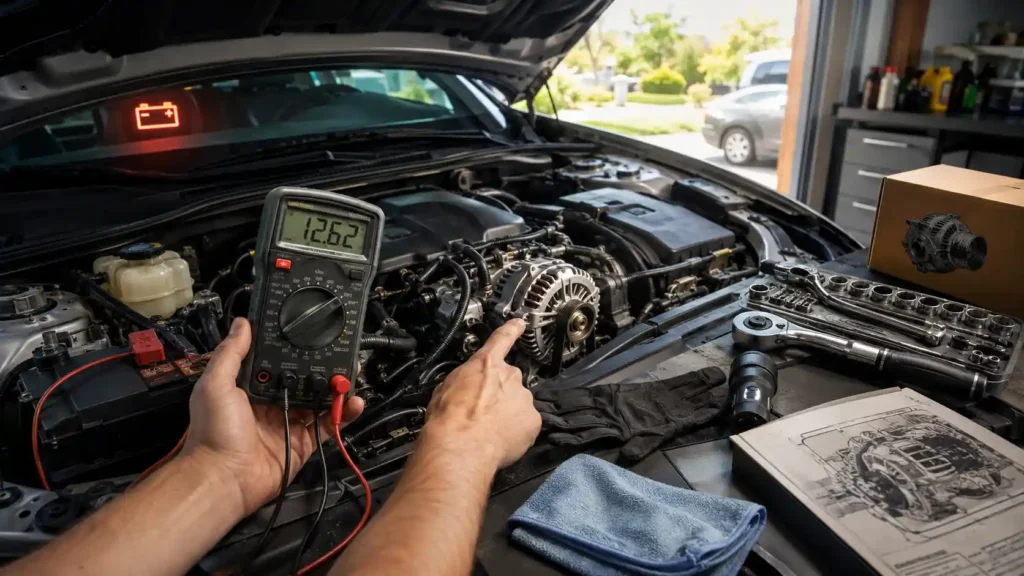
A failing alternator often gives several warning signs before it stops working completely. The most common symptoms include dim or flickering headlights, a battery warning light on the dashboard, a battery that repeatedly goes dead, unusual whining or grinding noises, and electrical accessories that work inconsistently. Because the alternator charges the battery and supplies power to your vehicle’s electrical system while the engine is running, ignoring these symptoms can eventually lead to a stalled engine or a car that won’t start.
Knowing how to identify alternator problems early can save you from expensive repairs and unexpected roadside breakdowns. Although many alternator symptoms resemble those of a weak battery, a simple voltage test with a digital multimeter can often help determine the real cause. In this guide, you’ll learn the key signs of a failing alternator, how to distinguish it from a bad battery, how to test your charging system safely, what causes alternator failure, repair costs, and when it’s time for a replacement.
What Does the Alternator Actually Do?
The alternator generates electrical power while the engine runs, charging the battery and simultaneously powering the vehicle’s electrical systems, including lights, the radio, power windows, and the engine control computer. It converts mechanical energy from the spinning engine into electrical energy through a belt-driven pulley system.
Without a functioning alternator, the battery is the only source of electrical power, and it will deplete relatively quickly since it’s not designed to run the entire vehicle indefinitely on its own. This is why alternator problems often masquerade as battery problems at first, since the symptoms overlap significantly in the early stages.
What Are the Most Common Signs of a Failing Alternator?
Several distinct warning signs point toward an alternator problem, and recognizing them early can prevent a complete breakdown.
- Dimming or flickering headlights and dashboard lights – especially noticeable when the engine is idling or when multiple electrical accessories are running simultaneously.
- A dead or dying battery despite normal use – if you find yourself needing frequent jump starts even though the battery itself tests as healthy, the alternator may not be recharging it properly.
- A battery-shaped warning light on the dashboard – most modern vehicles include this specific indicator, which illuminates when the charging system detects a voltage problem.
- Strange noises from the engine bay, such as grinding or whining – often caused by a worn alternator bearing or a failing internal component.
- A burning rubber or hot electrical smell – can indicate a slipping belt connected to the alternator or overheating internal alternator components.
- Electrical accessories behaving erratically – power windows moving slowly, radio cutting out, or dashboard gauges fluctuating unexpectedly can all point to inconsistent voltage output.
Experiencing one of these symptoms in isolation doesn’t automatically confirm an alternator problem, but a combination of two or more significantly increases the likelihood that the charging system needs attention.
How Do You Tell the Difference Between a Bad Alternator and a Bad Battery?
A bad alternator and a bad battery often produce similar symptoms, such as a car that won’t start or dim headlights, making them easy to confuse. However, understanding the differences can help you diagnose the real problem and avoid replacing the wrong component.
The table below compares the most common signs of a failing alternator and a failing battery for a quicker diagnosis.
| Symptom | Bad Alternator | Bad Battery |
|---|---|---|
| Engine Starts | May start but stalls shortly after | Often struggles or won’t start at all |
| Battery Warning Light | Usually illuminated | May or may not appear |
| Battery Charge | Battery keeps losing charge because it isn’t being recharged | Battery cannot hold a charge even after charging |
| Headlights | Dim or flicker while driving, especially at idle | Dim mainly before starting or when battery is nearly dead |
| Electrical Accessories | Power windows, radio, and dashboard electronics behave erratically while driving | Electronics work normally until the battery becomes discharged |
| Voltage Test | Running voltage below 13.7–14.7V indicates charging system failure | Engine off voltage below 12.4V may indicate a weak battery |
| Jump Start | Vehicle starts but dies again after a short drive | Vehicle usually continues running after a successful jump-start if the alternator is healthy |
| Common Cause | Worn bearings, faulty voltage regulator, damaged diodes, or slipping serpentine belt | Old age, sulfation, internal cell failure, or extreme temperatures |
While older troubleshooting methods suggested disconnecting the negative battery terminal with the engine running, this practice is not recommended for modern vehicles because it can damage sensitive electronic components. Instead, use a digital multimeter to measure charging voltage or have the charging system tested at an auto parts store for a safer and more accurate diagnosis.
How Do You Test Alternator Output With a Multimeter?
Testing alternator output is a more precise and safer method than the disconnect test, and it requires only a basic multimeter.
- With the engine off, measure the battery’s resting voltage, which should read between 12.4 and 12.7 volts on a healthy, charged battery.
- Start the engine and measure the voltage again with the multimeter connected to the battery terminals.
- A properly functioning alternator should produce a reading between roughly 13.7 and 14.7 volts while the engine runs.
- Turn on multiple electrical accessories, such as headlights, the radio, and air conditioning, and check the voltage again under this increased load.
- A voltage reading that drops significantly below 13.7 volts under load, or stays close to the resting battery voltage even with the engine running, points toward a weak or failing alternator.
This test gives a clear, quantifiable answer rather than relying solely on symptom observation, making it one of the more reliable at-home diagnostic methods available.
Can a Bad Alternator Belt Cause These Same Symptoms?
Yes, a loose, worn, or slipping alternator belt, often part of the serpentine belt system on modern vehicles, can prevent the alternator from spinning fast enough to generate adequate power even if the alternator itself is mechanically sound. This means a squealing noise combined with dimming lights doesn’t automatically confirm an internal alternator failure, since a belt issue can produce very similar symptoms.
Checking the belt’s condition and tension, or having it inspected, is a reasonable step before assuming the alternator itself needs replacement, since a belt repair is generally far less expensive than an alternator replacement. If the belt looks worn, cracked, or loose, addressing that first and then retesting the charging system gives a clearer picture of whether the alternator itself is actually the problem.
What Happens If You Continue Driving With a Failing Alternator?
Continuing to drive with a failing alternator typically leads to a gradual depletion of the battery as it works to compensate for insufficient charging, eventually resulting in a complete loss of electrical power and a stalled engine, often without warning. This can happen suddenly, sometimes while driving at highway speed, which makes a failing alternator a genuine safety concern rather than just an inconvenience.
Addressing early warning signs, particularly a dashboard warning light or a pattern of needing jump starts, before the alternator fails completely allows you to schedule a replacement on your own terms rather than dealing with an unexpected breakdown. Many alternators give some warning before total failure, which is exactly why catching these earlier symptoms is worth taking seriously.
How Much Does Alternator Replacement Typically Cost?
Alternator replacement typically costs $300 to $600, including parts and labor, although the total price depends on your vehicle’s make, model, engine layout, and the type of replacement alternator used. Luxury vehicles and models with limited engine access generally cost more because they require additional labor.
The table below provides a general breakdown of alternator replacement costs.
| Expense | Typical Cost |
|---|---|
| New Alternator | $200–$500 |
| Remanufactured Alternator | $150–$300 |
| Labor Cost | $100–$250 |
| Total Replacement Cost | $300–$600 |
Factors That Affect Alternator Replacement Cost
Several factors can influence the final repair bill, including:
- Vehicle make and model: Luxury and performance vehicles often have higher parts and labor costs.
- Alternator type: New OEM alternators are typically more expensive than remanufactured or aftermarket units.
- Engine accessibility: Some vehicles require removing other components to reach the alternator, increasing labor time.
- Labor rates: Repair shop rates vary by location and service provider.
Before replacing the alternator, it’s a good idea to have the charging system professionally tested. Many auto parts stores offer free alternator and battery testing, helping confirm whether the problem is the alternator, battery, serpentine belt, or a wiring issue. A proper diagnosis can prevent unnecessary repairs and save money.
Conclusion
A failing alternator often gives clear warning signs before complete failure, including dim lights, battery warning indicators, electrical issues, and repeated dead batteries. Recognizing these symptoms early can help you avoid unexpected breakdowns and expensive roadside repairs.
Before replacing the alternator, verify the diagnosis by checking battery voltage with a multimeter or using a free charging-system test available at many auto parts stores. Also inspect the serpentine belt and battery connections, as these components can produce similar symptoms.If testing confirms the alternator is failing, replacing it promptly will restore reliable charging, protect sensitive electrical components, and keep your vehicle dependable for everyday driving. Acting early is almost always less expensive and less stressful than waiting until the charging system fails completely.
Frequently Asked Questions
How do I know if my alternator is failing?
Common signs of a failing alternator include dim or flickering headlights, a battery warning light, frequent jump-starts, unusual whining noises, slow electrical accessories, and a burning smell. If multiple symptoms occur together, the charging system should be tested as soon as possible.
Can a bad alternator drain a new battery?
Yes. A failing alternator cannot properly recharge the battery while the engine is running. Even a brand-new battery will eventually lose power if the alternator isn’t supplying sufficient charging voltage.
What voltage should a healthy alternator produce?
A properly functioning alternator typically produces 13.7 to 14.7 volts while the engine is running. Readings below this range may indicate a weak alternator, faulty voltage regulator, worn belt, or charging system problem.
Is it safe to drive with a failing alternator?
Driving with a failing alternator is not recommended. Once the battery’s stored power is exhausted, the engine can stall unexpectedly, leaving you stranded and potentially creating a safety hazard.
What causes an alternator to fail?
Alternators commonly fail because of worn bearings, damaged voltage regulators, failing internal diodes, overheating, contaminated electrical connections, or excessive wear after many years of service.
How long do alternators usually last?
Most alternators last between 80,000 and 150,000 miles, although lifespan varies depending on driving conditions, climate, vehicle age, and electrical load.
Can I test my alternator at home?
Yes. The easiest method is using a digital multimeter. Measure battery voltage with the engine off and again while it’s running. If charging voltage doesn’t rise above approximately 13.7 volts, the alternator may not be charging correctly.
What is the average cost to replace an alternator?
Most alternator replacements cost between $300 and $600, including parts and labor. Luxury vehicles and models with difficult engine access may cost more.
Can a loose serpentine belt cause alternator problems?
Yes. A loose, worn, or slipping serpentine belt may prevent the alternator from spinning at the proper speed, reducing charging performance and causing symptoms similar to a failing alternator.
Should I replace the battery and alternator together?
Not necessarily. Replace only the component that has failed after proper testing. If both components are old or testing shows problems with each, replacing them together may improve long-term reliability.