Brake pads wear down slowly and quietly, right up until the moment they don’t. Catching that wear early is one of the simplest ways to avoid a much more expensive repair, and it takes only a few minutes.
Most manufacturers suggest checking brake pads roughly every six months, often timed with a tire rotation, though driving habits and traffic conditions can shorten that window considerably. This guide covers how to check your pads with the wheel still on, how to inspect them more closely if needed, and what warning signs mean it’s time to stop waiting.
Why Do Brake Pads Wear Out?
Every time you press the brake pedal, the pads clamp against the rotor to slow the wheel through friction. That friction gradually wears away the pad material, similar to how an eraser wears down with repeated use.
Stop-and-go city driving wears pads faster than steady highway driving, since braking happens far more frequently. Heavier vehicles, aggressive braking habits, and towing also accelerate wear, which is why pad lifespan varies so widely between drivers even on the same make and model of car.
How Can You Check Brake Pads Without Removing the Wheel?
On most vehicles, you can get a reasonable read on pad condition without any tools at all.
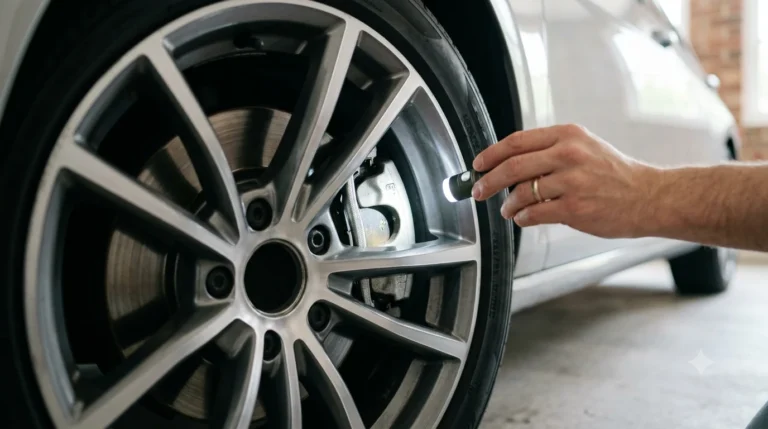
Look through the gaps in your wheel’s spokes toward the outer edge of the rotor, where the brake caliper sits. The pad is the flat material pressed against the metal rotor, and estimating its thickness from this angle gives a rough but useful sense of remaining life. A flashlight helps considerably here, especially on wheels with narrow gaps or darker brake components that are harder to see clearly.
Many brake pads also include a wear indicator groove cut into the pad material. As the pad wears down, this groove becomes shallower and eventually disappears entirely, which serves as a visual cue that replacement is approaching.
How Do You Inspect Brake Pads More Closely?
For a more precise look, removing the wheel gives full visibility of the pad and rotor.
Let the brakes cool for at least an hour before touching any components, since braking generates significant heat that takes time to dissipate. Park on a level surface, apply the parking brake, and use a jack to raise the vehicle until the tire is a few inches off the ground. Remove the lug nuts and the wheel to expose the brake assembly directly.
With the wheel off, use a flashlight to examine the pad thickness directly. Pads thicker than a quarter inch are generally considered to have healthy life remaining, while anything thinner than that suggests replacement is close. Comparing the pad thickness across all four wheels is also worth doing, since front and rear pads often wear at different rates depending on the vehicle’s braking bias.
What Sounds Indicate Worn Brake Pads?
Brake pads are engineered to announce their own wear long before they fail completely, and the sounds are hard to miss once you know what to listen for.
A high-pitched squeal when braking, even light braking, usually comes from a small metal wear indicator built into the pad specifically to make noise once the material grows thin. This sound is intentional, meant to alert the driver well before the pad is dangerously worn. A deeper grinding noise is a more serious sign, often indicating the pad has worn through completely and metal is now contacting metal, which can damage the rotor and significantly increase repair costs.
If you hear grinding rather than squealing, treating it as urgent rather than routine is the safer approach, since continued driving in that state accelerates rotor damage quickly.
What Other Warning Signs Point to Worn Brake Pads?
Beyond sound, a few other signals are worth paying attention to during regular driving.
- A dashboard brake warning light, present on many newer vehicles with built-in wear sensors
- A brake pedal that feels softer or requires pressing further than usual before engaging
- Vibration through the pedal or steering wheel when braking, which can point to uneven pad wear or a warped rotor
- The car pulling slightly to one side when braking, sometimes caused by uneven wear between the left and right brake assemblies
- Visibly thin pad material when glancing through the wheel spokes in good lighting
None of these signs alone confirms a diagnosis with certainty, but noticing more than one at the same time is a reasonably strong indicator that an inspection is overdue.
How Thick Should Brake Pads Be?
New brake pads typically start around 10 to 12 millimeters thick, though this varies somewhat by vehicle and pad type.
Most manufacturers and mechanics agree that replacement should happen once pad thickness drops to around 3 millimeters, which converts roughly to a quarter inch using a basic visual estimate. Waiting until pads reach 1 to 2 millimeters pushes into genuinely risky territory, both for stopping performance and for the added cost of rotor damage from metal-to-metal contact.
How Often Should You Check Your Brake Pads?
Checking brake pads at every tire rotation, generally every six months for most drivers, catches wear at a predictable and reasonable interval.
Drivers who do a lot of city driving, tow frequently, or drive in mountainous terrain with long descents should check more often, since these conditions wear pads noticeably faster than average. Building the check into an existing maintenance routine, rather than treating it as a separate task, makes it far more likely to actually happen on schedule.
Common Mistakes People Make When Checking Brake Pads
A few recurring habits lead drivers to miss brake wear until it becomes a bigger problem.
- Assuming that quiet brakes automatically mean healthy pads, when some wear indicators are visual rather than audible
- Only checking the front brakes, when rear pads can wear unevenly and deserve the same attention
- Waiting for a dashboard warning light on vehicles that don’t actually have that sensor installed
- Ignoring a slight pull or vibration during braking, attributing it to the road rather than the brakes themselves
- Continuing to drive after hearing a grinding noise, which accelerates rotor damage and increases repair cost significantly
Treating brake pad checks as routine maintenance rather than something to address only after a warning sign appears keeps small wear from turning into a rotor replacement.
Conclusion
Regularly checking your car’s brake pads is one of the simplest ways to keep your braking system safe, reliable, and cost-effective. A quick visual inspection every six months or during each tire rotation can help you spot wear before it turns into a more expensive repair. Paying attention to warning signs like squealing, grinding, vibration, or visibly thin pads also helps you address problems early and maintain consistent stopping performance.
By making brake pad inspections part of your routine vehicle maintenance, you can extend the life of your brake rotors, improve driving safety, and avoid unexpected repair bills. When in doubt, inspect the pads or have a qualified mechanic check the braking system replacing brake pads at the right time is always cheaper and safer than waiting until damage occurs.
Frequently Asked Questions (FAQs)
How do I know if my brake pads need replacing?
The easiest way is to check the pad thickness through the wheel spokes or listen for warning sounds. If the friction material is around 3 mm (about 1/8 inch) or less, it’s time to replace the pads. Other common signs include squealing brakes, grinding noises, vibration while braking, or the vehicle pulling to one side.
Can I check my brake pads without removing the wheels?
Yes. Most vehicles allow you to inspect the outer brake pad through the gaps in the wheel spokes. A flashlight makes it easier to see the remaining pad material. While this provides a good visual estimate, removing the wheel gives the most accurate inspection.
How often should I inspect my brake pads?
A good rule is to check your brake pads every six months or during every tire rotation. If you frequently drive in heavy traffic, tow loads, or travel through mountainous areas, inspect them more often because these conditions increase brake wear.
What is the minimum safe brake pad thickness?
Most new brake pads start at 10–12 mm thick. Replacement is generally recommended when the pad material reaches 3 mm. Driving with pads worn to 1–2 mm increases stopping distance and can damage the brake rotors.
What does a squealing noise mean when braking?
A high-pitched squeal often means the brake pad’s built-in wear indicator is contacting the rotor, signaling that the pads are nearing the end of their service life. While it’s usually safe to drive a short distance, you should schedule an inspection as soon as possible.
Is a grinding noise from the brakes dangerous?
Yes. Grinding usually means the brake pad friction material has worn away, allowing metal to contact the brake rotor. Continuing to drive can quickly damage the rotors, reduce braking performance, and significantly increase repair costs.
Do front brake pads wear out faster than rear brake pads?
In most vehicles, yes. Front brake pads typically wear faster because the front brakes handle most of the stopping force during braking. However, both front and rear pads should be inspected regularly since wear rates vary by vehicle and driving conditions.
Can worn brake pads damage the brake rotors?
Yes. If worn brake pads are not replaced in time, the metal backing plate can scrape directly against the rotor. This can score or warp the rotor, often requiring both the pads and rotors to be replaced instead of just the pads.
How much does it cost to replace brake pads?
The total cost depends on your vehicle, the type of brake pads, and whether you perform the work yourself or use a repair shop. Replacing pads before they become severely worn is much less expensive than repairing damaged rotors or other braking components.
Can I drive with worn brake pads?
It depends on the level of wear. Slightly worn pads that are only beginning to squeal usually allow enough time to schedule a replacement. However, if you hear grinding, notice reduced braking performance, or experience vibration or pulling while braking, you should have the brakes inspected immediately and avoid unnecessary driving.