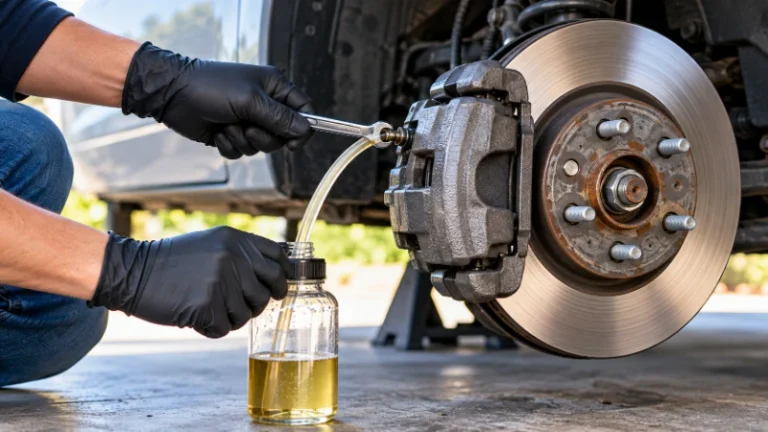
Bleeding your brakes means removing trapped air from the brake lines so the pedal feels firm and the brakes respond immediately when pressed. Air in the lines compresses under pressure, which is what causes a soft, spongy brake pedal instead of a solid one.
This guide walks through when brake bleeding is necessary, the two common methods for doing it at home, the correct sequence to follow, and how to tell the job is done correctly.
When Do You Actually Need to Bleed Your Brakes?
A spongy or soft brake pedal is the clearest sign that your brakes need bleeding. This usually happens after opening any part of the brake hydraulic system, such as replacing a caliper, brake line, or master cylinder.
Bleeding is also standard practice after a full brake fluid flush, since old fluid absorbs moisture over time and needs replacing every two to three years. Skipping this step after any brake system work risks leaving air in the lines even if the repair itself was done correctly.
What Tools Do You Need to Bleed Brakes at Home?
A basic bleeding job requires the following items, most of which are inexpensive and reusable for future brake work:
- A wrench that fits your bleeder valves – most vehicles use an 8mm or 10mm size, though it’s worth checking your specific model first.
- A clear plastic hose – lets you see fluid and air bubbles as they exit the valve.
- A catch container – holds the old fluid as it drains out.
- Fresh brake fluid – matching your manufacturer’s specification, straight from a sealed container.
- A vacuum bleeder kit (optional) – makes the job possible to do alone, without a second person at the pedal.
A two-person manual method works just as well as a vacuum bleeder and requires no special equipment beyond the basic wrench and hose.
What’s the Correct Order to Bleed Each Wheel?
Bleeding should always start with the wheel farthest from the master cylinder and finish with the one closest to it. On most vehicles, that sequence is:
- Passenger rear
- Driver rear
- Passenger front
- Driver front
This order matters because it clears air progressively through the system in the same direction fluid naturally flows. Skipping this sequence can leave air trapped in a line you’ve already finished bleeding.
How Does the Two-Person Manual Bleeding Method Work?
The two-person method uses one person pressing the brake pedal while the second person opens and closes the bleeder valve at each wheel. The person at the pedal presses down slowly, holds it, and calls out when it’s held so the valve can be opened briefly to release fluid and air together.
The valve is closed again before the pedal is released, which prevents air from being drawn back into the line. This cycle repeats at each wheel, in the correct order, until the fluid coming out runs clear and shows no visible air bubbles.
How Does a Vacuum Bleeder Work for a Solo Job?
A vacuum bleeder attaches to the bleeder valve and manually pulls fluid and trapped air out of the line using a hand pump, without needing anyone at the pedal. This makes it possible to bleed the entire system alone, since the pedal doesn’t need to be pressed at all.
Some vacuum bleeders can introduce tiny air bubbles from around the valve threads during suction, which is a normal quirk of the tool rather than a sign of a bad bleed. Watching for a steady stream of fluid, rather than isolated bubbles, is the more reliable indicator of a successful bleed with this method.
How Do You Know When the Bleeding Job Is Done?
A firm, solid brake pedal that doesn’t sink toward the floor under steady pressure is the clearest sign the bleeding job succeeded. The fluid exiting each bleeder valve should also run clear, without visible air bubbles, by the time you finish that wheel.
Test driving at low speed in a safe area afterward confirms the brakes respond immediately and consistently at each pedal press. If the pedal still feels soft after bleeding all four wheels in the correct order, there may be a leak or a deeper issue in the hydraulic system worth having inspected.
What Type of Brake Fluid Should You Use?
Your owner’s manual specifies the exact brake fluid type your vehicle requires, most commonly DOT 3 or DOT 4, and using the wrong type can damage seals in the brake system. These fluid types aren’t interchangeable with older DOT 5 silicone-based fluid, which uses a different chemical base entirely.
Always use fresh fluid straight from a sealed container, since brake fluid absorbs moisture from the air once opened and degrades in performance over time. Topping off the master cylinder reservoir throughout the bleeding process, so it never runs dry, is essential to avoid drawing new air back into the system.
Conclusion
Bleeding your car’s brakes is an essential maintenance task that restores a firm brake pedal, removes trapped air from the hydraulic system, and helps ensure safe, consistent stopping performance. Whether you choose the traditional two-person method or use a vacuum bleeder for a solo job, following the correct wheel sequence, using the proper brake fluid, and keeping the master cylinder topped up are the keys to a successful brake bleed.
If the brake pedal still feels soft after completing the procedure, don’t ignore it. Recheck your work for leaks or trapped air, and inspect the hydraulic system if necessary. Taking the time to bleed your brakes correctly improves both safety and braking confidence, making it a worthwhile DIY project for anyone comfortable performing basic vehicle maintenance.
Frequently Asked Questions
Do you need to bleed brakes every time you replace brake pads?
No. Replacing brake pads alone does not normally require brake bleeding because the hydraulic system remains sealed. However, if you replace a brake caliper, brake hose, master cylinder, or open any brake line, you should bleed the brakes to remove trapped air.
Can you drive a car with air in the brake lines?
You should avoid driving if you suspect air is trapped in the brake lines. Air compresses under braking, which can cause a soft or spongy brake pedal and increase stopping distance. Bleed the brakes and confirm the pedal feels firm before driving.
What is the correct brake bleeding order?
For most vehicles, bleed the wheel farthest from the master cylinder first and work toward the closest. The typical sequence is:
- Passenger rear
- Driver rear
- Passenger front
- Driver front
Always check your vehicle’s service manual, as some ABS or specialty brake systems may require a different procedure.
How can you tell if your brakes are fully bled?
Your brakes are properly bled when:
- The brake pedal feels firm and does not slowly sink.
- No air bubbles appear in the clear hose during bleeding.
- Fresh, clean brake fluid flows from each bleeder valve.
- The vehicle brakes consistently during a careful low-speed test drive.
How often should brake fluid be flushed and bled?
Most vehicle manufacturers recommend replacing brake fluid every 2–3 years or according to the maintenance schedule in your owner’s manual. Regular brake fluid changes help prevent moisture buildup, internal corrosion, and reduced braking performance.
Can you bleed brakes without a helper?
Yes. You can bleed brakes by yourself using a vacuum brake bleeder or a pressure bleeder. A one-way check valve bleeding kit also works for many vehicles, although the traditional two-person method remains one of the most reliable approaches.
What type of brake fluid should I use?
Always use the brake fluid specified by your vehicle manufacturer, such as DOT 3 or DOT 4. Never substitute DOT 5 silicone-based brake fluid unless your vehicle specifically requires it. Mixing incompatible brake fluids can damage the braking system.
Why is my brake pedal still soft after bleeding?
If the brake pedal remains soft after correctly bleeding all four wheels, the problem may not be trapped air. Possible causes include a leaking brake line, a failing master cylinder, worn brake components, or air trapped inside the ABS module. In these cases, further diagnosis or professional inspection is recommended.