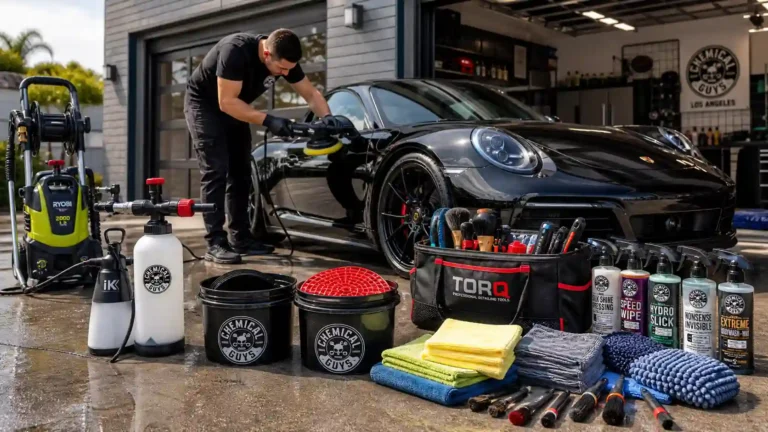
Car care tools and equipment are the foundation of proper vehicle detailing and long-term maintenance. The right tools help clean, protect, and restore every part of a car, from paint and glass to interior surfaces.
This article explains how different tools work, why they matter, and how to choose the right setup for your needs. It covers exterior and interior tools, paint correction equipment, protection methods, and professional vs beginner setups. You will also learn how to build a complete detailing kit and maintain your tools for long-term use.
Why Car Care Tools Matter for Proper Detailing
Car care tools play a crucial role in achieving safe, effective, and high-quality detailing results. The right tools help clean surfaces properly, reduce the risk of scratches or damage, and improve overall efficiency, making it easier to maintain a vehicle’s appearance and condition over time.
Impact on Vehicle Appearance and Longevity
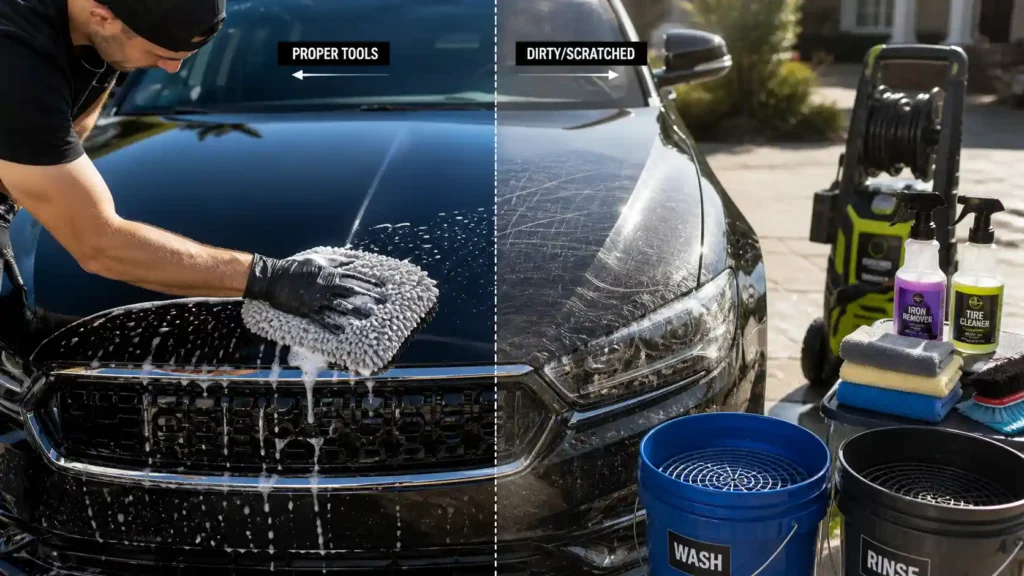
Proper tools help maintain the original condition of a vehicle by reducing scratches, swirl marks, and wear. For example, using microfiber wash mitts instead of rough sponges significantly lowers the chance of micro-scratches on paint surfaces.
Automotive detailing research and industry data show that improper washing techniques are one of the leading causes of paint damage. Data from the International Carwash Association indicates that a large percentage of visible paint defects are linked to poor washing methods and tool selection.Consistent use of proper tools also protects coatings and finishes. When surfaces are cleaned correctly, protective layers such as wax or ceramic coatings last longer. This reduces repainting or restoration costs over time.
Efficiency and Time-Saving Benefits
High-quality tools improve speed without sacrificing results. Pressure washers, foam cannons, and dual-action polishers reduce manual effort and allow deeper cleaning in less time.
Professional detailers often complete full exterior detailing in 2 to 4 hours using advanced tools. Manual methods can take much longer and still produce weaker results. This efficiency is important for both personal users and businesses.Better tools also reduce repeated work. A strong vacuum extractor, for example, removes deep dirt in fewer passes.
Difference Between DIY and Professional Results
| Aspect | DIY Detailing | Professional Detailing |
|---|---|---|
| Tools Used | Basic tools like wash mitts, towels, and simple cleaners | Advanced tools like dual-action polishers, steam cleaners, and pressure systems |
| Cleaning Quality | Good for regular maintenance | High-level deep cleaning and restoration |
| Efficiency | Takes more time and effort | Faster and more efficient workflow |
| Consistency | Results may vary depending on skill | Consistent and controlled results |
| Risk of Damage | Higher if wrong tools or techniques are used | Lower due to proper tools and experience |
| Overall Result | Clean and presentable finish | Professional-level finish with better shine and depth |
Complete Categories of Car Detailing Tools
Car detailing tools are grouped into different categories based on their function and the part of the vehicle they are designed to clean, restore, or protect. Each category plays a specific role in achieving safe, efficient, and professional-level detailing results.
- Exterior Cleaning Tools
Exterior tools are used to remove dirt, grime, and contaminants from the outer surfaces of a vehicle. This category includes washing tools, drying equipment, and wheel cleaning brushes, all designed to clean safely while protecting paint and finishes from scratches or damage. - Interior Cleaning Tools
Interior tools are designed to clean seats, carpets, dashboards, and tight spaces inside the car. These include vacuums, brushes, and steam cleaners, and they require careful use because interior materials like fabric, leather, and plastic need different cleaning approaches. - Paint Correction Equipment
Paint correction tools are used to remove imperfections such as swirl marks, oxidation, and light scratches from the vehicle’s surface. This category includes polishers, pads, and compounds that help restore paint clarity and improve overall gloss. - Protection and Finishing Tools
Protection tools apply coatings like wax, sealants, and ceramic layers to preserve the vehicle’s finish after cleaning. These tools help maintain shine, protect against environmental damage, and enhance the smoothness of the surface. - Specialized and Advanced Tools
Advanced tools are used for deep cleaning and professional-level detailing tasks. These include steam cleaners, air compressors, and extractors, which provide more powerful and precise cleaning, making them ideal for achieving high-end results.
Car Washing Tools
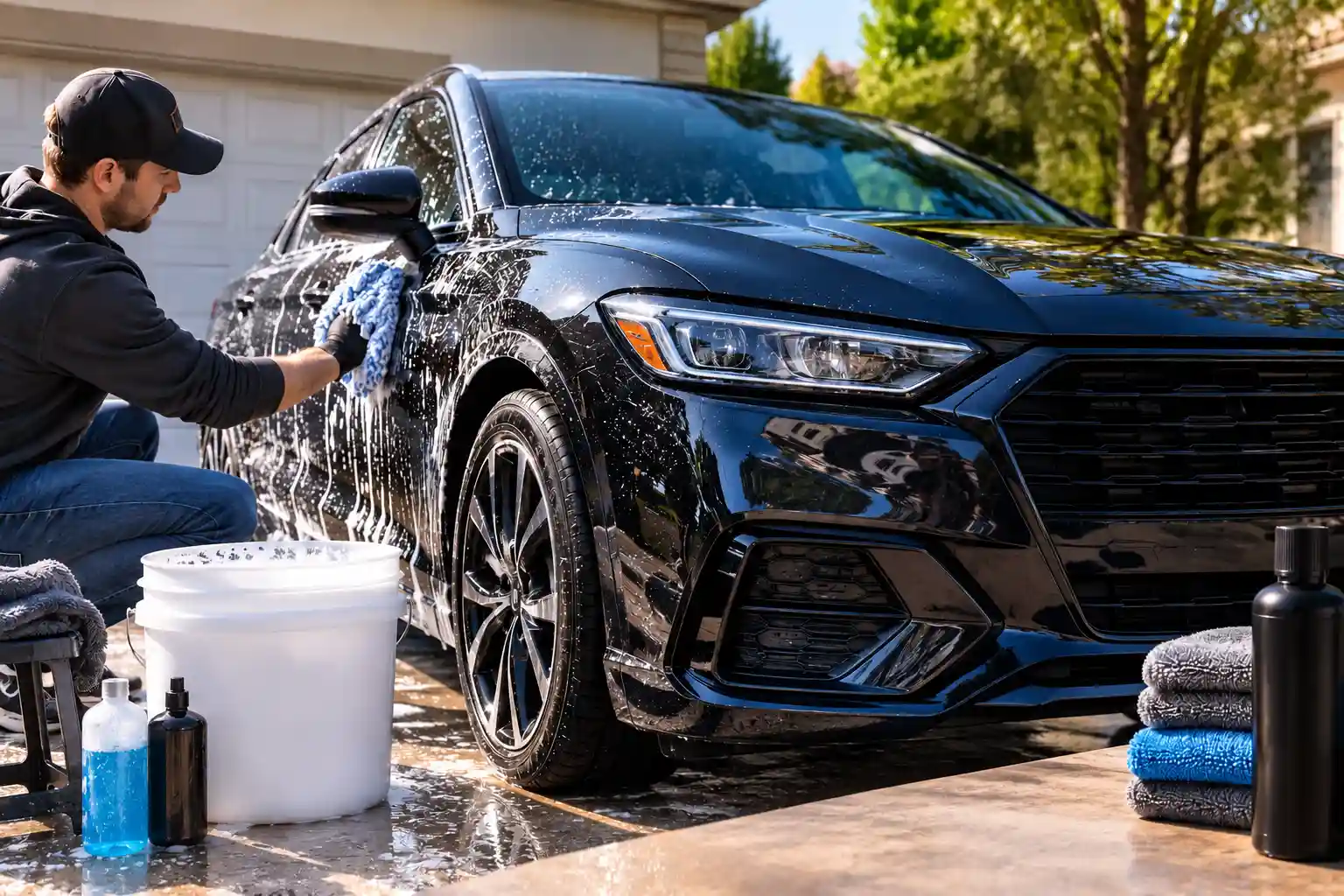
Car washing tools form the foundation of exterior detailing. These tools are designed to remove loose dirt, dust, and contaminants from the vehicle’s surface while preparing it for deeper cleaning steps. Using the right washing tools helps reduce the risk of scratches and keeps the paint in better condition over time.
- Buckets and Grit Guards
Buckets are used to hold clean water and car shampoo during the washing process. Grit guards are placed at the bottom of the bucket and work by trapping dirt and debris below a barrier, preventing them from being picked up again by the wash mitt.
Using a two-bucket method, one for clean water and one for rinsing dirty mitts, greatly reduces the chances of swirl marks. This method is widely recommended in professional detailing because it keeps contaminants away from the paint surface and improves overall washing safety. - Wash Mitts and Sponges
Wash mitts, especially those made from microfiber, are much safer than traditional sponges. They are designed to trap dirt deep within their fibers instead of pushing it across the surface.
This reduces friction and lowers the risk of scratches or swirl marks. Microfiber mitts also hold more water and soap, allowing smoother movement across the paint. Sponges, on the other hand, tend to keep dirt on the surface, which can lead to damage if used improperly. - Foam Cannons and Foam Guns
Foam cannons connect to pressure washers and produce thick, dense foam that covers the entire vehicle. This foam helps break down dirt and road grime before any physical contact is made. Foam guns work in a similar way but attach to regular hoses and produce lighter foam.
Pre-foaming is an important step because it loosens contaminants and reduces the need for aggressive scrubbing. This not only makes cleaning easier but also protects the paint by minimizing direct contact with dirt particles
Drying Tools
Drying tools are used after washing to remove water from the vehicle’s surface. Proper drying is important because leftover water can cause spots, streaks, and mineral deposits that affect the finish and overall appearance.
- Microfiber Drying Towels
Microfiber drying towels are designed to absorb large amounts of water quickly while remaining soft on the paint. Their fine fibers trap moisture and reduce friction, which helps prevent swirl marks and streaks during the drying process.
These towels can hold several times their weight in water, making them highly efficient for drying large areas like the hood and roof. Using high-quality microfiber towels ensures a smooth and safe drying experience without damaging the surface. - Air Blowers and Dryers
Air blowers and dryers use filtered air to push water off the vehicle’s surface without physical contact. They are especially useful for removing water from hard-to-reach areas such as mirrors, grills, emblems, and panel gaps.
Touchless drying is one of the safest methods because it eliminates the risk of friction-related scratches. It also speeds up the process and ensures no hidden water is left behind, which helps prevent water spots
later.
Wheel and Tire Cleaning Tools
Wheels and tires collect heavy dirt, brake dust, and road grime, which require specialized tools for proper cleaning. Using the right tools helps remove stubborn contaminants safely while protecting the finish and extending the life of the components.
- Wheel Brushes and Barrel Brushes
Wheel brushes are designed to clean the visible surfaces of rims, while barrel brushes are made to reach deep into the inner sections of the wheel. These brushes have soft yet durable bristles that remove dirt without scratching the finish.
Brake dust often contains tiny metallic particles that can stick to the wheel surface and cause damage over time if not removed. Regular cleaning with proper brushes helps maintain the wheel’s appearance and prevents long-term corrosion or staining. - Tire Scrub Brushes
Tire scrub brushes are used to clean rubber surfaces by removing built-up dirt, road grime, and old tire dressing. Their stiff bristles are effective at reaching into the texture of the tire for a deeper clean.
Clean tires allow new dressings to bond better and last longer. This not only improves the look of the tires but also helps protect the rubber from cracking, fading, and premature wear.
Pressure Washing Equipment
Pressure washing equipment uses high-pressure water flow to remove dirt, grime, and contaminants quickly and efficiently. These tools make the cleaning process faster while improving overall results compared to standard hose washing.
- Pressure Washers
Pressure washers generate a powerful stream of water that can break down and remove stubborn dirt from the vehicle’s surface. They are much more effective than regular hoses because they deliver consistent pressure, which helps clean deeply without excessive scrubbing.
Using a pressure washer reduces manual effort and speeds up the washing process. When used correctly with proper distance and settings, it is safe for paint and helps maintain a scratch-free finish. - Nozzles and Attachments
Nozzles and attachments control how water is sprayed from the pressure washer. Different nozzle angles adjust the pressure and spread of the water, allowing users to switch between gentle rinsing and stronger cleaning when needed.
Choosing the correct nozzle is important for both safety and efficiency. A wider spray pattern is safer for paint surfaces, while narrower patterns provide more power for removing heavy dirt from wheels and lower panels.
Essential Interior Car Care Tools
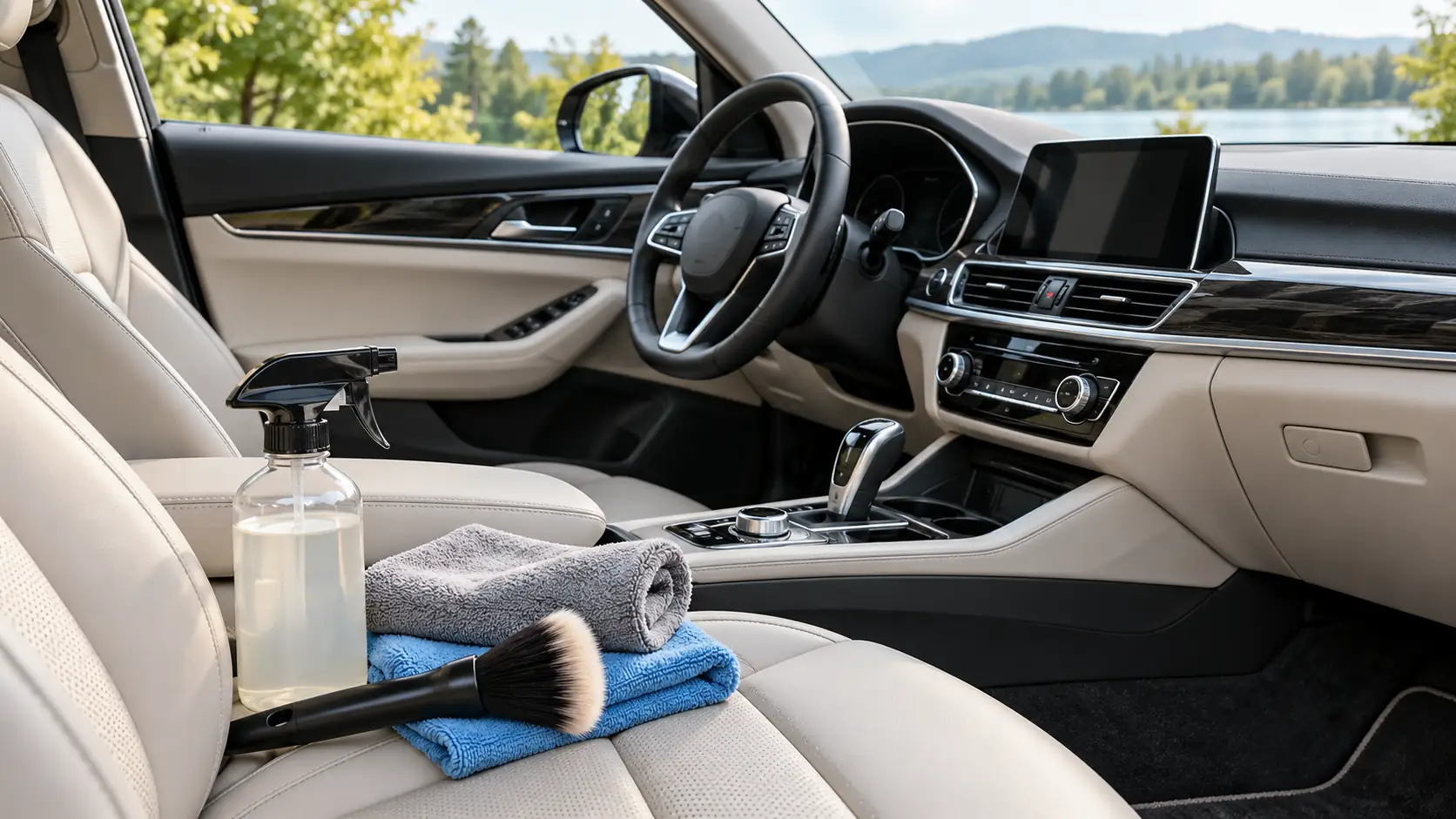
Interior detailing tools are used to clean, restore, and maintain the inside of a vehicle. These tools must be effective yet gentle because interior materials like fabric, leather, and plastic can be easily damaged if handled incorrectly.
- Vacuuming Equipment
Vacuuming is the first and most important step in interior cleaning. It removes loose dirt, dust, crumbs, and debris from seats, carpets, and floor mats, making the surface ready for deeper cleaning. Proper vacuuming improves overall cleanliness and prevents dirt from spreading during the detailing process.- Handheld Vacuums
Handheld vacuums are small, portable, and easy to use for quick cleaning tasks. They are ideal for reaching tight areas and handling light dirt or daily maintenance.
Their compact design makes them convenient, but they usually have less power compared to larger machines, so they are better suited for regular upkeep rather than deep cleaning. - Wet/Dry Vacuums
Wet and dry vacuums are more powerful and versatile. They can handle both dry debris and liquid spills, making them essential for deep interior cleaning.
These vacuums are commonly used by professionals because they can clean carpets and upholstery more effectively, especially when dealing with heavy dirt or moisture.
- Handheld Vacuums
- Deep Cleaning Tools
Deep cleaning tools are used after vacuuming to remove embedded dirt, stains, and bacteria from interior surfaces. These tools provide a deeper level of cleaning that basic methods cannot achieve.- Carpet Extractors
Carpet extractors spray a cleaning solution into the fabric and then extract it along with dirt and contaminants. This process cleans deep within carpet fibers and upholstery.
Extractors are highly effective for removing stains and restoring the original look of interior surfaces, making them a key tool for professional detailing. - Steam Cleaners
Steam cleaners use high-temperature steam to break down dirt, grease, and bacteria without the need for harsh chemicals.
They are effective for cleaning dashboards, seats, and hard-to-reach areas. Steam cleaning is also considered eco-friendly because it uses minimal water and reduces chemical use while still providing strong cleaning results.
- Carpet Extractors
- Interior Detailing Brushes and Tools
These tools are designed to clean small, delicate, and hard-to-reach areas inside the vehicle. They help achieve a more detailed and complete cleaning result.- Soft Brushes for Dash and Vents
Soft brushes are used to remove dust and dirt from sensitive surfaces like dashboards, air vents, and control panels.
Their gentle bristles prevent scratches while effectively lifting dust from textured surfaces, keeping the interior clean without damage. - Crevice Tools and Detailing Picks
Crevice tools are narrow attachments that reach into tight spaces such as seat gaps, corners, and between panels. Detailing picks help remove stuck dirt from very small areas.
These tools ensure that no hidden dirt is left behind, improving overall cleanliness and giving the interior a more refined and professional finish.
- Soft Brushes for Dash and Vents
Paint Correction and Surface Preparation Tools
Paint correction and surface preparation tools are used to restore the vehicle’s paint by removing defects and preparing it for polishing and protection. These tools help improve clarity, smoothness, and overall finish quality.
- Decontamination Tools
Decontamination tools are used to remove bonded contaminants that normal washing cannot eliminate. These contaminants include industrial fallout, tree sap, tar, and brake dust particles that stick to the paint surface.
If not removed, these particles can interfere with polishing and reduce the effectiveness of protective coatings. Proper decontamination ensures a clean and smooth surface, which is essential before any correction work.- Clay Bars and Clay Mitts
Clay bars and clay mitts are designed to pull out embedded contaminants from the paint surface. When used with a lubricant, they glide over the surface and safely lift particles without damaging the paint.
After claying, the surface becomes noticeably smoother, which improves the performance of polishing and coating applications. This step is considered essential in detailing because it prepares the paint for better correction and long-lasting protection.
- Clay Bars and Clay Mitts
Machine Polishing & Protection Equipment
| Category | Tool | Description |
|---|---|---|
| Machine Polishing Equipment | Dual Action Polishers | Dual-action polishers use a combination of вращение and oscillation movement, making them safe and beginner-friendly. They reduce the risk of burning paint and are ideal for removing light to moderate defects while improving gloss. |
| Machine Polishing Equipment | Rotary Polishers | Rotary polishers rotate in a single motion and provide more cutting power. They are mainly used by professionals for heavy paint correction but require skill to avoid overheating or damaging the paint surface. |
| Pads, Compounds & Applicators | Foam Pads | Foam pads are commonly used for polishing and finishing tasks. They provide a smooth and controlled application, making them suitable for refining paint and enhancing gloss without aggressive cutting. |
| Pads, Compounds & Applicators | Microfiber Pads | Microfiber pads offer more cutting power compared to foam pads. They are effective for removing deeper scratches and defects but require proper handling to maintain a balanced finish. |
| Pads, Compounds & Applicators | Cutting, Polishing & Finishing Compounds | These compounds contain abrasives that help remove paint imperfections and restore clarity. Modern compounds use advanced abrasive technology that breaks down during use, allowing smoother and more refined results. |
| Protection & Finishing Equipment | Wax & Sealant Applicators | These tools are used to apply wax and sealants evenly across the surface. Wax provides a natural shine, while sealants offer longer-lasting protection against environmental elements like UV rays and dirt. |
| Protection & Finishing Equipment | Ceramic Coating Tools | Ceramic coating tools help apply advanced protective layers that bond with the paint. These coatings provide long-term protection against UV damage, chemicals, and water spots, often lasting several years with proper care. |
| Protection & Finishing Equipment | Glass Cleaning Tools | Glass cleaning tools include microfiber cloths and applicators designed for streak-free cleaning. They improve visibility by removing dirt, smudges, and residues from windows and mirrors. |
| Protection & Finishing Equipment | Tire & Trim Dressing Applicators | These applicators are used to apply dressings on tires and plastic trims. They help restore color, add shine, and protect surfaces from fading, cracking, and UV damage over time. |
Professional vs Beginner Detailing Tools
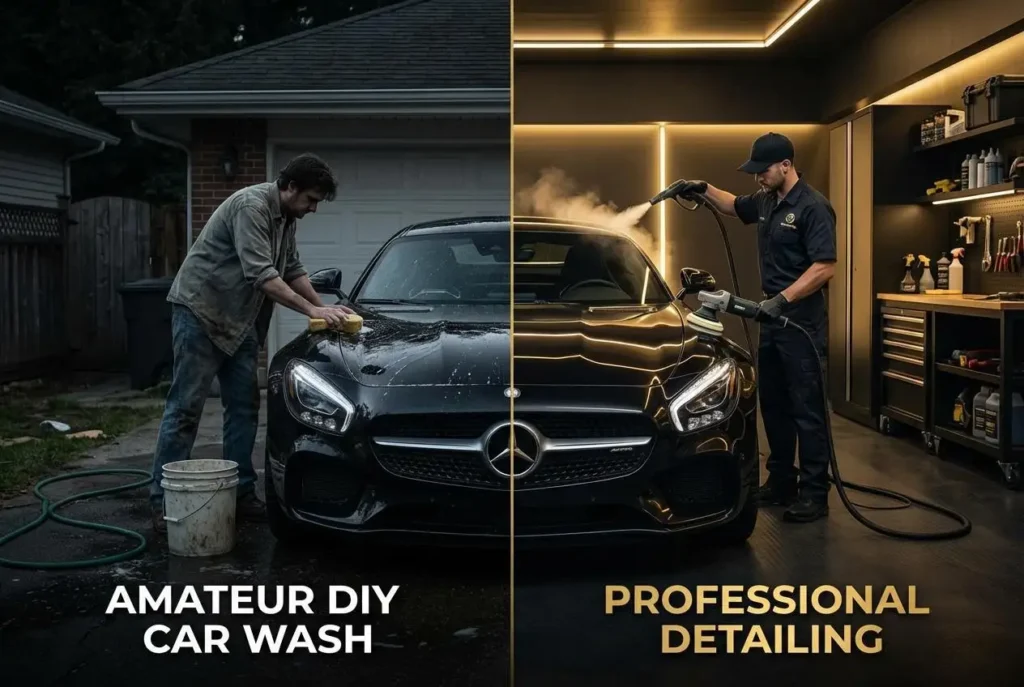
Choosing the right detailing tools depends on your experience level, budget, and the type of results you want to achieve. Beginners usually focus on safety and simplicity, while professionals prioritize efficiency, precision, and long-term performance.
Budget vs Premium Equipment Differences
Budget tools are more affordable and suitable for beginners or occasional use. However, they may have limited durability and fewer advanced features.
Premium tools, on the other hand, are built with higher-quality materials and offer better performance, reliability, and longer lifespan. While the initial cost is higher, they often provide better value over time due to reduced maintenance and replacement needs.
Must-Have Tools for Beginners
Beginners should start with basic tools that are easy to use and safe for all surfaces. These include wash mitts, microfiber towels, buckets with grit guards, and a reliable vacuum.
Such tools help maintain a vehicle properly without the risk of damaging paint or interior materials. They are also cost-effective and provide solid results for regular cleaning and maintenance.
Advanced Tools for Professionals
Professional detailers rely on advanced tools like dual-action polishers, carpet extractors, and steam cleaners to deliver high-quality results. These tools are designed for deeper cleaning, paint correction, and faster workflow.
They allow professionals to handle multiple detailing tasks efficiently while maintaining consistency and precision across different surfaces.
How to Build a Complete Car Detailing Kit
- Overview
A complete car detailing kit includes all the essential tools needed for cleaning, paint correction, and surface protection. Having the right setup ensures better results, saves time, and makes the detailing process more efficient for both beginners and professionals. - Basic Starter Kit
A basic starter kit focuses on essential tools required for regular car cleaning and maintenance. This includes wash buckets, grit guards, microfiber towels, wash mitts, and a basic car shampoo. These tools help achieve safe cleaning while preventing scratches and maintaining the vehicle’s condition. - Intermediate Setup
An intermediate detailing setup adds more advanced tools to improve cleaning performance and results. This typically includes foam cannons, pressure washers, wheel brushes, and entry-level polishing machines. These tools allow deeper cleaning and better surface preparation. - Professional Detailing Setup
A professional detailing setup includes high-end equipment designed for complete detailing services. This setup often features dual-action polishers, steam cleaners, carpet extractors, and advanced lighting tools. These tools provide precision, efficiency, and consistent professional-quality results.
Tool Maintenance and Storage Tips
- Overview
Proper maintenance and storage of car detailing tools are essential for ensuring long-term performance and consistent results. Well-maintained tools not only work better but also reduce the risk of surface damage during detailing. - Cleaning and Maintaining Tools
Detailing tools should be cleaned after every use to remove dirt, chemicals, and residue. Microfiber towels should be washed separately to maintain their softness and effectiveness. Regular cleaning helps prevent contamination and keeps tools performing at their best. - Proper Storage Practices
Tools should be stored in a clean, dry, and organized space to prevent damage and contamination. Keeping tools properly arranged also improves workflow and saves time during the detailing process. - Extending Tool Lifespan
Using tools correctly and following manufacturer guidelines helps extend their lifespan. Regular inspection and timely replacement of worn-out parts ensure consistent performance and better detailing results over time.
Common Mistakes When Choosing Car Care Tools
Choosing the wrong car care tools can lead to poor results and even damage to the vehicle’s surfaces. Understanding common mistakes helps avoid unnecessary costs and improves overall detailing quality.One common mistake is focusing only on price instead of quality. Cheap tools may seem cost-effective but often lack durability and performance. Another mistake is using the wrong tool for a specific task, which can cause scratches or uneven cleaning.
Lack of proper research is also a major issue. Not understanding tool functions, compatibility, and usage can reduce efficiency and lead to unsatisfactory results. Selecting the right tools based on needs and quality is key to achieving safe and effective car detailing.
Car Detailing Tools Checklist
A car detailing tools checklist helps ensure you have all the essential equipment needed for proper cleaning, correction, and protection. It keeps the process organized, saves time, and ensures consistent results by making sure no important tools are missed during detailing.
- Washing tools
- Drying tools
- Wheel and tire tools
- Interior cleaning equipment
- Paint correction tools
- Protection tools
Conclusion
Car care tools and equipment are essential for proper detailing and long-term vehicle maintenance. The right tools help clean surfaces safely, protect paint and interior materials, and maintain the overall condition of a car without causing damage. They also improve efficiency, making the detailing process faster and more effective.
From basic washing tools to advanced polishing machines, each tool plays an important role in achieving better results. You do not need to start with everything, as a simple setup with essential tools can deliver strong results. Over time, upgrading to advanced tools becomes easier as your experience grows. Consistency matters most. Regular use of the right tools keeps the vehicle clean, protected, and well-maintained while helping preserve its value and overall appearance.
FAQs About Car Care Tools and Equipment
What are the most important car care tools for beginners?
The most important car care tools for beginners are wash mitts, microfiber towels, buckets with grit guards, and a vacuum cleaner. These tools allow safe exterior and interior cleaning while reducing the risk of scratches or damage. They form the basic setup needed for effective car maintenance.
How often should car detailing tools be cleaned?
Car detailing tools should be cleaned after every use to maintain performance and prevent dirt buildup. Regular cleaning ensures tools remain effective, reduces contamination, and helps extend their lifespan, especially for microfiber towels and brushes.
Are expensive detailing tools worth it?
Expensive detailing tools are worth it for long-term use because they offer better performance, durability, and consistency. However, beginners can achieve good results with budget-friendly tools, making premium equipment optional rather than necessary at the start.
Can I detail my car without professional tools?
Yes, you can detail your car without professional tools by using basic cleaning equipment. However, professional tools provide deeper cleaning, better efficiency, and higher-quality results that are difficult to achieve with standard tools.
What is the difference between polishing and waxing tools?
Polishing tools are used to remove paint defects like scratches and swirl marks, while waxing tools apply a protective layer that enhances shine and protects the surface. Polishing improves the surface condition, whereas waxing maintains and protects it.