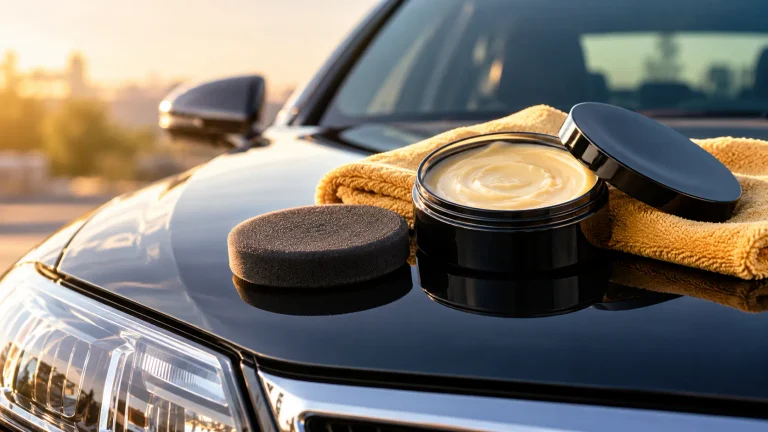
A good carnauba wax adds gloss and a sacrificial layer of protection to clean automotive paint. The difficult part is choosing between a traditional finishing wax, an easy-spreading liquid, and a carnauba-polymer blend designed for longer service between applications.
The best carnauba wax for your car depends on how you use it. A weekend cruiser and an outdoor daily driver have different needs, even when both owners want a deep, reflective finish. Application effort, existing paint protection, and maintenance habits matter as much as the name on the container.
For most owners, Meguiar’s Gold Class is the easiest place to start comparing conventional paste waxes. Butter Wet Wax suits a simple liquid routine, while Collinite 845 and 476s deserve a closer look when weather protection leads your shopping list. The six reviews below explain exactly what you gain, what you give up, and which product deserves a place in your kit.
Best Carnauba Waxes at a Glance
Start with the job you need your wax to perform. You do not need all six products; one suitable wax and good application tools are enough.
This article contains affiliate links. If you buy through them, we may earn a commission at no extra cost to you.
| Product | Best For / Category | Amazon |
|---|---|---|
| Meguiar’s Gold Class Carnauba Plus Premium Paste Wax | Best Overall | Check Price on Amazon |
| Mothers California Gold Pure Brazilian Carnauba Wax, 05550 | Best Finishing Wax for Prepared Paint | Check Price on Amazon |
| Griot’s Garage Best of Show Wax, 11171 | Best for Gloss-Focused Detailing | Check Price on Amazon |
| Chemical Guys Butter Wet Wax, WAC_201_16 | Best for Simple Wipe-On Application | Check Price on Amazon |
| Collinite No. 845 Insulator Wax | Best Liquid Carnauba-Polymer Blend | Check Price on Amazon |
| Collinite No. 476s Super Doublecoat | Best for Weather-Protection Priority | Check Price on Amazon |
Confirm the product number, size, and package contents before ordering so you receive the version reviewed here.
The 6 Best Carnauba Waxes of 2026, Reviewed
1. Best Overall — Meguiar’s Gold Class Carnauba Plus Premium Paste Wax
Best for: Owners who want a straightforward paste wax for regular glossy-paint care.
Gold Class earns our overall pick through a practical combination of carnauba-polymer formulation, glossy-paint compatibility, and an included foam applicator. The G7014J version is an 11-ounce paste, so check the product code if you want this format rather than the liquid or spray.
Meguiar’s supports hand or dual-action polisher application. That gives you room to start with a simple hand routine and use a machine later without changing waxes. Its main limitation is equally clear: adding gloss is not the same job as correcting damaged paint.
Key Features
- Carnauba-polymer protection: Combines carnauba with protective polymers for owners who want both a reflective finish and a formulated protection layer.
- Glossy-paint compatibility: Approved for glossy paint types, including clear coat, making it a practical option for conventional factory finishes.
- Hand or DA application: Use the included foam applicator for hand waxing, or a compatible dual-action polisher when you prefer machine application.
- Included foam applicator: Gives a first-time buyer one essential tool immediately; add clean microfiber towels for removal.
- 11-ounce paste format: The G7014J container suits buyers who prefer loading an applicator from a tin rather than dispensing liquid wax.
Pros
- A useful first purchase when you want one conventional wax for your regular paint-care routine.
- The included applicator simplifies getting started without buying a separate pad immediately.
- Flexible application lets you begin by hand and keep the same product if you later add a DA polisher.
- A sensible choice when your goal is maintaining already healthy paint rather than building a complicated correction kit.
Cons
- It is a protection purchase, so roughness, oxidation, or visible swirls may require additional preparation products and time.
- The paste format may feel less convenient if you prefer dispensing small amounts from a bottle onto a pad.
- It is not the right default choice for matte or satin paint; select finish-specific protection instead.
Buying Decision
Buy Gold Class if you want a dependable starting point for a conventional hand-waxing routine. It makes the most sense when your glossy paint is already in good condition and you want to add protection without purchasing a machine.
For a first wax purchase, choose this paste, pair it with clean buffing towels, and focus on applying a thin, even coat. Choose Butter Wet Wax instead if liquid application is the feature most likely to keep you waxing regularly. Check the G7014J version through the Amazon link above before ordering.
2. Best Finishing Wax for Prepared Paint — Mothers California Gold Pure Brazilian Carnauba Wax
Best for: Owners who already clean and prepare their paint before applying protection.
Mothers positions this wax as the final step in its Ultimate Wax System. Earlier steps clean and smooth the paint; this product enhances and preserves the prepared finish. That makes it a sensible choice for owners who prefer separate preparation and protection products.
The reviewed 05550 variant is a 12-ounce paste. Do not confuse it with California Gold Brazilian Carnauba Cleaner Wax, which serves a different role. The word “Pure” also does not mean the entire finished product is raw carnauba; the manufacturer’s ingredient information lists a formulated blend.
Key Features
- Dedicated finishing role: Designed as the protection stage after cleaning and surface preparation in the Mothers Ultimate Wax System.
- Carnauba-containing formulation: Uses carnauba as part of a finished formula intended to enhance and preserve the paint’s appearance.
- 12-ounce paste version: Product 05550 is the reviewed format; confirm this number when comparing listings.
- Separate preparation and protection: Lets you select preparation steps according to paint condition instead of relying on a single product for every task.
Pros
- A logical purchase when your existing kit already includes the products needed to clean and refine paint.
- Keeps the final protection step easy to identify in a multi-stage weekend detail.
- Suits an owner who wants to choose preparation products independently, based on actual surface needs.
- Helps avoid buying another cleaner wax when what your prepared paint needs is a finishing product.
Cons
- A complete preparation-and-protection routine can require more products and time than a one-step approach.
- It is the wrong purchase if you expect the wax alone to restore neglected or visibly damaged paint.
- Similar California Gold names make it easy to select the Cleaner Wax instead of this finishing wax.
Buying Decision
Buy Mothers 05550 when your paint is prepared and you want a dedicated final wax step. It is an especially clear fit if you already follow a separate cleaning, refining, and protection routine.
Before spending on the wax, decide whether your existing preparation products cover the work your paint needs. If they do, this purchase fills a specific gap in your kit. If you want to reduce the number of steps on lightly weathered paint, compare a suitable cleaner wax first. Use the Amazon link above and verify the 05550 paste version.
3. Best for Gloss-Focused Detailing — Griot’s Garage Best of Show Wax
Best for: Enthusiasts who prioritize the appearance of freshly prepared paint.
Best of Show Wax is our gloss-focused pick because Griot’s emphasizes color, depth, and clarity in its product description. The manufacturer describes a heavy carnauba content and a revised formula intended to make residue removal easier. These are formulation claims, rather than proof that it will outshine every alternative on every car.
The reviewed product is the 16-ounce liquid wax, item 11171. Best of Show Spray Wax is a separate product. For a car-show preparation routine, the useful question is whether you enjoy applying a finishing wax after the paint has been cleaned and refined.
Key Features
- Appearance-focused formula: Griot’s emphasizes color, depth, and clarity, making this an appropriate shortlist choice when finish presentation is your main goal.
- Heavy carnauba content: The manufacturer’s description highlights carnauba as part of the wax’s gloss-focused formulation.
- Revised residue-removal formula: Designed to make buffing easier, a useful consideration for owners who find removal the least enjoyable part of waxing.
- 16-ounce liquid format: Item 11171 provides bottle dispensing for those who prefer applying liquid wax to a pad.
Pros
- Gives appearance-focused buyers a clear alternative to choosing entirely around advertised protection months.
- Suits a planned detailing session before a cruise night, club meet, or show, when you have time to prepare the paint first.
- Liquid dispensing may fit your habits better than working from a hard-paste tin.
- Its purpose is easy to understand: use it as the finishing purchase in an appearance-led paint-care routine.
Cons
- Spending on a finishing wax before addressing visible swirls can leave the main appearance problem unresolved.
- This pick does not come with evidence from our own testing that it beats the other waxes for gloss or longevity.
- Owners shopping primarily to stretch protection intervals have a clearer durability-focused comparison in 845 and 476s.
Buying Decision
Buy Best of Show Wax if a carefully finished appearance is what makes a detailing session worthwhile for you. It belongs on the shortlist for a well-maintained weekend car or an enthusiast who enjoys preparing paint before waxing.
Put preparation first: if the car still shows heavy swirls, allocate part of the budget to appropriate correction rather than expecting wax to hide everything. Once the paint is ready, item 11171 is the liquid version to compare. If your main question is how rarely you can reapply protection, look at the Collinite picks before ordering.
4. Best for Simple Wipe-On Application — Chemical Guys Butter Wet Wax
Best for: Owners who want an uncomplicated liquid-wax application process.
Butter Wet Wax is a liquid carnauba wax built around a wipe-on, wipe-off routine. Chemical Guys instructs users to shake the bottle, start with a clean surface, apply a thin coat with a foam or microfiber applicator, and buff the residue with microfiber.
That straightforward sequence is its strongest buying argument. The reviewed WAC_201_16 bottle is the 16-ounce version. Choose it because its process fits your routine, rather than expecting a quick application to deliver the same longevity as every other protection system.
Key Features
- Wipe-on, wipe-off process: A straightforward application routine for buyers who want fewer timing decisions during a normal waxing session.
- Liquid carnauba formula: Bottle dispensing lets you add a small amount to an applicator without loading from a tin.
- Foam or microfiber application: The published directions allow either applicator type, followed by microfiber buffing.
- 16-ounce version: WAC_201_16 is the reviewed bottle; compare the product code when shopping bundles or alternative sizes.
- Clean-surface, thin-coat instructions: A clear process that makes the preparation and application requirements easy to plan.
Pros
- A practical option if a simple process is the difference between regularly waxing your car and putting it off.
- Requires a modest application setup: a suitable applicator and clean microfiber towels.
- Easy to fit into a planned wash-and-wax session without adding machine operation to the task.
- Liquid format suits buyers who dislike working with hard paste.
Cons
- The uncomplicated application process does not eliminate washing, inspection, or needed decontamination.
- It still requires manual spreading and buffing; it is not a touchless rinse-on protectant.
- Buyers whose main priority is a specific multi-month protection target should compare products with relevant published claims.
Buying Decision
Buy Butter Wet Wax if you want a liquid wax with a simple application routine you will actually use. It is a strong fit for owners who enjoy a freshly finished car but do not want to make every waxing session an elaborate project.
Choose it for convenience, not an assumed advantage in protection lifespan. If your outdoor daily driver needs a protection-focused liquid and you are willing to follow its application guidance, compare 845. Otherwise, check the WAC_201_16 bottle through the link above and add the applicator and towels you need.
5. Best Liquid Carnauba-Polymer Blend — Collinite No. 845 Insulator Wax
Best for: Daily-driver owners who want a liquid hybrid with a protection-focused formulation.
Collinite explicitly describes 845 as a carnauba-polymer hybrid paint sealant. It is a useful middle ground for buyers who want carnauba in the formula and prefer spreading a liquid rather than loading an applicator from a hard paste.
The manufacturer advertises four to seven months of weather protection, not a guaranteed interval for every vehicle. It supports hand and dual-action application and offers the product in a 16-fluid-ounce bottle. Collinite also excludes several surfaces, including glass and non-painted plastic, so avoid treating it as a universal exterior protectant.
Key Features
- Carnauba-polymer hybrid: Combines a carnauba-containing finish with a formulation explicitly positioned by Collinite as a paint sealant.
- Liquid application: The bottle format offers an alternative to the hard paste used in 476s.
- Hand and DA support: Suitable for hand application or a dual-action machine with the appropriate setup.
- Published weather-protection claim: Collinite advertises four to seven months; conditions and preparation determine the result on your vehicle.
- 16-fluid-ounce bottle: The reviewed format is useful to identify when comparing individual bottles and bundles.
Pros
- A compelling shortlist option for owners who want liquid application and a protection-focused formula together.
- Fits a hand-applied routine while leaving machine application available for owners who already have a DA.
- Offers a clear alternative when you want to consider longer advertised protection without moving to hard paste.
- Makes sense as the main protection purchase in a kit that already covers washing and paint preparation.
Cons
- Collinite excludes glass, rubber, and several other non-painted materials, so careful application around trim is necessary.
- Its consistency changes with temperature; expect a thicker gel in colder conditions and a thinner liquid when warm.
- Adding a second coat takes planning: Collinite recommends at least 12 hours between coats.
Buying Decision
Buy 845 if your priority is a liquid carnauba-polymer product with a protection-focused role. It is the more convenient Collinite format to shortlist when you prefer bottle dispensing or already apply protection with a DA.
For a daily driver, choose between 845 and 476s based on the process you are willing to repeat. Start with 845 if hard paste puts you off waxing; consider 476s if the higher manufacturer durability claim is worth the more deliberate application. Check the 845 bottle above and confirm that your intended surfaces are approved.
6. Best for Weather-Protection Priority — Collinite No. 476s Super Doublecoat
Best for: Owners who prioritize seasonal protection and are comfortable applying hard paste wax carefully.
476s is Collinite’s traditional hard-paste carnauba-polymer blend. The manufacturer identifies it as its most durable classic wax and advertises seven to ten months of weather protection. That supports our weather-protection award, but the figure remains a manufacturer claim rather than a result from this comparison.
It is a protection product, not a scratch-removing polish. It also carries restrictions for materials such as rubber, glass, and non-painted plastic. For a vehicle with extensive textured trim, careful application around those areas is part of the ownership tradeoff.
Key Features
- Hard-paste hybrid formulation: A traditional paste combining carnauba and polymers for a protection-focused finish.
- Highest classic-wax durability positioning: Collinite identifies 476s as its most durable classic wax, supporting its role as the seasonal-protection pick here.
- Published seven-to-ten-month claim: This is the manufacturer’s weather-protection range, not a guaranteed reapplication schedule.
- Small-section application guidance: Collinite recommends thin coats over roughly 2-by-2-foot areas, then removal when the wax hazes.
- Hand or DA use: Both methods are supported, allowing you to choose the equipment approach that fits your experience.
Pros
- A clear option for buyers who prioritize seasonal protection over the quickest application process.
- Gives you a specific reason to choose it over 845: higher manufacturer-advertised durability within the same classic range.
- Small-section instructions provide a manageable approach to a deliberate hand-waxing session.
- Worth shortlisting when you are happy to invest application time upfront rather than shop mainly for convenience.
Cons
- Thin coating and timely removal require attention; overapplication adds avoidable buffing work.
- Hard paste may be less appealing when you want to dispense product quickly onto a pad.
- Restrictions on glass, rubber, and non-painted plastic mean it cannot replace your other exterior-care products.
Buying Decision
Buy 476s if seasonal weather protection is the reason you are shopping and you accept a careful paste-wax process. It is the strongest protection-focused recommendation in this selection based on Collinite’s published positioning.
Set aside time to wash, inspect, and prepare the paint before application. Choose 845 instead if a liquid format will make the job easier to maintain consistently. If you are comfortable with hard paste, use the link above to compare the correct 476s product and container size before buying.
What Does Carnauba Wax Do for Car Paint?
Carnauba wax comes from the leaves of the Brazilian carnauba palm. Automotive formulas combine it with other ingredients so it can spread over paint and leave a protective film after buffing. A finished car wax is a formulation, not a container of raw palm wax.
That film can enhance gloss, encourage water beading, and make routine contamination easier to remove. It wears away with exposure and washing, so maintenance and reapplication are part of owning a waxed car.
Carnauba wax does not remove deep scratches, repair failing clear coat, or make paint resistant to stone chips. Polishing addresses suitable paint defects; waxing is the protection step afterward. Even freshly waxed paint needs prompt cleaning when bird droppings or other aggressive contaminants land on it.
Also, carnauba and polymers are not mutually exclusive. Several picks below blend natural wax with synthetic ingredients. Those blends belong in this category, but they should not be confused with a purely synthetic sealant or a dedicated ceramic coating.
How We Chose These Six Carnauba Waxes
We compared manufacturer product information, published application guidance, surface restrictions, and formulation descriptions. These are research-based recommendations, rather than results from a hands-on comparison test.
The selection focuses on six practical criteria:
- Category fit: Each product contains carnauba and serves as a paint-protection product.
- Surface compatibility: Recommendations focus on compatible glossy automotive paint and clear coat.
- Application method: Paste versus liquid, hand application, and supported machine use.
- Purpose: Routine waxing, finishing prepared paint, or prioritizing weather protection.
- Maintenance demands: How preparation, washing, and exposure affect the buying decision.
- Value: Whether a product fits the owner’s actual routine, rather than simply offering a larger container.
The awards below describe editorial suitability. Manufacturer durability figures are identified as claims, and actual longevity depends on conditions.
How Do You Choose the Right Carnauba Wax?
The right wax matches your finish, preparation routine, and willingness to maintain it. Start with those questions before comparing container sizes or marketing descriptions.
Check the Finish Before Buying
Glossy clear-coated paint is the main focus of this guide. Matte and satin finishes need products specifically approved for them because gloss-enhancing wax can change their appearance.
Vinyl wraps, paint protection film, and existing ceramic coatings also require separate compatibility checks. Approval for painted metal does not automatically cover those materials. Ask the finish or protection-system manufacturer when the label does not answer your question.
Decide Whether You Need Preparation or Protection
If washed paint still feels rough, investigate bonded contamination before waxing. If you see swirl marks or oxidation, decide whether suitable polishing is needed. A fresh protective film cannot correct those underlying problems.
Clean, smooth paint in good condition does not need aggressive correction simply because you are changing waxes. Match preparation to the condition of the surface and avoid unnecessary abrasive work.
Choose an Application Process You Will Repeat
Paste and liquid describe format, not a universal quality ranking. A liquid can be convenient to dispense onto a pad; a paste lets you load a small amount from a tin. Either can become frustrating if applied too heavily.
For a first purchase, think about your working space and patience. If you enjoy a deliberate hand-waxing session, a paste can suit you. If you want a simple bottle-and-applicator routine, a liquid may encourage more consistent maintenance.
Treat Durability Figures as Conditional
A published month range is useful context, but weather, washing, storage, and preparation affect service life. A car parked outside year-round faces different conditions from a garage-kept weekend vehicle.
Do not choose a wax solely by the longest advertised number. A product that fits your application habits can be a better purchase than one you avoid using because the process feels inconvenient.
Include the Tools in Your Budget
Allow for a clean applicator and suitable microfiber buffing towels. Inspect them for embedded debris before touching paint, and change towels when they become loaded with residue.
An included applicator is helpful, but it does not make the rest of the detailing kit unnecessary. Buying another wax while using dirty towels is unlikely to improve your finish.
How Should You Apply Carnauba Wax?
Apply wax to properly prepared paint using the product’s own directions. There is no single haze time that suits every formula.
- Wash the vehicle and remove loose dirt before touching it with an applicator.
- Dry and inspect the paint; address contamination or suitable defects only when necessary.
- Work in a shaded area on a cool surface where practical.
- Apply a thin, even film with a clean, appropriate applicator.
- Follow the product’s removal instructions rather than letting every wax dry for the same time.
- Buff gently with clean microfiber and inspect edges for residue.
- Follow any curing or second-coat instructions before adding more product.
For 476s specifically, Collinite recommends thin application in approximately 2-by-2-foot sections and removal when it hazes. Its typical one-to-three-minute haze estimate varies with conditions. Butter Wet Wax uses its own wipe-on, wipe-off guidance instead; copying a different wax’s timing is unnecessary.
What Mistakes Should You Avoid?
Most waxing problems begin with preparation or excess product rather than an inadequate brand.
- Applying a thick coat: More residue means more removal work; it does not establish proportionally better protection.
- Waxing dirty paint: Loose particles can move under the applicator and mark the finish.
- Using wax as scratch repair: Protection and paint correction serve different purposes.
- Ignoring trim restrictions: Keep the product on approved surfaces and clean accidental residue promptly.
- Combining protection systems without checking: Confirm compatibility before topping an existing coating or film.
- Judging protection from beading alone: Water behavior is one observation, not proof that a protective layer remains fully effective.
How Often Should You Reapply Carnauba Wax?
Reapply according to the product’s guidance and the vehicle’s exposure, rather than one fixed schedule for all six waxes. Inspect the finish after normal washing and assess whether your protection routine needs refreshing.
Clean bird droppings and other contamination promptly using a suitable method. Regular washing helps you inspect the surface, but strong cleaners or abrasive work can change existing protection. If polishing removes the protective film, plan to restore protection afterward.
Conclusion
Start with Meguiar’s Gold Class if you want a conventional paste wax with an included applicator and flexible application. Choose Mothers 05550 to complete a separate-step preparation routine, or Griot’s Best of Show when finish appearance is your main shopping priority.
For liquid convenience, choose Butter Wet Wax around its simple wipe-on process. If you want a protection-focused hybrid, shortlist Collinite 845 for liquid application and 476s for its higher manufacturer-advertised durability.
Pick one product that matches your paint and routine, check its current Amazon price in the comparison table, and budget for clean applicators and towels. The best purchase is the wax you can apply correctly and maintain consistently.
Frequently Asked Questions
1. Is Carnauba Wax Better Than Synthetic Wax?
Neither is automatically better for every car. Compare the finished formulation, application method, and protection requirements. A carnauba-containing product may also include polymers, so the categories often overlap.
2. Which Carnauba Wax Should a Beginner Choose?
Gold Class is our starting recommendation for a conventional paste-wax routine; Butter Wet Wax suits someone who prefers a liquid wipe-on process. Begin with compatible, clean paint and follow the selected product’s instructions. A machine is not necessary to start hand waxing.
3. Does Carnauba Wax Remove Scratches?
Carnauba wax does not remove scratches by leveling the paint. It may improve the overall appearance, but correction requires an appropriate separate process. Deep damage or clear-coat failure needs assessment beyond routine waxing.
4. Can You Apply Carnauba Wax Over Ceramic Coating?
Sometimes, but check the coating manufacturer’s guidance first. A wax topper can change the exposed surface’s water behavior and maintenance requirements. Collinite also advises checking coating compatibility before using 845 as a topper.
5. Is Paste Wax Always More Durable Than Liquid Wax?
No, format alone does not establish durability. Ingredients, preparation, and exposure matter. Compare specific products instead of assuming every paste outlasts every liquid.
6. Does “Pure Carnauba” Mean the Entire Product Is Natural Wax?
No, the wording does not establish that the complete automotive formula is 100% raw carnauba. Finished waxes need other ingredients to support application and film formation. Check the manufacturer’s ingredient information rather than inferring composition from the product name.
7. Can You Use These Waxes on Matte Paint?
Do not use them on matte paint without explicit approval for that finish. This guide focuses on glossy automotive paint. Choose a dedicated matte-compatible product when that is what your vehicle requires.
8. Should You Apply Two Coats of Wax?
A second coat is optional and should follow the product’s curing guidance. It can help address missed coverage, but does not automatically double durability. Collinite recommends waiting at least 12 hours between coats of 845.