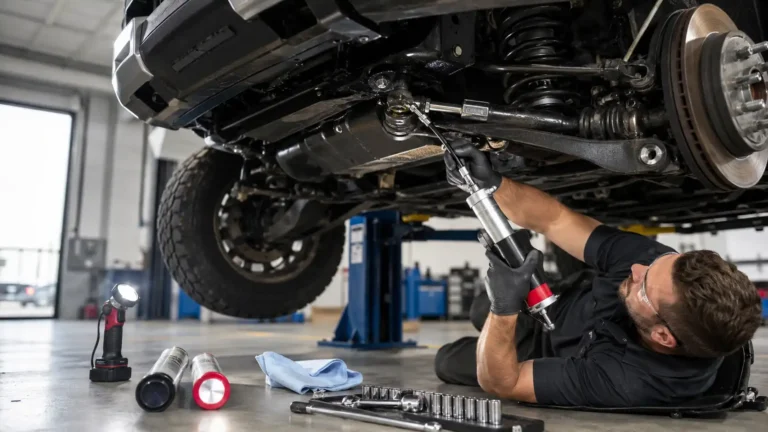
Greasing chassis and suspension components means applying fresh grease to grease fittings, called zerk fittings, found on ball joints, tie rod ends, and other pivoting suspension parts using a grease gun. This simple maintenance task reduces friction between metal parts, prevents premature wear, and keeps steering and suspension components moving smoothly for years longer than they would otherwise.
This guide covers how to find your grease fittings, what tools you need, the correct greasing technique, how often this task should be done, and how to recognize components that are overdue.
What Parts of a Car Actually Need Greasing?
Not every vehicle component uses grease fittings, and even among those that do, designs vary significantly between older and newer vehicles. The following components commonly include grease fittings on many trucks and older cars:
- Ball joints – the pivot points connecting the suspension to the steering knuckle, allowing both up-and-down and turning motion.
- Tie rod ends – connect the steering rack or linkage to the steering knuckle, transmitting steering input to the wheels.
- Sway bar links – connect the sway bar to the suspension, and some designs include a fitting while others use sealed bushings.
- Universal joints (U-joints) – found in the driveshaft of rear-wheel-drive and four-wheel-drive vehicles, allowing the driveshaft to flex as the suspension moves.
- Idler arms and pitman arms – part of older steering linkage systems, though less common on modern vehicles with rack-and-pinion steering.
Many modern vehicles use sealed components that don’t have grease fittings at all, since manufacturers pre-fill them with a lifetime supply of grease during assembly. Checking underneath your specific vehicle, or consulting a service manual, confirms which components on your car actually have fittings.
How Do You Find Grease Fittings on Your Vehicle?
Grease fittings are small metal nipples, usually about the size of a pencil eraser, that protrude slightly from the component they’re attached to. They’re typically found by looking underneath the front of the vehicle near the steering and suspension components, and sometimes underneath at the driveshaft as well.
A flashlight makes this search considerably easier, since fittings are often tucked into areas with limited visibility. If you’re unsure whether a specific component has a fitting, a straightforward way to check is running your hand carefully along suspension arms and joints, feeling for the small protruding nipple.
What Tools Do You Need to Grease a Vehicle?
A basic greasing job requires only a few tools, most of which are inexpensive and reusable for years.
- A grease gun – either a manual lever-pump style or a pistol-grip style, both work well for most home use.
- Grease tubes or cartridges – compatible with your specific grease gun, typically sold in standard sizes at auto parts stores.
- A rag – for wiping excess grease and cleaning fittings before and after application.
- A flashlight – to help locate fittings in dim areas underneath the vehicle.
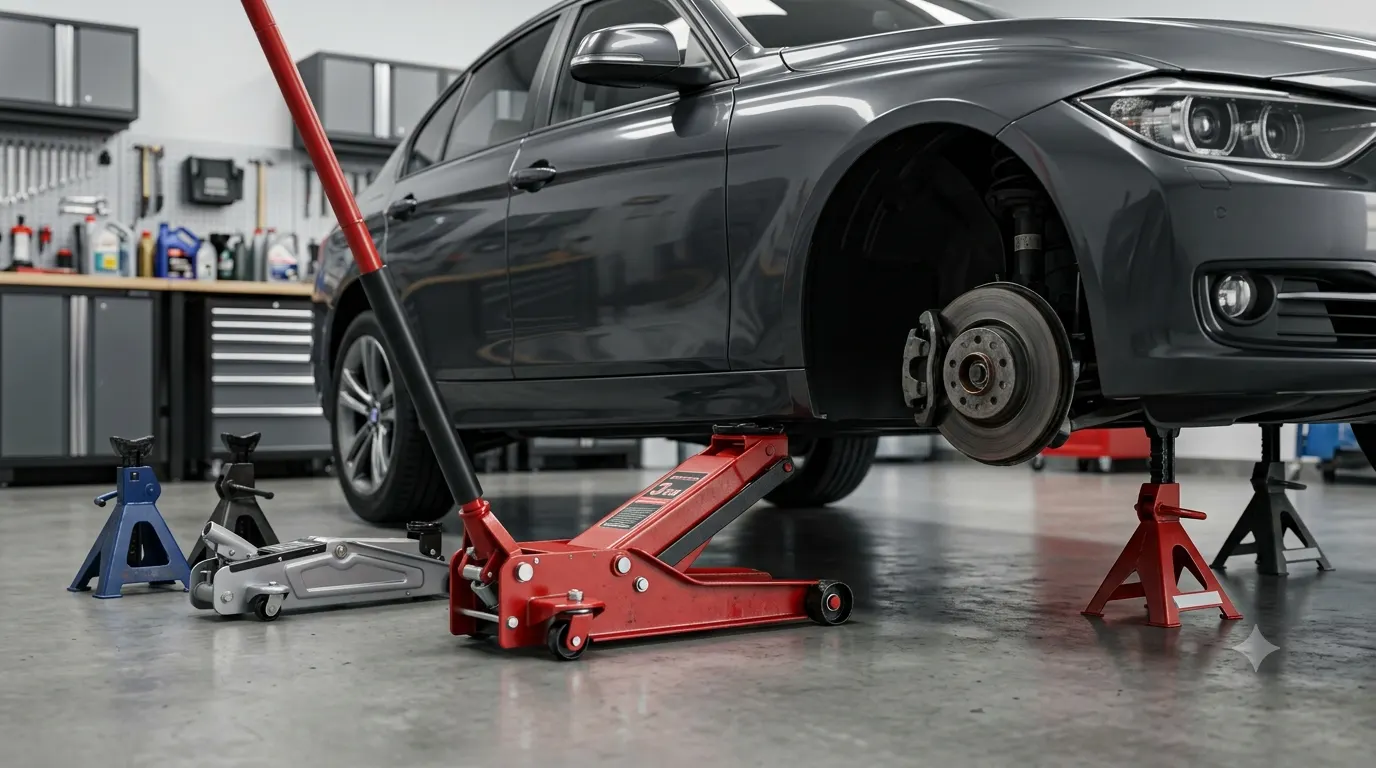
- Jack stands – if you need to raise the vehicle for better access to certain fittings.
A manual grease gun costs as little as $15 to $30, making this one of the more affordable pieces of equipment for ongoing vehicle maintenance.
What Type of Grease Should You Use?
Most general automotive applications use a multi-purpose lithium-based grease, which works well across a wide temperature range and resists water washout reasonably well. Some manufacturers specify a particular grease type for certain components, especially on performance or heavy-duty vehicles, so checking your owner’s manual is worth doing before your first greasing session.
Marine-grade or waterproof grease is a reasonable upgrade for vehicles frequently driven through water, mud, or harsh winter conditions, since it resists washing away more effectively than standard grease. Using a consistent grease type across all fittings on a vehicle also avoids any concern about mixing incompatible formulations.
How Do You Grease a Fitting Step by Step?
Greasing a suspension or steering fitting is a simple maintenance task when done correctly. Follow these steps to lubricate grease fittings safely and avoid damaging the component.
Step 1: Clean the Grease Fitting
Before attaching the grease gun, wipe the grease fitting (Zerk fitting) with a clean rag. Removing dirt, dust, and old grease prevents contaminants from being forced into the joint, which can accelerate wear instead of protecting it.
Step 2: Attach the Grease Gun Securely
Push the grease gun coupler straight onto the fitting until it locks firmly in place. A secure connection prevents grease from leaking around the fitting and ensures it flows directly into the component.
Step 3: Pump Grease Slowly
Operate the grease gun with slow, steady pumps. As fresh grease enters the joint, watch the rubber boot or seal carefully. It should expand slightly as the old grease is replaced.
Step 4: Stop When the Joint Is Full
Stop pumping as soon as the rubber boot begins to bulge slightly or a small amount of fresh grease appears around the seal. Adding more grease than necessary can rupture the rubber boot and allow dirt and moisture to enter the joint.
Step 5: Remove the Grease Gun
Twist or pull the grease gun coupler off the fitting carefully. Avoid pulling at an angle, as this can damage the fitting or make removal more difficult.
Step 6: Wipe Away Excess Grease
Use a clean rag to remove any excess grease from the fitting and surrounding area. Keeping the area clean helps prevent dirt and road debris from sticking to fresh grease.
Step 7: Repeat for All Grease Fittings
Inspect the rest of the suspension, steering, and driveshaft components for additional grease fittings. Lubricate each fitting using the same process to ensure all serviceable parts receive fresh grease.
Pro Tip
Never force grease into a fitting that won’t accept it. If grease won’t flow, the fitting may be clogged or the component may already be damaged. Also, avoid excessive pumping over-greasing is one of the most common mistakes and can tear the protective rubber boot, shortening the life of the suspension or steering component.
How Often Should You Grease Chassis and Suspension Components?
Most manufacturers that use grease fittings recommend greasing every 3,000 to 5,000 miles, often timed to coincide with an oil change for convenience. Vehicles driven frequently in mud, sand, water crossings, or harsh winter road conditions benefit from more frequent greasing, since these environments wash grease out of joints faster than normal driving.
Trucks and older vehicles with more grease fittings than modern cars generally need this attention more regularly, simply because they have more points requiring maintenance. Checking your specific vehicle’s service schedule, since interval recommendations vary meaningfully between manufacturers and vehicle types, gives the most accurate guidance.
What Are the Signs a Component Is Overdue for Greasing?
Several warning signs point to suspension or steering components that have gone too long without fresh grease.
- Clunking or popping noises over bumps – often the first audible sign of a dry or worn joint.
- A grinding or squeaking sound during turns – can indicate a dry tie rod end or ball joint under load.
- Looseness or play in the steering – a sign that a joint has worn beyond what fresh grease alone can fix.
- Visibly dry or cracked rubber boots – even without noise, a damaged boot lets dirt and moisture into the joint, accelerating wear.
Catching these signs early and greasing promptly can extend a joint’s life significantly, but a joint that’s already showing looseness or excessive wear generally needs replacement rather than just fresh grease.
Can You Over-Grease a Fitting?
Yes, pumping too much grease into a fitting can rupture the rubber boot that seals the joint, which then allows dirt, water, and road grime to enter and contaminate the grease inside. A ruptured boot often causes faster wear than not greasing the joint at all, since contamination inside a joint accelerates damage significantly.
Watching the boot closely while greasing, and stopping the moment it begins to expand, is the simplest way to avoid this mistake. If a boot does rupture during greasing, it’s worth having that specific joint inspected, since the boot itself may need replacing to keep the joint protected going forward.
Conclusion
Properly greasing your vehicle’s suspension and steering components is one of the simplest preventive maintenance tasks you can perform. When done at the recommended service intervals, it reduces friction, helps keep dirt and moisture out of moving joints, and can significantly extend the lifespan of ball joints, tie rod ends, U-joints, and other greaseable components. Although many modern vehicles use sealed, maintenance-free parts, older cars, trucks, and some heavy-duty vehicles still rely on regular chassis lubrication for reliable performance. Taking a few minutes to inspect grease fittings, using the correct grease, and avoiding overfilling can help prevent premature wear and costly repairs. Routine greasing keeps your suspension operating smoothly, improves steering performance, and contributes to safer, more dependable driving over the long term.
Frequently Asked Questions
How can I tell if my car has grease fittings?
Most vehicles manufactured before the early 2000s are more likely to have grease fittings on suspension or steering components. Many newer vehicles use sealed, maintenance-free joints instead. The easiest way to confirm is by checking underneath the vehicle for small metal grease nipples or consulting your owner’s manual or service manual.
What happens if I never grease chassis components?
If greaseable suspension or steering components are not lubricated regularly, friction increases and contaminants remain inside the joints. Over time, this can lead to premature wear, steering looseness, suspension noise, and expensive component replacement.
Which type of grease is best for suspension and steering components?
A high-quality multi-purpose lithium-based chassis grease is suitable for most passenger vehicles. Vehicles exposed to water, mud, or snowy conditions may benefit from marine-grade waterproof grease if it is approved by the manufacturer. Always follow the grease specification listed in your owner’s manual.
How often should suspension grease fittings be lubricated?
Most manufacturers recommend greasing every 3,000 to 5,000 miles (5,000 to 8,000 km) or during every oil change. Vehicles that regularly drive in dusty, muddy, wet, or off-road conditions may require more frequent lubrication.
Can over-greasing damage suspension parts?
Yes. Pumping excessive grease into a fitting can rupture the protective rubber boot. Once the boot is damaged, dirt and moisture can enter the joint, causing accelerated wear. Stop pumping as soon as the rubber boot slightly expands or fresh grease begins to appear.
Does every vehicle require chassis greasing?
No. Many modern cars use sealed ball joints and tie rod ends that are factory-filled with grease and cannot be serviced. Only vehicles equipped with grease fittings require periodic lubrication.
Can greasing suspension components eliminate squeaking or clunking noises?
Sometimes. If the noise is caused by a dry joint, fresh grease may eliminate it. However, if the component is already worn or has excessive play, lubrication alone will not solve the problem, and replacement is usually necessary.
How much does professional chassis greasing cost?
Professional chassis lubrication is often included with an oil change or offered as an additional service. Pricing typically ranges from $10 to $20, while purchasing a grease gun and grease cartridges allows most vehicle owners to perform the maintenance themselves for a lower long-term cost.
Is greasing suspension components a DIY-friendly maintenance task?
Yes. With a grease gun, the correct grease, basic safety equipment, and access to the grease fittings, most vehicle owners can complete this maintenance in less than 30 minutes. Following the manufacturer’s maintenance schedule helps maximize suspension and steering component life.