Checking your power steering fluid means locating the reservoir under the hood, reading the level against its marked lines, and topping it off with the correct fluid type if it’s low. This is one of the simplest fluid checks on any car, usually taking less than five minutes once you know where to look.
This guide covers how to find your reservoir, read the level correctly, choose the right fluid, add it safely, and recognize the warning signs of a leak that a simple top-off won’t fix.
Why Does Power Steering Fluid Matter?
Power steering fluid transmits hydraulic pressure that makes turning the wheel easy, especially at low speeds like parking. Without enough fluid in the system, that hydraulic assist weakens or disappears, making the steering wheel noticeably harder to turn.
Low fluid also allows air to enter the system, which can cause noise and accelerate wear on the power steering pump. Catching a low level early, before it causes pump damage, is the main reason this quick check is worth doing regularly.
How Do You Find the Power Steering Fluid Reservoir?
The reservoir is usually a small plastic tank located near the front of the engine bay, often labeled directly on the cap with a steering wheel icon or the words “power steering.” It’s typically connected to a black rubber hose that runs down toward the steering rack.
On some vehicles, particularly those with electric power steering rather than hydraulic, there’s no reservoir at all because the system doesn’t use fluid. Checking your owner’s manual confirms which type your vehicle has before you start looking for something that might not exist.
How Do You Read the Fluid Level Correctly?
Most reservoirs show level markings directly on the side of the translucent plastic tank, labeled “min” and “max” or “low” and “full.” With the engine off and the car on level ground, the fluid should sit between these two marks.
Some reservoirs use a small dipstick attached to the cap instead of side markings, in which case you remove the cap, wipe the dipstick clean, reinsert it fully, then pull it out again to read the level. Either method takes only a moment once you know which type your car uses.
What Type of Power Steering Fluid Should You Use?
Your owner’s manual specifies the exact power steering fluid type for your vehicle, and this detail matters more than it might seem. The following fluid types are common, but they’re not interchangeable:
- Standard power steering fluid – used by many older vehicles and some current models with hydraulic systems.
- Automatic transmission fluid (ATF) – specified by a number of manufacturers, particularly certain GM, Ford, and Chrysler models, in place of dedicated power steering fluid.
- Manufacturer-specific synthetic fluid – required by many European and Asian brands, often sold under the automaker’s own part number.
Using the wrong fluid type can damage seals inside the power steering pump and rack over time, even though many fluids look similar in color and consistency. Checking your manual or the cap itself, which sometimes lists the required type directly, avoids this mistake entirely.
How to Add Power Steering Fluid: Step-by-Step Guide
Adding power steering fluid is a simple maintenance task that usually takes less than 10 minutes. Before you begin, make sure you’ve identified the correct fluid specified in your owner’s manual, as using the wrong type can damage the steering system.
Step 1: Park the Vehicle Safely
Park your car on a level surface and engage the parking brake. If you’ve been driving, allow the engine to cool for a few minutes to avoid touching hot engine components. A level surface also ensures you get an accurate fluid level reading.
Step 2: Locate the Power Steering Fluid Reservoir
Open the hood and find the power steering fluid reservoir. It’s usually a small translucent plastic container near the front or side of the engine bay and is often labeled “Power Steering” or marked with a steering wheel symbol. If you can’t find it, consult your owner’s manual.
Step 3: Clean the Reservoir Cap
Before opening the reservoir, wipe the cap and surrounding area with a clean cloth. This prevents dirt, dust, or debris from entering the hydraulic system, which could damage the power steering pump or steering rack.
Step 4: Check the Current Fluid Level
Remove the cap and inspect the fluid level. Most reservoirs have MIN/MAX or LOW/FULL markings on the side, while some use a dipstick attached to the cap. Only add fluid if the level is below the recommended mark.
Step 5: Add the Correct Power Steering Fluid Slowly
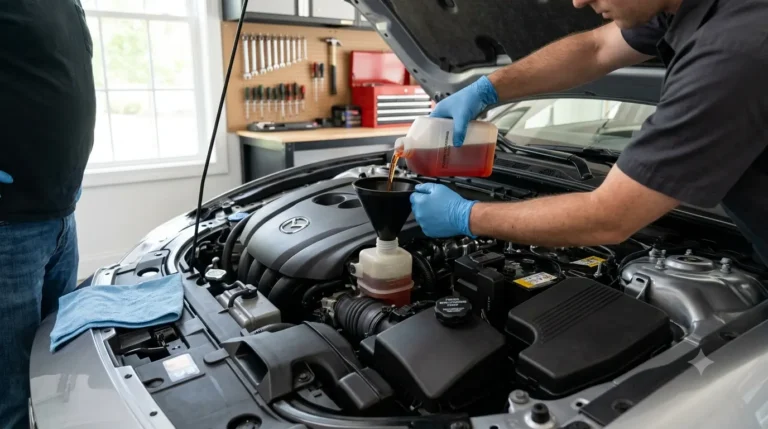
Using a clean funnel, pour the recommended power steering fluid into the reservoir a little at a time. Stop periodically to recheck the level instead of pouring the entire bottle at once. This helps prevent overfilling and reduces the risk of spills.
Step 6: Fill Only to the Recommended Level
Continue adding fluid until it reaches the FULL or MAX mark. Do not overfill the reservoir, as power steering fluid expands when it heats up and excess fluid may overflow or create unnecessary pressure inside the system.
Step 7: Reinstall the Cap and Clean Up
Securely tighten the reservoir cap and wipe away any spilled fluid from the engine bay. Keeping the area clean makes it easier to spot future leaks during routine inspections.
Step 8: Start the Engine and Check the Steering
Start the engine and slowly turn the steering wheel from lock to lock two or three times. This helps circulate the new fluid through the hydraulic system and removes any trapped air. Turn off the engine and recheck the fluid level, topping it off if necessary without exceeding the maximum mark.
Pro Tip: If the power steering fluid level drops again within a few days or you continue hearing whining noises while turning, inspect the system for leaks. A hydraulic power steering system should not consume fluid under normal operation, so a recurring low level usually indicates a problem that needs repair.
What Does It Mean If the Level Keeps Dropping?
A power steering system doesn’t consume fluid the way an engine gradually burns oil, so a level that keeps dropping between checks almost always points to a leak somewhere in the system. Common leak points include the pump seal, the hose connections, and the steering rack itself.
Reddish or light brown fluid spots underneath the front of the car are a visible sign worth investigating. Continuing to top off a leaking system without addressing the source risks running the pump dry, which can cause expensive damage that a simple fluid refill won’t prevent.
What Are the Warning Signs of Low or Old Power Steering Fluid?
Several signs point to a power steering fluid issue before the reservoir even runs completely dry.
- Whining noise while turning – often the first sign of low fluid or a failing pump, especially noticeable at low speeds or when turning sharply.
- Stiffer steering, particularly at low speed – a direct result of reduced hydraulic assist from insufficient fluid.
- Fluid that looks dark or smells burnt – a sign the fluid has degraded and may need a full flush rather than just a top-off.
- Visible fluid spots under the front of the car – a clear indicator of an active leak rather than gradual fluid breakdown.
Noticing any of these early and addressing them, whether that means a simple top-off or a shop visit for a leak, helps avoid more expensive pump or rack repairs later.
How Often Should You Check Power Steering Fluid?
Checking the level every one to two months, or anytime you notice a whining noise or stiffer steering, is a reasonable habit for most drivers. Since this system doesn’t naturally consume fluid, a level that’s staying consistent over time is actually a good sign that everything is sealed properly.
Most manufacturers don’t require a scheduled power steering fluid change the way they do for engine oil, though some recommend a flush every 50,000 to 100,000 miles depending on the vehicle. Checking your owner’s manual for a specific interval, if one exists, is the most reliable way to know what your car actually needs.
Can Low Power Steering Fluid Damage Your Car?
Yes, running a power steering system on low fluid for an extended period can cause real damage to the pump, since the pump relies on fluid both for hydraulic pressure and for lubrication of its internal moving parts. A pump forced to run dry or with air mixed into the fluid wears out its internal components far faster than one operating with a proper fluid level.
Steering rack seals can also suffer from prolonged low-fluid operation, since inconsistent pressure and trapped air create uneven wear inside the rack. A power steering pump replacement typically costs between $300 and $600 including labor, while a rack replacement can run well over $1,000, both of which are far more expensive than the small bottle of fluid that could have prevented the problem.
How Does Power Steering Fluid Age and Break Down Over Time?
Power steering fluid gradually accumulates heat cycles and microscopic metal particles from normal pump operation, which changes its color and reduces its effectiveness over years of use. Fresh fluid is typically light amber or red, while aged fluid darkens progressively toward brown or black as it absorbs heat damage and contaminants.
This gradual breakdown is different from a leak, since it happens even in a sealed system with no fluid loss at all. A full flush, rather than a simple top-off, is the appropriate fix once fluid has visibly darkened, since adding fresh fluid to already degraded fluid only partially restores its properties.
Conclusion
Checking your power steering fluid is one of the quickest maintenance tasks you can perform, yet it plays a major role in keeping your steering smooth, responsive, and reliable. By regularly inspecting the fluid level, using the correct fluid specified by your vehicle’s manufacturer, and watching for signs such as whining noises, stiff steering, or visible leaks, you can prevent costly damage to the power steering pump and steering rack. If the fluid level continues to drop, don’t rely on repeated top-offs identify and repair the leak as soon as possible. Whether your vehicle uses a traditional hydraulic system or modern electric power steering, understanding how your steering system works helps you maintain safer, more dependable performance and avoid unnecessary repair expenses.
Frequently Asked Questions
How do I know if my power steering fluid is low?
Common signs of low power steering fluid include a whining or squealing noise while turning, a steering wheel that feels harder to turn at low speeds, and a fluid level below the “MIN” mark on the reservoir. If you notice these symptoms, check the reservoir immediately and inspect the system for leaks.
Can I add power steering fluid myself?
Yes. Adding power steering fluid is a simple DIY maintenance task. Park the vehicle on level ground, locate the reservoir, verify the correct fluid type in your owner’s manual, and slowly fill the reservoir until it reaches the recommended level. Avoid overfilling, as excess fluid can overflow when the system warms up.
What type of power steering fluid does my car need?
The correct fluid depends on your vehicle. Some cars require dedicated power steering fluid, while others use automatic transmission fluid (ATF) or a manufacturer-specific hydraulic fluid. Always follow the specification listed in your owner’s manual or on the reservoir cap because using the wrong fluid can damage seals and reduce steering system performance.
Can I drive with low power steering fluid?
You can usually drive a short distance with low power steering fluid, but it is not recommended. Low fluid reduces hydraulic pressure, increases steering effort, and may damage the power steering pump if air enters the system. Refill the fluid as soon as possible and repair any leaks before continuing regular driving.
Why does my power steering fluid keep getting low?
Power steering fluid should not decrease during normal operation. If the level continues to drop, the system likely has a leak. Common leak locations include the power steering pump, pressure or return hoses, hose fittings, and the steering rack. Repeatedly topping off the fluid without fixing the leak can lead to expensive repairs.
How often should I check my power steering fluid?
Most vehicles benefit from checking the power steering fluid every one to two months or during every engine oil change. You should also inspect the fluid whenever you notice steering feels heavier than normal or hear unusual noises while turning.
What color should power steering fluid be?
Fresh power steering fluid is typically clear, light amber, or red, depending on the fluid specification. If the fluid appears dark brown or black, contains debris, or smells burnt, it has likely deteriorated and should be replaced with a complete system flush instead of simply topping it off.
Does every car have power steering fluid?
No. Many newer vehicles use electric power steering (EPS), which relies on an electric motor instead of hydraulic fluid. These vehicles do not have a power steering fluid reservoir and therefore do not require fluid checks or refills.
What happens if I overfill the power steering reservoir?
Overfilling the reservoir can cause the fluid to expand as it heats up, forcing excess fluid out of the cap or vent. This may create leaks, messy engine components, and increased system pressure. Add fluid gradually and stop at the “MAX” or “FULL” mark.
How much does it cost to fix a power steering fluid leak?
Repair costs depend on the source of the leak. Replacing a damaged hose typically costs $150–$350, a power steering pump replacement generally ranges from $300–$600, and replacing a steering rack can exceed $1,000, including parts and labor. Detecting leaks early can significantly reduce repair costs.