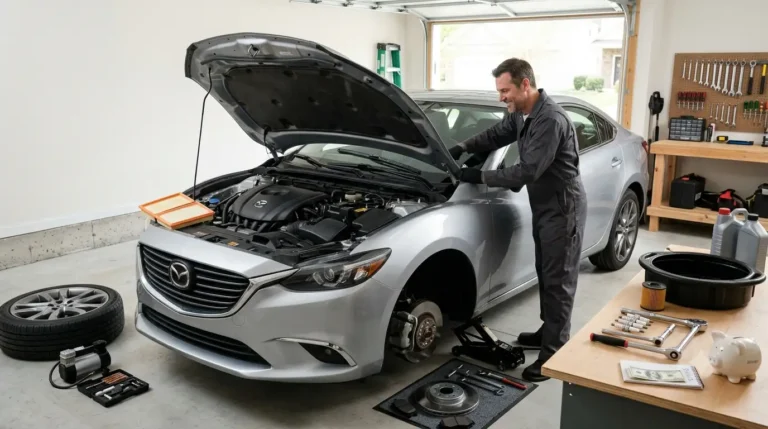
The biggest money-saving DIY car repairs are the ones shops charge the most in labor for relative to how simple the actual task is. Oil changes, brake pads, air filters, spark plugs, batteries, wiper blades, and small tire punctures top that list, often saving 50 to 80 percent of the shop price once you factor in labor markup.
This guide breaks down the real dollar difference between DIY and shop pricing for each of these repairs, plus which jobs are worth attempting and which are better left to a professional.
You can present this section in a clean, SEO-friendly table with a short transition paragraph before it.
Quick Comparison: DIY Cost vs. Shop Cost
Before deciding whether to tackle a repair yourself, compare the average DIY cost with what you would typically pay at a repair shop. The table below highlights the potential savings for some of the most common DIY car maintenance tasks.
| Repair | Average DIY Cost | Average Shop Cost | Potential Savings |
|---|---|---|---|
| Oil Change | $20–$45 | $65–$125 | $45–$80 |
| Brake Pads (Per Axle) | $30–$80 | $150–$300 | $120–$220 |
| Engine Air Filter | $15–$30 | $40–$80 | $25–$50 |
| Spark Plugs (Full Set) | $10–$100 | $150–$300 | Up to $200+ |
| Car Battery Replacement | $100–$200 | $120–$250 | $20–$50 |
| Tire Puncture Plug | $10–$20 | $20–$40 | $10–$20 |
| Wiper Blades (Pair) | $15–$30 | $40–$70 | $25–$40 |
Transition: While these average prices show the overall savings, the actual amount depends on your vehicle, the quality of replacement parts you choose, and local labor rates. Below, we’ll break down each repair to explain how much you can realistically save, the tools you’ll need, and whether it’s a good DIY project for your skill level.
How Much Do You Save Doing Your Own Oil Change?
An oil change done yourself typically costs between $20 and $45 in parts, compared to $65 to $125 at a shop for the same conventional or synthetic service. That gap comes almost entirely from labor, since the parts themselves, oil and a filter, cost roughly the same whether you buy them or a shop marks them up.
The job takes most people 20 to 30 minutes once they’ve done it a couple of times. Over a car’s lifetime, doing your own oil changes every 5,000 to 7,500 miles can save several hundred dollars a year compared to shop pricing.
How Much Do You Save Replacing Your Own Brake Pads?
Brake pad replacement done at home typically costs $30 to $80 per axle in parts, while a shop charges $150 to $300 per axle when you include labor. That’s often a savings of $100 to $200 per axle, and most cars need both front and rear pads replaced at different intervals.
The job requires basic tools, a jack, and some mechanical confidence, since it involves compressing the caliper piston and torquing lug nuts correctly. Rotors add cost if they need replacing too, but pads alone are one of the more approachable DIY brake jobs for someone comfortable working under the car.
How Much Do You Save Replacing Your Own Air Filter?
An engine air filter costs $15 to $30 at a parts store, compared to $40 to $80 at a shop once labor is added, even though the job itself takes under five minutes. Most air filters simply clip into a housing under the hood with no tools required at all.
This is one of the easiest and highest-margin DIY jobs on the list, since shops are charging significant labor for a task that involves opening a box and swapping a filter. Checking it yourself every 12,000 to 15,000 miles, or sooner in dusty conditions, also helps fuel efficiency and engine performance.
How Much Do You Save Replacing Your Own Spark Plugs?
Spark plugs themselves cost $10 to $100 for a full set depending on the type, with copper on the low end and iridium on the high end, compared to $150 to $300 at a shop including labor. The savings scale up significantly on vehicles with difficult-to-access plugs, where shop labor time, and therefore cost, increases.
On simpler engines with easily accessible plugs, this is a manageable weekend job with basic hand tools. On engines where plugs sit deep under the intake manifold, the labor difficulty rises enough that some DIYers choose to pay for that specific job while still handling easier maintenance themselves.
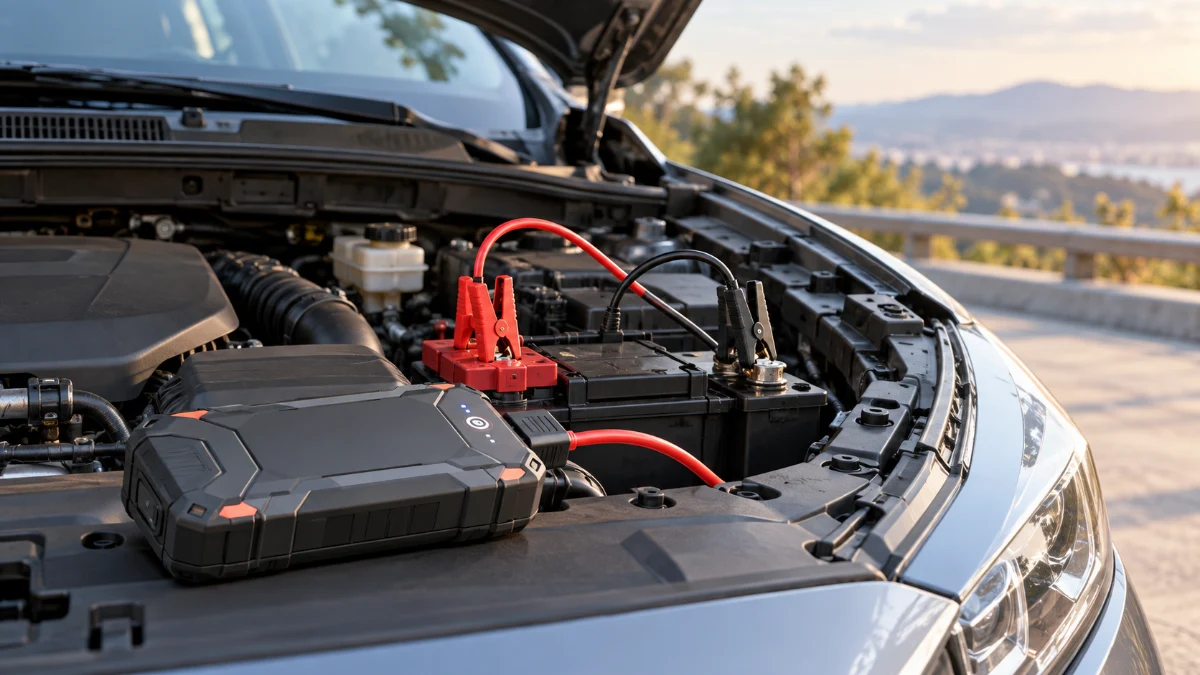
How Much Do You Save Replacing Your Own Car Battery?
A replacement battery costs $100 to $200 at a parts store, while having it installed at a shop typically adds $20 to $50 in labor on top of that same part price. The savings here are smaller in percentage terms than some other jobs, but the task itself takes under fifteen minutes with just a wrench.
Many auto parts stores will even test your old battery and core-charge your new one for free, which narrows the gap further. This makes battery replacement one of the lowest-risk, fastest DIY jobs to learn even for someone new to car maintenance.
How Much Do You Save Fixing a Small Tire Puncture Yourself?
A basic tire plug kit costs $10 to $20 and lets you repair a small puncture in a tire’s tread area in about ten minutes, compared to $20 to $40 at a shop for the same simple plug repair. The dollar gap is smaller here, but the convenience of not needing to drive to a shop on a low tire adds real value too.
This repair only applies to punctures in the tread, not sidewall damage, which should never be plugged and always requires a shop or replacement. A plug kit in your trunk is one of the cheapest tools that can also save you a tow or a stranded afternoon.
How Much Do You Save Replacing Your Own Wiper Blades?
Wiper blades cost $15 to $30 per pair at a parts store, compared to $40 to $70 installed at a shop or dealership for a job that takes under two minutes per blade. Almost every modern wiper blade snaps onto the arm without tools, using a simple clip or hook mechanism.
This is one of the simplest possible DIY jobs on any car, and the markup shops charge for installation is disproportionate to the actual labor involved. Replacing blades yourself every six to twelve months keeps this a near-zero-cost habit over time.
Which of These Repairs Should You Actually Attempt Yourself?
Not every job on this list carries the same risk level, so it helps to think of them in tiers:
- Start here (lowest risk): oil changes, air filters, wiper blades, and battery replacement. Mistakes are low-cost and the parts are inexpensive if something goes wrong.
- Next step (moderate skill needed): brake pads and spark plugs. These offer the biggest dollar savings but require more mechanical comfort and the right tools.
- Worth learning for convenience: tire plugging. The dollar savings are modest, but avoiding a shop trip for a simple puncture has real value on its own.
These four starting-tier jobs alone cover a large share of a typical car’s routine maintenance costs, making them the best place to build confidence before moving on to bigger jobs.
Conclusion
Learning a few basic DIY car repairs is one of the easiest ways to reduce vehicle ownership costs without sacrificing reliability. Simple maintenance tasks such as oil changes, air filter replacements, battery swaps, and wiper blade installation require minimal tools, take little time, and can save hundreds of dollars over the life of your vehicle. As your confidence grows, jobs like replacing brake pads and spark plugs offer even greater savings while helping you better understand how your car works.
The key is knowing your limits. Start with low-risk maintenance, follow your vehicle manufacturer’s recommendations, use quality replacement parts, and never compromise on safety. By focusing on the right DIY repairs and leaving complex or safety-critical work to professionals, you can keep your car running reliably while significantly lowering your annual maintenance expenses.
Frequently Asked Questions
What DIY car repair saves the most money?
Brake pad replacement usually provides the highest one-time savings because labor makes up a large portion of the repair cost. Replacing brake pads yourself can often save $100 to $200 per axle. Oil changes, while saving less per service, can generate similar or greater annual savings because they are performed more frequently.
What are the easiest DIY car repairs for beginners?
The best beginner-friendly DIY car repairs include:
- Replacing windshield wiper blades
- Changing the engine air filter
- Replacing the car battery
- Performing an engine oil and filter change
These jobs require few or no specialized tools, take less than an hour in most cases, and carry relatively low risk when completed according to the vehicle owner’s manual.
Do I need special tools to perform DIY car maintenance?
Not always. Many routine maintenance tasks can be completed with basic hand tools. However, jobs such as brake pad replacement require additional equipment, including:
- A floor jack
- Jack stands
- A torque wrench
- Basic socket and wrench set
Although these tools require an upfront investment, they can pay for themselves after just a few DIY repairs.
Is replacing brake pads safe for beginners?
Yes, replacing brake pads can be a suitable beginner project if you carefully follow your vehicle’s repair procedure and use the correct torque specifications. Since brakes are a critical safety system, always inspect your work thoroughly before driving. If you’re unsure about any step, consult a professional mechanic.
How much money can you save by doing your own car maintenance?
The amount varies depending on your vehicle and driving habits, but many drivers save several hundred dollars each year by handling routine maintenance themselves. Completing oil changes, air filter replacements, battery replacements, and wiper blade changes at home can significantly reduce annual maintenance costs. Including brake pad replacement may increase yearly savings to $500 or more for many vehicle owners.
Which car repairs should you not attempt yourself?
Some repairs are best left to experienced professionals because they involve critical safety systems or specialized equipment. These include:
- Sidewall tire repairs
- Major engine or transmission repairs
- Airbag and supplemental restraint system (SRS) repairs
- Advanced electrical diagnostics
- Suspension or steering repairs beyond routine maintenance
Attempting these repairs without proper training can create serious safety risks and may cost more if mistakes occur.