Resetting a check engine light is safe only after the underlying problem has actually been fixed, not as a shortcut to make the warning disappear. Clearing the code without addressing what triggered it is one of the more common mistakes drivers make, since the light almost always returns within days once the vehicle’s computer detects the same fault again during normal driving.
This guide covers the three main ways to reset a check engine light, what tools each method requires, when each approach is appropriate, and the situations where resetting the light without a proper diagnosis can actually make things worse.
Is It Safe to Reset a Check Engine Light Without Fixing the Problem First?
No, resetting a check engine light without fixing the underlying issue is not genuinely safe, since it only hides the warning rather than resolving whatever triggered it. The light exists specifically to alert you to a problem, and clearing it without repair simply removes your ability to see that warning while the underlying issue continues, potentially worsening in the meantime.
Identifying what triggered the light before resetting anything is worth the extra step, and most auto parts stores offer free code-reading services, or a basic OBD2 scanner lets you check the code yourself in a couple of minutes.
What Tools Do You Need for Each Reset Method?
An OBD2 scanner is the only tool required for the most controlled reset method, and basic models are inexpensive enough that many drivers own one alongside their regular tool kit. The battery disconnect method requires only a wrench sized to your battery terminal bolt, along with gloves and eye protection as a general precaution when working around any battery.
The drive cycle method requires no tools at all, since it relies entirely on normal driving over a period of days, though pairing it with a scanner to confirm the code has genuinely cleared gives more certainty than waiting and hoping the light turns off on its own.
How Do You Reset a Check Engine Light With an OBD2 Scanner?
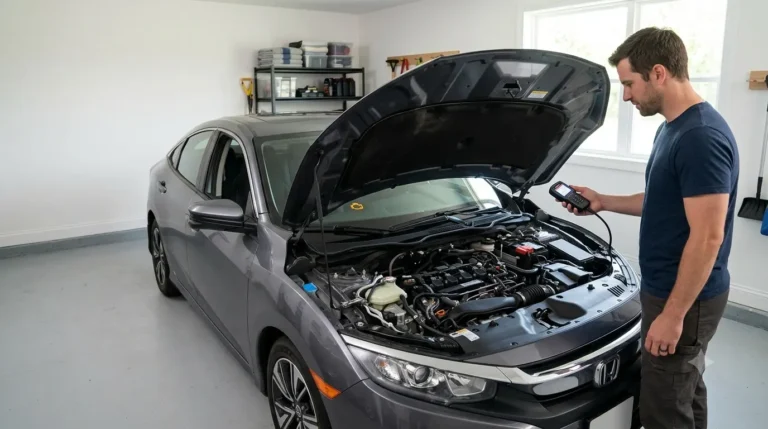
Using an OBD2 scanner is the most reliable and controlled way to reset a check engine light, and it’s the same basic method professional mechanics use. Locate the OBD2 port, usually found under the dashboard near the steering column, and plug in the scanner.
Turn the key to the “on” position without starting the engine, then follow the scanner’s prompts to read the stored trouble codes first. Once you’ve noted what triggered the light and, ideally, addressed the underlying cause, select the “clear codes” or “erase” option on the scanner to reset the light. This method resets only the check engine light and its stored codes, without affecting other vehicle systems or settings.
How Does the Battery Disconnect Method Work?
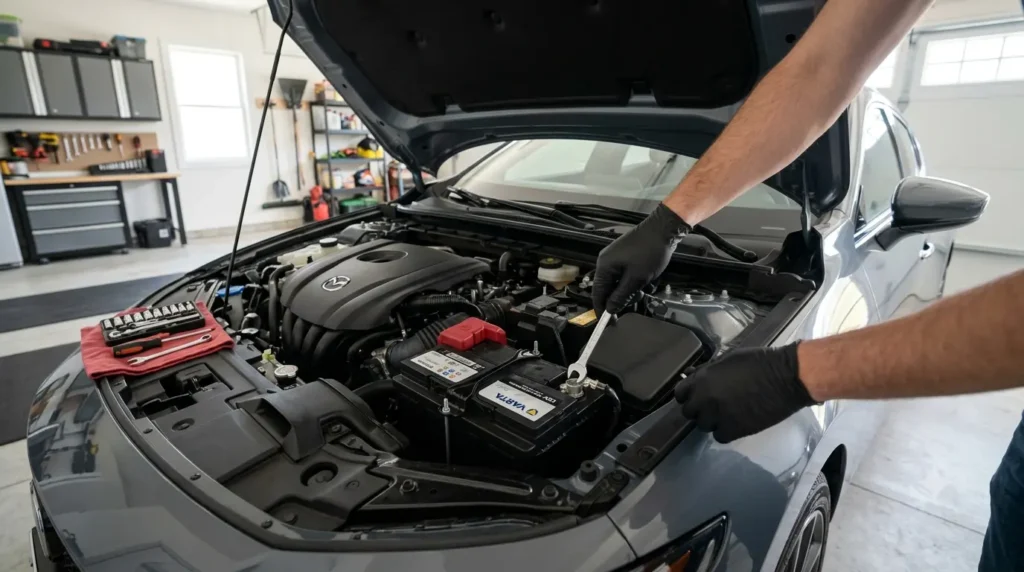
The battery disconnect method resets the check engine light by cutting all power to the vehicle’s computer systems, forcing a full reset across every module rather than just the engine light specifically. Park the vehicle safely, engage the parking brake, turn off the ignition, and locate the negative battery terminal in the engine bay.
Loosen and remove the negative terminal clamp, leave it disconnected for several minutes to ensure the computer’s memory fully clears, then reconnect it. This method is older and less precise than using a scanner, since it also resets radio presets, clock settings, and sometimes adaptive learning the engine computer has built up over time, which can cause a temporary change in how the car feels to drive until it relearns those patterns.
What Is the Drive Cycle Method and When Does It Work?
The drive cycle method resets a check engine light naturally, without any tool, by allowing the vehicle’s computer to run through its full diagnostic checks during a specific pattern of normal driving. If the underlying issue has genuinely been resolved, driving through a mix of idling, acceleration, steady cruising, and deceleration over several days often causes the light to turn off on its own once the computer confirms the fault no longer exists.
This method works well specifically because it doesn’t force a reset, it waits for the car’s own system to verify the fix, which makes it a useful confirmation step even after using a scanner or battery disconnect to clear the code manually.
When Should You Never Attempt to Reset a Check Engine Light Yourself?
A flashing check engine light should never be reset without professional diagnosis and repair first, since a flashing light indicates an active engine misfire that’s sending unburned fuel into the exhaust system, capable of overheating and destroying a catalytic converter within minutes of continued driving. Resetting a flashing light without fixing the misfire doesn’t stop the damage, it only removes your visibility into the fact that damage may still be occurring.
Any code accompanied by obvious performance problems, such as stalling, a rough idle, or a noticeable loss of power, also deserves professional attention rather than a simple reset, since these symptoms suggest the underlying issue is significant enough to affect how the car actually runs, not just a sensor reading slightly outside its normal range.
What Happens If You Reset the Light Without Fixing the Issue?
The check engine light will almost always return within a short period, often within days, once the vehicle’s computer detects the same underlying fault again during normal operation. Repeatedly clearing the code without addressing the cause doesn’t just waste time, it also means you lose the diagnostic history that could help identify a pattern, since each reset starts the vehicle’s monitoring system fresh.
In some cases, ignoring a recurring code and clearing it repeatedly can allow a minor issue to develop into a more serious and expensive repair, since the light’s entire purpose is early warning before a small problem becomes a costly one.
How Often Do Check Engine Codes Return After a Genuine Repair?
A code should not return at all after a genuine, correctly diagnosed repair, since the underlying fault that triggered it no longer exists for the computer to detect again. If a code does return shortly after a repair that was believed to be complete, it typically means either the repair didn’t fully address the root cause, a related component failed around the same time, or the repair itself introduced a new issue, such as a loose connector.
A code returning within the same drive cycle right after clearing it, without ever going away even briefly, is a particularly strong signal that the underlying problem is still active and wasn’t actually resolved, which is different from a code that returns weeks or months later due to an unrelated new issue.
Which Reset Method Should You Choose?
An OBD2 scanner is generally the best choice for most drivers, since it resets only the check engine light and its codes without disrupting radio settings, clock, or other vehicle systems. It also lets you read the stored code before clearing it, which the battery disconnect method doesn’t offer directly.
The battery disconnect method is a reasonable backup if you don’t have access to a scanner, though it comes with the tradeoff of resetting other settings and requiring you to note any security codes beforehand. The drive cycle method works best as a confirmation step after a repair, letting the car’s own system verify the fix rather than forcing an immediate reset.
Conclusion
Resetting a check engine light should always be the final step after diagnosing and repairing the underlying problem not the first. While methods like using an OBD2 scanner, disconnecting the battery, or completing a drive cycle can all clear the warning under the right circumstances, simply erasing the light without fixing the cause only hides the symptom and may lead to more costly repairs later. For most drivers, an OBD2 scanner is the safest and most reliable option because it clears diagnostic codes without resetting other vehicle settings. If the light comes back after a reset or begins flashing, it’s a clear sign that further diagnosis is needed. Addressing the root cause promptly is the best way to keep your vehicle running safely, improve reliability, and avoid unnecessary repair expenses.
Frequently Asked Questions
Can resetting a check engine light hide a serious problem?
Yes. Resetting a check engine light without fixing the underlying issue only removes the warning—it does not repair the problem. If the cause is something serious, such as an engine misfire, faulty catalytic converter, or fuel system issue, continuing to drive could lead to expensive engine or emissions system damage.
Will resetting the check engine light help my car pass an emissions test?
No, not immediately. After resetting the check engine light, the vehicle’s onboard emissions monitors must complete several drive cycles before they show a “ready” status. A recently reset vehicle often fails an emissions inspection because these monitors haven’t finished their self-tests yet.
How long does it take for a check engine light to reset itself after a repair?
In most cases, the check engine light turns off after several successful drive cycles once the vehicle’s computer confirms the problem has been fixed. Depending on the fault and driving conditions, this usually takes anywhere from a few trips to about one week.
Is disconnecting the battery a safe way to reset the check engine light?
Yes, disconnecting the battery is generally safe if performed correctly, but it is not the preferred method. It resets the engine computer along with radio presets, clock settings, and adaptive memory. Using an OBD2 scanner is a more accurate and convenient way to clear diagnostic codes.
Can I reset a check engine light at home without an OBD2 scanner?
Yes. You can reset a check engine light by disconnecting the battery or allowing the vehicle to complete enough drive cycles after the repair. However, an OBD2 scanner is the safest and most reliable method because it lets you read and clear trouble codes without affecting other vehicle settings.
Will the check engine light turn off by itself?
Yes, but only if the underlying problem has been completely resolved. After the vehicle successfully completes several drive cycles without detecting the fault again, the engine control module may automatically turn off the check engine light. If the problem still exists, the warning light will remain on or return shortly after being cleared.
What is the safest way to reset a check engine light?
The safest method is to first diagnose and repair the problem, then use an OBD2 scanner to clear the stored diagnostic trouble codes. This approach preserves other vehicle settings and confirms that the issue has been properly addressed before resetting the warning light.
Can I drive with the check engine light on after resetting it?
It depends on the cause. If the underlying problem has not been repaired, the light will likely return, and continued driving could worsen the issue. If the check engine light is flashing, stop driving immediately and have the vehicle inspected, as this usually indicates a severe engine misfire that can quickly damage the catalytic converter.