
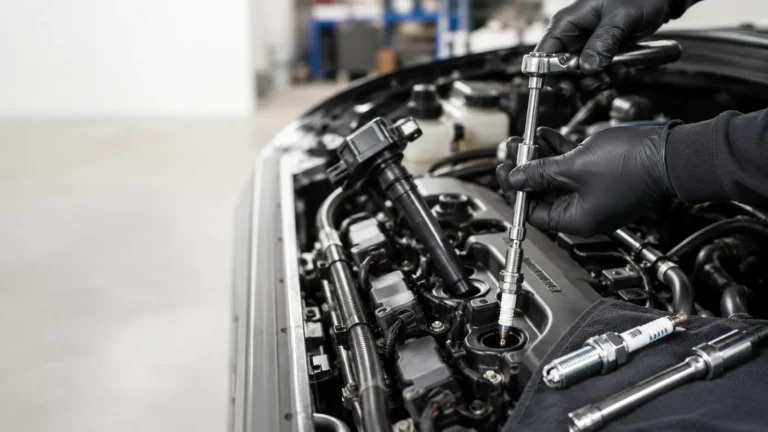
Worn spark plugs quietly rob an engine of smooth performance long before they cause an obvious problem. A properly functioning set of spark plugs plays a direct role in fuel efficiency, and studies on ignition system wear have shown that fouled or worn plugs can measurably reduce fuel economy while increasing emissions, since incomplete combustion sends unburned fuel straight out the exhaust rather than powering the engine.
Replacing spark plugs is one of the more satisfying DIY jobs, since the improvement in idle smoothness and throttle response is often noticeable within the first few minutes of driving afterward. This guide covers what tools you need, the correct order to remove and install each plug, how spark plug material affects replacement intervals, and the details that prevent a routine job from turning into an expensive mistake.
What Tools Do You Need to Replace Spark Plugs?
Replacing spark plugs requires a spark plug socket, a ratchet, one or more extensions, a torque wrench, a gapping tool, and dielectric grease. The spark plug socket is different from a standard socket, since it has a rubber insert designed to grip the plug’s ceramic insulator without damaging it during removal or installation.
Having the correct new spark plugs on hand, matched to your vehicle’s specification rather than a generic equivalent, also matters, since different engines call for different plug types, heat ranges, and gap settings. A shop manual or your owner’s manual will list the exact part number and gap specification for your engine, and buying based on that number rather than a general size match avoids compatibility issues.
How Do Spark Plug Materials Affect Replacement Intervals?
Copper spark plugs are the least expensive option but also wear fastest, typically needing replacement well before plugs made from more durable materials. Platinum spark plugs use a more wear-resistant metal at the electrode tip, extending the interval meaningfully compared to copper.
Iridium spark plugs represent the longest-lasting common option, using an even harder and more wear-resistant metal that allows for a finer electrode tip, which some manufacturers note improves ignition efficiency slightly in addition to extending service life. Many modern vehicles come factory-equipped with iridium or platinum plugs specifically because the extended interval reduces how often this maintenance needs to happen, even though the individual plugs cost more upfront than copper equivalents.
How Do You Prepare the Engine Before Starting?
Preparing the engine means letting it cool completely and parking on level ground before removing anything. A hot engine risks burns from surrounding components, and working on an angled surface makes it easier to drop small parts into hard-to-reach areas around the cylinder head.
Locate the spark plug wires or ignition coils, which sit directly above each spark plug, and remove any engine cover if one is blocking access. Taking a photo of the wiring layout before disconnecting anything is a simple habit that prevents confusion when reconnecting later, especially on engines where wire routing isn’t obvious or where coils are staggered across multiple rows of cylinders.
How Do You Remove the Old Spark Plugs?
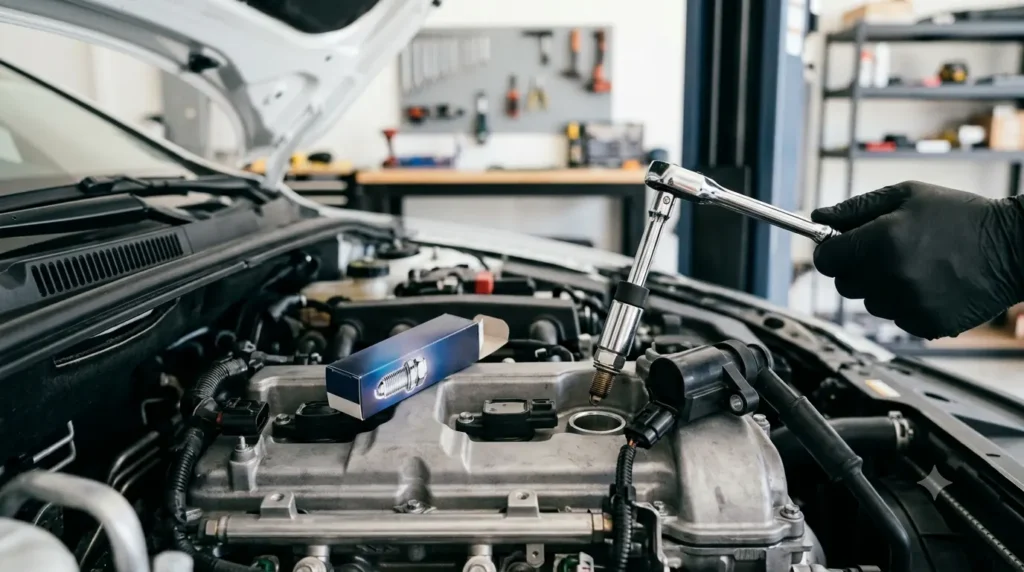
Removing old spark plugs means disconnecting the coil or wire first, then unscrewing the plug itself with a spark plug socket. Gently disconnect the ignition coil or spark plug wire from the top of each plug, working on one cylinder at a time rather than disconnecting everything at once.
Before loosening the plug itself, blow compressed air into the spark plug well or vacuum out any visible dirt and debris. This step matters more than it seems, since sand, leaves, or grit sitting around the plug can fall directly into the cylinder once the plug is removed, causing internal engine damage that’s far more expensive than the spark plug job itself. Fit the spark plug socket over the plug and turn counterclockwise to loosen and remove it, keeping steady, even pressure rather than jerking the ratchet, which reduces the risk of the socket slipping off the plug’s hex.
What Can You Learn From Inspecting the Old Spark Plugs?
Examining the removed spark plugs can reveal useful diagnostic information about how the engine has been running. A plug with a light tan or gray deposit on the electrode generally indicates normal, healthy combustion.
A plug covered in black, sooty deposits often points to a rich fuel mixture or a fouling issue, while a plug that looks unusually clean or white can suggest the engine is running lean. Oil fouling, recognizable by a wet, oily coating on the plug, can indicate worn piston rings or valve seals allowing oil into the combustion chamber, which is a more serious issue worth further investigation rather than something a spark plug replacement alone will fix. Comparing the condition of plugs across different cylinders can also highlight a cylinder-specific problem if one plug looks noticeably different from the rest.
How Do You Gap and Install New Spark Plugs?
Gapping a spark plug means checking the space between the electrodes matches your engine’s specification before installation, using a gapping tool to measure and adjust as needed. Not all spark plugs come pre-gapped correctly out of the box, so checking this before installation, rather than after, saves a second removal if the gap is off, and an incorrect gap can cause misfires or reduced fuel efficiency even with an otherwise new, healthy plug.
Thread the new plug into the cylinder by hand first, turning it several full rotations before ever touching a wrench, which avoids cross-threading the delicate threads in the cylinder head, an error that can require expensive thread repair or even cylinder head replacement in severe cases. Once hand-tight, use a torque wrench to tighten the plug to the manufacturer’s specified torque value, since both overtightening and undertightening cause real problems, from a stripped thread to a plug that loosens over time and causes a misfire or compression loss. Apply a small amount of dielectric grease to the inside of the ignition coil boot before reconnecting it, which helps prevent moisture intrusion and makes future removal considerably easier.
Why Does the Order You Work in Matter?
Working on one cylinder at a time, from disconnection through reinstallation, before moving to the next, prevents wires or coils from being reconnected to the wrong cylinder. Mixing up ignition coil positions or spark plug wires, particularly on engines with non-obvious wire routing, can cause a misfire or rough running condition that’s confusing to diagnose afterward, sometimes leading a driver to suspect a much more serious problem than a simply mismatched wire.
Completing each cylinder fully before starting the next also reduces the chance of leaving a cylinder’s plug well exposed to falling debris for an extended period while you work elsewhere in the engine bay.
Should You Replace All Spark Plugs at the Same Time?
Yes, replacing all spark plugs in the same service is the standard recommendation, even if only one is showing obvious wear or fouling. Spark plugs installed together typically wear at a similar rate, and replacing them as a full set keeps combustion consistent across every cylinder rather than leaving older, less efficient plugs mixed in with new ones.
An engine running on a mismatched set of old and new plugs can develop a subtle imbalance in performance between cylinders, since older plugs require more voltage to fire consistently, which puts additional strain on the ignition coils and can shorten their lifespan as well.
What Should You Do After Installing New Spark Plugs?
Starting the engine and listening for smooth idling confirms the installation was successful before you consider the job finished. A rough idle, misfire, or check engine light shortly after a spark plug replacement usually points to a loose connection, an incorrect gap, or occasionally a coil boot that wasn’t seated fully.
Taking the car for a short drive afterward and paying attention to throttle response and idle smoothness gives a clearer picture than idling in the driveway alone, since some issues only show up under load. Many drivers report noticeably smoother acceleration and a quieter idle within the first few miles after a full spark plug replacement, particularly if the old plugs had gone well past their recommended service interval.
Conclusion
Replacing spark plugs is one of the most effective DIY maintenance tasks you can perform to keep your engine running efficiently. By using the correct tools, replacing the plugs one cylinder at a time, checking the spark plug gap, and tightening each plug to the manufacturer’s specified torque, you can improve engine performance while avoiding costly mistakes.
Regular spark plug replacement helps maintain smooth idling, reliable starting, better fuel economy, and responsive acceleration. It also gives you an opportunity to inspect the condition of the old plugs, which can reveal early signs of engine problems before they become more expensive to repair. Following your vehicle’s recommended maintenance schedule ensures your ignition system continues to perform at its best for years to come.
Frequently Asked Questions
How often should spark plugs be replaced?
Spark plug replacement intervals depend on your vehicle and the type of spark plugs installed. Copper spark plugs generally need replacement every 20,000–30,000 miles, platinum plugs often last 60,000–100,000 miles, and iridium spark plugs can last 100,000 miles or more. Always follow the maintenance schedule in your owner’s manual because service intervals vary by manufacturer.
Can I replace spark plugs myself?
Yes. Replacing spark plugs is considered a beginner-to-intermediate DIY maintenance job if you have the proper tools, including a spark plug socket and torque wrench. Working on a cool engine, replacing one spark plug at a time, and following your vehicle’s specifications will help ensure a safe and successful installation.
Do new spark plugs need to be gapped?
Many modern spark plugs come pre-gapped, but you should always verify the gap before installation. An incorrect spark plug gap can cause misfires, rough idling, poor fuel economy, and reduced engine performance. Compare the gap with your vehicle manufacturer’s specifications before installing the plugs.
What happens if I overtighten a spark plug?
Overtightening a spark plug can strip the cylinder head threads, crush the sealing washer, or crack the ceramic insulator. These problems can result in expensive engine repairs. Using a torque wrench and tightening each spark plug to the manufacturer’s specified torque is the safest approach.
Can debris falling into a spark plug well damage the engine?
Yes. Dirt, sand, or other debris that enters the cylinder while the spark plug is removed can scratch the cylinder walls, damage the piston, or interfere with valve operation. Cleaning the spark plug well with compressed air or a vacuum before removing the plug helps prevent contamination.
Is a torque wrench necessary for installing spark plugs?
Yes. A torque wrench is strongly recommended because spark plugs require a precise tightening specification. Tightening by feel increases the risk of both overtightening and undertightening, either of which can lead to misfires, compression leaks, or damaged threads.
Why is my engine misfiring after replacing spark plugs?
A misfire after a spark plug replacement is usually caused by a loose ignition coil, an improperly seated spark plug, an incorrect spark plug gap, or spark plug wires connected to the wrong cylinder. Carefully checking each connection and verifying the installation typically resolves the problem.
What does the color of old spark plugs indicate?
The appearance of old spark plugs can help diagnose engine conditions.
- Light tan or gray: Normal combustion and healthy engine operation.
- Black and sooty: Rich air-fuel mixture or spark plug fouling.
- White or blistered: Lean fuel mixture or excessive engine heat.
- Oily deposits: Possible worn piston rings or leaking valve seals.
Inspecting spark plugs during replacement can help identify engine issues before they become serious.
Should I replace all spark plugs at the same time?
Yes. Replacing all spark plugs as a complete set is recommended because plugs wear at a similar rate. Installing a full matching set promotes consistent combustion, balanced engine performance, smoother acceleration, and reduces unnecessary stress on the ignition coils.
What are the signs that spark plugs need replacing?
Common symptoms of worn spark plugs include:
- Difficulty starting the engine
- Rough idle or engine misfires
- Reduced fuel economy
- Sluggish acceleration
- Loss of engine power
- Illuminated Check Engine Light
If you notice one or more of these symptoms and your spark plugs are near their recommended service interval, it’s a good time to inspect or replace them.