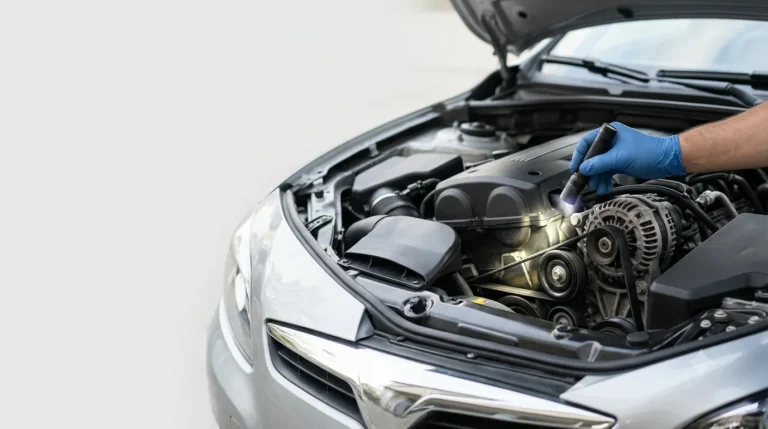
A squealing belt is one of the more common noises a car makes, and it almost always traces back to one of two root causes. Diagnosing it correctly the first time saves a wasted trip to the parts store and, more importantly, prevents a minor tension issue from turning into a stranded car with a snapped belt.
This guide covers what actually causes belt squeal, how to test for the source yourself, and when the noise signals something beyond the belt itself.
What Does It Mean When Your Car’s Belt Squeals?
A squealing belt almost always means the serpentine belt is either losing tension or slipping against a pulley rather than gripping it properly. The sound is a high-pitched shriek that typically grows louder as engine speed increases, though the pitch itself usually stays fairly consistent.
This differs from a chirping or clicking noise, which often points to a different issue like a worn bearing rather than the belt itself. Recognizing which sound you’re actually hearing is the first step toward diagnosing the right component.
What Are the Main Causes of Belt Squealing?
Low belt tension is the most common cause of a squealing serpentine belt. A stretched or worn belt, a fatigued automatic tensioner, an out-of-adjustment manual tensioner, or simply the wrong belt installed can all reduce tension enough to cause slipping and noise.
Contamination is another frequent cause, where oil, coolant, or power steering fluid leaking onto the belt reduces grip and accelerates wear at the same time. Worn components contribute as well. A partially seized pulley bearing can cause the belt to slip as it passes over, while a wobbling pulley shaft throws off alignment enough to generate consistent noise even with proper tension.
How Do You Visually Inspect a Squealing Belt?
A visual inspection starts with checking the belt for cracking, glazing, or missing ribs along its length. Cracks running across the ribbed side, a shiny or glazed appearance, or sections where ribs have worn away entirely all point toward a belt that’s reached the end of its useful life.
Uneven wear on one side of the belt compared to the other is a particularly useful clue, since it often indicates a misaligned pulley rather than a simple age-related wear pattern. Tracing the belt’s full path around each pulley and looking for oil residue, cracks, or visible wobble narrows down the likely source before you do anything else.
What Is the Water Test and How Does It Work?
The water test is a simple diagnostic where you mist a small amount of water onto the ribbed side of the belt while the engine runs, listening for a change in the noise. If the squeal changes or briefly quiets after the water hits the belt, the belt itself is almost certainly the source of the noise.
If misting water produces no noticeable change, the noise is more likely coming from a pulley bearing rather than the belt itself. This test takes only a few seconds and helps rule out one of the two most likely culprits quickly, without needing to remove any parts.
How Do You Check Belt Tension?
Belt tension can be checked with a simple press test using your fingers on a cold, stopped engine. Pressing on the belt at the midpoint of its longest span, you should feel no more than about a quarter inch of deflection for every 12 inches of belt length.
A belt that deflects noticeably more than that likely has insufficient tension, either from a worn automatic tensioner or a belt that’s stretched beyond its usable life. This quick check, combined with a visual inspection, usually points clearly toward whether the fix is a tensioner adjustment, a tensioner replacement, or a full belt replacement.
Does When the Noise Happens Give You a Clue?
Yes, the timing of a belt squeal often narrows down the likely cause significantly. A brief shriek lasting only a few seconds right at cold start frequently points to a loose or glazed belt, a weakening tensioner, or simply a damp belt after rain or heavy dew.
Squealing that happens specifically when turning the steering wheel or during parking maneuvers usually points to the power steering system placing extra load on a tired belt or slipping pulley. A squeal that starts the instant the air conditioning compressor engages is a similar pattern, where the added mechanical load exposes a belt that’s already marginal on tension.
Should You Use Belt Dressing or Spray Lubricant to Stop the Noise?
No, using belt dressing or spray lubricant to quiet a squealing belt is not recommended and can make the underlying problem worse. If a belt needs lubrication to stop squealing, that’s a sign of a genuine mechanical issue, whether tension, alignment, or contamination, that a spray product only masks temporarily rather than fixes.
Spraying lubricant on a belt can also reduce grip further over time, potentially causing more slipping once the temporary effect wears off. Addressing the actual cause, whether that’s tensioner adjustment or belt replacement, is the only reliable long-term fix.
When Should You Replace the Belt Versus Just the Tensioner?
Replace the belt itself when it shows visible cracking, glazing, missing ribs, or has simply exceeded its service interval, typically listed in your owner’s manual. Replace the tensioner instead when the belt itself looks healthy but tension testing shows excessive deflection, or when the tensioner pulley shows visible wobble or resistance when spun by hand.
In many cases, a belt replacement done without also inspecting the tensioner leads to the same squealing returning within a short period, since an old belt was often masking a tensioner that was already failing. Replacing both together, when the vehicle’s mileage suggests both are due, tends to be the more reliable long-term fix.
Conclusion
A squealing belt is more than an annoying sound it’s an early warning that your vehicle’s belt drive system needs attention. Whether the cause is a worn serpentine belt, weak belt tensioner, misaligned pulley, or fluid contamination, identifying the source early can help prevent larger mechanical problems. Careful inspection of the belt, pulleys, and accessory components allows you to diagnose the issue accurately instead of replacing parts unnecessarily. Ignoring the noise can eventually lead to poor alternator performance, reduced power steering assistance, overheating, or even a broken belt that leaves you stranded. By diagnosing and repairing the problem as soon as the squealing begins, you can improve your vehicle’s reliability, avoid expensive repairs, and keep your engine operating safely and efficiently for the long term.
Frequently Asked Questions
Is it safe to keep driving with a squealing belt?
It’s generally safe to drive only a short distance if your serpentine belt is squealing, but you shouldn’t ignore the noise. A squealing belt often indicates slipping, wear, or incorrect tension. If the belt fails completely, your vehicle may lose power steering, battery charging, or coolant circulation, depending on which accessories the belt drives. Have the issue inspected as soon as possible to avoid a breakdown.
Can cold weather cause a serpentine belt to squeal?
Yes. Cold weather can temporarily make a serpentine belt squeal because the rubber becomes less flexible and has reduced grip during startup. If the noise disappears after the engine warms up, the belt may still be worn, glazed, or slightly loose. Persistent cold-start squealing is often an early sign that the belt or belt tensioner should be inspected.
How much does it cost to fix a squealing belt?
The cost varies depending on the underlying problem. Replacing only the serpentine belt is typically less expensive than replacing a worn tensioner or idler pulley because those repairs involve additional parts and labor. A proper inspection can identify whether the belt, pulley, or tensioner is responsible for the noise before repairs begin.
Can a squealing belt damage other engine components?
Yes. A slipping serpentine belt can prevent engine accessories from operating correctly. This may cause the alternator to charge the battery improperly, reduce power steering assistance, or limit coolant circulation if the water pump is belt-driven. Fixing the problem early helps prevent more costly repairs.
Why does my belt squeal only when I turn on the air conditioner?
When the air conditioning compressor engages, it places additional load on the serpentine belt. If the belt is worn, glazed, or not properly tensioned, this extra resistance can cause it to slip and squeal. In many cases, this points to a worn belt, weak automatic tensioner, or failing pulley rather than a problem with the air conditioner itself.