Disclosure: Car Care Guy participates in the Amazon Associates Program. As an Amazon Associate, we earn from qualifying purchases.
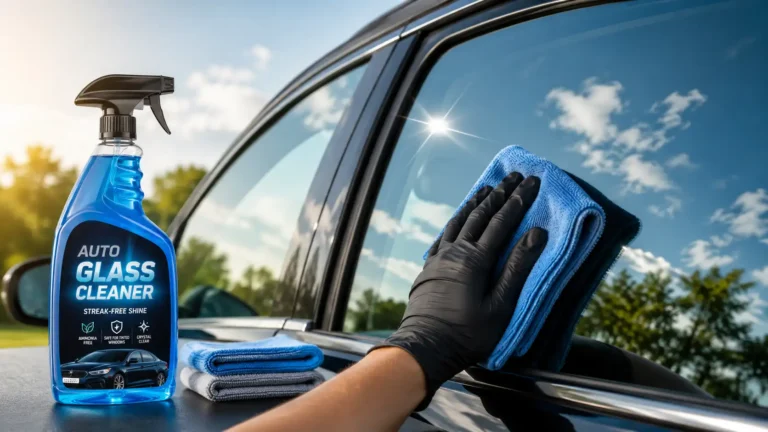
Cleaning car windows sounds simple until you are dealing with oily interior haze, fingerprints, road film, bug residue, water spots, or streaks that become obvious as soon as sunlight hits the windshield.
For most drivers, Invisible Glass Premium Aerosol is the easiest all-around choice because it is ammonia-free, tint-safe, residue-free, and its foam stays on vertical glass instead of immediately running down the window.
But it is not the right product for every situation. Meguiar’s Perfect Clarity makes more sense for stubborn windshield film, Rain-X 2-in-1 adds water repellency to exterior glass, Armor All Glass Wipes are useful for quick cleanups, and CARPRO Clarify is aimed more at detailing enthusiasts.
This guide compares 10 car glass cleaners by cleaning purpose, formula type, tint compatibility, application method, and whether they leave behind any additional protection.
Best Car Glass Cleaners at a Glance
| Product | Best For | Formula | Buy Link |
| Invisible Glass Premium Aerosol | Best overall | Aerosol foam | Check Price on Amazon |
| Chemical Guys Streak Free | Best trigger spray | Liquid spray | Check Price on Amazon |
| Meguiar’s Perfect Clarity | Interior haze and road film | Liquid spray | Check Price on Amazon |
| Windex Automotive | Best affordable everyday cleaner | Liquid spray | Check Price on Amazon |
| Griot’s Garage Ultra-Premium | Best foaming cleaner | Aerosol foam | Check Price on Amazon |
| Sprayway Glass Cleaner | Large glass and vertical surfaces | Aerosol foam | Check Price on Amazon |
| CARPRO Clarify | Detailing enthusiasts | Liquid spray | Check Price on Amazon |
| Armor All Glass Wipes | Quick touch-ups | Pre-moistened wipes | Check Price on Amazon |
| Rain-X 2-in-1 | Rainy-weather driving | Liquid spray | Check Price on Amazon |
| Chemical Guys HydroView | Ceramic-style glass protection | Liquid spray | Check Price on Amazon |
How We Selected These Glass Cleaners
We compared current manufacturer information, product specifications, tint compatibility, formula type, ease of application, intended use, and current product availability.
This is an editorial buying guide, not a claim that every cleaner was laboratory-tested side by side by Car Care Guy.
The most important factors were:
- Ability to remove fingerprints, grease, road film, and interior haze
- Streak and residue control
- Compatibility with automotive window tint
- Ease of use on vertical glass
- Interior versus exterior suitability
- Whether the formula leaves protection behind
- Convenience for routine maintenance
- Suitability for specific problems such as water repellency or heavy windshield film
One important point: maximum cleaning strength is not always better. A simple residue-free cleaner is usually the better choice for routine interior glass, while a cleaner with hydrophobic additives makes more sense on exterior windshields.
1. Invisible Glass Premium Aerosol Glass Cleaner — Best Overall
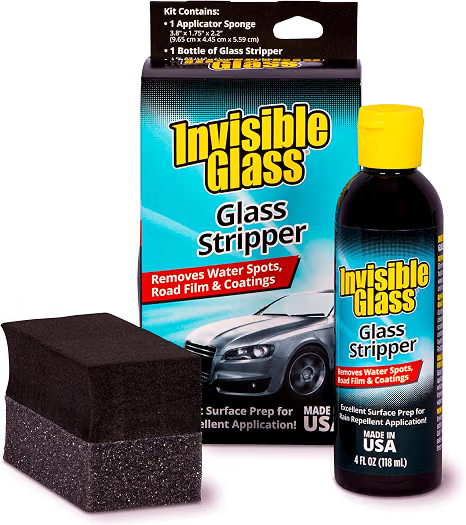
Invisible Glass is a good default choice when you want one cleaner for windshields, side windows, rear glass, and tinted windows.
Its aerosol formula creates foam that stays on vertical surfaces long enough to loosen fingerprints, greasy film, smoke haze, road grime, and other contamination. The formula is ammonia-free and does not rely on soaps, scents, or dyes that can leave visible residue behind.
Best For
Drivers who want one reliable glass cleaner for routine interior and exterior cleaning.
Pros
- Ammonia-free
- Safe for tinted windows
- Foam clings well to vertical glass
- No added soaps or dyes
- Good for interior windshield film
- Works on both interior and exterior automotive glass
- Fast, simple application
Cons
- Aerosol overspray can reach the dashboard or trim
- Does not add water repellency
- The can is less convenient to store than a compact trigger bottle
- A dedicated mineral remover may still be required for baked-on water spots
Buying Decision
Choose Invisible Glass if you are unsure which cleaner you need and simply want a dependable automotive glass product without added coatings.
For interior windshields, spray it onto your microfiber towel instead of directly toward the windshield. This gives you more control and reduces overspray onto the dashboard.
2. Chemical Guys Streak Free Glass & Window Cleaner — Best Trigger Spray
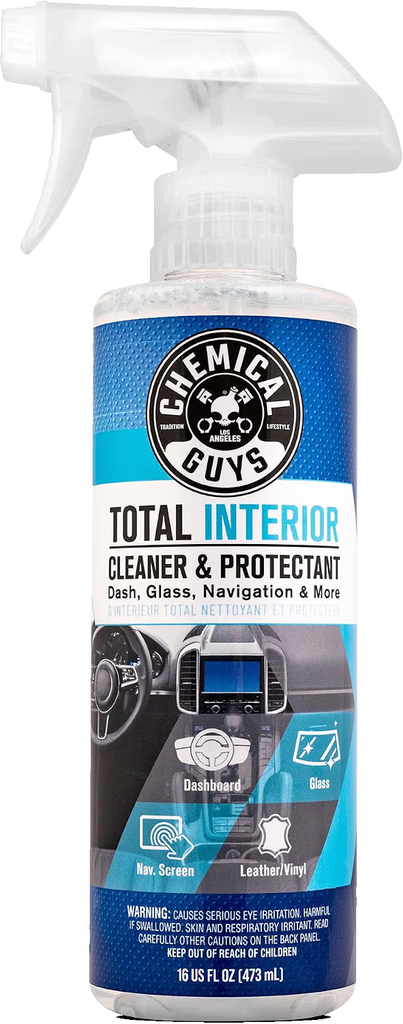
Chemical Guys Streak Free is a good alternative to an aerosol if you prefer the control of a trigger bottle.
Its ammonia-free formula is designed for automotive glass and tinted windows and is intended to remove dirt, grease, fingerprints, and grime without leaving a heavy residue. Chemical Guys also sells larger refill sizes, which may appeal to people who regularly clean several vehicles.
Best For
Tinted windows and drivers who prefer a traditional trigger spray.
Pros
- Ammonia-free
- Tint-safe
- Easy to control around dashboards and door trim
- Suitable for interior and exterior glass
- Available in larger quantities for frequent users
- Useful for routine windshield haze and fingerprints
Cons
- Liquid spray can run more quickly than foam
- Requires a clean towel and proper technique to prevent streaking
- Does not add hydrophobic protection
Buying Decision
Choose this over an aerosol if you frequently clean interior glass and want precise control over how much product reaches the towel.
It is particularly useful when your vehicle has aftermarket tint and you want a cleaner specifically marketed for tint compatibility.
3. Meguiar’s Perfect Clarity Glass Cleaner — Best for Windshield Haze
Windshield haze can be harder to remove than normal fingerprints.
Plastic, vinyl, adhesives, dressings, smoke, cooking oils, and normal cabin contamination can contribute to a thin film on the inside of a windshield. This film becomes especially noticeable when driving toward the sun or facing headlights at night.
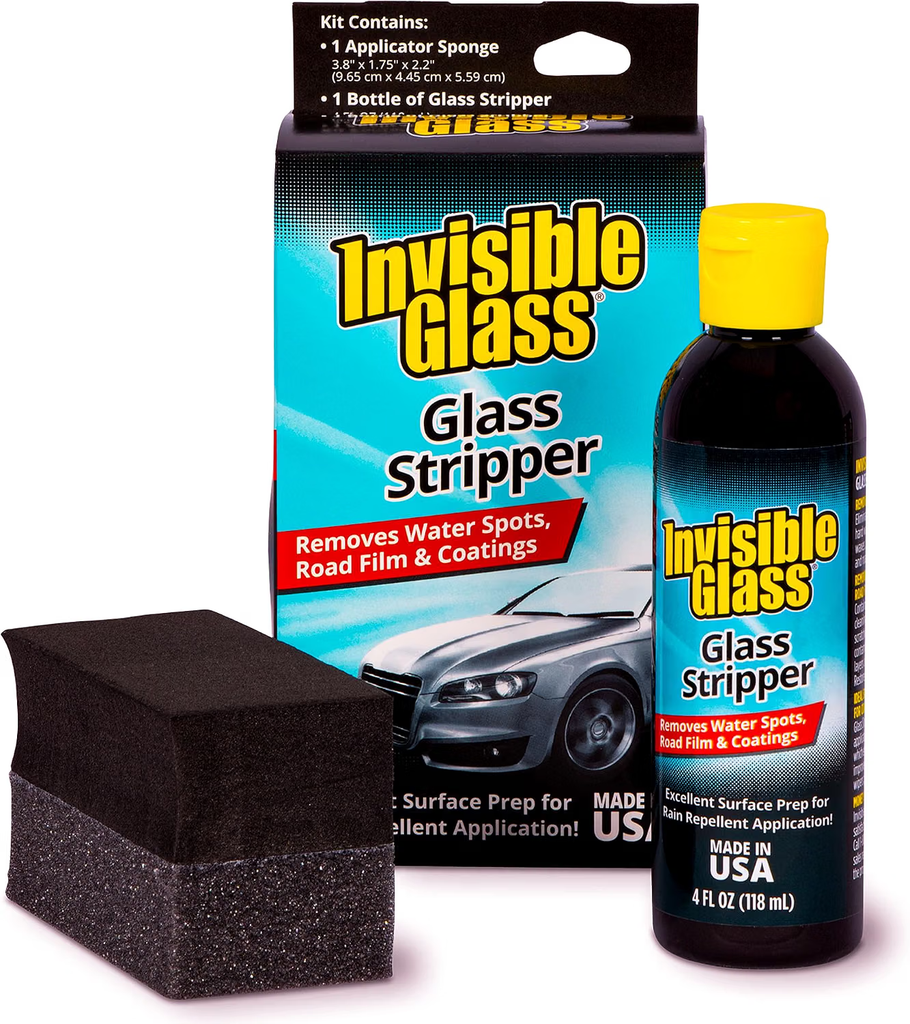
Meguiar’s Perfect Clarity is designed to tackle vinyl fog residue, road grime, bug splatter, bird droppings, and similar contamination while using an anti-hazing formula. Meguiar’s also states that it is safe for tinted windows.
Best For
Interior windshield haze, greasy film, and glass that does not come completely clean with a light maintenance spray.
Pros
- Stronger focus on stubborn automotive contamination
- Tint-safe
- Ammonia-free current formula
- Helps remove interior film
- Works on exterior road grime and bug residue
- Large 24-ounce bottle
Cons
- More cleaning power than you need for light fingerprints
- Still will not remove etched mineral damage
- Proper final buffing is important for maximum clarity
Buying Decision
Choose Perfect Clarity when the inside of your windshield still looks cloudy after ordinary cleaning.
If you only clean relatively clean glass every couple of weeks, Invisible Glass, Chemical Guys, or Windex Automotive may be simpler choices.
4. Windex Automotive Car Window and Glass Cleaner — Best Affordable Everyday Cleaner
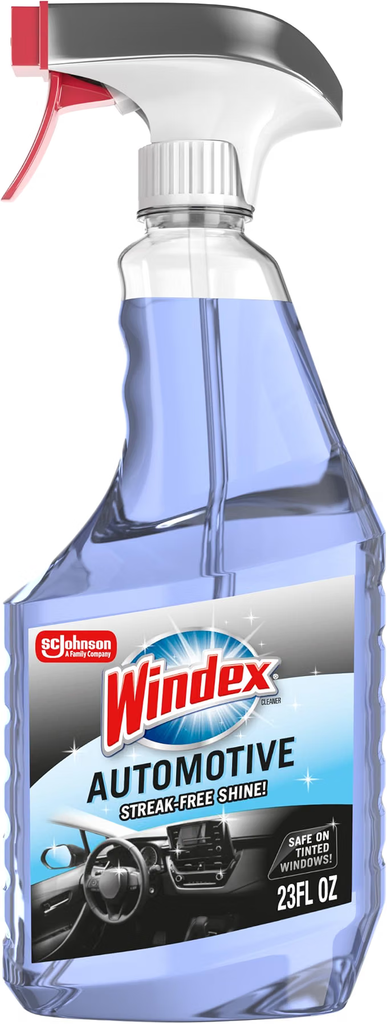
This is not the same product as simply grabbing an old bottle of household Windex from under the kitchen sink.
Windex now sells a dedicated Automotive formula that is ammonia-free and designed for car windows, including tinted glass. The current 23-ounce formula targets dust, fingerprints, smudges, and routine automotive contamination.
Best For
Drivers who want an inexpensive, readily understandable everyday glass cleaner.
Pros
- Automotive-specific formula
- Ammonia-free
- Safe for tinted windows
- Useful on interior and exterior glass
- Large 23-ounce bottle
- Suitable for regular maintenance
- Familiar trigger-spray format
Cons
- Less specialized than enthusiast-focused products
- Trigger spray can drip when too much is applied
- Does not add rain repellency
- Severe water spots or bonded contamination need another product
Buying Decision
Windex Automotive makes sense if you want a basic car glass cleaner without paying for ceramic additives, premium detailing branding, or specialty coatings.
Make sure you are buying the Automotive or ammonia-free formulation rather than assuming every Windex product has the same chemistry.
5. Griot’s Garage Ultra-Premium Glass Cleaner — Best Foaming Cleaner
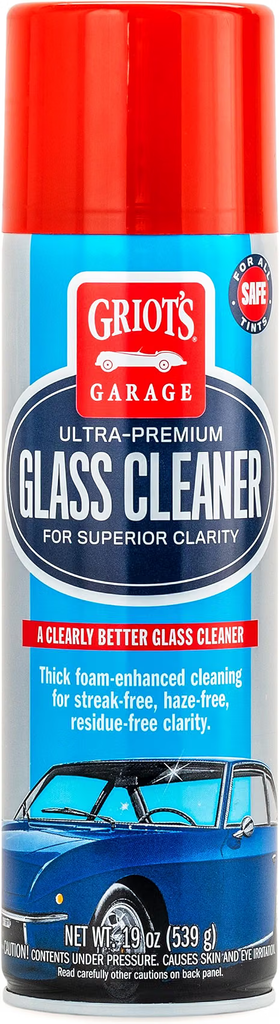
Griot’s Garage Ultra-Premium Glass Cleaner uses a thick foaming application that stays on the surface instead of immediately running down the glass.
Griot’s describes the formula as ammonia-free and safe for tinted windows. The foam is intended to loosen road grime, bug contamination, smoke film, dirt, and other residue before wiping.
Best For
Drivers who prefer foam and want more dwell time on dirty windshields and vertical glass.
Pros
- Strong foaming action
- Ammonia-free
- Tint-safe
- Good dwell time on vertical surfaces
- Useful against road film and bug residue
- Designed specifically around automotive glass care
Cons
- Aerosol format creates more overspray than a trigger bottle
- Costs more than many basic glass cleaners
- Does not add hydrophobic protection
Buying Decision
Choose Griot’s if you prefer a rich foam that stays where you spray it.
For light maintenance, the extra dwell time is not essential. It becomes more useful when cleaning exterior windshields, large SUV windows, or glass with accumulated contamination.
6. Sprayway Glass Cleaner — Best for Large Glass Areas
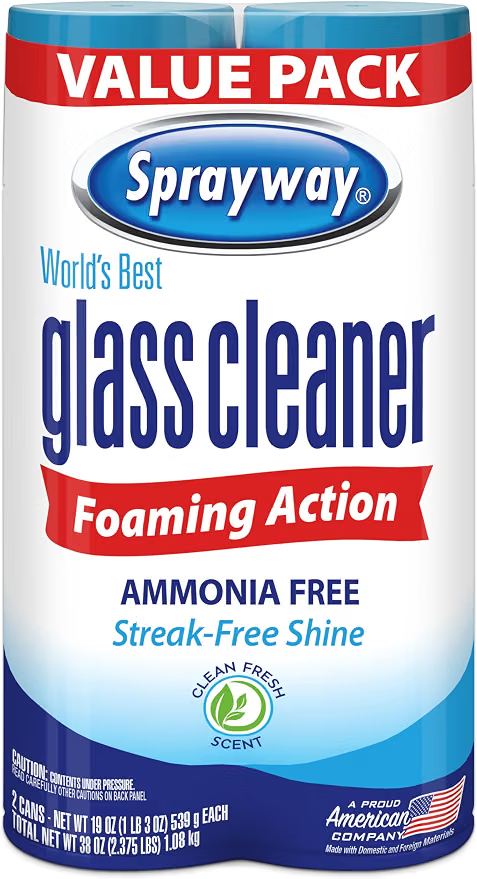
Sprayway is not exclusively an automotive product, but its ammonia-free foaming formula has made it a popular option for vehicle glass as well as household windows and mirrors.
The foam reduces immediate runoff on vertical surfaces, which is useful when cleaning large windshields, side glass, sunroofs, and panoramic roofs.
Best For
Large windows, SUVs, trucks, vans, panoramic roofs, and buyers who want one foam cleaner for the car and home.
Pros
- Ammonia-free
- Thick foam
- Good coverage on large glass surfaces
- Less immediate dripping than many liquid sprays
- Useful inside the home as well as on automotive glass
- Easy to find
Cons
- Not developed specifically as an automotive detailing product
- Aerosol overspray needs to be controlled inside the cabin
- No water-repellent protection
- Spray directly onto the towel around sensitive interior surfaces
Buying Decision
Sprayway makes sense if you want a versatile foaming glass cleaner rather than a product used only for your vehicle.
If tint compatibility and automotive-specific formulation are your priorities, Invisible Glass or Chemical Guys provides a more straightforward choice.
7. CARPRO Clarify Glass Cleaner — Best for Detailing Enthusiasts
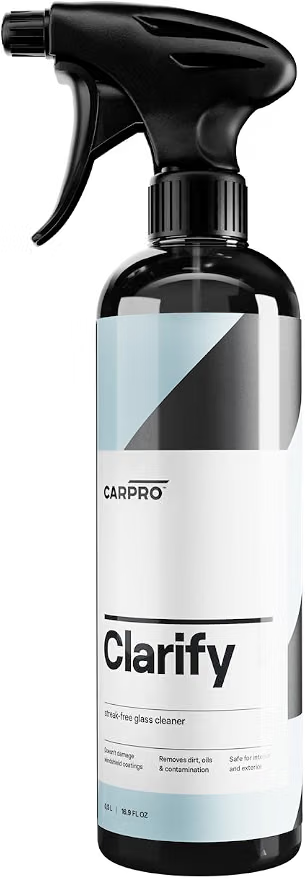
CARPRO Clarify is aimed more directly at car-detailing enthusiasts.
It is designed to remove oils, fingerprints, dirt, traffic film, and other contamination while leaving glass clear enough to complement higher-end detailing work.
Unlike a ceramic glass product, Clarify is primarily a cleaner. That can be useful if you already have a separate glass coating and do not want every maintenance cleaner adding another layer to the surface.
Best For
Enthusiasts who want a dedicated automotive glass cleaner without integrated rain-repellent protection.
Pros
- Automotive detailing-focused formula
- Good for oily fingerprints and film
- Suitable for routine detailing
- Does not force you into a cleaner-plus-coating combination
- Useful for people already using separate glass protection products
Cons
- Costs more than basic automotive glass cleaners
- Unnecessary for drivers who simply need occasional windshield cleaning
- A budget cleaner may accomplish the same job on lightly dirty glass
Buying Decision
Choose CARPRO Clarify if you already use dedicated detailing products and want glass cleaning to remain separate from glass protection.
For a basic daily driver, Windex Automotive or Invisible Glass will usually be easier to justify.
8. Armor All Glass Wipes — Best for Quick Cleaning
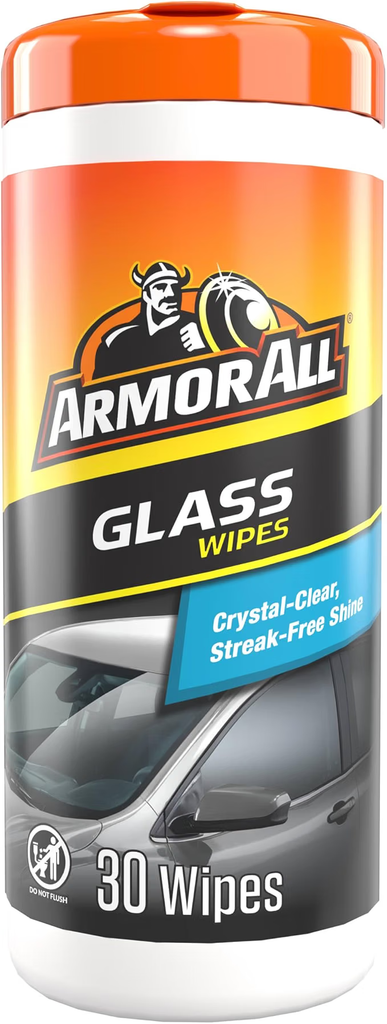
Armor All Glass Wipes are about convenience rather than maximum cleaning power.
Each wipe is pre-moistened, so you do not need a spray bottle and separate cleaning towel for quick fingerprints, haze, bugs, or road grime.
Armor All states that the wipes are ammonia-free and suitable for factory tint, most aftermarket tint, rear defroster lines, and ceramic-coated automotive glass.
Best For
Glove boxes, road trips, rideshare vehicles, quick touch-ups, and emergency cleaning.
Pros
- No spray bottle required
- Easy to keep in the vehicle
- Ammonia-free
- Safe for tinted automotive glass
- Convenient for fingerprints and small messes
- Useful for windshield touch-ups on the road
Cons
- Less economical than a bottle and reusable microfiber towel
- Wipes can dry out if the container is not sealed
- Large windshields may require several wipes
- Not ideal for serious detailing
- A second dry microfiber towel can still improve the final finish
Buying Decision
Keep these in the car if convenience matters more than cost per use.
For full vehicle cleaning, a liquid or foam cleaner plus reusable microfiber towels is the better solution.
9. Rain-X 2-in-1 Glass Cleaner + Rain Repellent — Best for Rainy Weather
Rain-X 2-in-1 does something most traditional glass cleaners on this list do not: it cleans the glass and leaves behind a hydrophobic treatment.
Rain-X says the product causes water to bead and roll away while also helping reduce the adhesion of rain, road spray, bugs, sleet, snow, and ice.
The current U.S. instructions specify that the trigger product is intended for exterior vehicle glass.
Best For
Windshields and exterior windows on vehicles frequently driven in rain.
Pros
- Cleans and adds water repellency
- Improves water beading
- One product replaces separate cleaning and rain-treatment steps
- Useful for road-trip and wet-weather vehicles
- Easy spray-and-wipe application
Cons
- Primarily for exterior glass
- Not the best choice for routine interior cleaning
- May be unnecessary if your windshield already has a dedicated ceramic coating
- Requires a clean final buff for even water-beading performance
Buying Decision
Choose Rain-X when wet-weather visibility is one of your main priorities.
Do not choose it merely because you need to remove interior windshield fingerprints. Invisible Glass, Meguiar’s, Chemical Guys, or Windex Automotive are more appropriate for that job.
10. Chemical Guys HydroView Ceramic Glass Cleaner & Coating — Best Cleaner With Ceramic Protection
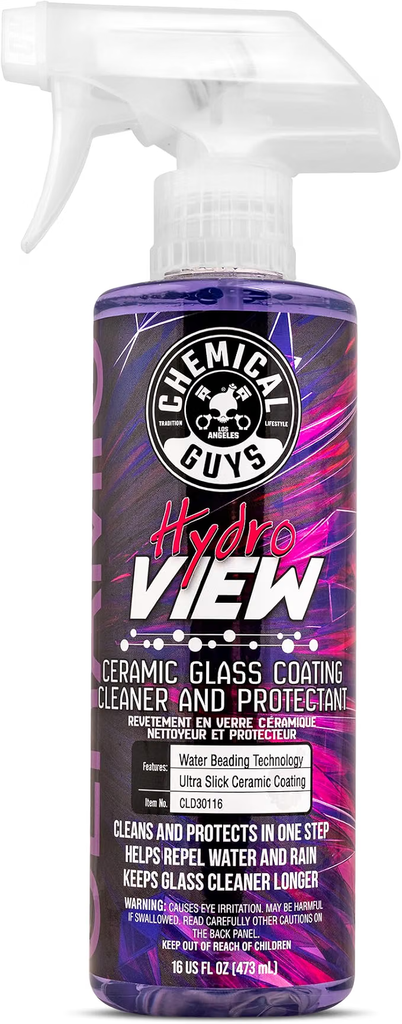
HydroView combines a glass cleaner with ceramic-style hydrophobic protection.
Chemical Guys positions it as a 2-in-1 product that removes dirt while creating water-beading behavior on the glass. It can be used on automotive glass, although Chemical Guys recommends testing an inconspicuous area before using it on aftermarket tint film.
Best For
Drivers who want glass cleaning and hydrophobic protection in a single detailing step.
Pros
- Cleaner and protectant in one
- Adds water beading
- Simple spray-and-wipe application
- Useful for exterior windshield maintenance
- Reduces the need for a separate glass-protection step
Cons
- More expensive than a conventional cleaner
- Not necessary if your glass already has a dedicated coating
- Requires more careful buffing than a residue-free cleaner
- Chemical Guys recommends testing aftermarket tint first
Buying Decision
HydroView makes the most sense when you specifically want a cleaner that leaves protection behind.
If you already have a ceramic glass coating, use a compatible maintenance cleaner instead of repeatedly layering unrelated hydrophobic products.
Which Car Glass Cleaner Should You Buy?
You do not need several glass cleaners for one car.
Choose according to the problem you actually have:
- For one all-purpose automotive cleaner: Invisible Glass Premium Aerosol
- For a controlled trigger spray: Chemical Guys Streak Free
- For stubborn interior windshield haze: Meguiar’s Perfect Clarity
- For affordable routine cleaning: Windex Automotive
- For strong foaming action: Griot’s Garage Ultra-Premium
- For large windows and general-purpose use: Sprayway
- For enthusiast detailing: CARPRO Clarify
- For quick roadside or glove-box cleaning: Armor All Glass Wipes
- For rain repellency: Rain-X 2-in-1
- For ceramic-style protection while cleaning: Chemical Guys HydroView
For most drivers, a simple ammonia-free cleaner without added protection is the easiest product to live with. You can always apply a separate glass coating later if you decide you want stronger water repellency.
What Makes a Good Car Glass Cleaner?
An Ammonia-Free Formula Is the Safest Default
Factory privacy glass and aftermarket tint are not always the same thing.
Factory tint may be built into the glass itself, while aftermarket window tint commonly uses film bonded to the inside of the glass.
Because tint materials and adhesives vary, an automotive cleaner that is specifically labeled tint-safe or ammonia-free is the safer default when you do not know exactly what film is installed.
Do not assume that every household glass cleaner is suitable for aftermarket automotive tint.
Low Residue Matters More Than Heavy Shine
Glass should not look dressed.
A good windshield cleaner should remove oil and contamination and then disappear. Products that leave too much residue can create haze that becomes obvious at night or when driving directly into the sun.
For interior windshields, this is why simple residue-free cleaners can outperform products that advertise numerous extra features.
Foam and Liquid Sprays Serve Different Purposes
Foam is useful on vertical surfaces because it stays in place longer.
That can help on:
- Windshields
- Side windows
- Rear glass
- Panoramic roofs
- Bug-contaminated exterior glass
Trigger sprays provide more application control, especially inside the cabin.
Neither format is automatically better.
Water-Repellent Cleaners Are Mainly an Exterior Benefit
Hydrophobic cleaners such as Rain-X and HydroView are most useful when rain performance matters.
You generally do not need hydrophobic treatment on the inside of your windshield.
If your exterior glass already has a ceramic coating or dedicated rain treatment, check compatibility before adding another protection product on top.
Why Does the Inside of a Windshield Get Hazy?
A dirty windshield is not always caused by dirt entering through an open window.
Interior materials can release small amounts of volatile compounds over time. Combined with airborne oils, smoke, fingerprints, cleaning residue, and normal cabin contamination, these can form a thin film on the inside of the windshield.
The result often looks acceptable in normal daylight but becomes obvious when:
- Driving toward a low sun
- Facing headlights at night
- The windshield begins to fog
- Bright streetlights reflect across the glass
If a single cleaning pass does not remove the film, clean the windshield twice using fresh towels.
How to Clean Car Windows Without Streaks
The cleaner matters, but technique matters just as much.
1. Work on Cool Glass
Park in the shade whenever possible.
Hot glass can cause cleaner to evaporate before you have time to wipe it evenly.
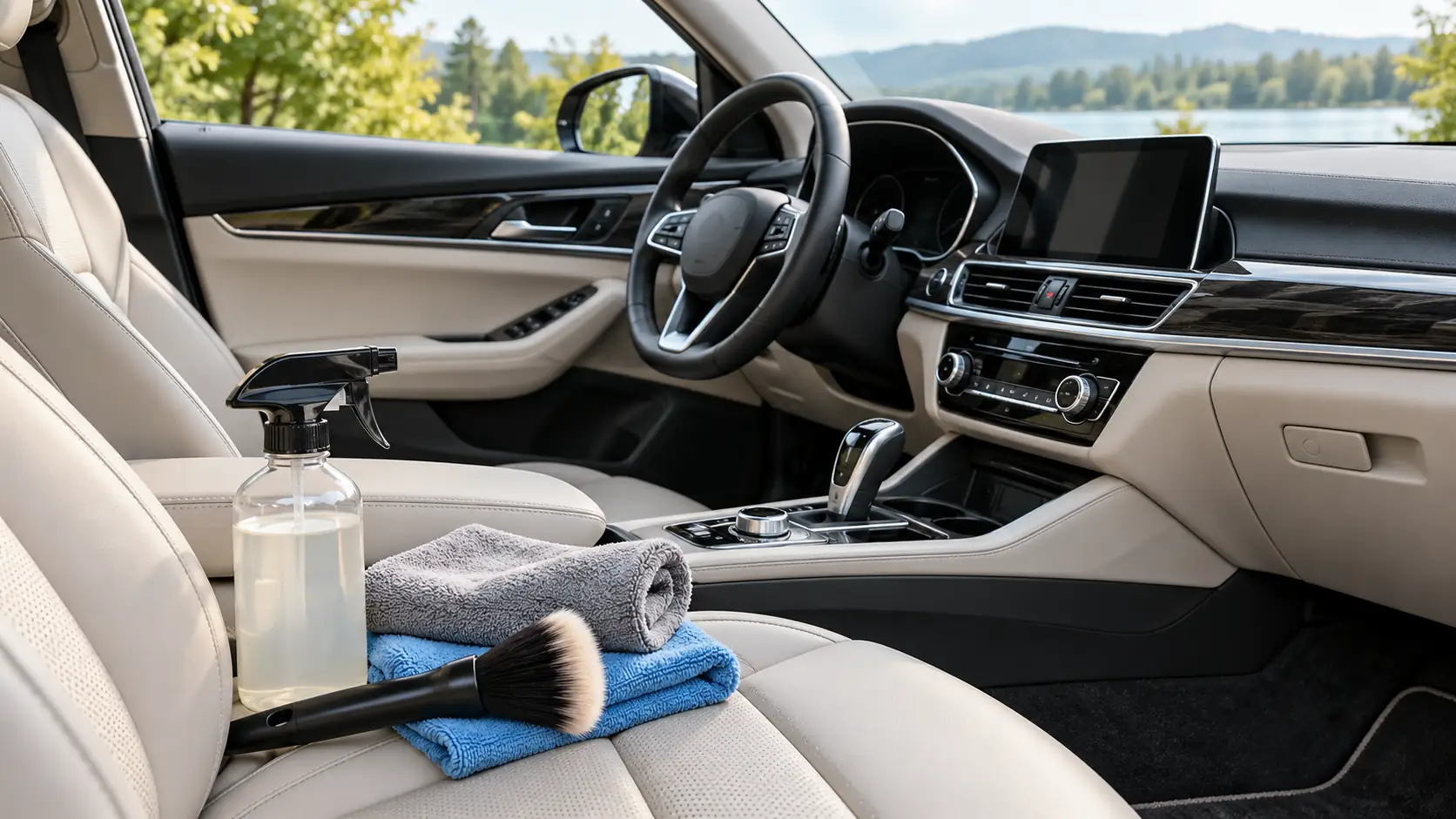
2. Use Two Clean Microfiber Towels
Use one towel for cleaning and another completely dry towel for the final buff.
A towel contaminated with wax, tire dressing, interior protectant, fabric softener, or oily residue can create streaks even with an excellent glass cleaner.
3. Spray the Towel for Interior Glass
Instead of spraying directly across the dashboard, lightly mist the cleaner onto your microfiber towel.
This helps prevent overspray from reaching:
- Infotainment screens
- Dashboard plastics
- Instrument panels
- Leather
- Upholstery
- Sensitive trim
4. Clean in Different Directions Inside and Outside
A useful detailing technique is to wipe:
- Interior glass horizontally
- Exterior glass vertically
If you notice a streak afterward, its direction immediately tells you which side of the glass needs another pass. Griot’s Garage recommends this type of directional approach for identifying missed areas.
5. Finish With a Dry Towel
Do not leave the surface wet and expect the cleaner to disappear perfectly on its own.
Use a dry glass towel to lightly buff the surface until no haze remains.
Why Does My Windshield Still Look Dirty After Cleaning?
If regular cleaner does not solve the problem, identify what is actually on the glass.
Greasy Interior Film
Clean the interior twice and use fresh microfiber towels.
Hard Water Spots
A normal glass cleaner may remove light deposits, but mineral contamination that has bonded to the glass can require a dedicated water-spot remover or glass polish.
Wiper Marks
Inspect the blades. Dirty or deteriorated wipers can immediately redeposit contamination onto clean glass.
Road Film
Exterior windshields can develop an oily combination of exhaust residue, traffic film, dirt, and environmental contamination. A stronger automotive cleaner or glass-preparation product may be required.
Scratches or Etching
Cleaner cannot repair damaged glass.
If a mark remains visible after the surface is completely clean and smooth, it may be scratching, mineral etching, or another physical defect rather than dirt.
Can You Use Household Glass Cleaner on Car Windows?
Sometimes, but an automotive-specific product is the safer and simpler choice.
The main issue is not that a bottle came from the household-cleaning aisle. It is whether the formula is compatible with automotive tint, coatings, plastics, and nearby interior materials.
For example, Windex specifically recommends its ammonia-free formulation for automotive use rather than assuming every Windex formula should be treated identically.
When aftermarket tint is present, follow the tint manufacturer’s cleaning recommendations.
Are Glass Cleaners Safe for Tinted Windows?
Use products specifically described as tint-safe or ammonia-free.
Also remember that you normally clean the film itself when working on the inside surface of an aftermarket-tinted window. Avoid aggressive abrasive cleaners, razor blades, rough scrub pads, or other methods that could scratch or lift the film.
If the tint was recently installed, follow the installer’s curing and cleaning instructions before applying any cleaner.
What Should You Use for Hard Water Spots?
A conventional glass cleaner is designed primarily for surface contamination such as fingerprints, oils, dust, traffic film, and light grime.
Hard-water deposits contain minerals. Once these deposits become bonded or etched into the glass, repeatedly spraying normal cleaner may accomplish very little.
Start with a dedicated automotive water-spot remover. More severe contamination may require glass polishing.
Do not aggressively polish aftermarket window film.
Frequently Asked Questions
What is the best glass cleaner for cars?
Invisible Glass Premium Aerosol is the strongest all-around choice in this guide for drivers who want an ammonia-free, tint-safe cleaner without added coatings. Different products make more sense for specific needs, such as Meguiar’s Perfect Clarity for stubborn film or Rain-X 2-in-1 for water repellency.
What is the best car glass cleaner for tinted windows?
Use a product specifically identified as ammonia-free and tint-safe. Invisible Glass, Chemical Guys Streak Free, Meguiar’s Perfect Clarity, Griot’s Garage Ultra-Premium, Windex Automotive, and Armor All Glass Wipes are among the options in this guide designed for automotive tint.
What is the best cleaner for inside car windshields?
A residue-free automotive glass cleaner such as Invisible Glass works well for routine interior cleaning. For heavier greasy haze or vinyl fog residue, Meguiar’s Perfect Clarity is a better specialist option.
Can I use Windex on tinted car windows?
Use Windex Automotive or Windex Ammonia-Free rather than assuming every Windex formulation is interchangeable. SC Johnson specifically states that its ammonia-free formulation is suitable for tinted car glass.
Why does my windshield streak after cleaning?
The most common causes are too much cleaning product, hot glass, a contaminated towel, insufficient final buffing, or cleaning residue already present on the windshield.
Use less product and finish with a completely dry microfiber glass towel.
Are glass cleaning wipes worth buying?
They are useful for convenience, especially in a glove box or road-trip kit. A spray cleaner and reusable microfiber towels are generally more economical and more effective for cleaning an entire vehicle.
Is Rain-X a glass cleaner?
Rain-X makes several different glass products. Rain-X 2-in-1 Glass Cleaner + Rain Repellent both cleans exterior automotive glass and leaves a water-repellent layer. The company also sells separate dedicated rain-repellent treatments.
Can glass cleaner remove water spots?
Light surface deposits may come off, but established mineral spots often require a dedicated water-spot remover or glass polish. If the minerals have etched the glass, normal cleaner cannot repair the damage.
How often should I clean my car windows?
Clean them whenever dirt or haze begins affecting visibility. For many daily drivers, interior glass may need attention every few weeks, while the exterior windshield may require more frequent cleaning depending on weather, road conditions, bugs, and mileage.
Final Thoughts
For most vehicles, you do not need the most complicated glass-care product. You need a cleaner that removes contamination, wipes away cleanly, and is compatible with your windows.
Invisible Glass Premium Aerosol is the easiest all-around recommendation for routine automotive glass care. Chemical Guys Streak Free provides similar tint-friendly cleaning in a controlled trigger bottle, while Meguiar’s Perfect Clarity is worth considering when stubborn windshield haze is the problem.
Drivers who frequently deal with rain should look at Rain-X 2-in-1 or Chemical Guys HydroView, but remember that adding protection is different from simply cleaning the glass.
Whatever product you choose, pair it with two clean microfiber towels and work on cool glass. A good cleaner combined with good technique will usually make a bigger difference than repeatedly switching between products.