Resin and ink residues persist because they are formulated with strong polymer binders that adhere to surfaces and resist moisture and mechanical removal. Studies on ink removal show that effectiveness depends on chemical interactions such as solvent concentration, pH, and the ability to solubilize binders rather than simple wiping. At the same time, regulatory pressure on volatile organic compounds (VOCs) and toxicity is reshaping solvent selection.
The global bio-based solvents market is valued in the multi-billion-dollar range and growing at over 8% annually, driven by demand for lower-toxicity and renewable alternatives . This shift is particularly relevant in applications like printing inks, coatings, and industrial cleaning, where residue removal performance must align with environmental and safety standards.
Why Bio-Based Solvents Work for Resin and Ink Removal
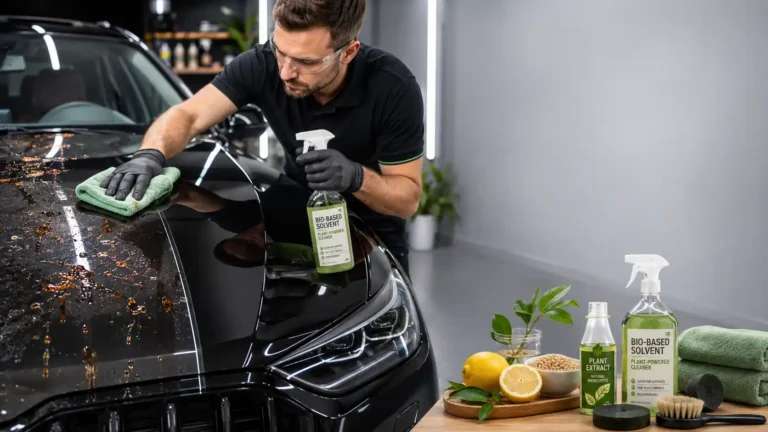
Bio-based solvents work because they are designed to dissolve or soften organic buildup without relying only on harsh petroleum chemistry. Green chemistry sources describe them as alternatives to petrochemical solvents, often derived from renewable crops and related feedstocks. They are also commonly described as less toxic, less flammable, and more biodegradable than traditional solvent systems. That combination makes them useful when you need cleaning power but also want lower odor and better handling.
Bio-Based Solvents Break Down Sticky Residue
The cleaner reaches into the residue and weakens the bonds that hold the film together. Once that bond loosens, the residue softens, lifts, and becomes easier to wipe away. Some bio-based solvents also help carry oils and pigments away from the surface instead of just spreading them around. Research reviews on green solvents note that bioalcohols, terpenes, and fatty acid methyl esters are used because they combine useful solvency with a lower environmental burden than many conventional solvents.
Benefits Over Traditional Solvents
Bio-based solvents can offer a cleaner handling profile than many traditional cleaners. Green chemistry guidance says they are often less toxic, less flammable, and biodegradable, while NIOSH warns that many conventional organic solvents can create skin exposure and vapor hazards. In workplace settings, that matters because solvents are used across printing, degreasing, and coating tasks, and reducing exposure is a real safety goal, not just an environmental preference.
4 Types of Bio-Based Solvents Used for Residue Removal
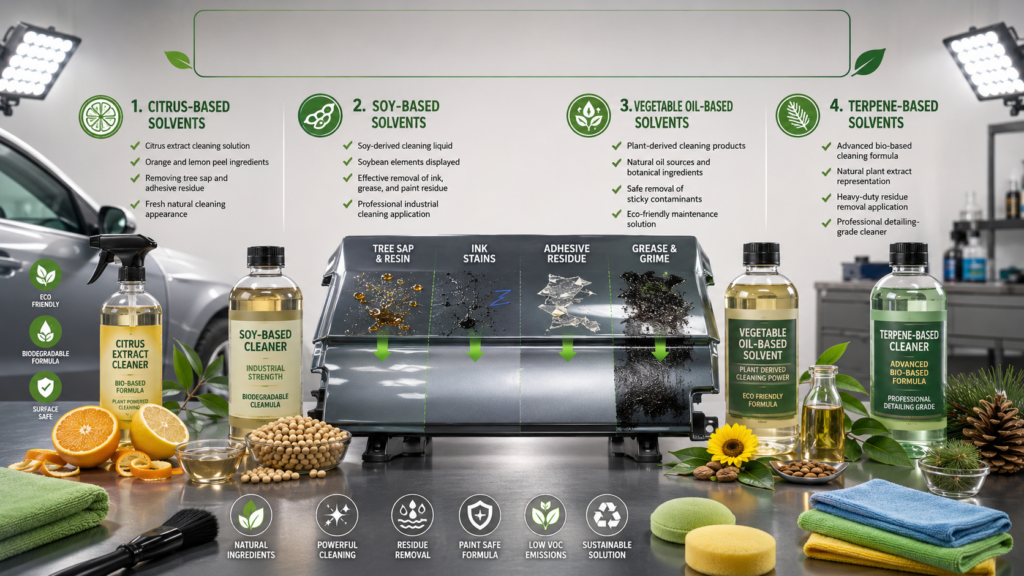
There is no single bio-based solvent that works best in every case. The right choice depends on how heavy the residue is, what surface you are cleaning, and how much contact time the surface can handle. Common bio-based families include citrus solvents, soy-based blends, ester-based solvents, and low-VOC biodegradable cleaners.
- Citrus-Based Solvents
Citrus-based cleaners usually rely on terpene compounds such as limonene. These are popular for sticky buildup because they can help break down oily or resinous material without the sharp smell of many industrial solvents. Green solvent reviews list terpenes like limonene and pine oil as major green solvent classes, and they are often chosen for cleaning where a plant-derived option is preferred.
- Soy-Based Solvents
Soy-based products often use fatty acid methyl esters, which are part of the green solvent group highlighted in recent reviews. They are valued in cleaning because they can soften oily residue and help remove ink film without depending on a heavy petroleum load. These products are especially useful when the goal is to keep the cleaning process more biodegradable and less aggressive.
- Ester-Based Bio Solvents
Ester-based bio solvents are often chosen for their balance of solvency and handling. Green chemistry sources describe bio-based solvents as renewable and more compatible with many formulation ingredients, which is one reason ester systems are used in cleaning blends. In practical terms, they can be a good middle ground when a residue is too stubborn for mild cleaners but does not justify a strong harsh solvent.
- Low-VOC Biodegradable Cleaners
Low-VOC biodegradable cleaners are important when you want better air quality and less odor during cleanup. EPA printing rules repeatedly focus on controlling VOC-containing inks and cleaning solvents, while green chemistry reviews emphasize reduced toxicity and improved biodegradability. For many shops, that makes low-VOC products the most practical everyday option for repeated residue removal.
How to Remove Resin and Ink Residue Step by Step
Resin and ink residues require a controlled removal process because of their strong adhesion and chemical resistance. A step-by-step approach—starting with surface evaluation and ending with proper cleanup—helps maintain surface integrity while improving removal efficiency. Safety practices from NIOSH and EPA also support gradual application, proper ventilation, and controlled solvent use.
Steps:
- Identify the Surface First
- Test the Solvent in a Small Area
- Apply the Bio-Based Solvent
- Let It Dwell for the Right Amount of Time
- Wipe, Brush, or Scrub Gently
- Repeat if Needed
- Rinse and Dry the Surface
Steps-1. Identify the Surface First
Start by determining whether the surface is metal, glass, plastic, coated, painted, or porous. This step is critical because solvent reactions vary by material. Non-porous surfaces generally tolerate cleaning better, while delicate or unfinished materials may absorb solvents or discolor. According to CDC, understanding material compatibility helps reduce the risk of surface damage.
Steps-2. Test the Solvent in a Small Area
Apply a small amount of the bio-based solvent to a hidden section and observe the reaction. This patch test ensures the solvent does not harm the surface finish. It is a simple but essential step, especially for coated or high-value materials, as it prevents widespread damage before full application.
Steps-3. Apply the Bio-Based Solvent
Use a controlled amount of solvent—just enough to wet the residue. Overuse can spread contaminants or affect surrounding areas. EPA recommends careful handling of cleaning solvents, including proper storage and ventilation during use.
Steps-4. Let It Dwell for the Right Amount of Time
Allow the solvent to sit so it can penetrate and soften the resin or ink. If wiped too early, the residue may smear rather than lift. For light contamination, short dwell times are sufficient. For thicker buildup, repeated short applications are more effective than prolonged exposure.
Steps-5. Wipe, Brush, or Scrub Gently
Begin with a soft cloth to lift the loosened residue. If needed, use a gentle brush for additional action. The goal is to remove the softened layer without forcing it deeper into the surface. NIOSH notes that gloves are recommended, as some solvents can be absorbed through the skin.
Steps-6. Repeat if Needed
Stubborn residue often requires multiple passes. A layered removal approach—using light, repeated applications—is safer than aggressive scrubbing. This method is especially important for delicate finishes or coated surfaces where damage risk is higher.
Steps-7. Rinse and Dry the Surface
After removal, wipe the area with a damp cloth if suitable for the material, then dry it completely. This step removes any remaining residue or solvent film. Proper disposal of used wipes and solvent waste, as advised by CDC, helps maintain a safe and clean workspace.
Best Surfaces for Bio-Based Solvent Cleaning
Bio-based solvents are most useful on surfaces that can handle controlled wiping and a short dwell time. Non-porous materials usually give the best results because residue stays on top instead of sinking in. EPA and NIOSH guidance both support closed, careful handling because the goal is to clean efficiently without creating new exposure or damage.
Metal Surfaces
Metal is often the easiest surface to clean because most metals can handle a controlled solvent wipe. This makes them a strong candidate for resin or ink cleanup on tools, frames, and machine parts. If the metal is painted or coated, though, test first because the coating may react differently than the metal beneath it.
Glass and Non-Porous Surfaces
Glass and other non-porous surfaces usually respond well because the residue sits on the surface and can be softened, wiped, and removed more easily. These are among the best surfaces for bio-based solvent cleaning when you need a clear, streak-free finish. A lint-free cloth usually gives the best result.
Plastic and Coated Surfaces
Plastic and coated surfaces need more care because some solvents can haze, soften, or dull the finish. That is why patch testing matters so much here. Bio-based products are often gentler than harsher solvents, but gentler does not mean risk free.
Fabrics and Porous Materials
Porous materials are the hardest because the residue can sink below the visible layer. A bio-based solvent may still help, but it usually needs more patience and lighter application. In some cases, the residue may be too deep for surface cleaning alone, and a specialist cleaner or professional treatment may be the better option.
Safety Tips Before Using Bio-Based Solvents
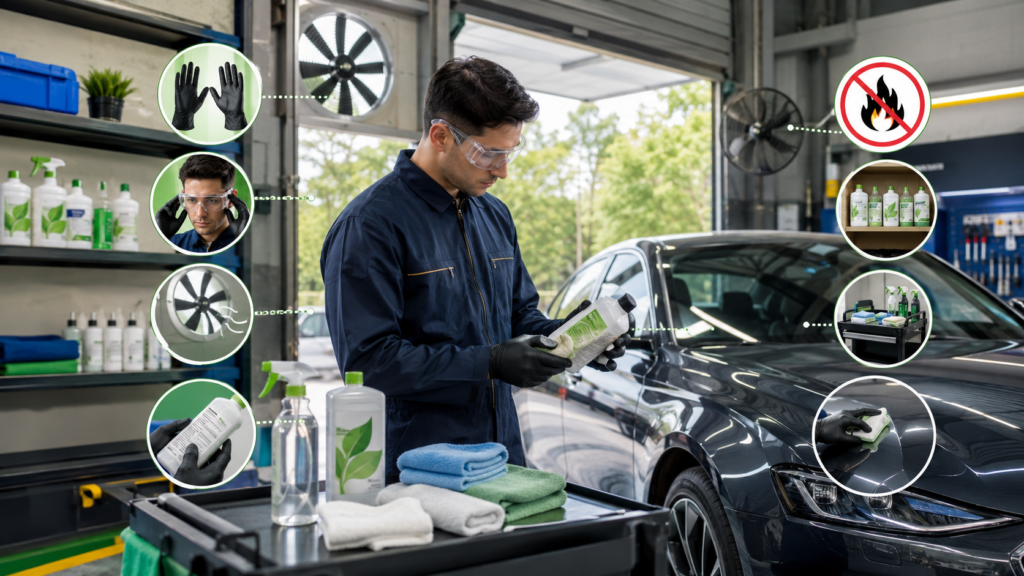
Even safer solvents deserve careful use. NIOSH warns that many cleaning solvents can be absorbed through the skin and that gloves, ventilation, and proper storage matter. Bio-based does not automatically mean harmless, so good habits still matter.
Ventilation and Protective Gear
Work in a space with good airflow and wear chemical-resistant gloves. NIOSH specifically notes that common latex gloves may not be enough for many solvents, so glove choice should match the cleaner. Eye protection is also wise when you are dealing with splash risk or overhead cleaning.
Storage and Handling
Keep the solvent in a closed container when it is not in use. EPA printing rules say VOC-containing inks and cleaning solvents should be kept in closed, non-leaking containers and spills should be removed immediately. That same disciplined handling helps with bio-based cleaners too, especially in busy work areas.
Disposal Guidelines
Do not leave soaked wipes or dirty cloths exposed. NIOSH recommends storing used wipers in a closed container until removal from the shop. This reduces vapor exposure and keeps the work area cleaner and safer.
Bio-Based Solvents vs Traditional Chemical Solvents
Bio-based and conventional solvents can both remove resin and ink, but they differ in toxicity, environmental impact, handling requirements, and long-term cost considerations.
| Factor | Bio-Based Solvents | Traditional Chemical Solvents |
| Cleaning Performance | Effective for light to moderate resin and ink residues; performance depends on formulation and dwell time | Often stronger and faster-acting, especially for heavy or aged residues |
| Safety and Odor | Generally lower toxicity and milder odor; reduced risk of skin absorption in many formulations (as noted by NIOSH) | Higher exposure risks; many are flammable, with strong odors and potential neurotoxic effects |
| Environmental Impact | Derived from renewable sources; better biodegradability; supported by | Typically petroleum-based; higher VOC emissions and environmental persistence |
| Handling and Storage | Easier to manage in routine cleaning; often fewer ventilation and disposal constraints | Requires strict handling, ventilation, and disposal controls due to hazardous properties |
| Cost and Practical Use | May reduce long-term costs through safer handling and lower compliance requirements | Lower upfront cost but higher indirect costs (safety gear, ventilation, waste management) |
| Best Use Case | Routine cleaning, moderate residue removal, environmentally conscious applications | Heavy-duty industrial cleaning where maximum solvency is required |
When to Use a Professional-Grade Bio-Based Cleaner
A professional-grade cleaner makes sense when the residue is thick, old, or part of an industrial process. It is also the better choice for large areas, sensitive production equipment, or surfaces where a weak cleaner would take too long. In the printing and coating world, solvent use is often tied to regulated work practices because the cleanup load can be significant.
Heavy Resin Buildup
If the residue has hardened into a thick layer, a stronger bio-based blend may be needed. Multiple light applications are usually safer than one heavy soak, but there is a point where a professional formula saves time and gives a cleaner finish.
Industrial Ink Residue
Industrial ink residue often contains more pigment and binder than household cleanup jobs. EPA printing documents show that inks and cleaning solvents are part of managed production systems, which is a sign that industrial residue often needs a higher-performance cleaner.
Sensitive or High-Value Surfaces
When the surface is expensive, coated, or difficult to replace, a professional cleaner can be the safer route. The cost of a specialist product is often smaller than the cost of repairing a damaged finish. Patch testing still matters, but the formulation should be chosen with the surface in mind first.
Common Mistakes to Avoid
The biggest mistakes are using too much product, skipping the patch test, and scrubbing too hard. These mistakes waste cleaner and can damage the surface faster than the residue itself. EPA and NIOSH guidance on controlled solvent use supports a careful approach rather than a forceful one.
Using the Wrong Solvent for the Surface
A stronger solvent is not always the better choice. A surface-safe bio-based cleaner that needs two passes is often better than a harsh cleaner that removes the finish. Matching the solvent to the material is the first rule of safe cleanup.
Skipping the Patch Test
Skipping the patch test is one of the fastest ways to create a permanent mark. A hidden spot can tell you if the cleaner is safe, too strong, or too slow before you commit to the whole surface.
Overusing the Product
More product does not always mean better cleaning. Controlled use is better because it limits runoff, residue spread, and vapor exposure. EPA work-practice rules for printing solvents emphasize minimizing spills and handling cleaning liquids in a contained way.
Scrubbing Too Aggressively
Hard scrubbing can damage coatings, push residue deeper, or leave scratches. Soft cloths and patient repeat cleaning usually do a better job. When the residue is very heavy, it is often wiser to upgrade the cleaner than to increase pressure.
Conclusion
Bio-based solvents offer a practical way to remove resin and ink residue without relying only on harsher chemical cleaners. They work best when the surface is identified first, the solvent is tested in a small area, and the residue is removed in calm, repeated steps. For many users, the biggest advantage is the balance of cleaning power, lower odor, and better handling.
For stubborn industrial residue, a professional-grade bio-based cleaner can save time and reduce risk. The safest result usually comes from matching the solvent to the residue, then working patiently and carefully.
FAQs
Can bio-based solvents remove both resin and ink residue?
Yes. Many bio-based solvents can remove both resin and ink residue, especially when the buildup is fresh or moderate. Effectiveness depends on selecting the right type—such as citrus, ester-based, or low-VOC blends—and allowing enough dwell time to soften the residue before wiping.
Are bio-based solvents safe on painted or coated surfaces?
Yes, but only after a patch test. Painted and coated surfaces are more sensitive than metal or glass, so testing on a hidden area helps prevent dulling, discoloration, or softening of the finish.
How long should a bio-based solvent stay on residue before wiping?
There is no fixed time. Light residue may loosen within seconds, while thicker buildup may require longer dwell time or repeated application. Always start with a short test and follow product label guidance.
Do bio-based solvents leave behind residue?
Sometimes. Residue may remain if too much solvent is used or if the surface is not wiped properly. Using minimal product and finishing with a clean wipe or rinse helps prevent leftover film.
Which bio-based solvent works best for tough residue?
Terpene-based and ester-based solvents are often effective for tough resin and ink buildup. For heavy industrial residue, a professional-grade formula designed for the specific surface and soil type may be required.
Are bio-based solvents better than traditional solvents for cleaning?
Bio-based solvents can be a better choice for routine cleaning due to lower toxicity, reduced odor, and improved environmental profile. However, traditional solvents may still perform better for extremely heavy or aged residue.
Can bio-based solvents damage plastic surfaces?
Yes, some formulations can affect certain plastics. Compatibility varies by material, so a patch test is recommended before full application.
Do bio-based solvents require ventilation during use?
Yes. Even though they are generally safer, proper ventilation is still recommended to reduce exposure and improve working conditions.
Are bio-based solvents flammable?
Some are mildly flammable, depending on the formulation. Always check product specifications and follow safe handling practices.
Can bio-based solvents be used for industrial cleaning?
Yes. Many industries use bio-based solvents for printing, coatings, and equipment cleaning. Performance depends on selecting the right formulation for the specific residue and surface.