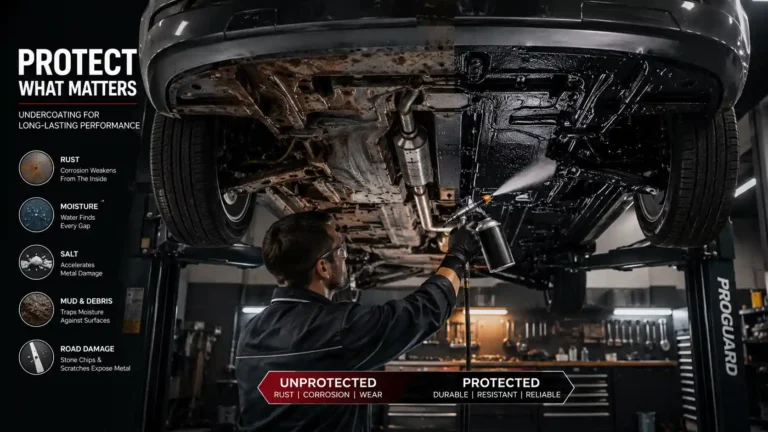
Car undercoating is a protective layer applied to the underside of a vehicle to help shield it from moisture, salt, dirt, road debris, and corrosion. Road exposure constantly puts the undercarriage at risk, especially in areas with heavy rain, snow, coastal air, or salted roads. Over time, this hidden part of the vehicle can develop rust faster than visible surfaces because it is inspected less often and often has thinner protection. Undercoating works by creating a barrier between metal surfaces and the elements that cause oxidation and damage. Depending on the formula, it may also help reduce the impact of small stones, grit, and road noise, making it an important part of long-term vehicle protection.
Why Car Undercoating Matters
Car undercoating matters because the underside of a vehicle is constantly exposed to damage that is not always visible. Salt, standing water, mud, and loose stones gradually wear down factory protection and increase the risk of corrosion over time. According to American Automobile Association, road salt can accelerate rust formation on the undercarriage, which makes preventive protection and regular cleaning important.
- Protection Against Rust
Rust forms when metal reacts with oxygen and moisture, and once it starts, it can spread and weaken structural components. American Automobile Association has highlighted that rust-related damage can become expensive, with past surveys indicating that a notable percentage of drivers in winter regions experienced repairs linked to corrosion over a five-year period. - Protection Against Moisture
Moisture often collects in seams, joints, and low areas beneath the vehicle, where it can remain trapped for long periods. A protective coating reduces direct contact with these areas. Products like cavity wax from 3M are designed to remain flexible and self-healing, which helps protect internal sections where water buildup is common. - Protection Against Road Salt, Gravel, and Debris
Road salt is widely recognized as a major cause of underbody damage because it speeds up corrosion. American Automobile Association notes that salt exposure can significantly impact vehicle durability if not managed. At the same time, gravel and debris can chip away protective layers, exposing bare metal and increasing the chance of rust forming underneath.
Extra Benefits: Noise Reduction and Undercarriage Defense
Many drivers like undercoating because it can also reduce road noise. 3M says some rubberized undercoatings help deaden sound while protecting against chipping and weathering. That makes undercoating useful not only for corrosion control but also for a quieter ride and a tougher underbody surface.
4 Types of Car Undercoating
Not all undercoatings behave the same way. Some are thicker and more durable, while others stay softer and are better for hidden areas or frequent re-treatment. The right choice depends on climate, vehicle age, and how long you want the protection to last.
1. Rubberized Undercoating
Rubberized undercoating is one of the most common choices for the visible underside and wheel wells. 3M says its rubberized products resist chipping, abrasion, rust, and weathering, and they are designed to build a textured protective layer. This makes them a strong option for daily driving and harsh road conditions.
2. Wax-Based Undercoating
Wax-based undercoating is often used in hidden cavities and hard-to-reach spaces. 3M’s cavity wax is non-hardening and self-healing, which helps it stay in place and protect seams and internal structures. That kind of coating is useful where flexibility matters and where a hard shell is not the best fit.
3. Oil-Based Undercoating
Oil-based undercoating is known for creeping into seams and reaching tight spaces. It is often used as a corrosion barrier in older cars or in areas where moisture is already a concern. Because oil-based coatings are softer, they may need more frequent attention than thicker rubberized products. This is why they are often chosen for protection, not for a long-lasting cosmetic finish.
4. Asphalt-Based Undercoating
Asphalt-based undercoating is a thicker option that has long been used for rust protection and sound deadening. 3M’s Body Schutz coating is described as an asphalt-based underbody coating with rust-proofing and sound-deadening properties. It is built for protection, but it is not always the best choice for every modern vehicle because it can be less flexible than newer coatings.
Which Undercoating Is Best for Your Vehicle?
The best undercoating depends on your car’s age, driving conditions, and environment. According to Consumer Reports, many modern vehicles already include factory corrosion protection, so additional coating is not always necessary. However, vehicles exposed to heavy salt, coastal air, or rough roads often benefit more from added protection.
Best for New Cars Vs Best for Older Cars
New cars benefit most from early undercoating because the protective layer helps prevent rust, moisture damage, salt corrosion, and road debris before they begin affecting the chassis. Older cars can also benefit from undercoating, especially after rust treatment and cleaning, as it helps slow further corrosion and adds an extra layer of long-term protection.
| Category | Recommendation |
| Best for New Cars | For new vehicles, the goal is to support factory protection rather than replace it. Light coatings such as wax-based cavity protection or high-quality rubberized layers are commonly used because they add protection without adding too much thickness. Data from National Highway Traffic Safety Administration service bulletins shows that manufacturers themselves apply similar treatments in salt-prone regions, which suggests added protection can be useful in harsh climates. |
| Best for Older Cars | Older cars usually require more preparation before undercoating because they may already have minor rust, chips, or worn surfaces. Proper cleaning, drying, and sometimes rust treatment are necessary before applying any coating. Guidance from 3M emphasizes that a clean and dry surface is essential for proper bonding, especially on used vehicles where contamination is more likely.Best for Wet, Coastal, or Snowy Climates Vehicles in wet or snowy regions face constant exposure to moisture and road salt, which increases corrosion risk. American Automobile Association has highlighted that salt damage is a major factor in undercarriage rust, making undercoating a valuable extra layer in these environments. It works best when combined with regular undercarriage washing.Best for Daily Drivers vs. Off-Road Vehicles Daily drivers benefit from coatings that can handle consistent exposure to water spray, dirt, and small debris. Rubberized or wax-based coatings are often suitable for this use. Off-road vehicles, on the other hand, face heavier impacts from mud, rocks, and uneven terrain, so they may need a thicker and more durable protective layer. The best choice depends on how aggressively the vehicle is used and the type of conditions it regularly faces. |
When Should You Apply Undercoating?
Timing matters because undercoating works best on a clean, dry, and healthy surface. It is usually easier to apply before long exposure to salt, moisture, and road grime begins. According to American Automobile Association, preparing before winter conditions can help reduce long-term undercarriage damage.
- Best Time of Year to Apply It
The ideal time is before the harsh season starts, especially before winter. Applying undercoating in dry weather allows proper curing and reduces the risk of trapping moisture underneath. American Automobile Association recommends early preparation before road salt exposure increases. - Signs Your Vehicle Needs It
Your vehicle may need undercoating if you frequently drive in snow, coastal areas, salted roads, or rough terrain. Visible rust spots, chipped metal surfaces, or increased noise from the underbody can indicate reduced protection. If heavy corrosion is already present, treatment should come first, as noted in findings referenced by Federal Register.
How Car Undercoating Is Applied
Proper application is just as important as the product itself. The coating must bond to a clean surface, cover exposed areas evenly, and fully cure before the vehicle is used. Guidance from 3M shows that preparation and layering play a major role in long-term protection.
- Surface Cleaning and Preparation
The underbody should be thoroughly washed, dried, and degreased before applying any coating. Dirt, oil, and loose rust can prevent proper adhesion, which weakens the protective layer. Both 3M and Rust-Oleum emphasize that clean, dry, and oil-free surfaces are essential for effective results. - Application Methods
Undercoating can be applied using spray cans, brushes, or specialized spray guns with extension wands. The method depends on the product type and the areas being covered. According to 3M, multiple coats are often recommended for better coverage, and special tools help reach tight spaces and hidden seams under the vehicle. - Drying and Curing Time
Drying time varies depending on the formulation. Some coatings become touch-dry within about an hour, while others require longer curing before exposure to moisture or road use. Allowing full curing is important because rushing this step can trap contaminants and reduce durability, as noted in product guidance from 3M.
Cost of Car Undercoating
Cost depends on the product, the size of the vehicle, and whether you do it yourself or hire a shop. The real question is not only the price today, but also how much corrosion repair it may help prevent later. AAA has reported that salt-related rust can lead to large repair bills, which is why many drivers view undercoating as a preventive measure.
DIY Cost vs Professional Installation Cost
Option | Estimated Price Range | What You Get |
| DIY Undercoating | Around $50 to $150 depending on product quality and quantity | Lower cost because you only pay for materials. However, all prep work like cleaning, masking, and proper application depends on you. Results can vary based on skill and tools. Guidance from 3M shows that poor preparation can reduce effectiveness. |
| Professional Installation | Around $300 to $800 or more depending on vehicle size and service quality | Higher cost but includes expert surface preparation, even coating, and access to hidden areas. This improves durability and consistency. 3M guidance highlights that proper application plays a major role in long-term protection. |
How to Maintain an Undercoated Car
Maintenance keeps the coating working as intended. Even strong undercoating can wear down over time due to salt, dirt, and impact, so regular care is essential to keep protection effective.
- Washing the Undercarriage
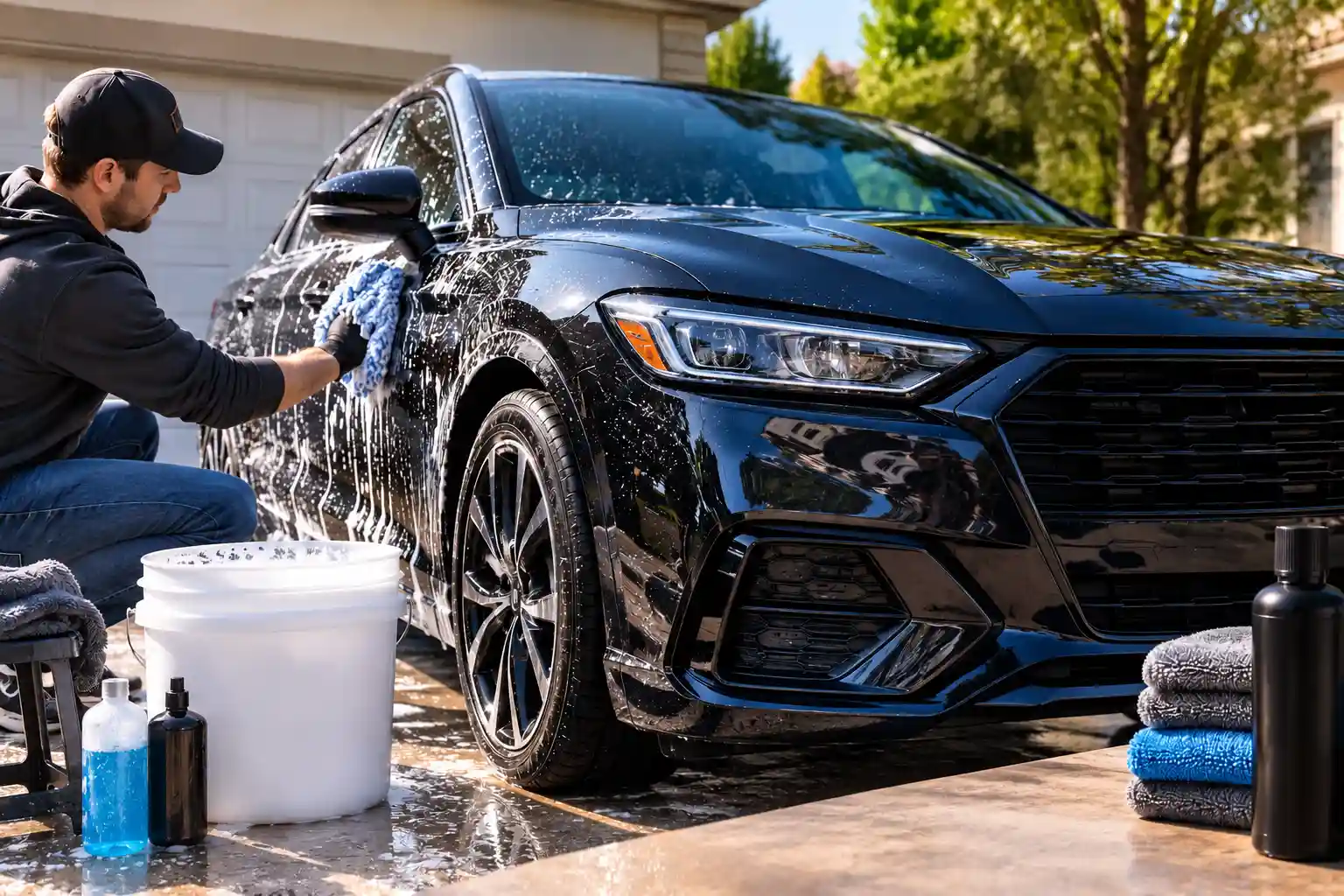
Regularly washing the underside of your vehicle helps remove salt, mud, and debris before they cause damage. American Automobile Association recommends frequent cleaning during winter, especially focusing on the undercarriage where salt buildup is most harmful. - Checking for Damage or Peeling
Inspect the coating for chips, cracks, peeling, or exposed metal areas. Damage often occurs from gravel, curbs, or rough driving conditions. According to 3M, once the coating is compromised, moisture can reach the metal and restart corrosion. - Reapplying When Needed
Reapplication is necessary if the coating becomes thin or damaged. Touch-ups help restore protection and prevent further wear. Guidance from Alaska Department of Transportation & Public Facilities highlights that vehicles in harsh climates or rough terrain benefit most from timely reapplication.
Pros and Cons of Car Undercoating
Car undercoating offers added protection for the underside of a vehicle, but it is not a perfect solution for every situation. The decision should be based on both its benefits and its limitations, as highlighted by Consumer Reports.
| Pros (Advantages) | Cons (Drawbacks) |
| Helps reduce rust by limiting exposure to moisture and oxygen | Can be expensive, especially with professional installation |
| Provides resistance against moisture, salt, and corrosion | Requires proper surface preparation to be effective |
| Protects against road debris like gravel and dirt | Poor application can trap moisture and worsen corrosion |
| Can reduce road noise due to insulating properties | Not a replacement for regular washing and maintenance |
| Adds an extra protective layer in harsh climates | Often unnecessary for modern cars with factory protection |
Conclusion
Car undercoating is a smart protection step for many vehicles, especially in places where salt, snow, rain, and road debris are common. It helps shield the underside from rust and wear, but it works best when the surface is clean, the product is chosen carefully, and the car is washed and inspected regularly. For drivers in harsh climates, undercoating can be a practical way to slow damage and protect long-term value. For drivers in mild areas, factory protection and routine cleaning may be enough.
FAQ
Is car undercoating really worth it?
Yes, car undercoating is worth it for vehicles exposed to road salt, snow, moisture, or rough roads because it helps reduce rust and long-term damage. According to American Automobile Association, preventing corrosion is usually more affordable than repairing rust-related damage later.
Does undercoating stop rust completely?
No, undercoating does not stop rust completely, but it significantly reduces the risk by limiting exposure to moisture and oxygen. Rust can still develop if the coating is damaged, poorly applied, or not maintained through regular cleaning and inspection.
Can you undercoat a used car?
Yes, you can undercoat a used car, but proper preparation is essential for effective results. The surface must be cleaned, dried, and treated for any existing rust so the coating can bond properly and provide long-lasting protection.
How often should undercoating be reapplied?
Undercoating should be inspected at least once a year, and reapplied when signs of wear, damage, or thinning appear. The exact timing depends on the product used, driving conditions, and exposure to harsh environments like snow or off-road terrain.
Is rubberized undercoating better than wax-based undercoating?
Rubberized undercoating is better for exposed areas because it is thicker and resists chips and impact, while wax-based undercoating works better for hidden cavities since it stays flexible and can reach tight spaces. 3M supports using different coatings for different parts of the vehicle.
Can undercoating trap moisture?
Yes, undercoating can trap moisture if it is applied on a wet or dirty surface, which may lead to corrosion instead of preventing it. Proper cleaning and complete drying before application are critical to avoid this issue.
Is undercoating safe for new cars?
Yes, undercoating can be safe for new cars, but it is not always necessary because most modern vehicles already include factory corrosion protection. Consumer Reports notes that extra coating may only be useful in harsh climates.
Can I do the car undercoating myself?
Yes, car undercoating can be done as a DIY project using available products, but the results depend heavily on preparation and application quality. If the vehicle has rust or is difficult to clean properly, professional service is often a more reliable option.