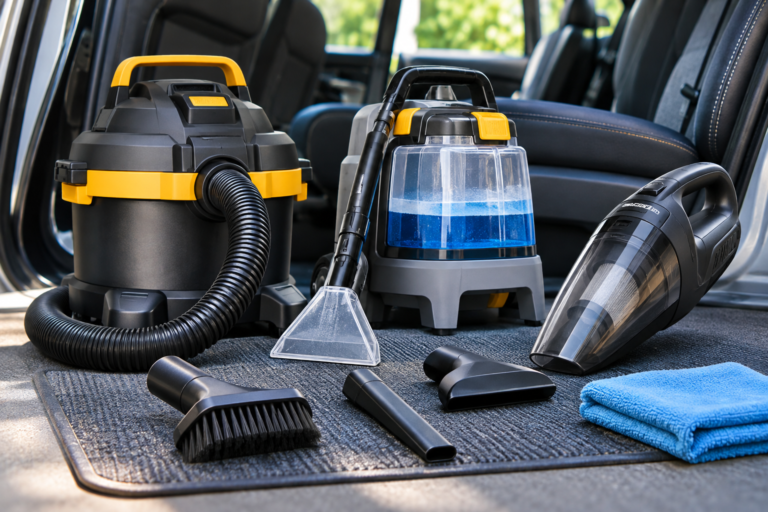
Car detailers commonly use corded wet/dry shop vacuums because they can handle ordinary interior debris and, when properly configured, small liquid spills. Many also use carpet extractors for deep-cleaning upholstery, while cordless vacuums are convenient for quick touch-ups. A powerful vacuum alone is not the whole answer: hose reach, narrow attachments, filtration, and the ability to remove embedded hair often matter just as much.
For most car owners, a compact wet/dry vacuum with a crevice tool and upholstery brush is a practical starting point. You may not need an extractor unless you regularly clean stained carpets or cloth seats. This guide compares the equipment by use case rather than claiming hands-on product testing.
The Vacuums Professional Detailers Commonly Use
Detailers choose equipment according to the type of debris, access to power, available space, and whether the job involves dry cleaning or washing fabric. One business may use more than one type of machine.
| Vacuum type | Best use | Main advantage | Main limitation |
|---|---|---|---|
| Wet/dry shop vacuum | General interior debris and compatible liquid pickup | Versatile for a range of jobs | Can be bulky; wet pickup requires the correct setup |
| Dry vacuum or dust extractor | Routine dry interior cleaning | Filtration and dust containment may be priorities | Not necessarily suitable for liquids |
| Cordless handheld vacuum | Quick cleanups and mobile work | Easy to carry and deploy | Battery runtime and bin capacity can limit longer jobs |
| Carpet extractor | Washing and extracting moisture from fabric | Applies cleaning solution and recovers some of it | More equipment and drying time than routine vacuuming |
A wet/dry vacuum is the most flexible starting point, but it is not a substitute for every other machine. Choose based on the jobs you actually do, rather than assuming a professional setup must include all four.
Wet/Dry Shop Vacuums
Wet/dry shop vacuums are a common choice for car interiors because they can collect dry debris and, with the manufacturer’s specified setup, liquids. Their separate hoses and attachments help reach floor mats, footwells, cargo areas, and gaps around seats.
The trade-off is size. A large canister may hold more debris but can be awkward to move around a vehicle or store in a small garage. Check hose reach and attachment compatibility before prioritizing tank capacity. For most personal vehicles, a manageable machine that reaches the entire cabin is more useful than a large one that is difficult to maneuver.
Dry Vacuums and Dust Extractors
A dry vacuum or dust extractor can suit a detailer who focuses on ordinary interior cleaning and wants effective dust containment. Depending on the model, it may use a collection bag, a filter, or both.
Do not assume that a machine marketed as a dust extractor can collect water. Check the manufacturer’s instructions for its intended materials and filter arrangement. If occasional liquid pickup matters to you, a wet/dry model may be the simpler choice.
Cordless Handheld Vacuums
Cordless vacuums are useful for crumbs, loose dirt, and quick maintenance between full details. They can also be convenient for mobile detailers working where a power outlet is not nearby.
Their main compromises are battery runtime and small collection bins. Cleaning a heavily soiled SUV may require emptying the bin or recharging before the job is finished. Look at the included crevice attachment and battery system as well as the vacuum itself; a handheld that cannot reach between seats may leave much of the work unfinished.
Carpet Extractors
A carpet extractor is a fabric-cleaning machine, not simply a stronger vacuum. It applies cleaning solution to carpet or upholstery and then recovers some of the liquid through a suction tool. Detailers may use one when dry vacuuming and spot treatment are not enough.
An extractor adds cost, cleaning steps, and drying time. It is usually unnecessary for an owner who only needs to remove dust and crumbs. For an occasional fabric-cleaning job, renting suitable equipment or hiring a detailer may make more sense than buying a machine.
What Matters More Than a Vacuum’s Appearance
The best vacuum for a car is the one that reaches the dirty areas, contains the debris, and is comfortable enough to use for the whole job. A large canister or an impressive marketing claim does not establish how well a vacuum will clean a particular interior.
Suction, Airflow, and Restrictions
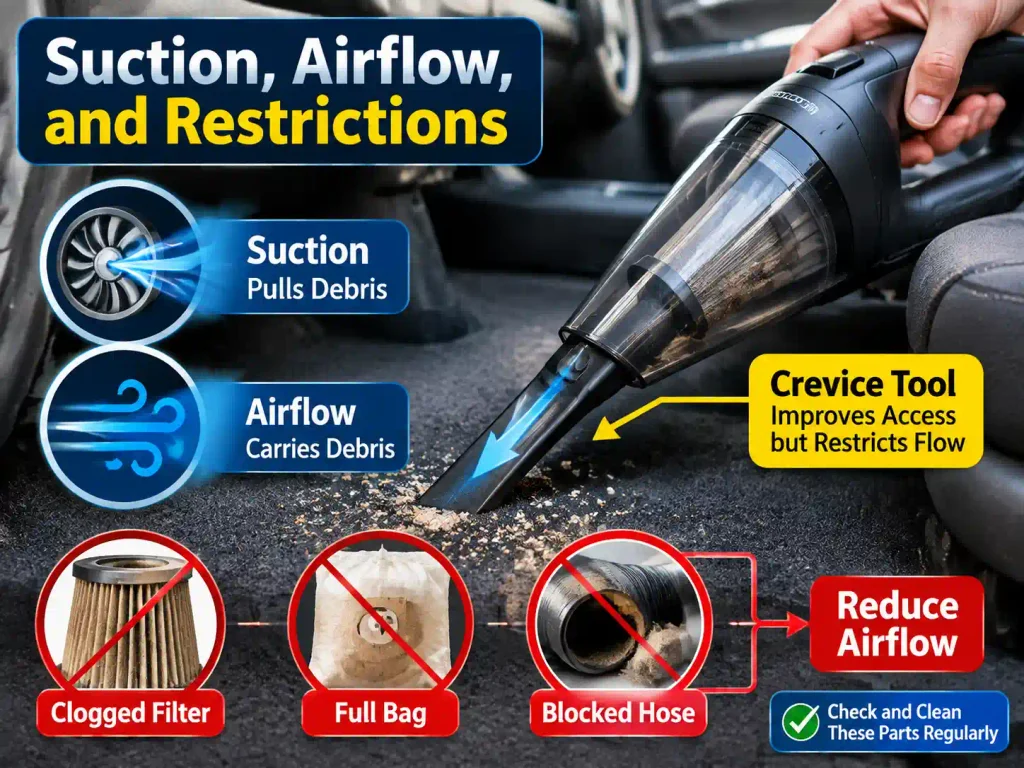
Suction helps a vacuum pull against resistance, while airflow helps carry loose debris through the hose. Both matter, but advertised numbers are not always directly comparable if manufacturers measure them differently.
A narrow crevice tool improves access, yet it also restricts the opening. A clogged filter, full bag, or blocked hose can reduce useful airflow regardless of the vacuum’s advertised output. Before replacing a machine that seems weak, check those components according to its manual.
Hose Length and Maneuverability
A hose should reach into footwells and across seats without forcing the canister against the car. Consider where the machine will sit and whether its cord and hose together can reach both sides of the vehicle.
Longer reach is convenient, but a hose also needs to be flexible enough to work around seat rails and door openings. For mobile work, storage and transport may matter as much as maximum reach. Confirm the actual hose and cord lengths in the listing or manufacturer’s documentation rather than judging them from photos.
Attachments for Interior Surfaces
The right attachment can make more difference than buying a larger vacuum. Look for tools that suit the surfaces and gaps in your car:
- Crevice tool: Reaches beside seats, along console edges, and into narrow footwell areas.
- Upholstery brush: Helps lift loose dirt from cloth seats and carpet while vacuuming.
- Soft brush attachment: Useful around vents and textured trim when used gently.
- Wider floor or upholstery nozzle: Covers open carpet and cargo areas more efficiently than a narrow tool.
Check that the tools fit the hose supplied with the vacuum. A long crevice tool is helpful only if it can enter the gap without forcing or scratching surrounding trim.
Filters and Collection Bags
A filter protects the vacuum and helps contain collected dust. A compatible collection bag can also make emptying dry debris less messy, although bags add an ongoing expense. Follow the manufacturer’s maintenance instructions because filter cleaning and replacement requirements vary.
HEPA is a filtration designation, not a guarantee that every part of a vacuum is sealed against leaks. If fine-dust containment is a priority, examine the manufacturer’s information about the complete machine, filter, and bags. Ordinary car-cleaning vacuums should not be assumed suitable for hazardous materials such as asbestos or lead dust.
How Detailers Remove Dirt a Vacuum Cannot Easily Lift
A vacuum picks up loosened debris, but compacted sand, hair, and fibers caught in carpet often need agitation first. Detailers commonly work a small area at a time, using a brush or suitable pet-hair tool to bring material toward the surface before vacuuming it away.
For floor mats, removing them from the car makes both the mats and the carpet beneath easier to access. A stiff brush may help on durable carpet, while delicate upholstery and trim need a gentler approach. Test an inconspicuous area and avoid scraping surfaces with hard plastic attachments.
Do not force a nozzle under a powered seat or pull on wiring and connectors. Move the seat using its normal controls when possible, then work carefully around the rails. If an area cannot be reached safely, leave it rather than disturbing electrical components.
Should You Buy a Shop Vacuum or a Carpet Extractor?
Buy a shop vacuum first if your main problem is loose dirt, crumbs, sand, or pet hair. It handles routine dry cleaning and may also collect compatible liquid spills when configured as instructed. A brush and crevice tool will usually do more for everyday maintenance than an extractor.
Consider an extractor if you repeatedly need to wash cloth seats or carpet and can allow the interior to dry. Vacuum the fabric first, follow the fabric and cleaning-product instructions, and avoid saturating upholstery or electrical components. Moisture left in the cabin can create an odor problem, so provide ventilation and allow surfaces to dry before closing the car up.
A wet/dry vacuum can recover some liquid, but that alone does not make it equivalent to an extractor with a solution-delivery system. Check the equipment’s capabilities rather than assuming the two machines perform identical jobs.
Choosing a Vacuum for Your Situation
The most useful choice depends on how often you clean, where you work, and what you need to remove. Extra capacity or a specialist machine is not automatically a better purchase.
- Occasional home cleaning: Choose a manageable wet/dry vacuum with a crevice tool and suitable brush. A compatible vacuum you already own may be enough.
- Quick maintenance: A cordless handheld can handle light debris without setting up a cord, but check its attachments and battery arrangement.
- Large or heavily used vehicles: Favor comfortable hose reach, a collection capacity you can manage, and accessible replacement filters or bags.
- Mobile detailing: Consider transport space, access to electrical power, and whether carrying separate dry and fabric-cleaning equipment is practical.
- Frequent fabric washing: Consider an extractor in addition to a dry-cleaning vacuum, not as a replacement for routine debris removal.
Before buying, check the manufacturer’s instructions for replacement filters, bags, and accessories. A low purchase price is less appealing if the attachments you need are unavailable or do not fit.
Vacuuming Safety and Maintenance
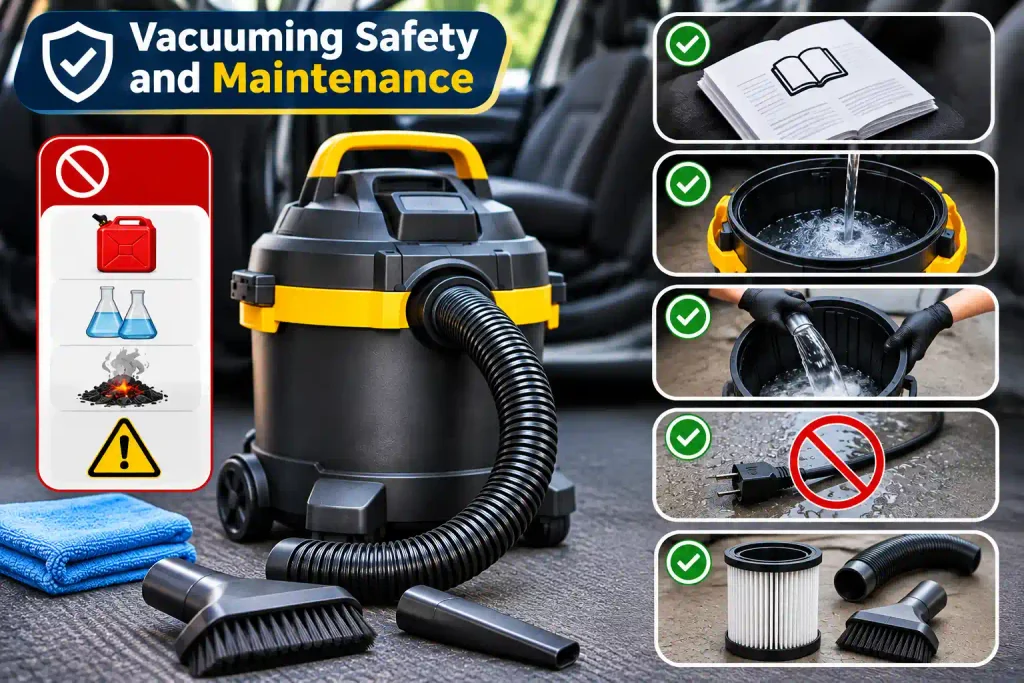
Use the vacuum only for materials its manufacturer permits. Do not vacuum gasoline, solvent spills, hot ash, or other hazardous material with an ordinary household or shop vacuum. For an unknown chemical spill or potentially hazardous dust, keep people away and seek appropriate professional guidance.
Before collecting water with a wet/dry vacuum, unplug it and configure the tank and filters exactly as the manual directs. Do not assume the dry filter or collection bag can remain in place. Empty and clean the tank afterward, and let components dry as instructed before returning to dry pickup.
Keep the power cord away from water and inspect it for damage before use. Empty the container and maintain the filter when needed, then check the hose and tools for obstructions. A maintained vacuum is easier to assess than one struggling with a packed tank or clogged filter.
Which Vacuum Should You Choose?
For most owners, start with a manageable wet/dry vacuum, a crevice tool, and a brush suited to the interior. Choose a cordless handheld if quick touch-ups are your priority, or add an extractor if you regularly wash fabric. If your existing vacuum reaches the necessary areas and handles the debris safely, you may not need to buy another one.
Frequently Asked Questions About Car Detailing Vacuums
The following answers address common choices for owners who want a detailer’s results without buying a full professional setup.
Do car detailers use household vacuums?
Some can use a suitable household vacuum for dry interior cleaning, particularly if it has a hose and useful attachments. Check that the manufacturer permits the debris you plan to collect, and do not use a dry-only model for liquid spills.
Is a wet/dry vacuum better than a cordless car vacuum?
A wet/dry vacuum is generally more versatile for mixed cleaning tasks, while a cordless vacuum is more convenient for quick, light jobs. The better choice depends on whether you value liquid capability and longer cleaning sessions or easy portability.
Do you need an extractor to clean car seats?
No. Dry vacuuming and an appropriate fabric spot-cleaning method may be enough for lightly soiled seats. An extractor is more useful for repeated or broader fabric-washing jobs, provided the upholstery and cleaning product are suitable and the seats can dry properly.
Can a vacuum remove all pet hair from car carpet?
A vacuum can remove loose pet hair, but hair embedded in carpet fibers may need a suitable brush or pet-hair tool to loosen it first. Results depend on the carpet, the hair, and the attachment; no vacuum should be assumed to remove every strand.