A dashboard sits behind glass and takes sunlight every day. Plastic and vinyl can fade or lose their original finish, and an overly glossy dressing can reflect in the windshield. The right protectant needs to suit the dashboard material, leave a finish you can live with, and fit a reapplication routine you will follow.
Choosing is confusing because some products are dedicated protectants, some clean and protect in one wipe, and some also condition leather or dress exterior trim. “Long-lasting” also needs context: a car parked outdoors, frequent interior cleaning, and heat can change how often protection needs refreshing. There is no independent duration test behind this list. Where a brand publishes a schedule, it is identified as the brand’s guidance.
Top pick: 303 Automotive Protectant, 16 oz is the best overall choice for a vinyl or plastic dashboard if you want a dry, low-glare finish. Its maker explicitly recommends buffing it dry and reapplying every 3–5 weeks. For a manufacturer-stated 30-day option, consider Mothers Protectant; for a dashboard you also need to clean, choose Meguiar’s Ultimate Interior Detailer.
Quick comparison: 10 Best UV Protections for Dashboards That Actually Last
| Product | Best for | Key specification | Check Price on Amazon |
|---|---|---|---|
| 303 Automotive Protectant, 16 oz | Matte finish and a clear upkeep schedule | 16 oz; reapply every 3–5 weeks per 303 | Check Price on Amazon |
| Mothers Protectant, 16 oz | Simple monthly upkeep | 05316; 16 oz; manufacturer states 30-day protection | Check Price on Amazon |
| Meguiar’s Natural Shine Protectant, 16 oz | Restoring a natural dashboard look | G4116; 16 oz; vinyl, rubber, plastic | Check Price on Amazon |
| CARPRO PERL, 500 ml | A concentrate for interior and exterior trim | 500 ml; dilute 1:5 for interior vinyl | Check Price on Amazon |
| Armor All Original Protectant Wipes, 30 Count | Fast wipe-on application | 30 premoistened protectant wipes | Check Price on Amazon |
| Chemical Guys InnerClean, 16 oz | Light dust and fingerprints | 16 oz; quick detailer with UV protection | Check Price on Amazon |
| Turtle Wax Hybrid Solutions Inside Job, 16 oz | Cleaning mixed interior materials | 16 oz; leather, vinyl, plastic, rubber | Check Price on Amazon |
| Adam’s Leather Conditioner, 16 oz | Dashboards in leather-heavy interiors | 16 oz; leather, vinyl, and textured plastic | Check Price on Amazon |
| Chemical Guys VRP, 16 oz | Darker-looking faded plastic | 16 oz; apply with pad; vinyl, rubber, plastic | Check Price on Amazon |
| Meguiar’s Ultimate Interior Detailer, 15.2 oz | Quick cleaning with a satin finish | G16216; 15.2 oz; cleaner and UV protectant | Check Price on Amazon |
10 Best UV Protections for Dashboards That Actually Last
1. 303 Automotive Protectant, 16 oz — Best for a matte dashboard
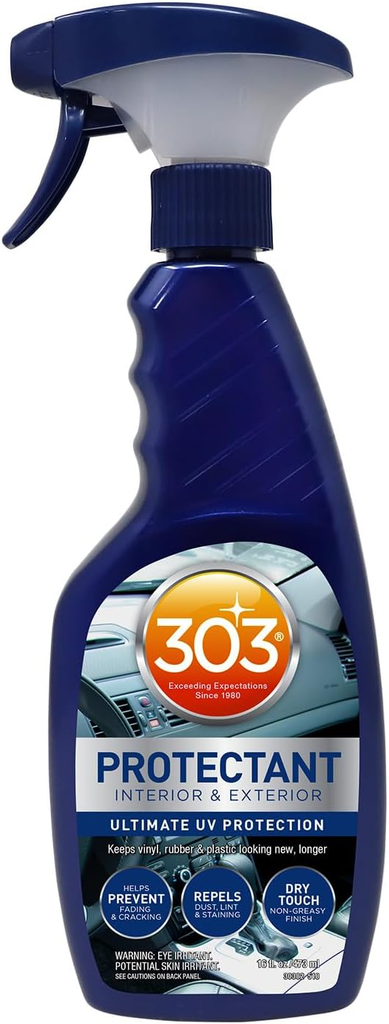
303 is the most direct choice for a driver who wants UV protection without turning the dashboard shiny. Its 16 oz automotive formula is intended for vinyl, plastic, and rubber; 303 describes a dry, natural finish. A lower-sheen dash can also be more comfortable when windshield reflections bother you.
The application matters. Clean and dry the surface, apply out of direct sun, spread a thin coat, and buff it dry. According to 303, the product does not air dry. The maker recommends reapplication every 3–5 weeks for continued protection; that is upkeep guidance, not a measured guarantee for every vehicle. Do not use it on clear plastic, gauge panels, fabric, flooring, or unfinished leather. Choose 303 over a spray-and-wipe cleaner if the dashboard is already clean and finish control is the priority.
Best for: A plastic or vinyl dash where glare and greasy residue are concerns.
Pros: Dry matte finish; manufacturer gives clear buffing and reapplication directions; useful on rubber and vinyl trim too.
Cons: Needs a separate cleaning step; skipped buffing can leave streaks; excluded from clear plastic and gauge panels.
Buying Decision: Buy it for controlled, low-glare protection and plan to refresh it regularly.
2. Mothers Protectant, 16 oz — Best for a monthly maintenance routine
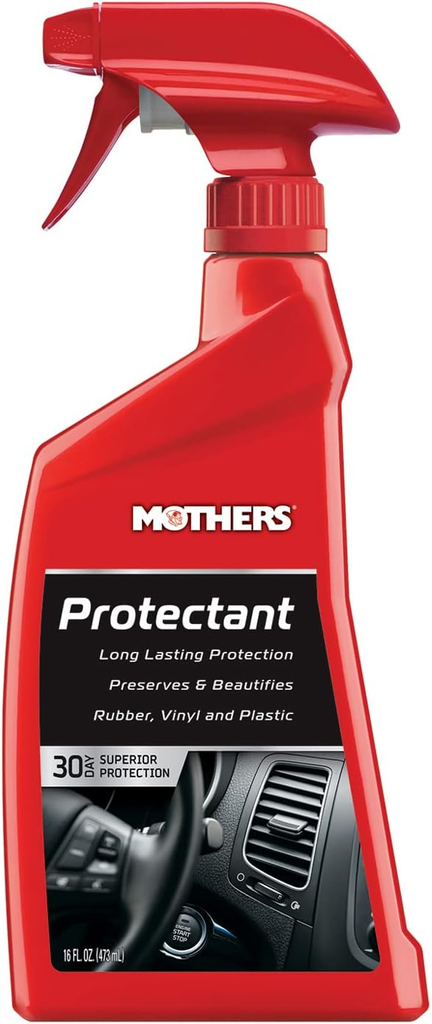
Mothers calls its 16 oz, model 05316 spray a protectant for rubber, vinyl, and plastic, including dashboards and door panels. The manufacturer states 30-day protection, which gives owners a simple monthly reminder. That claim comes from Mothers; conditions in an exposed vehicle can vary.
It also suits a household that wants the same product for certain exterior plastic and rubber parts. Its coverage is broad, but avoid assuming all interior materials accept a trim protectant: check the dashboard’s material and the vehicle manual first. Compared with 303, this is the pick if a calendar-based refresh schedule matters more than a specifically matte result. Neither product repairs cracking that has already occurred.
Best for: Someone who will reapply a protectant about once a month.
Pros: Manufacturer publishes a 30-day claim; 16 oz spray; covers dashboard, doors, and compatible rubber or plastic trim.
Cons: Manufacturer’s duration is not independent test data; a separate cleaner is useful when the dashboard is greasy or dirty.
Buying Decision: Choose it for an easy repeat schedule and broad vinyl, rubber, and plastic use.
3. Meguiar’s Natural Shine Protectant, 16 oz — Best for a factory-style look
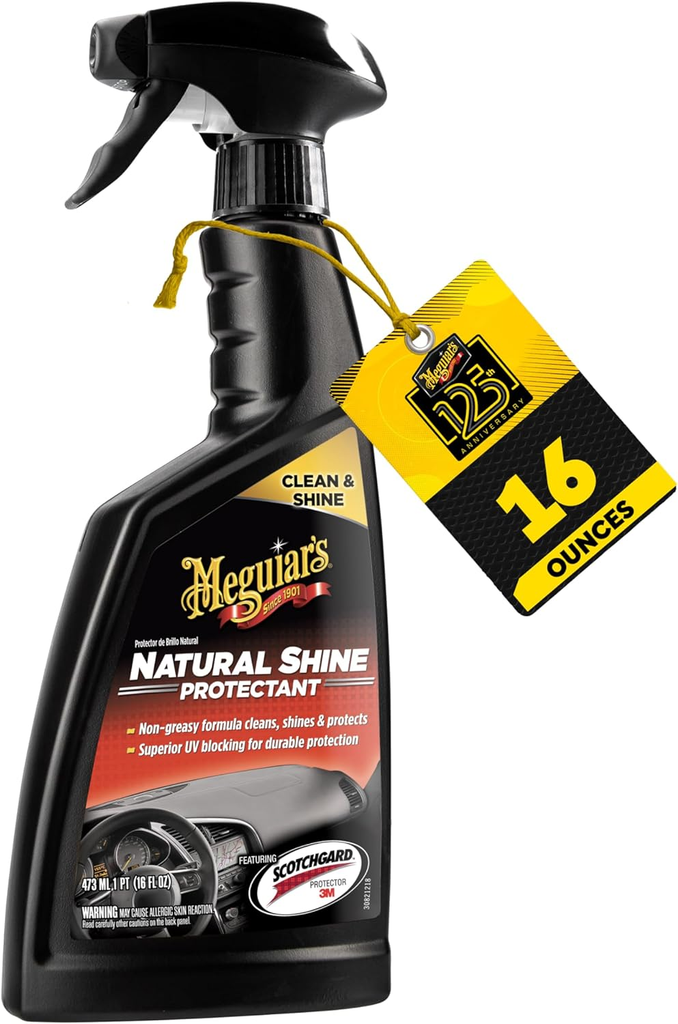
Meguiar’s G4116 is a 16 oz trigger spray for vinyl, rubber, and plastic. The brand describes a non-greasy formula that cleans, restores color, and adds protection. Its selling point is the natural-looking finish: it suits a dash that has dulled a little but whose owner does not want the obvious gloss of a high-shine dressing. Meguiar’s product information lists a UV absorber for this formula.
Use a cloth to control the product near vents and glass, then wipe off excess. If a dashboard already has severe discoloration or cracked plastic, a dressing can improve the appearance only within limits. Choose Natural Shine over Chemical Guys VRP if you want less darkening and a lighter-looking finish. Choose 303 if you particularly want its dry matte finish and published refresh guidance.
Best for: Slightly faded vinyl or plastic that should still look close to its original finish.
Pros: Natural-look finish; trigger spray; suitable for several common dashboard and door-trim materials.
Cons: Less dramatic darkening than a dedicated dressing; no fixed duration should be assumed from its finish.
Buying Decision: Pick it when the appearance of the dash matters as much as adding UV protection.
4. CARPRO PERL, 500 ml — Best for a concentrated protectant
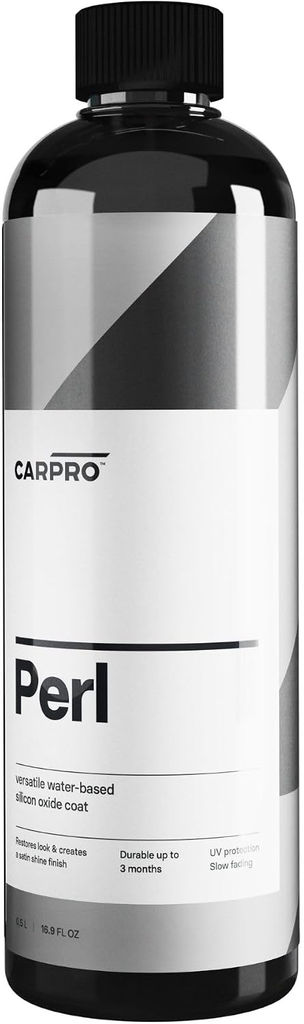
PERL is a water-based concentrate for plastic, engine-bay materials, rubber, and finished leather. The linked bottle is 500 ml. CARPRO lists one part PERL to five parts water for interior vinyl and leather, a different mix from its exterior and tire directions. This makes it useful if you protect the dashboard and also maintain exterior trim, provided you label your diluted bottle clearly.
Clean first, apply a thin layer, remove excess, and allow it to dry before use. The need to dilute and apply carefully is its limitation: a ready-to-use spray is easier if you clean one dashboard occasionally. PERL also leaves a richer satin look than 303’s matte finish. Do not copy the tire dilution onto an interior panel.
Best for: Owners who maintain several plastic and rubber surfaces and do not mind mixing a concentrate.
Pros: Clear 1:5 interior dilution from CARPRO; 500 ml concentrate; suitable for interior vinyl and compatible exterior trim.
Cons: Requires measuring and a separate bottle; incorrect dilution or excess product can make interior application messy.
Buying Decision: Choose PERL for versatile, measured use across the vehicle; use a simpler spray for occasional dashboard-only care.
5. Armor All Original Protectant Wipes, 30 Count — Best for quick application
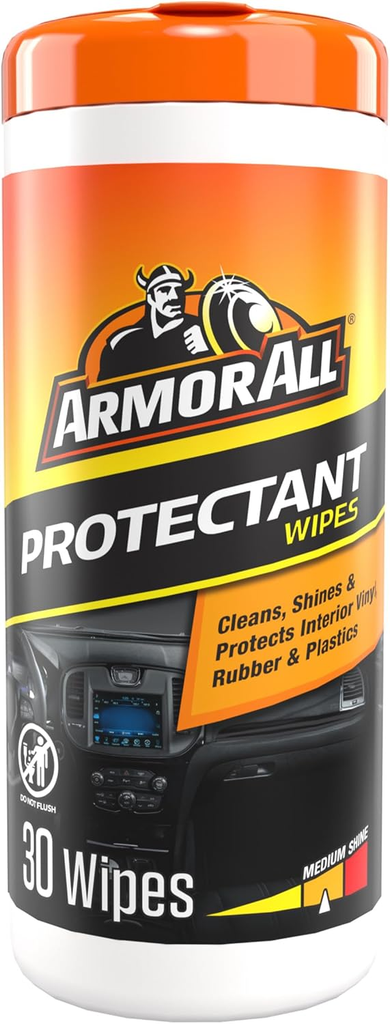
This is the 30-count canister of Original Protectant Wipes. Armor All says the wipes add UV protection to vinyl, rubber, and plastic, including dashboards. A wipe makes sense if keeping a separate sprayer, applicator, and towel in the car is inconvenient. It also helps control application near vents.
Armor All recommends regular reapplication, with weekly use suggested on its product page. Wipes are less practical for a large, heavily soiled dashboard, and a canister must be closed carefully to keep them moist. Do not use these on infotainment screens or gauge displays; Armor All specifically excludes touchscreens. Choose the wipes over 303 for speed, while accepting more frequent upkeep and disposable waste.
Best for: A fast dash and door-trim wipe during routine interior upkeep.
Pros: Single-use applicator; 30-count canister; no spray drifting onto the windshield.
Cons: Weekly refresh guidance; can dry out if poorly stored; unsuitable for touchscreens.
Buying Decision: Buy them for convenience, especially if a simple wipe makes you more likely to keep up the routine.
6. Chemical Guys InnerClean, 16 oz — Best for light dust and fingerprints
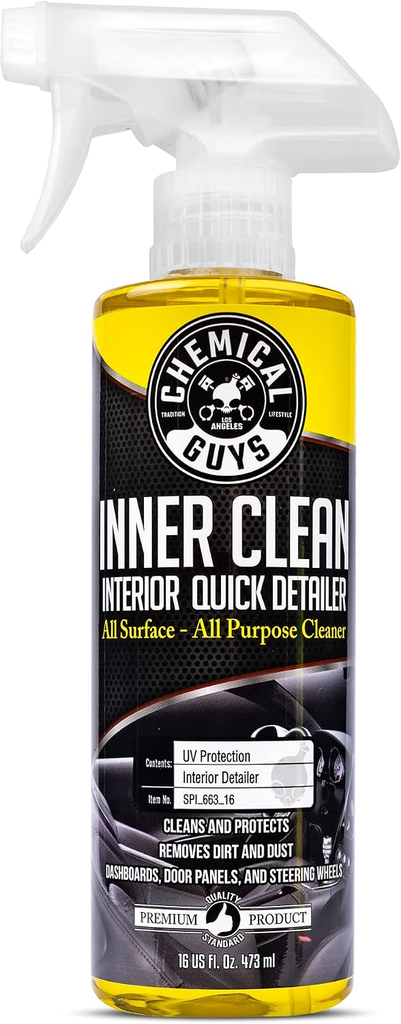
InnerClean is a 16 oz interior quick detailer with UV protection. Chemical Guys says it removes light dust, body oils, and fingerprints and leaves a clean factory-style sheen. It is useful when the dashboard needs a light wipe before adding protection; the maker also describes anti-static ingredients for dust control.
For best control, spray a microfiber towel, wipe the dash, and use a dry side to remove excess. A quick detailer is not the same job as deep cleaning a stained or sticky interior. InnerClean is a better fit than 303 when routine grime is the immediate problem; 303 is the clearer fit when you want a dedicated matte protectant and a stated reapplication interval. Check the intended surface before treating screens or delicate trim.
Best for: A mostly clean dash that accumulates fingerprints and light dust between full details.
Pros: Removes light soil while adding UV protection; 16 oz spray; anti-static finish claim.
Cons: Not a heavy-soil cleaner; no manufacturer-backed fixed duration for its UV effect on a dashboard.
Buying Decision: Choose it when a quick cleaning pass is part of every protectant application.
7. Turtle Wax Hybrid Solutions Inside Job, 16 oz — Best for mixed interior surfacesg
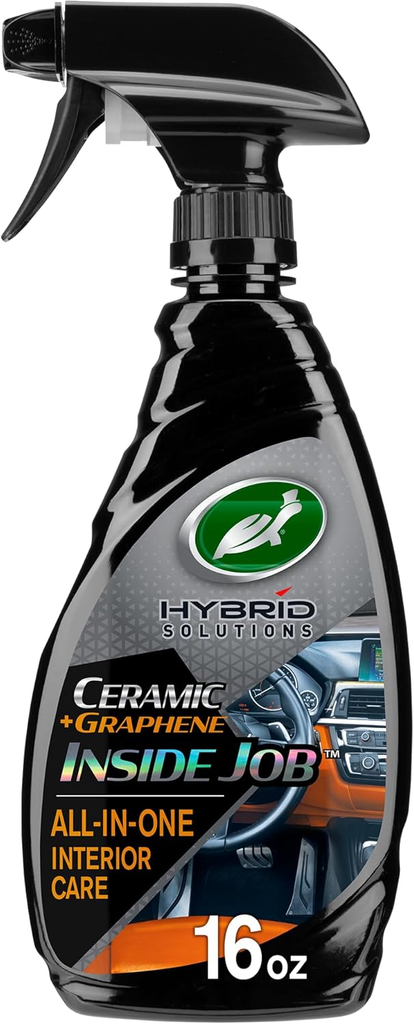
The 16 oz Hybrid Solutions Ceramic + Graphene Inside Job spray is designed to clean and protect washable leather, vinyl, plastic, and rubber surfaces. Turtle Wax says its formula adds UV and dust protection and contains conditioning ingredients. That combination makes sense when the dashboard sits alongside leather-covered trim and you want one maintenance bottle for much of the cabin.
Wipe the product evenly with microfiber and turn to a dry side to remove residue. The ceramic and graphene wording describes the formula; it does not mean a permanent interior coating or a verified number of months of UV resistance. Choose Inside Job over InnerClean when broad leather and plastic use is more valuable than a light dust-detailing routine. Check the label and vehicle manual before treating a specialty display or unusual coating.
Best for: A cabin with both plastic dashboards and washable leather or vinyl trim.
Pros: Broad intended material range; cleans and conditions in one step; UV and dust protection claims.
Cons: Cannot replace a deep cleaner for stubborn staining; protection duration is not independently established here.
Buying Decision: Buy it if one bottle for the dashboard and adjacent mixed materials simplifies upkeep.
8. Adam’s Leather Conditioner, 16 oz — Best for leather-heavy cabins
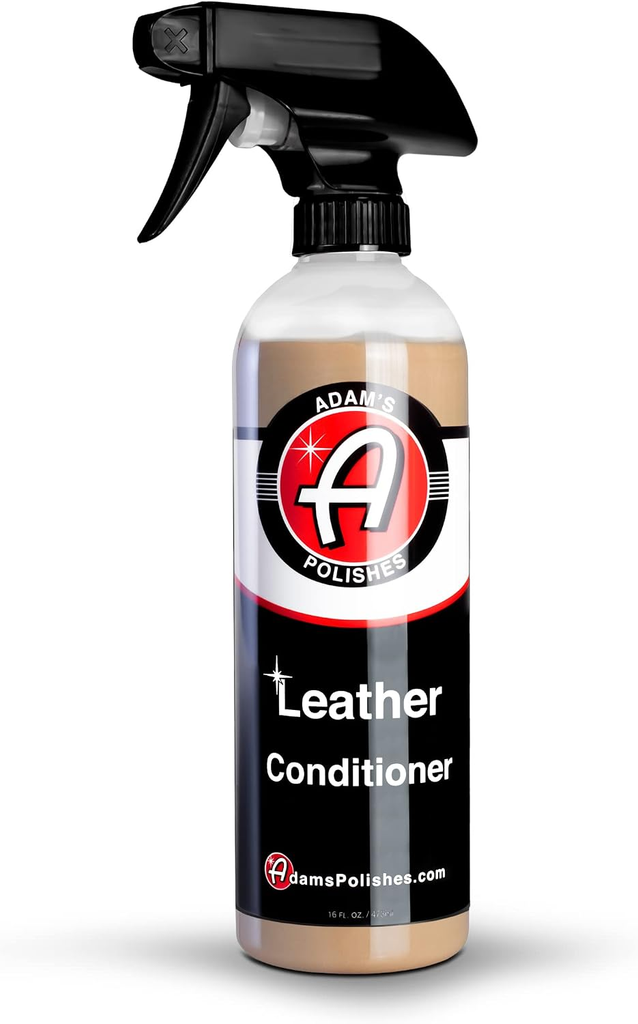
Adam’s 16 oz Leather Conditioner is made for leather, vinyl, and textured plastic interior surfaces, including dashboards. Adam’s says it contains UV blockers and leaves a satin finish. It is a better fit than a plastic-only dressing if your vehicle has leather seats, leather-covered dash trim, and vinyl panels and you want a conditioner that spans those materials.
Use it after cleaning; do not expect conditioner to lift built-up grime by itself. Adam’s gives an upkeep suggestion of several applications per season rather than a universal duration for every parking condition. It has a leather scent, which matters if you prefer an unscented interior. It is also less suitable than 303 if you want a specifically matte dashboard with minimal sheen.
Best for: Leather- and vinyl-heavy interiors where the dashboard can use the same conditioner.
Pros: Covers leather, vinyl, and textured plastic; satin finish; maker explicitly mentions dashboards and UV blockers.
Cons: Needs cleaning first; scent and satin darkening may not suit a matte cabin.
Buying Decision: Choose it when leather care is central to your interior routine and the dashboard material is compatible.
9. Chemical Guys VRP, 16 oz — Best for darkening faded trim
VRP stands for vinyl, rubber, and plastic. The linked 16 oz dressing uses a pad application: clean the surface, spread a few drops or sprays, and buff away excess. Chemical Guys says it gives plastic a darker, shinier look while protecting against UV exposure. Its controlled pad application can help when you want to refresh an uneven-looking dashboard without spraying nearby glass.
Appearance is the tradeoff. On a high dashboard, added gloss may reflect in the windshield, so test a small area and buff it down. VRP is better suited to a driver who wants visible darkening than one seeking 303’s low-glare finish. It will not fix cracks, peeling coatings, or permanently restore sun-damaged plastic.
Best for: Compatible dark vinyl or plastic that looks dull and needs a richer finish.
Pros: Controlled applicator use; visible darkening; can also serve compatible rubber and exterior plastic.
Cons: May create unwanted windshield reflection; requires surface cleaning and thorough removal of excess.
Buying Decision: Buy it for a darker appearance, after checking the result on a small dashboard section.
10. Meguiar’s Ultimate Interior Detailer, 15.2 oz — Best for one-step satin cleaning
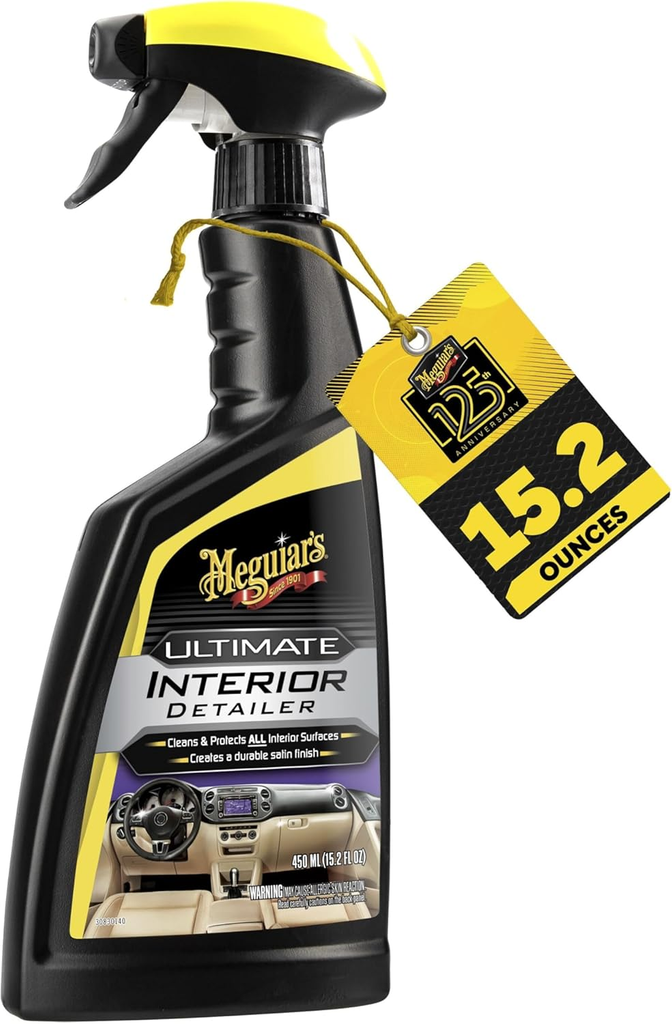
Meguiar’s G16216 is a 15.2 oz interior detailer that cleans and adds UV protection. Meguiar’s describes a fast-drying, non-greasy satin finish. It fits a driver who wants to remove everyday dash film and leave a restrained finish without separately applying a dressing.
It differs from Natural Shine: that product concentrates on restoring color on vinyl, rubber, and plastic, while Ultimate Interior Detailer is the better general cleaning-and-protection step. The 15.2 oz bottle is less convenient than a large spray if you treat several vehicles. Follow the bottle’s surface directions around sensitive displays; do not treat screen compatibility as automatic merely because the product is an interior detailer.
Best for: A quick wipe that cleans the dash and leaves UV protection with satin sheen.
Pros: Cleans and protects in one pass; manufacturer describes a fast-drying non-greasy finish; restrained satin appearance.
Cons: 15.2 oz bottle; not a substitute for targeted cleaning of heavy grime or for repairing damaged surfaces.
Buying Decision: Choose it when one-step interior maintenance is more useful than a dedicated dressing.
Which should you buy?
For most plastic or vinyl dashboards, choose 303 Automotive Protectant if you want a matte finish and will follow its buffing and reapplication directions. Choose Mothers Protectant if a monthly reminder suits you. If dust and fingerprints are your main problem, Meguiar’s Ultimate Interior Detailer combines a cleaning step with protection.
| Your main need | Pick | Reason |
|---|---|---|
| Minimal glare | 303 Automotive Protectant | Dry matte finish |
| Published monthly protection claim | Mothers Protectant | Manufacturer states 30 days |
| Factory-style appearance | Meguiar’s Natural Shine Protectant | Modest color and sheen restoration |
| One concentrate for several vehicle surfaces | CARPRO PERL | Separate manufacturer dilution for interiors |
| Fast wipe kept in the car | Armor All Original Protectant Wipes | Ready-to-use 30-count canister |
| Light dust and fingerprints | Chemical Guys InnerClean | Quick detailer with UV protection |
| Leather and plastic together | Turtle Wax Hybrid Solutions Inside Job | Multi-material cleaner and protectant |
| Leather-focused care | Adam’s Leather Conditioner | Conditions leather, vinyl, and textured plastic |
| Darker faded-looking plastic | Chemical Guys VRP | Pad-applied dressing with richer finish |
| Satin clean-and-protect pass | Meguiar’s Ultimate Interior Detailer | Cleans and adds UV protection |
What makes dashboard protection last?
Surface preparation. A protectant works best on a clean, dry, compatible material. Dust, old dressing, and skin oils can cause uneven application. A product that cleans and protects in one step suits light dirt; clean heavy contamination first.
Complete application. Use a cloth or applicator near vents and glass, spread a thin coat, and remove residue as directed. For 303, buffing dry is part of the manufacturer’s instructions, not an optional finishing touch. Do not apply a tire-strength concentration of a multipurpose dressing to the dash.
Exposure and upkeep. UV protection is maintenance. 303 recommends refreshing every 3–5 weeks; Mothers states 30-day protection; Armor All suggests weekly wipe use. These are manufacturer statements for different products, not comparable laboratory test results. Outdoor parking, heat, and cleaning frequency may call for a different schedule. A fitted sunshade can reduce direct exposure while parked.
Safe use and mistakes to avoid
- Identify the dashboard material and check the vehicle manual. A plastic dash, leather-covered dash, soft-touch coating, and anti-glare screen are different surfaces.
- Dust or clean first. Test any unfamiliar protectant on a small, inconspicuous spot.
- Apply to a microfiber towel or pad near the windshield, displays, and switches. Use a thin, even layer, then buff off excess according to the product directions.
- Keep dressings off steering-wheel grips, pedals, controls, touchscreens, clear gauge covers, and glass unless the manufacturer specifically permits that surface.
- Recheck the finish in daylight. If glare or streaking appears, remove excess with an appropriate clean cloth rather than adding another layer.
The common buying mistake is treating gloss as proof that UV protection will last longer. Another is choosing a product by a duration slogan without noticing its reapplication directions. A dried or cracked dashboard may also need repair; protectant cannot reverse structural damage.
FAQs
Can UV protectant prevent an existing dashboard crack from spreading?
It is meant to help maintain compatible material, not repair a crack. A cracked or peeling dash needs a separate repair assessment. Reducing sun exposure can help limit further stress.
Should I put dashboard protectant on an infotainment screen?
Use only a product explicitly approved for that display. Armor All says its Original Protectant Wipes should not be used on touchscreens; 303 also excludes clear plastics and gauge panels. A product safe for vinyl is not automatically safe for screen coatings.
How often should I reapply it?
Follow your chosen bottle’s instructions and watch the surface. As examples, 303 recommends every 3–5 weeks, Mothers states 30-day protection, and Armor All suggests weekly use for its protectant wipes. These schedules come from the manufacturers and are not head-to-head durability results.
Is a matte or glossy finish better?
A matte or restrained satin finish is usually easier to live with on the top of a dash because it produces less windshield reflection. A glossier finish may look good on lower door trim. Test before dressing the entire dashboard.
Will a UV protectant replace a windshield sunshade?
They address different parts of the problem. A protectant treats compatible surfaces; a sunshade reduces direct sunlight while parked. If the car sits outdoors for long periods, using both can be sensible.
Conclusion
303 Automotive Protectant, 16 oz is the best overall pick for dashboard UV care because it gives a dry matte finish, clear surface exclusions, and practical reapplication directions. Mothers Protectant suits a monthly routine, CARPRO PERL suits owners willing to dilute a concentrate, and Meguiar’s Ultimate Interior Detailer suits drivers who want cleaning and protection in one pass. Match the finish to your sightline and reapply according to the product and the car’s exposure.