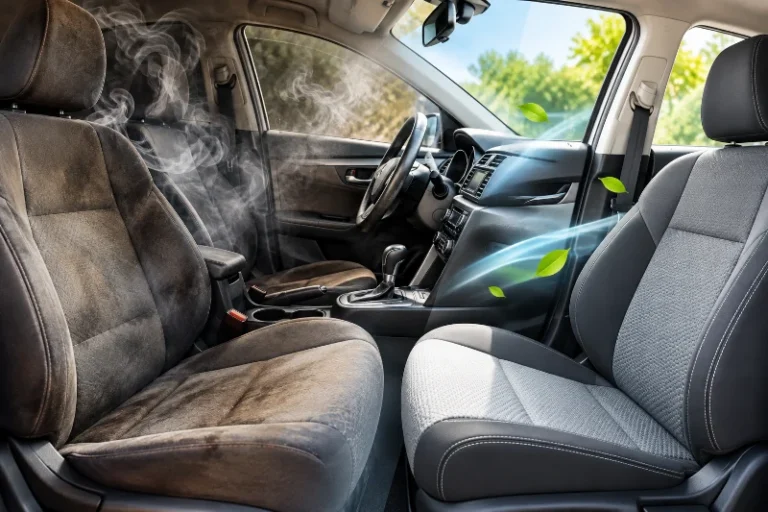
Learning how to remove smoke smell from a used car starts with cleaning the surfaces where smoke residue has actually settled, not simply spraying an air freshener. Cigarette smoke can leave residue on upholstery, carpet, headliners, seat belts, plastic trim, glass, and other interior surfaces, so treating only the area that smells strongest often gives temporary results.
The most effective approach is to remove the source systematically. Start by removing trash and personal items, vacuuming the entire interior, cleaning fabric and carpet, wiping hard surfaces, treating the headliner carefully, cleaning the seat belts, replacing the cabin air filter when appropriate, and allowing the interior to dry completely.
If the smell remains after thorough cleaning, the remaining odor may be coming from areas that are difficult to reach, including HVAC components or deeply contaminated materials. In severe cases, professional odor treatment may be worth considering.
Why Is Smoke Smell So Difficult to Remove From a Used Car?
Smoke odor is difficult to remove because smoke residue can settle across many different materials instead of remaining in one location. Porous materials such as fabric, carpet, and headliner material can retain residue, while hard surfaces can also develop a film that contributes to the smell.
This is why simply opening the windows or using an air freshener usually does not solve an established smoke odor. The CDC recommends preventing smoking inside cars because ventilation and air fresheners do not eliminate secondhand smoke exposure.
A used car that was smoked in regularly can therefore require a full interior cleaning rather than a quick deodorizing treatment.
What Do You Need to Remove Smoke Smell From a Used Car?
Before starting, gather the basic cleaning supplies you will need:
- Vacuum cleaner with a crevice attachment
- Automotive interior cleaner
- Fabric or upholstery cleaner
- Soft upholstery brush
- Clean microfiber towels
- Glass cleaner
- Small detailing brush
- Baking soda
- Clean water
- Carpet or upholstery extractor if available
- Replacement cabin air filter if the vehicle uses one
Use products according to their labels and check the vehicle manufacturer’s recommendations for interior materials.
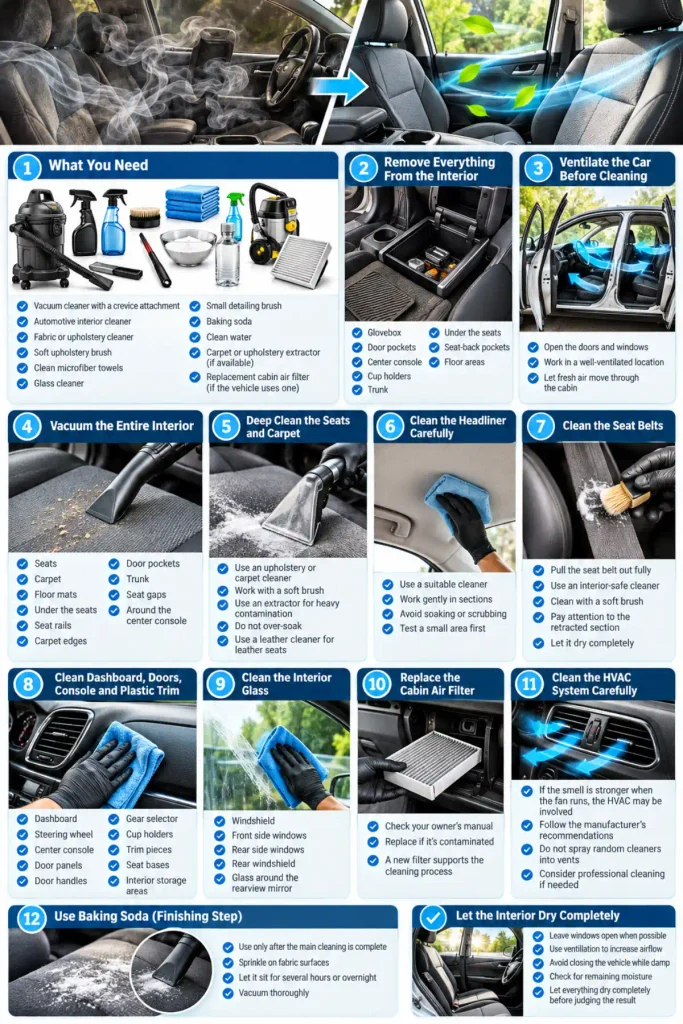
Step 1: Remove Everything From the Interior
Start by removing everything from the vehicle.
Check:
- Glovebox
- Door pockets
- Center console
- Cup holders
- Trunk
- Under the seats
- Seat-back pockets
- Floor areas
Small items can retain smoke odor and continue releasing it after the main interior has been cleaned.
Remove the floor mats and clean them separately. If the vehicle has removable seat covers, clean those according to their material and care instructions.
Step 2: Ventilate the Car Before Cleaning
Open the doors and windows when practical and work in a well-ventilated location.
Ventilation helps move contaminated air out of the cabin while you clean, but it should not be treated as the main odor-removal method. Smoke residue that has settled into interior materials still needs to be physically cleaned.
Avoid trying to cover the smell with strong fragrances at this stage. A scented spray can make it harder to tell whether the original smoke odor has actually been removed.
Step 3: Vacuum the Entire Interior
Thorough vacuuming should come before wet cleaning.
Slowly vacuum:
- Seats
- Carpet
- Floor mats
- Under the seats
- Seat rails
- Carpet edges
- Door pockets
- Trunk
- Seat gaps
- Around the center console
Use a narrow attachment for seams and difficult areas.
The objective is to remove loose dirt, ash, dust, and debris before introducing a liquid cleaner. Removing loose contamination first also makes the subsequent cleaning more effective.
If the vehicle has heavily contaminated carpet, an extractor can help remove material that ordinary vacuuming cannot reach.
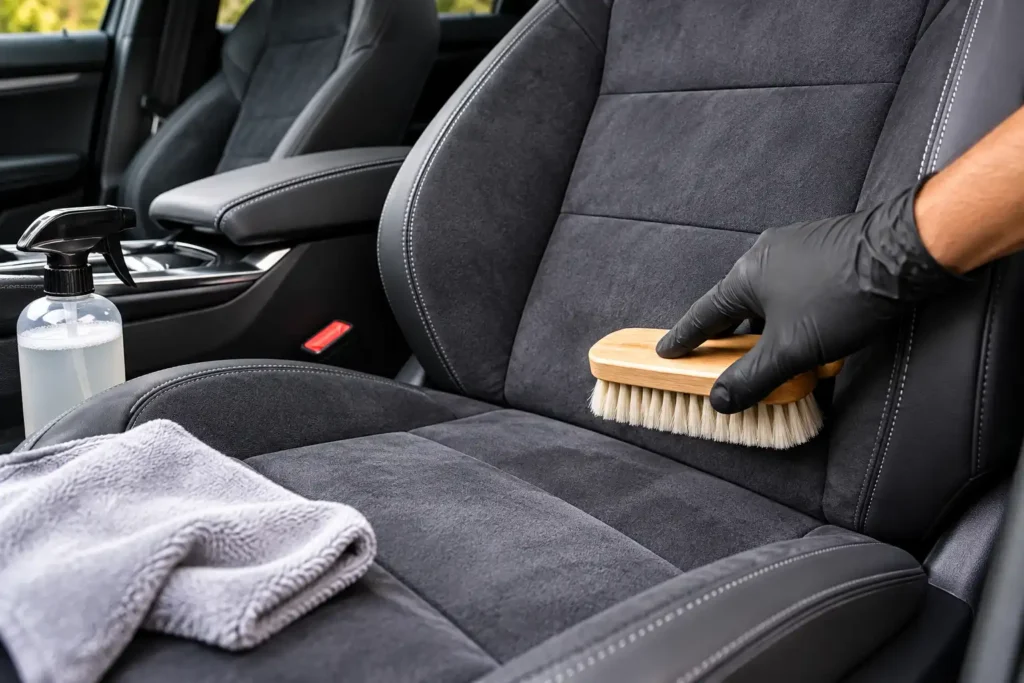
Step 4: Deep Clean the Seats and Carpet
Fabric seats and carpet should receive particular attention because they can retain odor deep within the material.
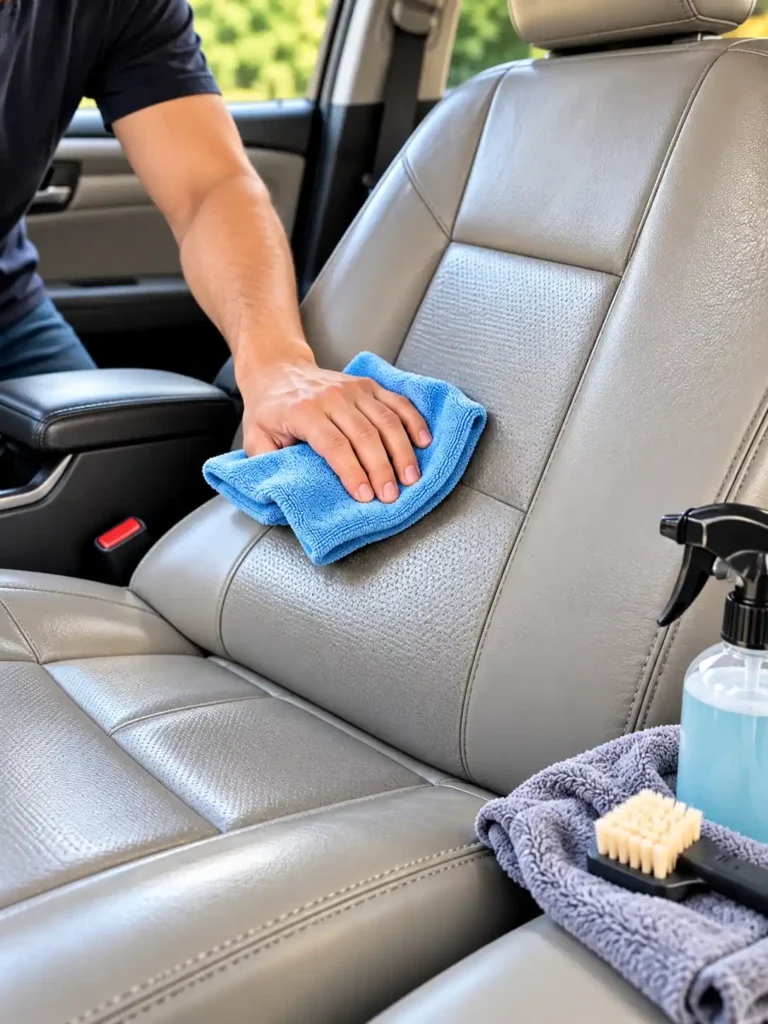
Apply a suitable automotive upholstery or carpet cleaner according to its instructions. Work the cleaner into the fabric with a soft brush rather than aggressively scrubbing.
For heavily contaminated areas, extraction can be more useful than simply spraying and wiping because it removes dirty moisture and loosened residue from the material.
Do not excessively soak the seats or carpet. Too much moisture can make drying difficult and may create a separate musty odor problem.
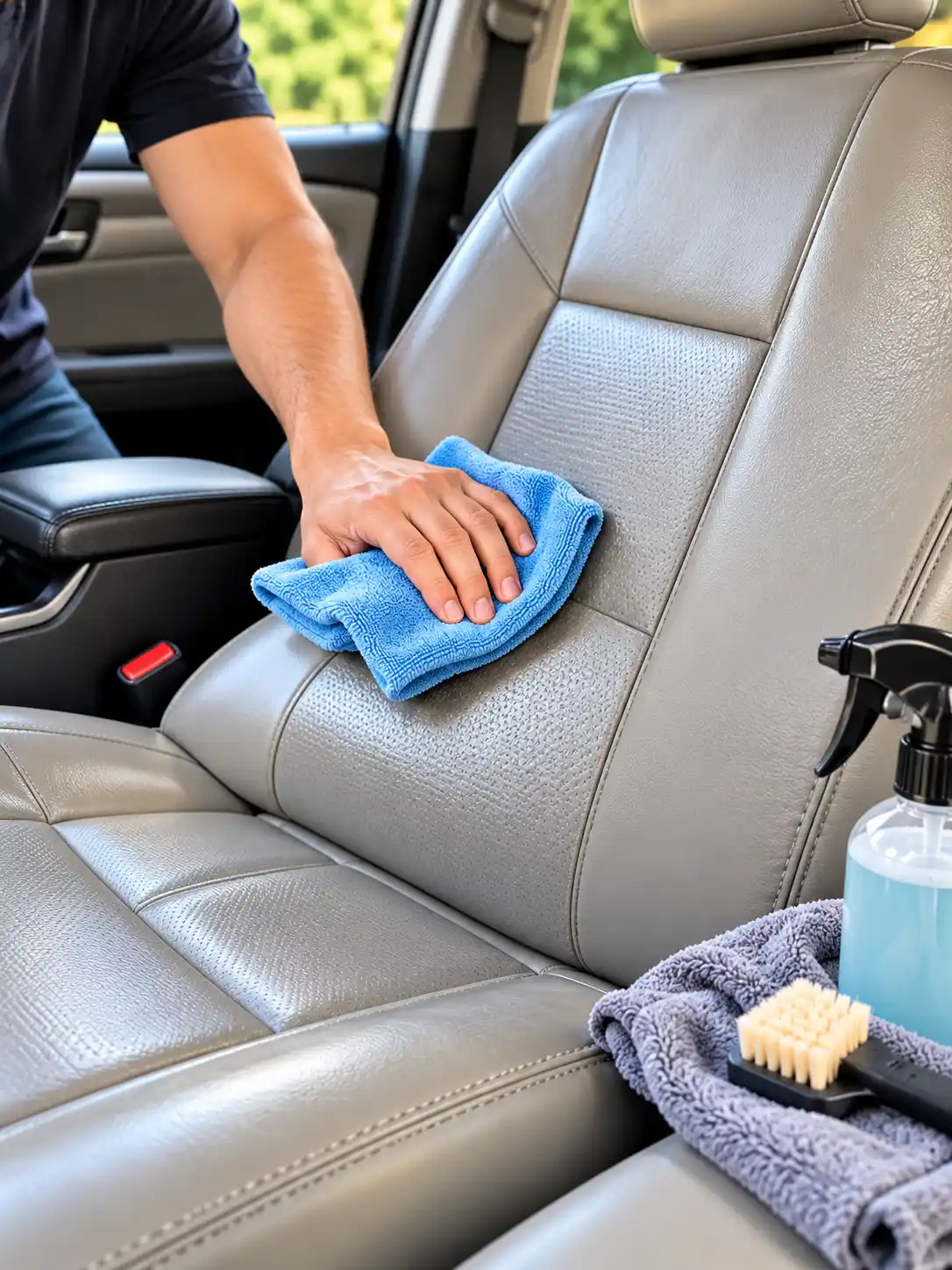
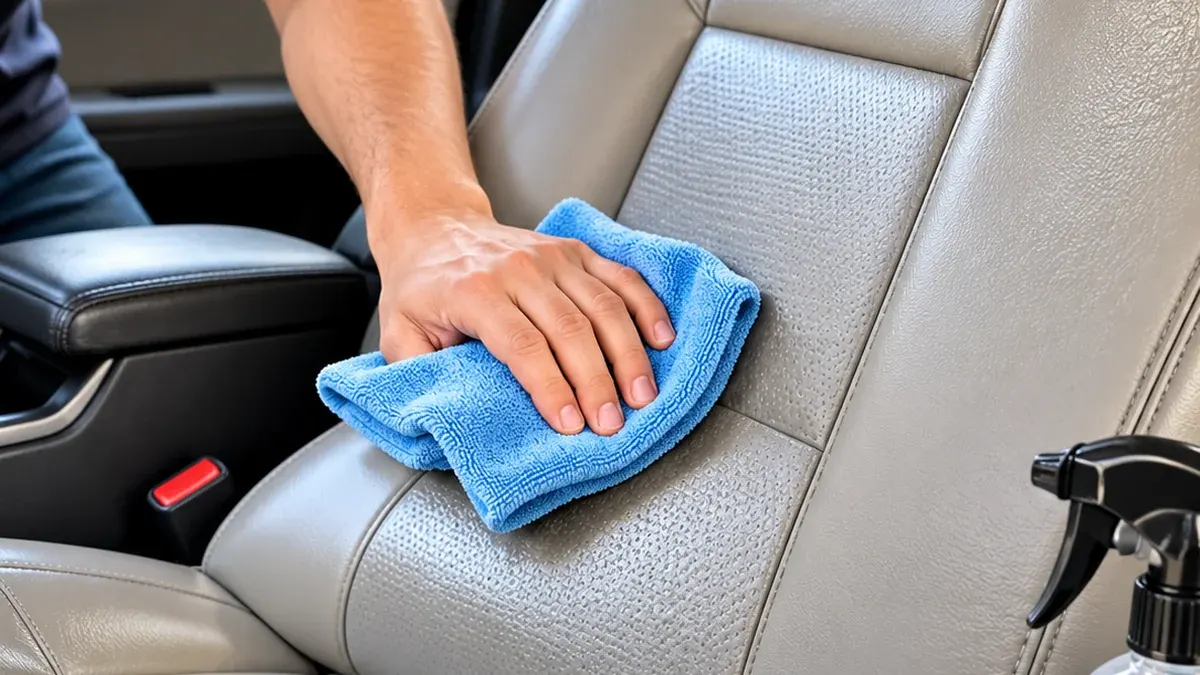
If your vehicle has leather seats, use a cleaner specifically intended for automotive leather rather than a fabric cleaner.
Step 5: Clean the Headliner Carefully
The headliner is one of the easiest areas to overlook when removing smoke smell.
Smoke naturally reaches the upper part of the cabin, and headliner material can retain odor.
However, avoid aggressively soaking or scrubbing the headliner. Excess moisture or aggressive agitation can damage the adhesive or cause the material to loosen.
Use a small amount of a suitable cleaner and work gently in manageable sections. Always follow the cleaner manufacturer’s instructions and test an inconspicuous area first.
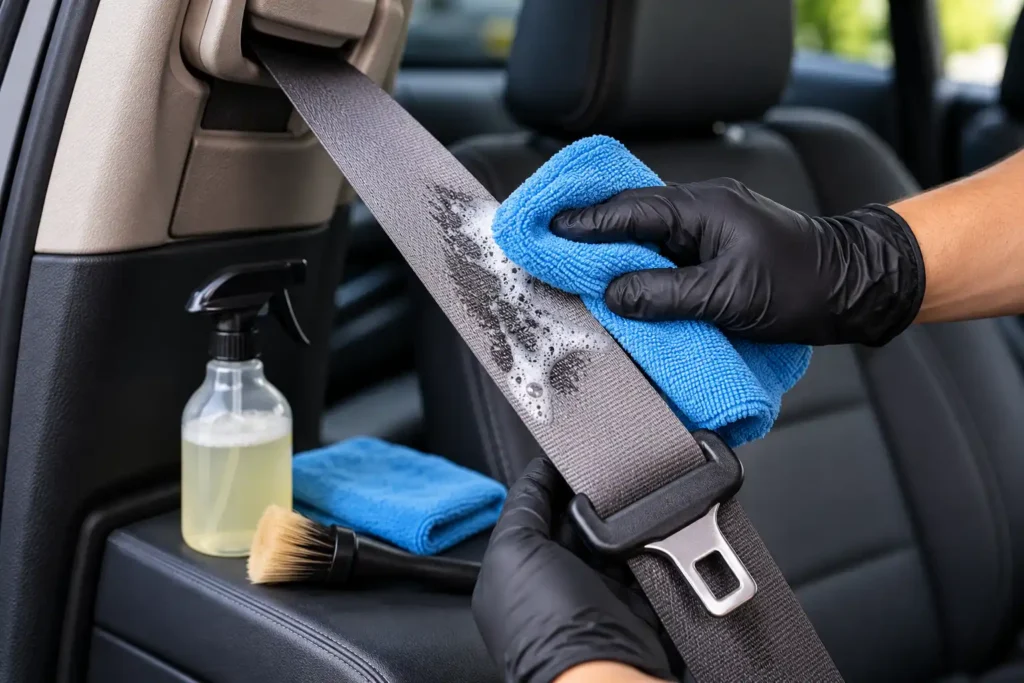
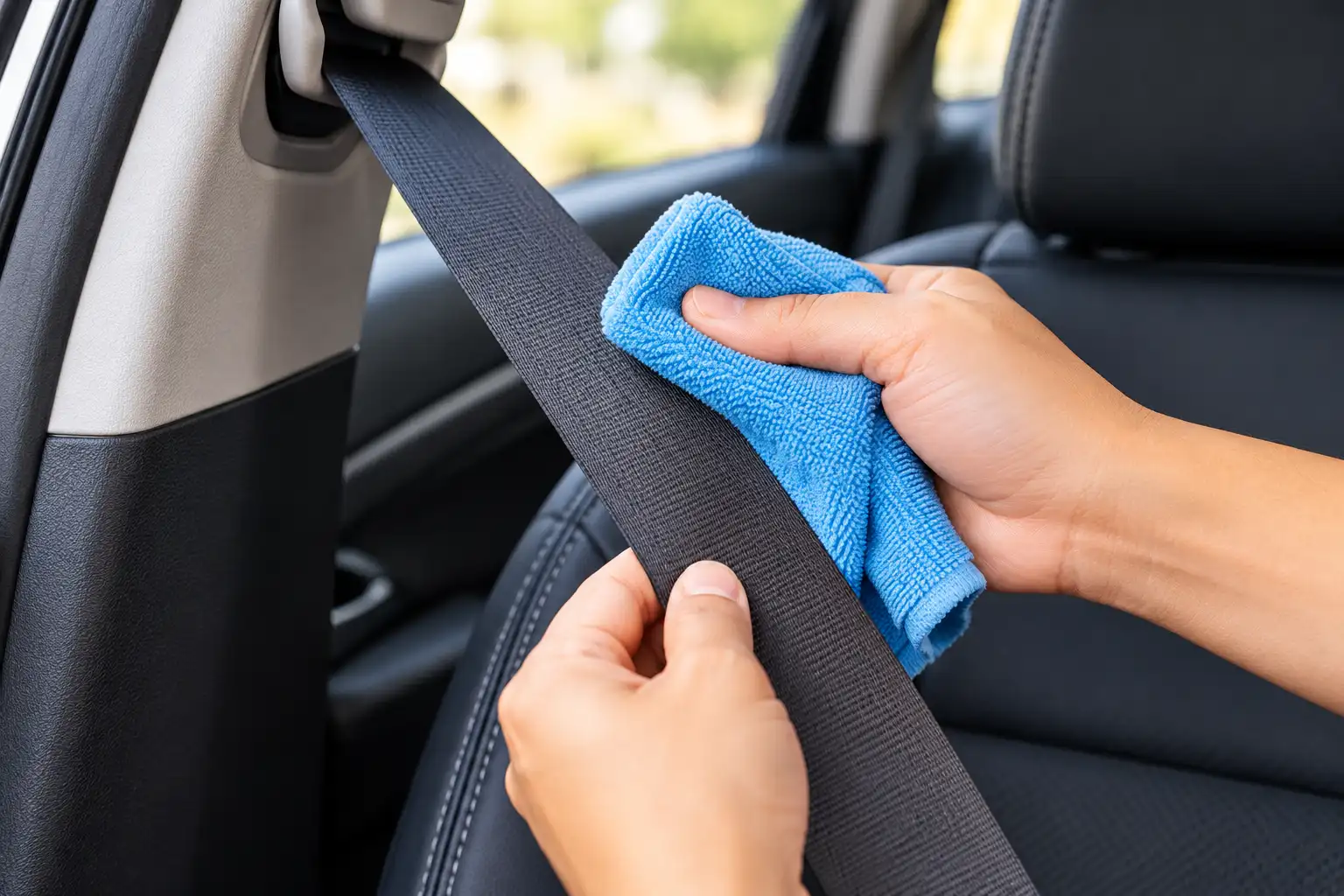
Step 6: Clean the Seat Belts
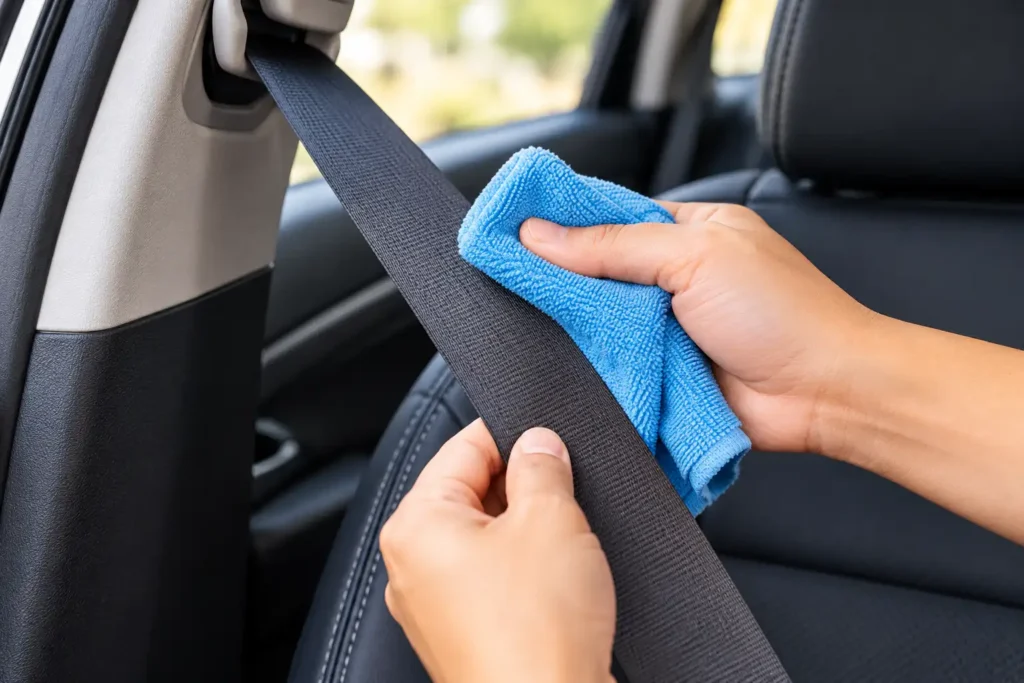
Pull each seat belt out as far as practical and inspect the entire exposed section.
Seat belts are woven fabric, so they can retain residue even when the surrounding interior appears clean.
Clean them using an appropriate interior or fabric-safe cleaner and a soft brush. Avoid aggressive scrubbing that could damage the belt material.
Pay particular attention to the portion that normally remains retracted, because that area can be overlooked during a normal interior detail.
Allow the belts to dry completely before retracting them.
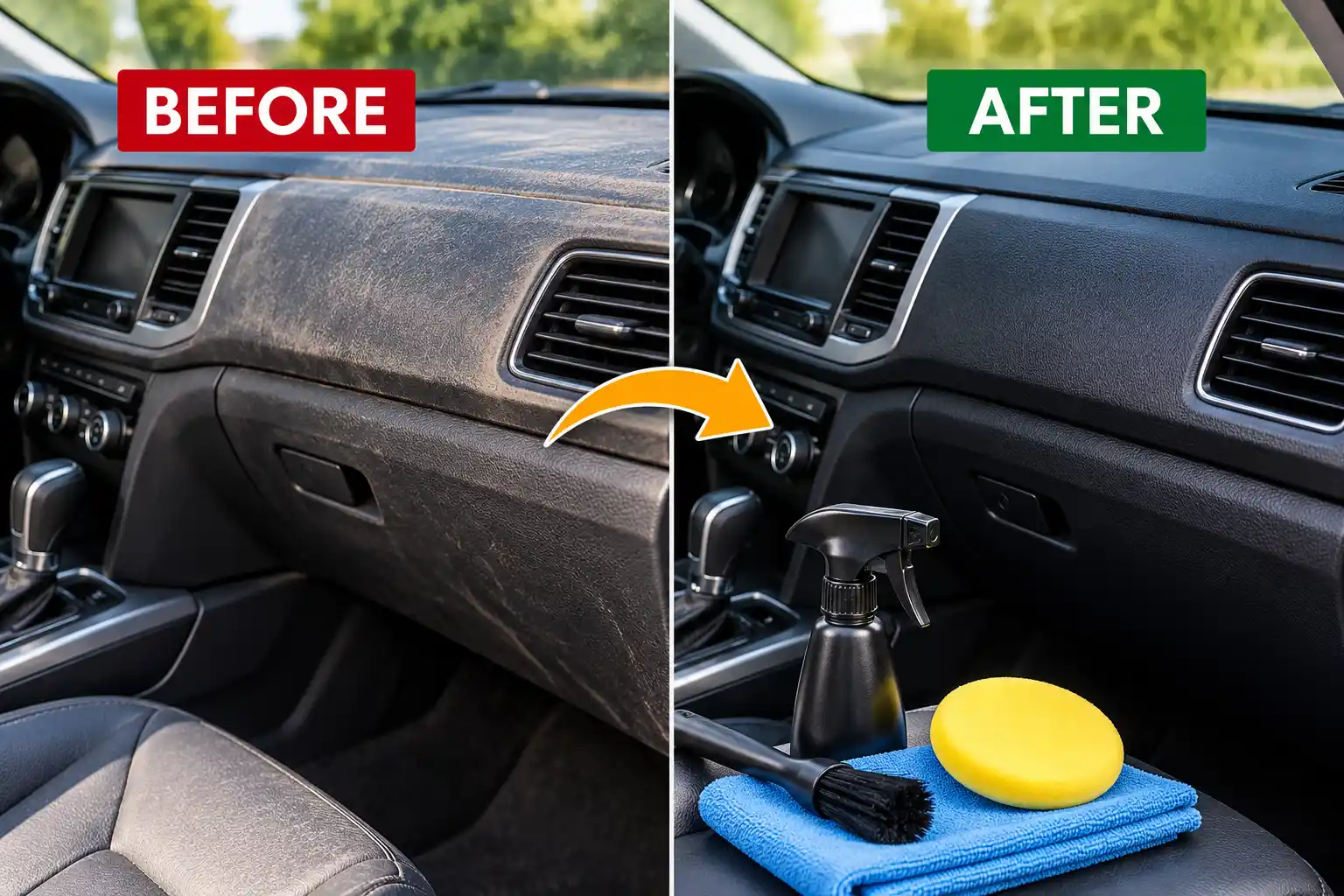
Step 7: Clean the Dashboard, Doors, Console and Plastic Trim
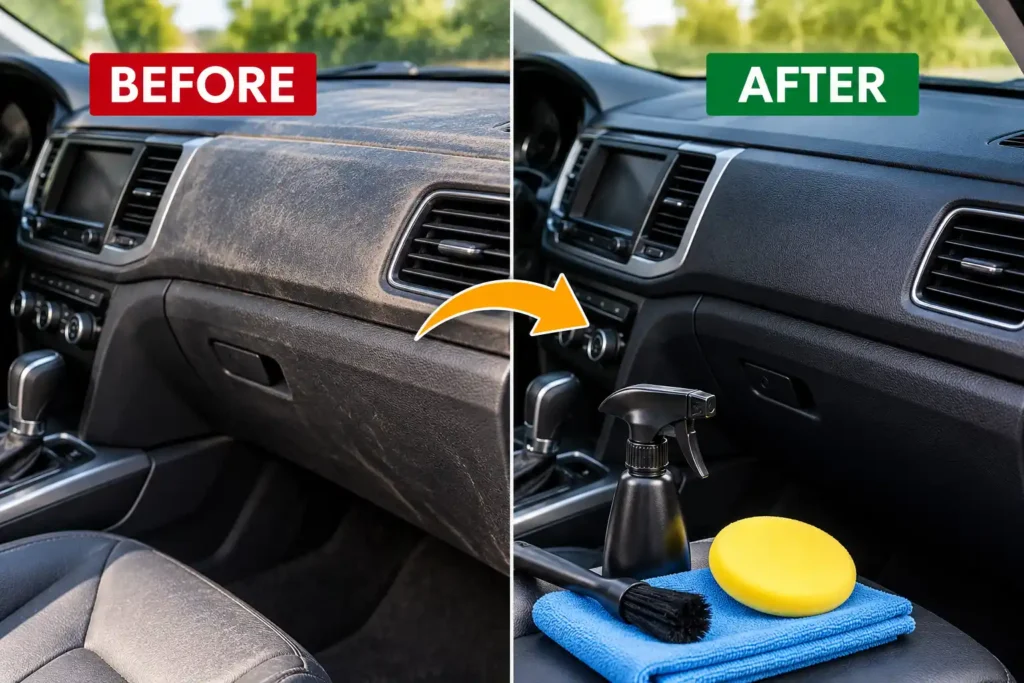
Next, clean the hard surfaces throughout the cabin.
Focus on:
- Dashboard
- Steering wheel
- Center console
- Door panels
- Door handles
- Gear selector
- Cup holders
- Trim pieces
- Seat bases
- Interior storage areas
Apply the cleaner to the microfiber towel when appropriate rather than flooding buttons, switches, vents, or electrical components with liquid.
Use a soft detailing brush around seams, buttons, vents, and other areas where residue can accumulate.
This step matters because smoke odor is not limited to fabric. Hard interior surfaces can also hold residue that contributes to the overall smell.
Step 8: Clean the Interior Glass
Smoke residue can leave a film on the inside of the windows and windshield.
Use an automotive glass cleaner and a clean microfiber towel to clean the interior glass thoroughly.
Pay particular attention to:
- Windshield
- Front side windows
- Rear side windows
- Rear windshield
- Glass around the rearview mirror
If you notice persistent oily or smoky film, repeat the cleaning with a fresh section of the microfiber towel rather than repeatedly spreading the residue around.
Step 9: Replace the Cabin Air Filter
If your vehicle uses a replaceable cabin air filter, inspect it during the odor-removal process.
A filter that has been exposed to smoke can contribute to unpleasant smells when the HVAC system operates. Replacing a heavily contaminated filter is therefore a practical step when dealing with a smoker’s used car.
Check your owner’s manual for the correct filter location and replacement procedure because filter locations and access methods vary between vehicles.
Replacing the filter should support the interior cleaning process rather than replace it. A new filter cannot remove smoke residue that remains on the seats, carpet, headliner, or hard surfaces.
Step 10: Clean the HVAC System Carefully
If the smell becomes stronger when the fan or air conditioning starts, the HVAC system may be contributing to the odor.
Before attempting any HVAC-specific cleaning procedure, check the vehicle owner’s manual and follow the vehicle manufacturer’s recommendations.
Do not spray a random household cleaner into vents or HVAC openings. Some components are sensitive to liquids, and the correct procedure varies by vehicle.
If the odor remains strongly associated with HVAC operation after the interior has been thoroughly cleaned and the cabin filter has been replaced, professional inspection or cleaning may be appropriate.
Step 11: Use Baking Soda Only as a Finishing Step
Baking soda can be used as a supplementary odor-absorbing step after the main cleaning is complete.
Once the upholstery and carpet are completely dry, sprinkle a reasonable amount over suitable fabric surfaces and allow it to sit for several hours or overnight. Vacuum it thoroughly afterward.
Baking soda should not be treated as the primary solution for severe smoke odor. It does not remove the underlying smoke residue from the interior.
The cleaning process is what addresses the contamination. Baking soda is better viewed as an additional finishing step.
Step 12: Let the Interior Dry Completely
Drying is an important part of the process.
After cleaning fabric, carpet, or upholstery:
- Leave the windows open when conditions allow
- Use ventilation to increase airflow
- Avoid closing the vehicle while materials are still noticeably damp
- Check carpet and upholstery for remaining moisture
- Allow the interior to dry completely before evaluating the final odor
Do not judge the result immediately after applying cleaning products. Residual moisture and cleaning-product smells can temporarily change how the cabin smells.
What If the Smoke Smell Comes Back on Hot Days?
If the smoke smell becomes noticeable again after the vehicle sits in the sun, some contaminated material may still be holding residue.
Heat can change how volatile compounds are released from contaminated materials, so recurring odor after cleaning is a reason to inspect the areas that were easiest to overlook.
Recheck:
- Carpet and carpet padding
- Headliner
- Seat belts
- Seat seams
- Under-seat areas
- Door panels
- Trunk carpeting
- Cabin air filter
- HVAC-related areas
A second targeted cleaning is usually more useful than simply adding another air freshener.
When Should You Consider Professional Odor Treatment?
Professional treatment becomes more reasonable when the vehicle has heavy, long-term smoke contamination and the odor remains after the interior has been thoroughly cleaned.
Be especially cautious about DIY ozone generators.
The EPA states that ozone can irritate the lungs and that ozone-generating devices can produce concentrations above levels considered harmful to human health. EPA also notes that ozone is generally ineffective at removing many indoor contaminants at concentrations that do not exceed public-health standards.
That means an ozone treatment should not be presented as a simple “run a machine in the car and the smell disappears” solution.
If professional odor treatment is considered, the vehicle should be unoccupied during treatment and the service provider should follow appropriate safety and ventilation procedures.
How Long Does It Take to Remove Smoke Smell From a Used Car?
A thorough DIY cleaning can take several hours, depending on the vehicle’s size, the severity of the contamination, and whether the seats and carpet require extraction.
Drying can add additional time.
A lightly contaminated vehicle may improve substantially after one complete cleaning, while a vehicle that was smoked in heavily for years may require repeated cleaning or professional treatment.
Do not judge success only by how the car smells immediately after cleaning. Allow the interior to dry completely and then reassess the odor.
Can Air Freshener Remove Cigarette Smoke Smell?
Air freshener can mask smoke odor temporarily, but it does not remove the residue responsible for the underlying smell.
If the goal is to actually remove smoke smell from a used car, clean the contaminated surfaces first. Consider fragrance only after the original odor has been addressed.
Using increasingly strong fragrances can also make it difficult to determine whether smoke odor is still present.
What Areas Are Most Commonly Missed When Removing Smoke Smell?
The most commonly overlooked areas are usually the surfaces that are less obvious during a normal interior cleaning.
Check:
- Headliner
- Seat belts
- Under-seat carpet
- Carpet padding
- Seat seams
- Door pockets
- Trunk carpet
- Cabin air filter
- HVAC-related areas
- Interior glass
If the cabin still smells after cleaning the obvious surfaces, inspect these areas before assuming the entire process failed.
Should You Buy a Used Car That Smells Like Cigarette Smoke?
A smoke smell does not by itself establish that a used car has mechanical problems. However, severe smoke contamination can mean additional cleaning work and expense.
Before buying the vehicle, inspect the interior carefully and consider the effort required to clean the seats, carpet, headliner, seat belts, glass, hard surfaces, and HVAC-related areas.
A strong persistent odor can also be useful information when negotiating the vehicle’s overall value because professional odor treatment may be necessary.
Frequently Asked Questions
What is the fastest way to remove smoke smell from a used car?
The fastest practical approach is to remove the source systematically: vacuum the interior, deep clean the fabric and carpet, clean hard surfaces and glass, clean the headliner and seat belts carefully, replace a contaminated cabin air filter, and dry the interior completely.
Will baking soda remove cigarette smoke smell from a car?
Baking soda can help absorb residual odor, but it is unlikely to remove heavy, established smoke contamination by itself. Use it as a finishing step after cleaning the interior.
Does vinegar remove cigarette smoke smell from a car?
Vinegar may help with some odors, but it should not replace proper cleaning of smoke-contaminated upholstery, carpet, hard surfaces, and other interior materials. Use automotive-safe products according to their instructions.
Should I use an ozone generator in my car?
Ozone generators require caution because ozone is a lung irritant. The EPA does not recommend treating ozone-generating air cleaners as a simple occupied-space odor solution and notes that effective concentrations can exceed levels considered safe for people.
For severe smoke contamination, professional odor treatment is preferable to casually operating an ozone generator yourself.
Why does my car still smell like smoke after cleaning?
Persistent smoke odor usually means some contaminated area was missed or not cleaned deeply enough. Recheck the carpet padding, headliner, seat belts, seat seams, trunk carpeting, cabin air filter, and HVAC-related areas.
Does replacing the cabin air filter remove smoke smell?
Replacing a smoke-contaminated cabin air filter can help reduce odor coming through the HVAC system, but it will not remove smoke residue from the rest of the interior.
Can I completely remove smoke smell from a used car?
In many cases, a thorough cleaning can greatly reduce or eliminate the noticeable odor, but heavily contaminated vehicles may require multiple cleaning passes or professional treatment. The severity and duration of previous smoke exposure make a significant difference.
The Best Way to Remove Smoke Smell From a Used Car
The most reliable approach is to remove the smoke residue instead of trying to cover the smell.
Start with a complete vacuum, then clean the carpet, upholstery, headliner, seat belts, hard surfaces, and interior glass. Replace a contaminated cabin air filter, address HVAC-related odor when appropriate, and allow everything to dry completely.
If the smell remains after those steps, inspect the overlooked areas again before moving to specialized professional treatment. For severe contamination, professional help can make more sense than repeatedly applying air fresheners or experimenting with ozone.