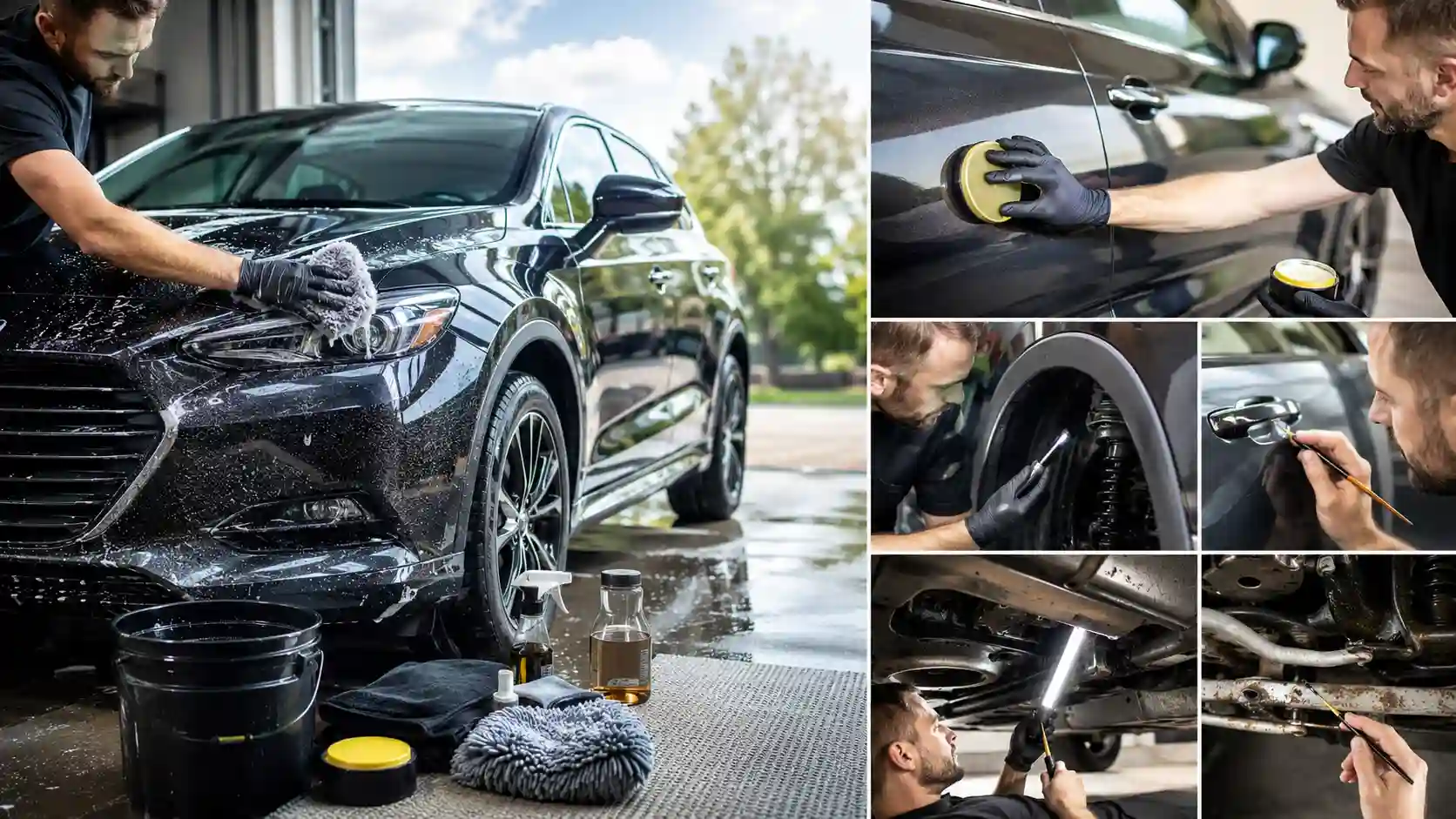
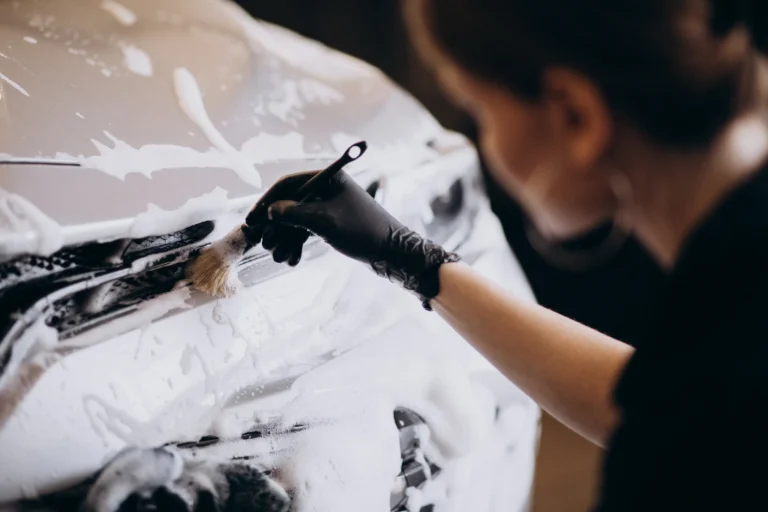
Understanding how automotive finishing works helps you achieve a smoother, glossier, and more refined vehicle paint surface. Automotive finishing is the stage of car detailing that refines paintwork after cleaning and defect removal, using fine polishes, suitable pads, and careful machine or hand polishing to improve clarity, gloss, and surface uniformity.
In this guide, you’ll learn what automotive finishing is, how it works, where it fits into the car detailing process, and which paint imperfections it can improve. We’ll also cover the tools and products used for finishing, its limitations, and the techniques that help protect your vehicle’s clear coat. Finally, discover how proper automotive finishing influences paint appearance, long-term maintenance, and resale condition.
What Is Finishing in Car Care?
Finishing in car care is the final paint-refining stage that improves gloss, clarity, and surface uniformity after washing, decontamination, and heavier correction work. In simple terms, it is the step that makes the paint look sharp and well-defined rather than just clean.
In practice, finishing usually means using a finer polish, a less aggressive pad, and a controlled technique to reduce light defects left in the uppermost part of the painted surface. Professional refinish systems from 3M describe this stage as refinement that helps reduce compounding and buffing time while improving the final appearance of painted panels. 3M also notes that finishing systems are built to eliminate swirl marks and produce a high-gloss, defect-free surface when paired correctly with the right pads and abrasives.
Finishing is often confused with waxing or detailing as a whole, but it is not the same thing. Wax or sealant adds protection on top of the paint, while finishing works on the paint surface itself to improve how it reflects light. That distinction matters because a surface can be protected and still look dull, hazy, or lightly marred if it has not been properly refined first.
What Does Finishing Actually Do to a Vehicle Surface?
Finishing smooths very fine surface irregularities so light reflects more evenly across the paint. That is why a properly finished panel usually looks deeper, sharper, and more glossy than a panel that has only been washed or roughly corrected.
At a technical level, finishing removes or refines a very small amount of material at the top of the paint system, usually in the clear coat on modern vehicles. That controlled abrasion levels the edges around tiny defects such as wash marring, micro-scratches, haze, and holograms so they become less visible. Industry polishing guidance from 3M describes fine abrasives as a way to remove defects, refine the surface, and reduce the sanding scratches that would otherwise remain visible later in the polishing process. PPG also describes polishing marks as abrasive damage linked to excessive pressure, speed, coarse compounds, or dirty materials, which shows why finishing is really about controlled refinement rather than aggressive cutting.
The visual change happens because smooth paint reflects light in a more organized way. When the surface is full of tiny scratches, oxidation, or haze, reflected light scatters. That scattered reflection makes the paint look grey, flat, or cloudy even when the color itself is still present. A refined finish reduces that scatter and restores better gloss and clarity. 3M’s polishing process guidance directly connects pad choice, reduced pressure, overlapping passes, and ultrafine polishing with glossy finishing and lower risk of creating new micro-scratches.
Why Finishing Matters After Washing, Decontamination, and Paint Correction
Finishing matters because cleaning alone does not restore optical clarity, and heavy correction alone does not always leave the surface looking fully refined. A car can be contaminant-free and still look dull. It can also be compounded and still show haze or micro-marring.
This is why finishing sits between correction and protection in many professional workflows. Washing removes loose dirt. Decontamination removes bonded material. Compounding cuts heavier defects when needed. Finishing then refines what remains so the final gloss looks even before any wax, sealant, or coating is applied. 3M’s own repair and polishing literature separates defect removal from refinement and inspection, and its step process stresses inspecting the surface with control spray before moving on.
This step matters even more because vehicles are staying on the road longer. S&P Global Mobility reported that the average age of vehicles in the U.S. reached 12.8 years in 2025, and the Bureau of Transportation Statistics points to the same long-term aging trend in the national vehicle fleet. Older paint is more likely to show wash wear, dullness, oxidation, and clarity loss, which makes finishing more valuable in real-world maintenance and resale preparation.
Finishing also matters for appearance-based value. Kelley Blue Book explains that a vehicle’s condition is one of the primary factors determining market value, and its published condition definitions specifically mention paint flaws, body appearance, touch-ups, and refinishing needs. In other words, surface condition is not just cosmetic. It plays into how a vehicle is judged in the marketplace.
What Problems Does Finishing Help Improve?
Finishing is mainly used to improve minor to moderate visual defects that sit at or near the top of the paint surface. It is not a cure for every kind of damage, but it is very effective for making lightly worn paint look sharper and more uniform.
Swirl Marks
Swirl marks are fine circular or curved scratches that often come from improper washing and drying. Consumer Reports warns that moving a sponge in circles can create light but noticeable scratches called swirl marks, which is one reason many detailers focus on proper wash methods before they ever polish a car.
Finishing can reduce or remove many swirl marks because those marks are usually shallow defects in the upper paint surface. A fine polish and finishing pad can level the paint around them enough to improve reflection and reduce the spider-web effect seen in sunlight or under inspection lights. 3M’s materials also note that finishing systems are designed to eliminate swirl marks on painted surfaces, including darker vehicles where these defects show more strongly.
Light Scratches
Finishing can improve very light scratches that have not gone too deep into the clear coat. These are the marks often left by washing, wiping dust off dry paint, or using dirty towels and pads.
The key limit is depth. If the scratch is shallow, finishing may refine it substantially. If it is deep enough to pass through much of the clear coat or into the base layer, finishing will not safely remove it. That is why the least aggressive method is considered best practice in professional polishing systems.
Oxidation
Oxidation is surface deterioration caused by exposure to sunlight, weather, and contaminants over time. In automotive coatings, UV exposure plays a major role in clear coat aging. Research published in Polymer Degradation and Stability examined ultraviolet absorber longevity in automotive clear coats and showed that weathering affects the clear coat layer over time.
On neglected paint or exterior plastics, finishing can remove some of the dead, dull surface material and restore some shine. But the result depends on how severe the oxidation is. AAA notes that harsh winter road chemicals can leave dull spots or a hazy film as they eat away at the protective clear coat. Once deterioration becomes severe, finishing may only provide limited visual recovery.
Haze and Micro-Marring
Haze and micro-marring are very fine defects that often appear after compounding or poor polishing technique. They may not look dramatic in shade, but under direct light they reduce clarity and make the paint appear slightly grey or cloudy.
This is one of the most important jobs of a finishing step. PPG says polishing marks can result from polishing before the surface is fully hardened, from too much pressure or speed, or from using the wrong or dirty materials. 3M’s ultrafine polishing guidance similarly stresses reduced speed, softer finishing cloths, and keeping the foam properly lubricated to avoid generating new micro-scratches.
Dull or Flat Paint Appearance
A dull finish usually means light is scattering rather than reflecting cleanly. That can happen because of contamination, light abrasion, oxidation, or old wash damage.
Finishing helps by restoring a more even surface profile. Once the upper layer is refined, color tends to look richer and reflections look more defined. This is one reason finishing is commonly used before show preparation, sale preparation, or protection steps such as wax and ceramic coating.
Uneven Gloss and Clarity
Uneven gloss often happens when one part of the panel is more marred, more oxidized, or more aggressively corrected than another. You may notice this as patchy reflections or inconsistent shine from one angle to another.
A proper finishing pass helps equalize the look of the paint. 3M’s color-coded polishing process emphasizes overlapping patterns, final inspection, and repeating the first polishing step when remaining defects are still visible. That kind of controlled refinement is how detailers improve consistency across a full panel instead of creating a glossy spot next to a hazy one.
How Finishing Works in Car Care
Finishing works through controlled surface refinement. It is gentle compared with compounding, but it still relies on abrasion, pad choice, pressure control, machine speed, and close inspection.
The goal is not to grind away the surface. The goal is to improve the top layer just enough that defects are reduced and reflected light becomes cleaner and sharper.
Surface Leveling and Defect Refinement
The basic mechanism is surface leveling. Fine abrasives polish down the tiny raised edges around defects so the panel becomes more uniform.
3M describes its finishing abrasives as precisely shaped structures that expose fresh mineral as they wear, which helps create faster and more consistent cutting. In real detailing terms, that means the product keeps refining instead of behaving unpredictably. Consistency is especially important when you are trying to improve gloss without creating new marks.
Light Reflection, Gloss, and Clarity
Gloss is really about how evenly the surface reflects light. A surface full of tiny scratches still reflects light, but it does so in a scattered way. That is why damaged paint often looks bright in one angle and dull in another.
Finishing improves optical behavior by making the top surface smoother at a microscopic level. When that happens, reflections look sharper, color looks deeper, and panel lines appear cleaner. This is why a car can look dramatically better after a light finishing polish even when no major defects were removed.
Abrasive Technology in Finishing Products
Modern finishing products use engineered abrasives that are much finer than cutting compounds. Some are designed to break down as they work, while others maintain a more uniform cutting action.
Professional systems from 3M specifically describe structured abrasives that expose fresh cutting surfaces during use, improving consistency across the polishing cycle. That matters because a predictable abrasive helps the user remove defects with less guesswork and with less risk of leaving secondary marring behind.
Why Softer Pads and Finer Polishes Matter
Softer pads and finer polishes matter because finishing is about refinement, not force. PPG warns that excessive pressure, excessive machine speed, coarse compound, and dirty polishing materials can all create polishing marks. 3M likewise advises keeping the pad flat, reducing pressure near the end of the polishing stage, and using extra-soft cloths during ultrafine polishing to avoid adding new defects.
This is also why wool pads and aggressive compounds are usually not the first choice for a true finishing step. 3M notes that wool compounding pads are more aggressive than foam and tend to leave deeper swirl marks that must be removed later. In other words, the tool and product combination directly shapes the quality of the final finish.
Where Finishing Fits in the Full Car Care Process
Finishing works best when it is placed in the right order. It comes after the surface is cleaned and corrected, and before the final protection layer is added.
If finishing is done too early, dirt and bonded contamination can interfere with the result. If it is skipped after heavier correction, the paint may still look hazy or uneven even though major defects were reduced.
Wash and Dry
Every finishing process starts with a proper wash and dry stage. This removes loose dirt, road film, dust, and traffic buildup that could drag across the paint during polishing.
A clean surface reduces the chance of creating fresh scratches. It also helps you see the true condition of the paint instead of judging it through a layer of grime. If the car is not washed properly first, finishing becomes less effective and less safe.
Clay Bar or Surface Decontamination
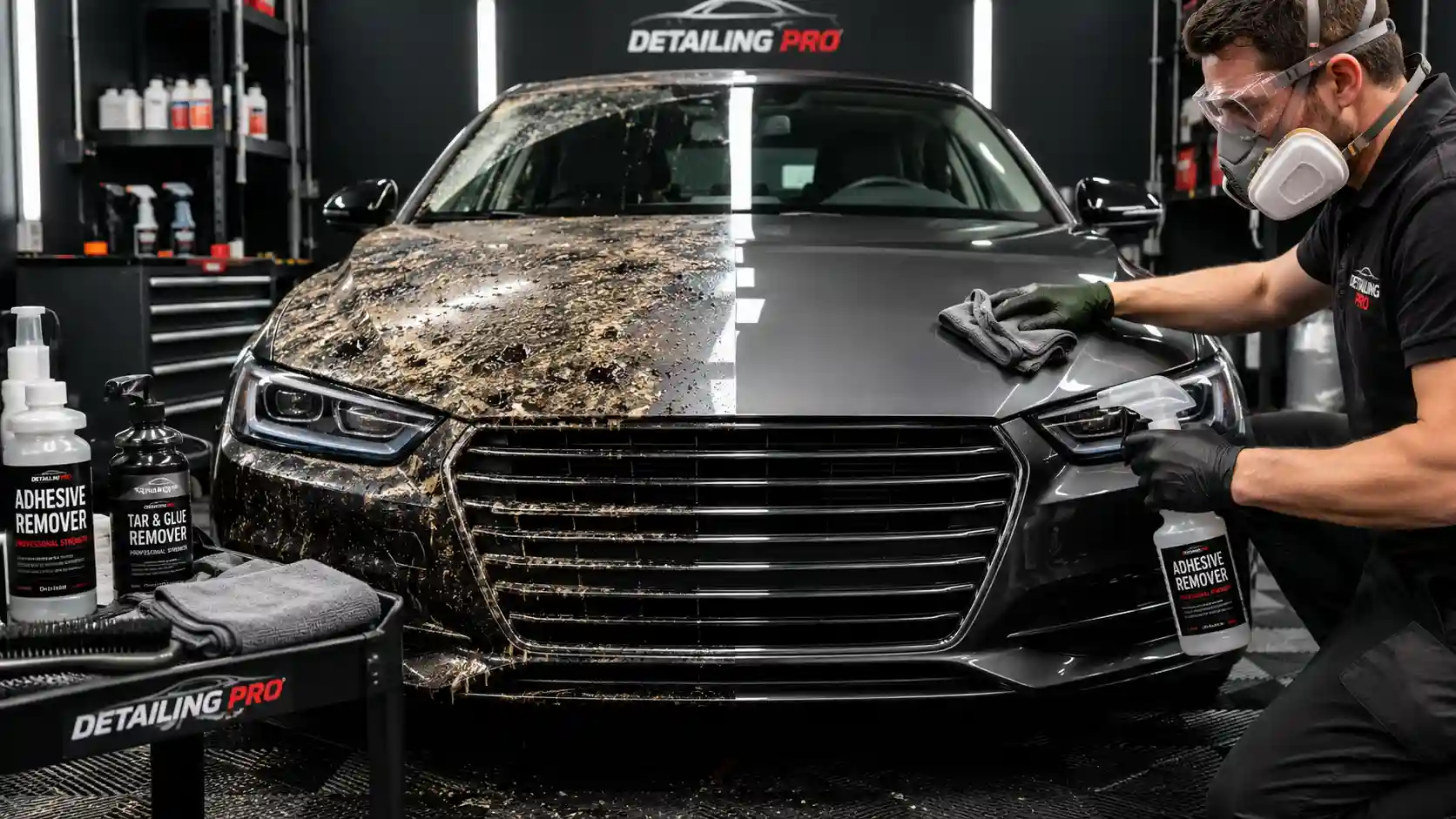
After washing, the next step is removing bonded contamination. This includes fallout, tar, tree sap residue, industrial particles, and other material that washing alone cannot remove.
A contaminated surface can feel rough even after it looks clean. Finishing over that roughness can interfere with pad movement and reduce the polish’s ability to refine the paint evenly. That is why clay bar treatment or chemical decontamination is often done before polishing begins.
Paint Inspection
Once the paint is clean and decontaminated, it should be inspected under good light. This is the stage where swirl marks, haze, oxidation, water spot etching, and deeper scratches become easier to see.
Inspection helps determine whether the surface only needs finishing or needs compounding first. It also helps you choose the right pad and polish combination. Without this step, it is easy to use a product that is too weak or too aggressive.
Compounding if Needed
Compounding is only needed when the paint has more visible defects that a finishing polish cannot handle well. This includes heavier swirl marks, stronger oxidation, deeper water spot damage, or moderate surface scratches.
A compound cuts faster and removes more material than a finishing polish. But because it is more aggressive, it may leave its own haze or micro-marring behind. That is why finishing often comes after compounding, not instead of it.
Polishing and Finishing
This is the refinement stage where the paint is brought to a clearer and glossier condition. The goal here is not heavy defect removal. The goal is to improve the final look by refining the surface.
A finishing polish with a softer pad is commonly used at this stage. The detailer works small sections, wipes off residue, and checks the results carefully. If the combination is right, the paint becomes more even in gloss, sharper in reflection, and smoother in appearance.
Protection With Wax, Sealant, or Ceramic Coating
Finishing should be followed by protection. Once the paint is refined, it is in its best visual state, and sealing that result helps preserve it.
Wax adds a short-term protective layer and a warm look. Sealants usually last longer and offer more durable environmental protection. Ceramic coatings are designed for much longer durability and stronger resistance to water, chemicals, and environmental fallout. Whatever product is chosen, applying protection after finishing helps keep the improved surface looking better for longer.
What Products Are Used in the Finishing Stage?
The finishing stage uses products designed to refine, clean, enhance, or prepare the surface for protection. These products do not all do the same job, so understanding the difference helps create better results.
Some products correct the paint. Some improve gloss temporarily. Some prepare the surface for coating. Some protect the finish once the polishing is complete.
Finishing Polish
Finishing polish is the main product used in this stage. It contains fine abrasives that refine the top layer of paint and improve gloss, clarity, and smoothness.
This is the product most people mean when they talk about finishing a car. It is less aggressive than a cutting compound and is usually paired with a soft foam finishing pad. It works especially well for light swirls, haze, and compounding marks.
Glaze
A glaze is a gloss-enhancing product that fills minor defects and improves the look of the paint. It does not usually correct the surface the way a true polish does.
Glaze can make paint look wetter, darker, and more reflective, especially on older finishes. But the improvement is often temporary because it relies more on filling than actual defect removal. It can still be useful when the goal is visual enhancement rather than correction.
All-in-One Polish
An all-in-one polish combines light correction, cleaning, and protection in one product. It is designed for speed and convenience rather than maximum refinement.
This type of product is useful when the vehicle needs a visible improvement but not a full correction process. It can work well for daily drivers, dealership prep, or light maintenance details. The result is usually good, but not as refined as a dedicated polishing and protection process.
Finishing Compound
A finishing compound sits between a heavier compound and a true finishing polish. It has more correction power than a standard finishing polish, but it is designed to leave a cleaner finish than a heavy-cut product.
This kind of product is useful when the surface needs stronger defect removal but still needs a refined end result. On some paint types, it may finish down well enough to be a one-step correction product.
Surface Prep Sprays
Surface prep sprays remove polishing oils, residue, and fillers so the true condition of the paint can be inspected. They are especially important before applying ceramic coatings.
A surface can look perfect while polishing oils are still sitting on top. Once those oils are wiped away, some hidden haze or micro-marring may become visible. That is why prep sprays help confirm whether the finishing result is real.
Protective Products Applied After Finishing
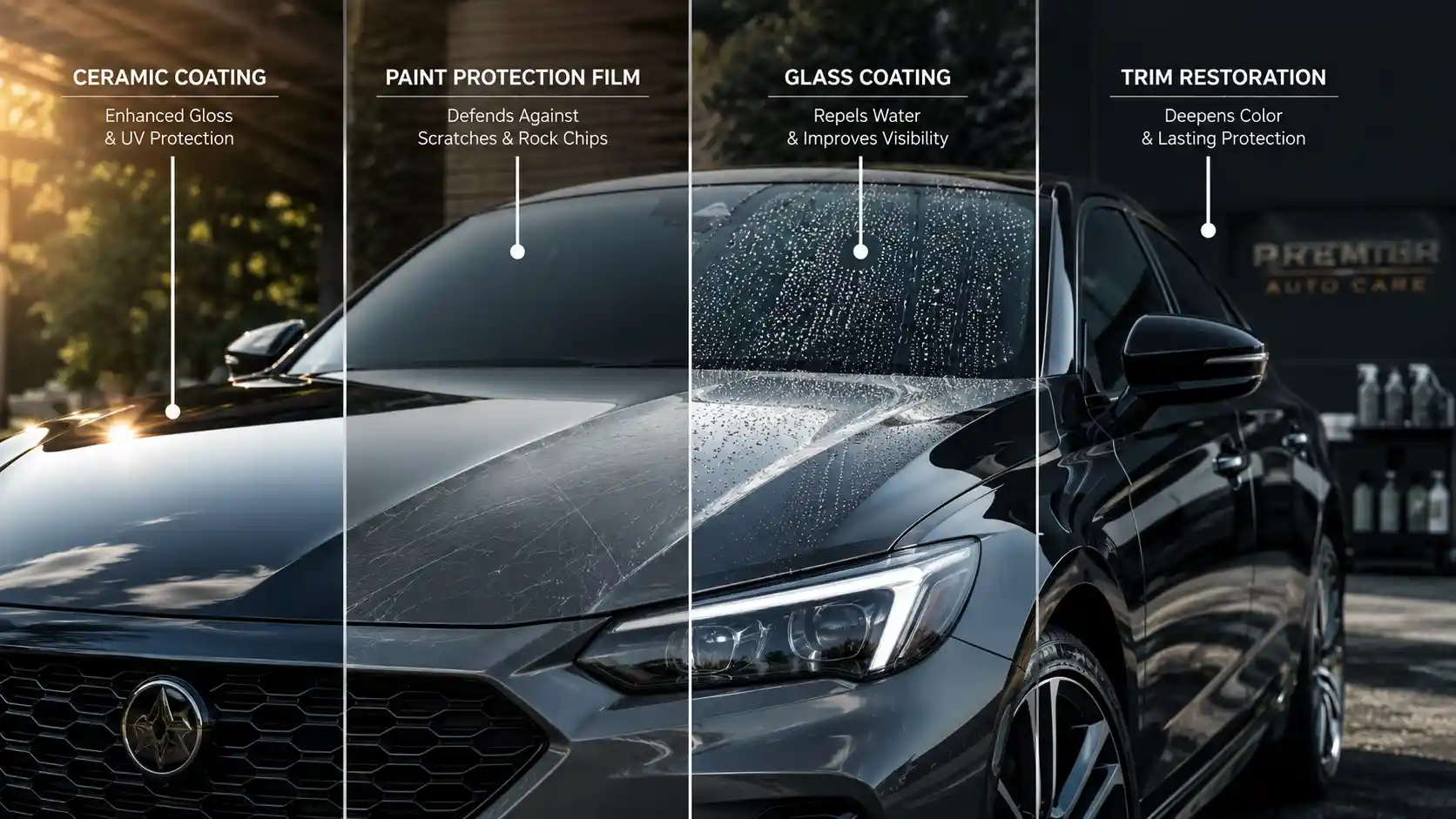
Once finishing is complete, the surface should be protected. Common options include wax, paint sealant, spray protection, and ceramic coating.
The right choice depends on the goal. A simple wax may be enough for short-term shine. A sealant offers longer protection. A ceramic coating is usually chosen when long-term durability and easier maintenance are the priority. The key point is that protection locks in the visual improvement created by finishing.
What Tools Are Used for Finishing in Car Care?
The tools used during finishing affect both the safety of the process and the quality of the result. Even the best polish can perform poorly if the wrong machine, pad, towel, or lighting is used.
A controlled tool setup helps refine the paint rather than add more defects. That is why tool choice is just as important as product choice.
Dual Action Polishers
A dual action polisher is one of the most common tools used for finishing. It moves in a way that combines rotation and oscillation, which helps reduce the risk of overheating or creating harsh polishing trails.
For most users, especially beginners, a dual action machine gives a good balance of safety and effectiveness. It can remove light defects, refine compounding marks, and create a strong finishing result on many paint types.
Rotary Buffers
A rotary buffer spins on a direct axis and can cut faster than a dual action polisher. It is powerful and efficient, but it also requires more control.
In skilled hands, a rotary can produce excellent correction and finishing results. But if used poorly, it can leave holograms, haze, or excessive heat buildup. That is why it is often preferred by experienced users rather than beginners.
Hand Applicators
Hand applicators are used when the surface is small, delicate, or does not need machine polishing. They are common for spot work, trim areas, pillars, tight curves, and light enhancement.
Hand finishing can improve gloss and reduce very light defects, but it usually cannot match the speed or correction ability of a machine. It is best for maintenance work or areas where machines are hard to control safely.
Finishing Pads
Finishing pads are softer pads designed to refine the surface rather than cut heavily. Foam finishing pads are especially common because they provide good control and help spread fine polish evenly.
The pad matters because it changes how aggressive or gentle the polishing process becomes. A softer pad paired with a fine polish is usually the standard setup for a true finishing stage.
Microfiber Towels
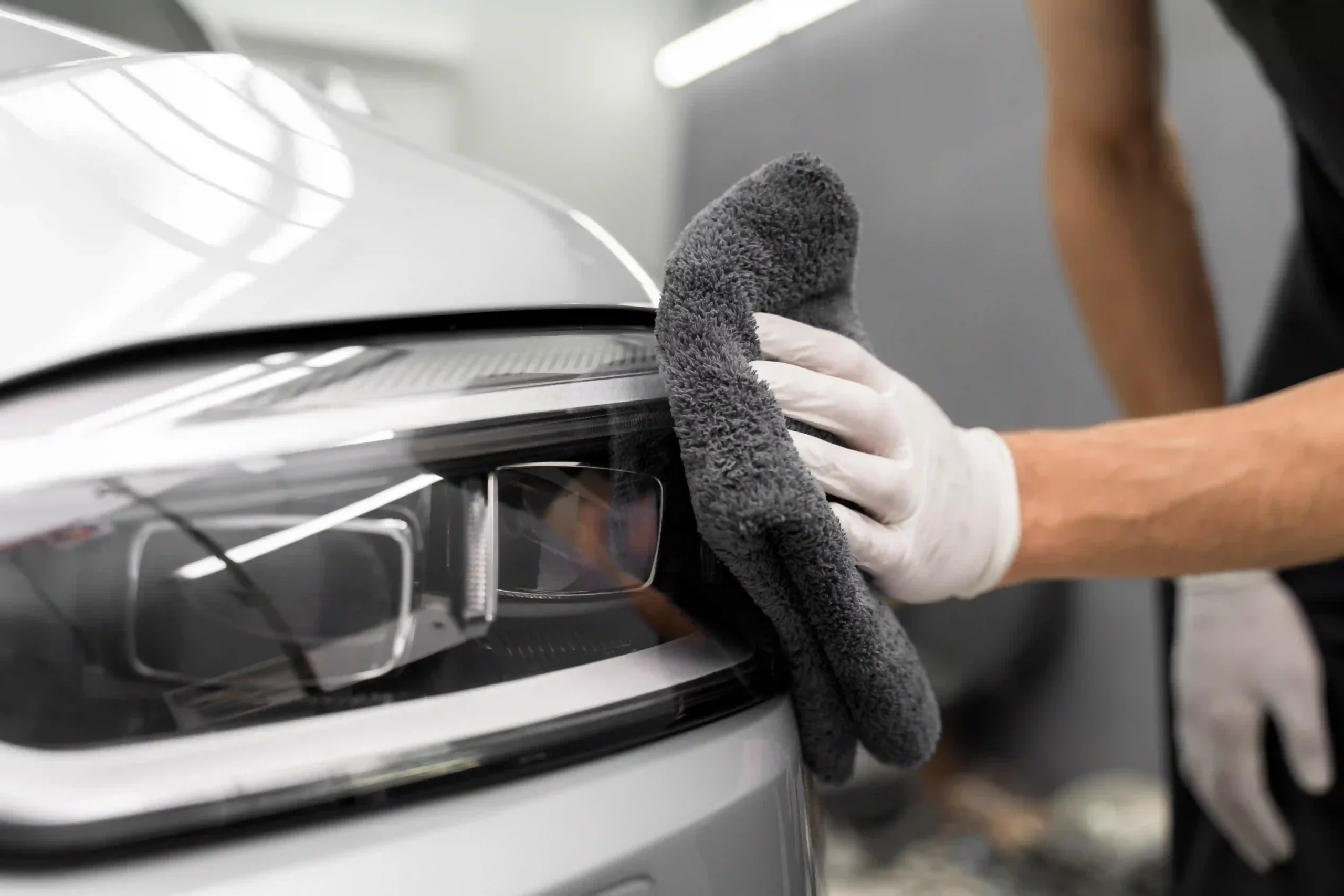
Microfiber towels are used to remove polish residue, wipe down the surface, and inspect the result. A clean, soft towel is essential because finishing is often ruined by poor wipe-off technique.
If the towel is dirty, rough, or loaded with dried product, it can create fresh micro-marring. That is why many detailers use separate towels for polish removal, final wipe-down, and protection product application.
Inspection Lights
Inspection lights help reveal the true condition of the paint. Without proper light, swirl marks, haze, and holograms may remain hidden until the car is seen outside.
Good inspection lighting helps you judge progress accurately. It also prevents false confidence. A panel that looks perfect in low light may still show defects in sunlight, so inspection lights are a critical part of the finishing process.
Which Surfaces Can Be Finished in Car Care?
Finishing is most often associated with paint, but it can also be used on other exterior surfaces that respond well to refining and polishing. The method and product choice must match the material.
Not every surface should be treated the same way. Some surfaces are soft and delicate. Others are harder and can handle stronger polishing.
Clear Coat Paint
Clear coat paint is the most common surface for finishing on modern vehicles. This top transparent layer is what gives the paint much of its gloss and is where most light wash marks and haze appear.
Finishing on clear coat usually focuses on improving clarity, leveling minor defects, and restoring reflective gloss. This is the main surface where finishing polish and soft pads are used.
Single-Stage Paint
Single-stage paint does not have a separate clear coat layer. The color and gloss are in the same paint layer, so polishing behaves differently.
This type of paint can often respond very well to finishing, especially on older vehicles. But it may also transfer color onto the pad, and it can be easier to remove too much material if the process is too aggressive. A careful test spot matters more here.
Headlights
Headlights can also be finished when the lens surface is dull, lightly oxidized, or hazy. This is common on older polycarbonate headlights exposed to sun and weather.
Finishing headlights usually comes after sanding or stronger correction if the oxidation is more severe. A polishing step then helps restore clarity and improve light output appearance. However, headlights often need a UV-resistant protective layer afterward because polishing alone does not solve long-term exposure.
Metal Trim and Chrome
Metal trim and chrome can often be polished and finished to restore brightness and reduce light staining or oxidation. These surfaces usually require different metal-safe products than painted panels.
When done correctly, finishing improves reflectivity and makes trim pieces look cleaner and sharper. But heavily pitted or corroded metal may not fully recover through polishing alone.
Piano Black and Gloss Plastic
Piano black trim and gloss plastic can be finished, but they are among the most delicate surfaces on a vehicle. They mark very easily and often show swirls faster than regular paint.
A very soft pad, a gentle polish, and low pressure are usually needed. In many cases, the biggest challenge is refining the surface without adding new marring during wipe-off.
Painted Wheels and Exterior Trim
Painted wheels and certain exterior trim pieces can also be finished if their surface condition allows it. These areas often collect brake dust, road grime, and chemical contamination, so cleaning is especially important before polishing.
Because wheels have tighter shapes and more heat exposure, the process must be more controlled. Small tools, soft applicators, and careful product choice help avoid damage while still improving gloss.
How to Finish a Car Surface Step by Step
A proper finishing process follows a clear sequence. The safest approach is to start gently, inspect often, and only increase correction when the surface truly needs it.
This step-by-step method helps improve results while reducing unnecessary paint removal. It also makes the process easier to repeat across the entire vehicle.
Clean and Inspect the Surface
Start with a properly washed and dried surface. Remove bonded contamination if needed, then inspect the panel under bright light.
This first inspection shows what you are actually working with. It also helps you separate defects that can improve through finishing from defects that are too deep to correct safely with a fine polish.
Choose the Least Aggressive Product and Pad
Always begin with the mildest combination likely to work. That usually means a finishing polish and a soft or medium-soft polishing pad.
This approach protects the paint and avoids removing more material than necessary. If the result is not enough, you can step up later. Starting too aggressively creates more risk and may leave extra haze that needs another polishing stage.
Test a Small Section First
Before working on the whole car, test a small section. This shows how the paint responds to the chosen combination.
The test spot saves time and prevents guesswork. If the finish looks clearer and glossier without new marring, you can continue with confidence. If not, adjust the pad, product, pressure, or number of passes before moving on.
Work in Controlled Sections
Polish small sections at a time instead of trying to cover a large area all at once. Controlled sections help maintain even product spread and more consistent pressure.
This also makes it easier to inspect results and keep track of what has already been finished. Large uncontrolled sections often lead to uneven correction and missed spots.
Wipe Off Residue and Inspect Results
After polishing each section, wipe off the residue with a clean microfiber towel. Then inspect the surface closely under good light.
Do not assume the panel is finished just because it looks good from one angle. Move the light, change your position, and check the clarity. This is where real finishing quality is confirmed.
Repeat Only if More Refinement Is Needed
If the section still shows light haze or fine defects, repeat the process only as much as needed. More polishing is not always better.
The goal is to reach the desired finish with the minimum necessary correction. Repeating the process without purpose wastes time and can remove material without a real benefit.
Apply Protection After Finishing
Once the panel is refined, protect it. This helps preserve the improved look and reduces how quickly the surface picks up new contamination and environmental wear.
A polished but unprotected surface can lose its freshly finished look faster. Protection helps keep the gloss, slickness, and clarity that the finishing stage created.
How Do You Know if a Surface Needs Finishing?
A surface needs finishing when it still looks dull, hazy, lightly marred, or visually incomplete after washing. In many cases, the signs are easy to see once the paint is inspected in direct light.
Finishing is not only for badly damaged vehicles. It is also useful when the paint looks clean but lacks sharpness, depth, or uniform gloss.
Visible Swirls in Sunlight
If the paint shows circular or spider-web style marks in sunlight, finishing is often needed. These marks are usually caused by washing and drying wear.
They may not feel deep, but they disturb how the surface reflects light. A proper finishing step can often improve them significantly.
Loss of Depth and Reflection
When the paint no longer shows crisp reflections, the surface may need refinement. Dark colors show this problem clearly because they lose that rich, mirror-like look faster.
If the panel looks flat even after cleaning, finishing is often the step that restores visual depth.
Light Water Spot Etching
Some light water spots leave behind faint mineral etching that remains after washing. If the marks are shallow, finishing may improve or remove them.
If the etching is deeper, stronger correction may be needed first. But for mild cases, a finishing polish can often sharpen the appearance of the affected area.
Haze After Compounding
A surface that looks slightly cloudy after compounding almost always needs finishing. Heavy correction products are designed to cut defects, not always to leave maximum clarity.
Finishing refines that cut and brings the paint to a cleaner final appearance. Without it, the correction may be incomplete visually.
Rough Appearance Even After Washing
Sometimes the surface looks visually rough even if it feels cleaner after washing. That rough look may come from minor defects, oxidation, staining, or inconsistent gloss.
Finishing helps smooth the visual profile of the paint. It can turn a surface that looks tired into one that looks cared for again.
What Results Should You Expect From Proper Finishing?
Proper finishing should produce a cleaner, clearer, and more attractive surface. The exact result depends on paint condition, paint type, and the level of prior damage, but the visual improvement is often easy to notice.
Finishing does not create miracles. It creates refinement. That refinement is what gives the vehicle a more complete and professional final look.
Better Gloss
One of the first results people notice is improved gloss. The paint looks brighter and more reflective because the surface is smoother and more even.
This is usually the most visible change on daily driven vehicles. Even a lightly polished panel can look noticeably richer after proper finishing.
Improved Clarity
Clarity means reflections look sharper rather than blurry or washed out. It is the difference between a panel that simply shines and a panel that looks clean, deep, and well-defined.
This result becomes more obvious under direct light, on darker colors, and on surfaces that had previous haze.
Smoother Surface Feel
A properly finished surface often feels slicker and more refined to the touch, especially once any polishing residue is removed.
That smoother feel does not replace protection, but it usually reflects a better-refined paint surface and cleaner top layer.
Reduced Fine Defects
Finishing should reduce light swirls, micro-marring, and mild haze. These are the defects that often make a car look older than it really is.
The surface may not become perfect, but it should look cleaner and more uniform than before.
Better Final Appearance Before Protection
A strong finishing step gives the vehicle a better base before wax, sealant, or ceramic coating is applied. This matters because protection tends to highlight the condition of the surface underneath.
If the paint is well-finished first, the protection layer usually looks better too. The final result feels more complete, more even, and more premium.
What Finishing Cannot Fix
Finishing improves the top surface, but it does not solve every paint problem. Some damage goes too deep, some damage is structural, and some issues need repainting or repair instead of polishing.
Knowing these limits is important because it keeps expectations realistic. It also helps prevent over-polishing a surface that will not improve much from more refinement.
Deep Scratches Through the Clear Coat
Deep scratches that go through the clear coat cannot usually be fixed by finishing alone. A finishing polish is too mild to level that kind of damage safely.
In some cases, the scratch may be softened visually if the edges are lightly refined. But if the mark is deep enough to catch a fingernail or shows a darker or lighter base underneath, polishing will not remove it fully.
Stone Chips
Stone chips are impact damage where paint has been knocked away. Since material is missing, finishing cannot put that paint back.
The area may look slightly cleaner if the surrounding surface is polished, but the chip itself will remain. Proper repair usually means touch-up work, localized repainting, or more advanced refinishing depending on severity.
Peeling Clear Coat
Peeling clear coat is a failure of the paint system, not a light surface defect. When the clear layer begins lifting, flaking, or separating, polishing will not restore it.
Trying to finish a peeling area can sometimes make the edge look worse. The real fix is repainting because the protective layer has already failed.
Severe Oxidation
Light to moderate oxidation can often be improved. Severe oxidation is different because the damaged material may extend too far or leave the surface weak and uneven.
In those cases, finishing may add some gloss for a short time, but it will not fully restore healthy paint. Stronger correction or repainting may be needed depending on the condition.
Paint Failure or Structural Damage
Paint cracking, deep corrosion, body damage, rust-through, and failing panels are beyond the role of finishing. These are repair issues, not polishing issues.
A good finishing step can improve the surrounding appearance, but it cannot replace bodywork, rust repair, or repainting. Surface refinement only works when the paint system is still basically sound.
Common Finishing Mistakes in Car Care
Finishing is a refining step, but it can still go wrong if technique, tools, or preparation are poor. Many bad finishing results come from simple mistakes rather than bad products.
The good news is that most of these mistakes are preventable. A careful process usually matters more than chasing the most expensive polish.
Using Too Aggressive a Product
One common mistake is using a heavy compound when the surface only needs a finishing polish. This removes more material than necessary and can create extra haze that then needs more work.
The best approach is to start mild and only step up if needed. Finishing should focus on refinement, not unnecessary cutting.
Skipping Surface Preparation
Polishing a surface that has not been washed, decontaminated, or properly inspected is risky. Dirt and bonded debris can interfere with pad movement and create new scratches.
Preparation also affects product choice. If you skip inspection, you may treat the wrong problem with the wrong method.
Using a Dirty Pad or Towel
A dirty pad can trap spent polish, dust, and removed paint residue. A dirty towel can drag particles across the surface during wipe-off.
This is one of the easiest ways to create fresh micro-marring. Clean pads and clean microfiber towels help protect the result you are trying to achieve.
Working on Hot Paint
Hot paint causes polish to behave poorly and makes the process harder to control. The product may dry too quickly, wipe off badly, or leave uneven refinement.
It is better to work in a shaded, cool area whenever possible. A controlled environment gives more working time and more consistent results.
Applying Too Much Pressure
Many people think more pressure means better correction. In finishing, too much pressure often does the opposite.
Heavy pressure can reduce pad rotation, create extra heat, and increase the chance of haze or polishing trails. Light to moderate pressure with controlled passes usually works better for a true finishing result.
Expecting Polish to Replace Protection
Polish improves the paint surface, but it does not protect it for long on its own. Some products leave temporary gloss-enhancing oils behind, but that is not the same as a protective layer.
Once finishing is done, the surface still needs wax, sealant, or ceramic coating if you want the result to last longer and stay easier to maintain.
Finishing by Hand vs Machine Polishing
Finishing can be done by hand or by machine, but the results, speed, and consistency are different. The better option depends on the condition of the paint, the size of the job, and the user’s skill level.
Neither method is automatically right or wrong. The choice should match the surface and the goal.
When Hand Finishing Is Enough
Hand finishing is enough when the defects are very light or when the area is small and delicate. It works well for pillars, tight trim sections, spot refinement, and quick gloss improvement.
It is also useful for people who only want mild enhancement without buying a machine. The downside is that hand polishing is slower and usually less consistent over large panels.
When a Machine Gives Better Results
A machine gives better results when the paint needs more even refinement across larger areas. Dual action polishers in particular help create more uniform correction and a stronger final gloss.
Machine polishing also saves time and reduces user fatigue. For full vehicles or paint that has visible haze and swirl marks, machine finishing is usually the more effective option.
Safety and Control for Beginners
For beginners, a dual action polisher is usually the easiest machine to control. It is more forgiving than a rotary and lowers the chance of leaving harsh buffer trails.
Beginners should still work slowly, use a test spot, and avoid aggressive combinations. Good finishing is built on patience and control, not speed.
How Often Should You Finish a Car?
A car should only be finished when the surface actually needs refinement. Finishing is not something that should be done constantly just to maintain shine.
For many daily driven vehicles, light finishing once or twice a year is enough. Some cars may need less if they are washed carefully, protected well, and stored in better conditions.
The real answer depends on how the car is used. A vehicle that lives outside, sees regular washing, and faces strong sun or harsh weather may show swirls and dullness faster. A garage-kept vehicle with careful maintenance may hold its finish much longer.
The important point is that finishing removes a small amount of material each time. That is why it should be done with purpose, not as a habit every few weeks. Safe car care is about preserving paint, not constantly polishing it.
Should You Apply Wax, Sealant, or Ceramic Coating After Finishing?
Yes, you should apply protection after finishing. Finishing improves the surface, but protection helps preserve that improvement.
A refined paint surface is clean, glossy, and visually sharp. Leaving it bare means it is still exposed to water, dirt, UV, road film, bird droppings, and environmental fallout. Protection adds a barrier that helps the finish last longer and stay easier to maintain.
Wax is often chosen for warmth and ease of use. Sealant is chosen for longer-lasting synthetic protection. Ceramic coating is chosen when stronger durability, water behavior, and longer-term surface defense are the main goals.
The best time to protect paint is right after it has been properly finished and cleaned. That way, the protection sits on a better-looking and better-prepared surface.
Is Finishing Safe for All Paint Types?
Finishing is safe for many paint types when the method is matched to the surface. But it is not a one-size-fits-all process.
Different paints react differently to pressure, heat, pads, and abrasives. That is why a test spot is one of the most important parts of safe finishing.
Modern clear coat paint is usually the most straightforward to finish. Single-stage paint may react faster and can transfer color to the pad. Soft paints can haze more easily. Hard paints may need more passes or a different product to respond well.
Delicate trim surfaces such as piano black or gloss plastic need extra care because they mark easily. Repainted panels can also behave differently from factory paint. On older or thin paint, being too aggressive is a bigger risk.
So yes, finishing can be safe, but only when the person doing it respects the material. Gentle testing, proper lighting, and the least aggressive method are what make the process safe.
How Finishing Improves the Look, Feel, and Value of a Vehicle
Finishing improves how a vehicle looks by restoring clarity, even gloss, and cleaner reflections. It improves how the surface feels by making it smoother and more refined. It can also support value because visual condition strongly shapes how people judge a car.
A car with dull, swirled, hazy paint often looks older and less cared for than it really is. A car with a refined finish usually looks cleaner, sharper, and better maintained even before deeper inspection begins.
That matters in everyday ownership because appearance affects pride, maintenance habits, and first impressions. It also matters in resale because buyers notice paint condition quickly. A vehicle that presents well often feels easier to trust because the exterior suggests better care overall.
Finishing does not turn every used car into a showroom car. But it can close the gap between tired paint and well-kept paint in a very noticeable way. That is why finishing remains one of the most valuable appearance steps in car care.
Conclusion
Finishing in car care is the stage that refines the surface after cleaning and correction so the vehicle looks clearer, glossier, and more complete. It is not the same as washing, waxing, or detailing as a whole. It is the step that improves how the paint reflects light and how the final result feels to the eye.
When done properly, finishing reduces light defects, improves gloss, sharpens reflections, and creates a better surface for wax, sealant, or ceramic coating. It works best when the paint is properly prepared, the least aggressive method is used first, and expectations stay realistic.
It also has clear limits. Finishing cannot fix missing paint, deep chips, peeling clear coat, or major structural damage. But for swirl marks, haze, light scratches, dullness, and uneven gloss, it often makes the biggest visible difference.
That is why finishing matters. It is the process that takes a car from clean to refined, and from corrected to truly finished.
Frequently Asked Questions
Is finishing the same as detailing?
No, finishing is not the same as detailing. Finishing is one step in car care that refines the paint to improve gloss, clarity, and smoothness. Detailing is the full process of cleaning, correcting, protecting, and restoring both the interior and exterior of a vehicle.
Does finishing remove scratches permanently?
Finishing can permanently remove very light surface scratches if they are shallow enough to be polished out safely. It does not permanently remove deep scratches that go through the clear coat or into the paint layer, because those usually need touch-up or repainting.
Do you need to compound before finishing?
No, you do not always need to compound before finishing. Compounding is only necessary when the paint has heavier defects like deeper swirl marks, oxidation, or scratches. If the surface only has light haze or minor marring, finishing polish alone may be enough.
Can you finish a car by hand?
Yes, you can finish a car by hand using a finishing polish and a soft applicator pad. Hand finishing works best for light defects, small areas, and maintenance work. For better correction, faster results, and more even refinement, machine polishing usually works better.
What pad is best for finishing polish?
The best pad for finishing polish is usually a soft foam finishing pad. It helps refine the paint gently, improves gloss, and reduces the risk of adding haze or micro-marring. The exact pad can vary depending on the paint type and polish being used.
Should you wax after finishing?
Yes, you should wax after finishing if you want to protect the refined surface. Finishing improves gloss and clarity, but it does not provide lasting protection. Wax, sealant, or ceramic coating helps preserve the finish and protect the paint from dirt, water, and UV exposure.
How long does a finished surface stay glossy?
A finished surface can stay glossy for a few weeks to several months depending on how the car is washed, stored, driven, and protected. Proper washing and a good wax, sealant, or ceramic coating help the gloss last longer and keep the surface looking refined.
Can finishing damage clear coat?
Yes, finishing can damage clear coat if it is done too aggressively, too often, or with the wrong pad, polish, pressure, or machine speed. When done correctly with a safe method, finishing is generally safe and removes only a very small amount of the surface.
What Is the Difference Between Polishing, Buffing, and Compounding?
Compounding is the aggressive step used to remove heavier paint defects. Polishing is the refining step that improves gloss, clarity, and smoothness after correction. Buffing is a broader term often used for machine polishing or working a product across the paint to improve the finish.