A dead battery rarely gives you much warning. You turn the key, hear a click, and suddenly you need another vehicle, jumper cables, or roadside assistance.
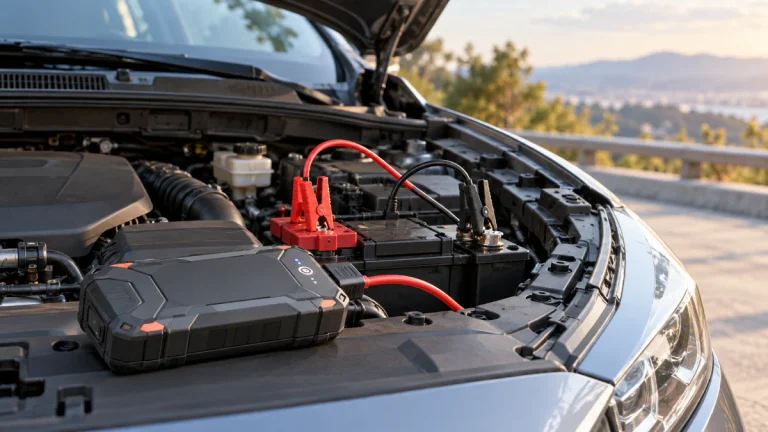
A portable jump starter solves that problem by carrying its own battery. You connect the clamps, start the vehicle, disconnect the pack, and get back on the road.
One thing to understand before buying: most products shoppers call a portable car battery charger are actually portable jump starters. They deliver a short burst of starting current. They are not the same as plug-in smart chargers that slowly recharge and maintain a vehicle battery.
This guide focuses on portable units you can keep in a car, truck, SUV, RV, work vehicle, or garage for emergency starting. Each recommendation below links to one exact Amazon product listing, not an Amazon search page.
Quick Comparison: 10 Best Portable Car Battery Chargers
| Product | Best For | Rated Output | Engine Rating | Main Advantage | Amazon |
|---|---|---|---|---|---|
| Clore JNC325 | Best overall | 450 Start Assist Amps | Up to 8.0L gas / 6.0L diesel | Heavy cables and 0V override | Check Price on Amazon |
| NOCO GB40 | Most everyday cars | 1000A peak | Up to 6.0L gas / 3.0L diesel | Compact and simple | Check Price on Amazon |
| GOOLOO GT6000 | Large engines | 6000A peak | All gas / up to 12.0L diesel | 100W USB-C | Check Price on Amazon |
| NOCO GBX45 | Fast recharging | 1250A peak | Up to 6.5L gas / 4.0L diesel | 60W USB-C PD | Check Price on Amazon |
| TOPDON JumpSurge2000 | Midrange value | 2000A peak | Up to 8.0L gas / 6.0L diesel | Good engine coverage | Check Price on Amazon |
| HULKMAN Alpha85 | Easy operation | 2000A peak | Up to 8.5L gas / 6.0L diesel | Large status display | Check Price on Amazon |
| LOKITHOR JA301 | Jump starter + inflator | 2000A peak | Up to 8.0L gas / 6.0L diesel | 150 PSI air compressor | Check Price on Amazon |
| DEWALT DXAEJ14 | All-in-one roadside station | 1600A peak | 12V automotive use | 120 PSI compressor | Check Price on Amazon |
| Clore JNC660 | Garage and heavy-duty use | 1700A peak / 425 cranking amps | 12V automotive use | 46-inch #2 AWG cables | Check Price on Amazon |
| NOCO GB70 | Trucks and larger engines | 2000A peak | Up to 8.0L gas / 6.0L diesel | Proven high-capacity design | Check Price on Amazon |
Important: Peak-amp figures are not perfectly comparable between brands. Engine-size rating, clamp quality, cable resistance, temperature, battery condition, and the manufacturer’s testing method all affect starting performance.
1. Clore Automotive Jump-N-Carry JNC325 — Best Overall
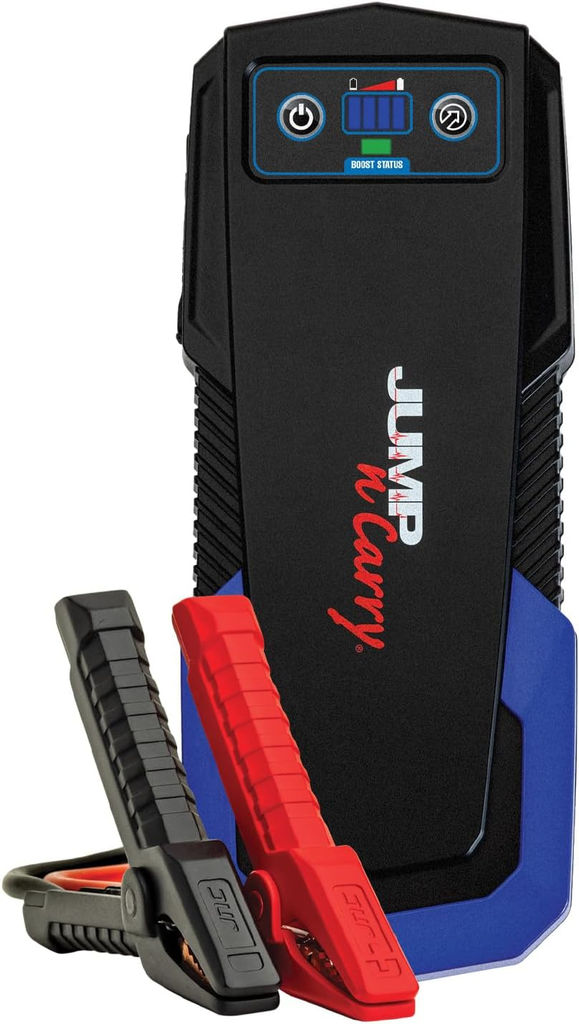
The JNC325 is a strong choice for buyers who care more about starting hardware than flashy marketing numbers. Clore rates it for gasoline engines up to 8.0 liters and diesel engines up to 6.0 liters.
What makes it stand out is the cable and clamp setup. It uses 24-inch #6 AWG output leads with Clore’s MaxAccess clamps, giving you more substantial hardware than many compact jump packs.
It also includes an override function for a vehicle battery that has dropped to 0.0 volts. That matters because some smart jump starters will not activate when they cannot detect enough voltage at the battery terminals.
Clore lists reverse-polarity protection, backfeed protection, over-voltage protection, short-circuit protection, and overheat protection. The JNC325 is also designed to conform to UL2743 requirements for lithium jump starters.
At about 4.3 pounds, it is not the smallest unit here. That is the trade-off. You get more serious cables and a more tool-like design, but it takes more trunk space than a NOCO GB40.
Key specs
- 12V lithium jump starter
- 450 Start Assist Amps
- Up to 8.0L gasoline engines
- Up to 6.0L diesel engines
- 24-inch cables
- #6 AWG output leads
- 0V override mode
- Dual USB outputs
- 10A DC output
- LED work light
- Approx. 4.3 lb
Best for: Drivers, pickup owners, shops, and fleet users who want substantial cables and straightforward starting capability.
Skip it if: Glove-box size is your first priority.
2. NOCO Boost Plus GB40 — Best Compact Pick for Most Cars
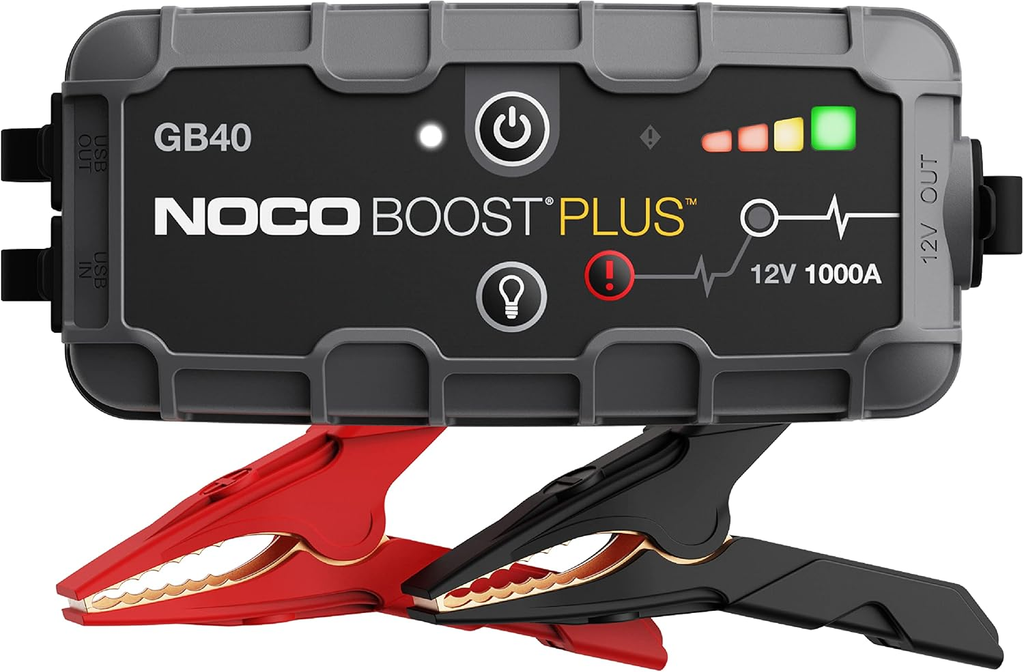
The NOCO GB40 makes sense for the average car owner because it covers common engine sizes without taking up much room. NOCO rates it at 1000A peak for gasoline engines up to 6.0 liters and diesel engines up to 3.0 liters.
That covers a broad range of sedans, crossovers, V6 vehicles, motorcycles, small trucks, boats, and powersports equipment.
The GB40 also has reverse-polarity protection and manual override for batteries too weak for normal automatic detection. Its IP65-rated enclosure, with the ports closed, adds useful protection against dust and water exposure.
The main weakness is charging speed. This is an older design and does not have the high-output USB-C charging found on newer models such as the GBX45.
For buyers who mainly want a compact emergency jump starter that is easy to keep in the vehicle, that limitation may not matter.
Key specs
- 1000A peak current
- Up to 6.0L gas
- Up to 3.0L diesel
- 24Wh lithium-ion battery
- IP65 with ports closed
- 100-lumen flashlight
- USB power-bank function
- Manual override
Best for: Sedans, crossovers, motorcycles, small SUVs, and normal daily drivers.
Skip it if: You have a large diesel pickup or want fast USB-C recharging.
3. GOOLOO GT6000 — Best for Large Engines
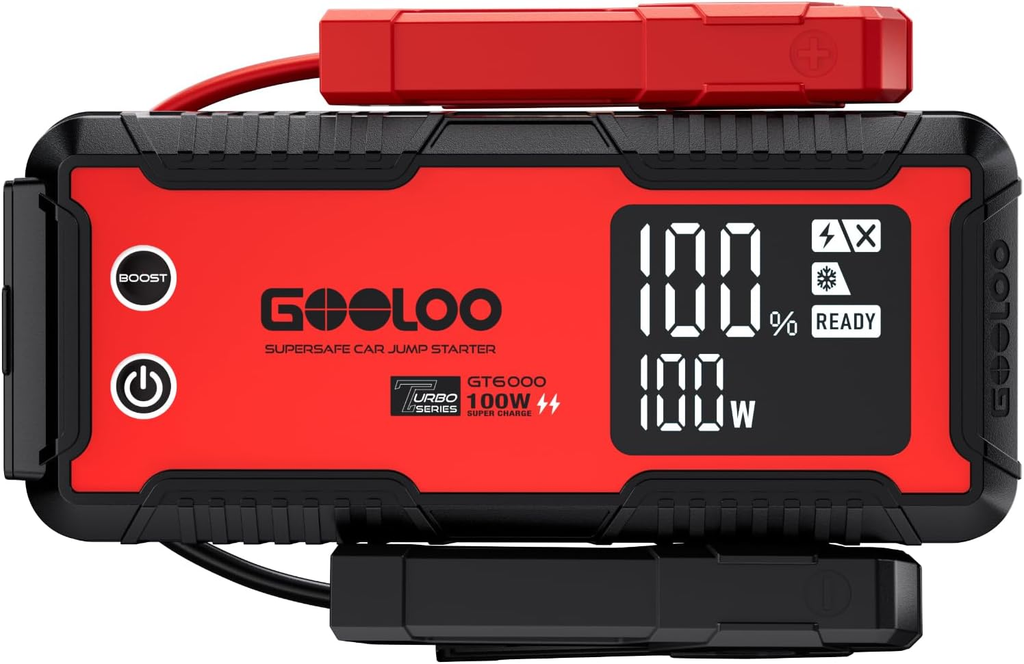
The GT6000 is built for buyers who need more engine capacity than a basic glove-box jump starter provides. GOOLOO rates it at 6000A peak, with support for all gasoline engines and diesel engines up to 12.0 liters.
That makes it more relevant to diesel pickups, large SUVs, RVs, work trucks, and other vehicles where a small entry-level jump pack may be undersized.
Its other useful feature is 100W bidirectional USB-C Power Delivery. With a compatible charger, the USB-C port can recharge the jump starter quickly and can also supply high-output USB-C power to compatible laptops, tablets, phones, and other devices.
For a four-cylinder commuter, the GT6000 is more capacity than you need. For a truck or larger diesel, the extra headroom is easier to justify.
Key specs
- 6000A peak current
- Rated for all gasoline engines
- Rated for diesel engines up to 12.0L
- Approximately 99.9Wh battery capacity
- 100W bidirectional USB-C PD
- USB-A outputs
- DC accessory output
Best for: Diesel pickups, large SUVs, RVs, work trucks, and drivers who also want a high-output power bank.
Skip it if: You drive a small car and only need basic emergency starting power.
4. NOCO Boost X GBX45 — Best for Fast USB-C Recharging
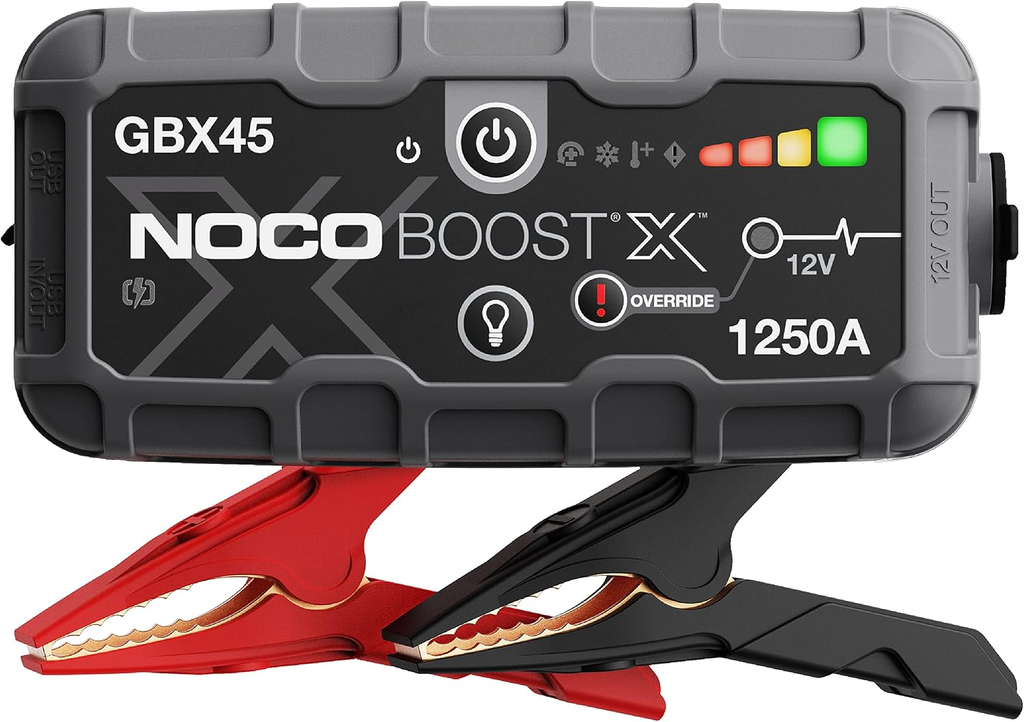
The GBX45 is the better fit for buyers who like NOCO’s compact design but want modern charging.
NOCO rates it at 1250A peak and supports gasoline engines up to 6.5 liters and diesel engines up to 4.0 liters. That gives it slightly more vehicle coverage than the GB40.
The big difference is USB-C Power Delivery. The GBX45 supports USB-C input and output up to 60W with compatible equipment. That makes it much easier to recharge quickly before a trip.
NOCO also gives it an IP65 rating with the ports closed, a built-in 100-lumen light, and its usual battery connection protections.
You will usually pay more for it than a basic jump pack with a larger advertised peak-amp figure. The reason to choose it is the combination of compact size, fast charging, and clearly documented specifications.
Key specs
- 1250A peak current
- Up to 6.5L gas
- Up to 4.0L diesel
- 31Wh lithium-ion battery
- USB-C PD up to 60W
- IP65 with ports closed
- 100-lumen flashlight
Best for: Drivers who want a compact premium jump starter that can recharge quickly.
Skip it if: You care more about maximum engine capacity per dollar.
5. TOPDON JumpSurge2000 — Best Midrange Value
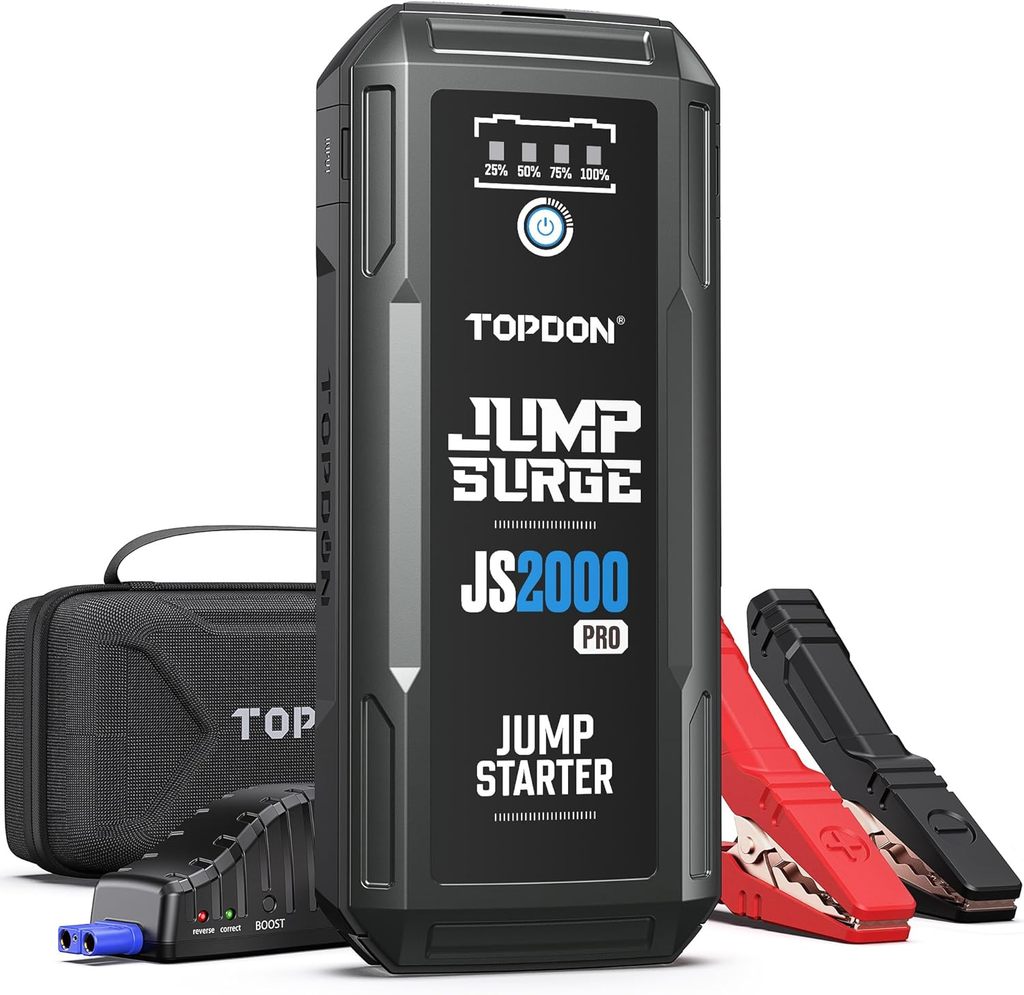
The TOPDON JumpSurge2000 offers a practical middle ground between small 1000A-class packs and much larger high-output units.
The Amazon model linked here is rated at 2000A peak and is designed for gasoline engines up to 8.0 liters and diesel engines up to 6.0 liters. That gives it useful coverage for cars, SUVs, pickups, and many light-duty diesel applications.
It also includes a boost function for deeply discharged batteries, USB power-bank capability, an emergency light, and an EVA storage case.
For most buyers, the main reason to choose it is straightforward: it gives you more engine coverage than the smallest jump starters without moving into the bulk and price of large professional jump boxes.
Key specs
- 2000A peak current
- Up to 8.0L gas
- Up to 6.0L diesel
- 12V vehicle compatibility
- Boost function for deeply discharged batteries
- USB device charging
- LED emergency light
- EVA storage case
Best for: SUV, pickup, and larger-engine owners looking for a balanced midrange option.
Skip it if: You want the smallest possible unit or very high-output USB-C charging.
6. HULKMAN Alpha85 — Best Display and User Interface
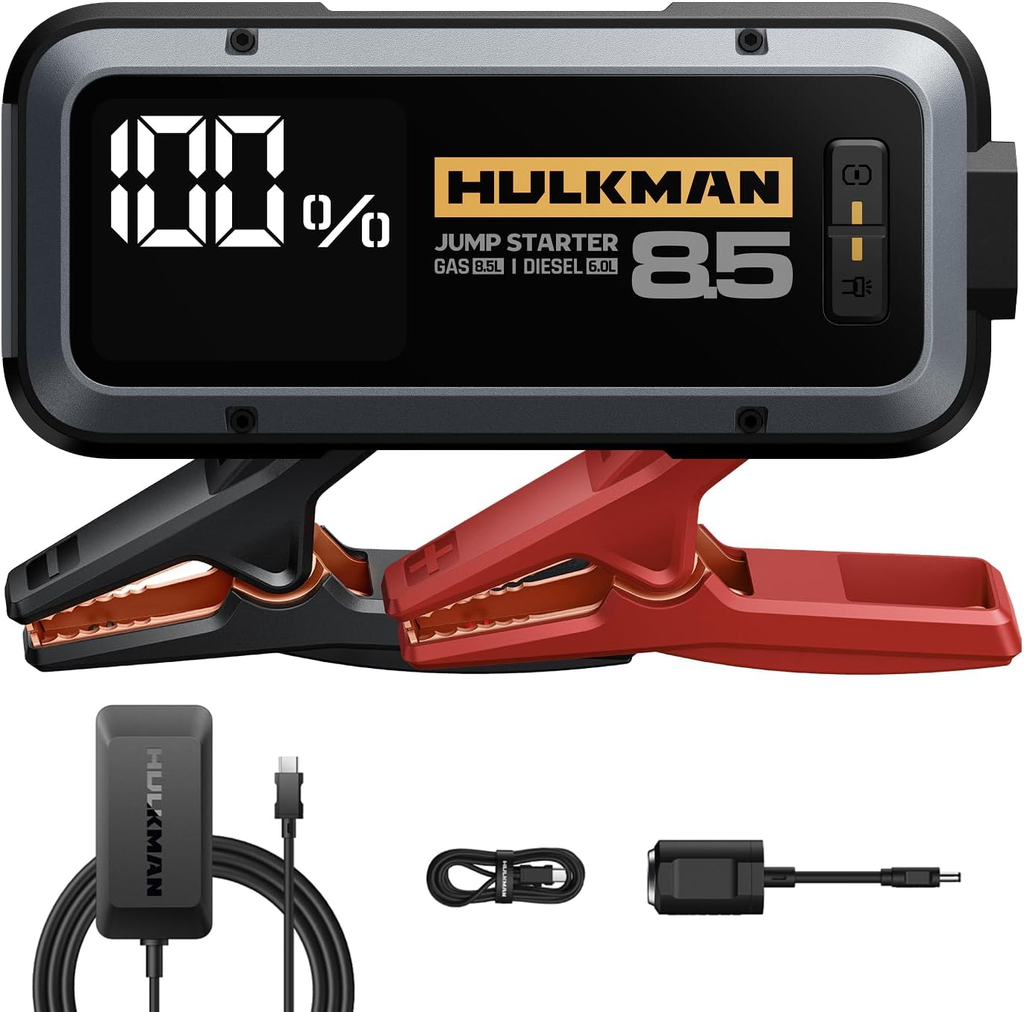
The Alpha85 is easier to understand than many jump starters because it uses a large 3.3-inch display instead of relying only on a few small indicator lights.
HULKMAN rates it at 2000A peak, supporting gasoline engines up to 8.5 liters and diesel engines up to 6.0 liters. Its internal battery is rated at 20,000mAh or 74Wh.
The screen shows charge level, operating status, and error information. That can be useful for people who rarely use a jump starter and do not want to remember what different blinking LEDs mean.
It also works as a power bank through USB-A and USB-C and provides a DC output for compatible 12V accessories.
HULKMAN includes a force-start function for batteries that are too deeply discharged for normal detection. Like any manual or force-start mode, it should only be used according to the manufacturer’s instructions.
Key specs
- 2000A peak current
- Up to 8.5L gas
- Up to 6.0L diesel
- 20,000mAh / 74Wh battery
- 3.3-inch status display
- USB-C and USB-A
- 15V/10A DC output
- Force-start function
Best for: Buyers who want clear status information and a simple interface.
Skip it if: You want an ultra-small jump pack.
7. LOKITHOR JA301 — Best with Built-In Tire Inflator
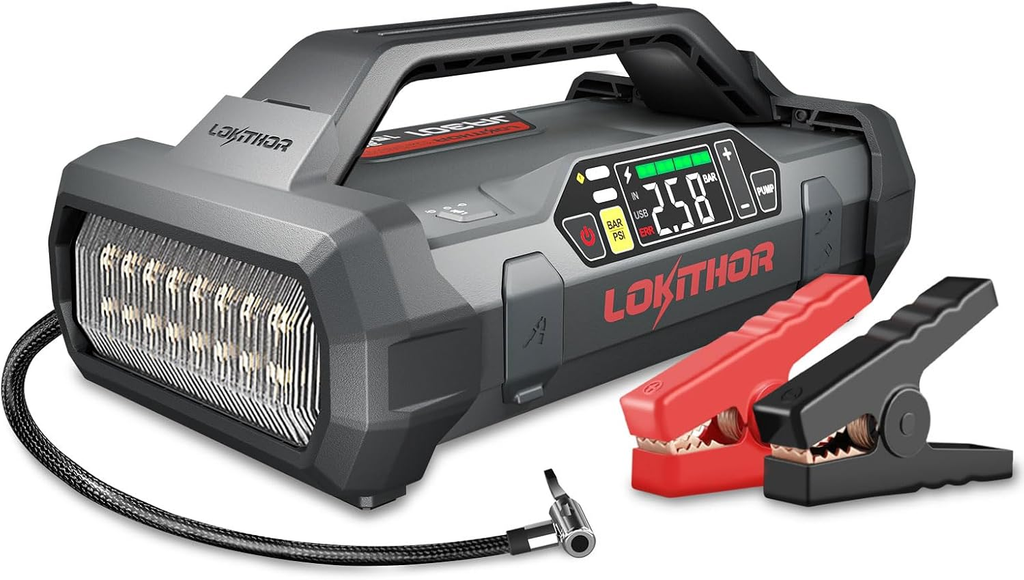
The JA301 combines two roadside tools that are genuinely useful: a battery jump starter and an air compressor.
LOKITHOR rates it at up to 2000A peak for vehicles up to 8.0L gas or 6.0L diesel. Its integrated compressor has a pressure range up to 150 PSI and a digital display.
That means one unit can help with a dead battery in the morning and a low tire later in the trip.
The compressor is especially useful for slow leaks and routine top-ups. It does not replace a shop compressor for heavy continuous use, but carrying a separate inflator becomes unnecessary for many drivers.
Combination tools are naturally larger than a jump-only pack, so the JA301 makes the most sense for buyers who actually want both functions.
Key specs
- 2000A peak
- Up to 8.0L gas
- Up to 6.0L diesel
- 10-150 PSI inflator
- Approx. 35 L/min airflow
- 74Wh power-bank function
- 300-lumen LED light
Best for: Family vehicles, road trips, SUVs, and drivers who want one unit for battery and tire emergencies.
Skip it if: You already carry a good compressor.
8. DEWALT DXAEJ14 — Best Traditional All-in-One Power Station
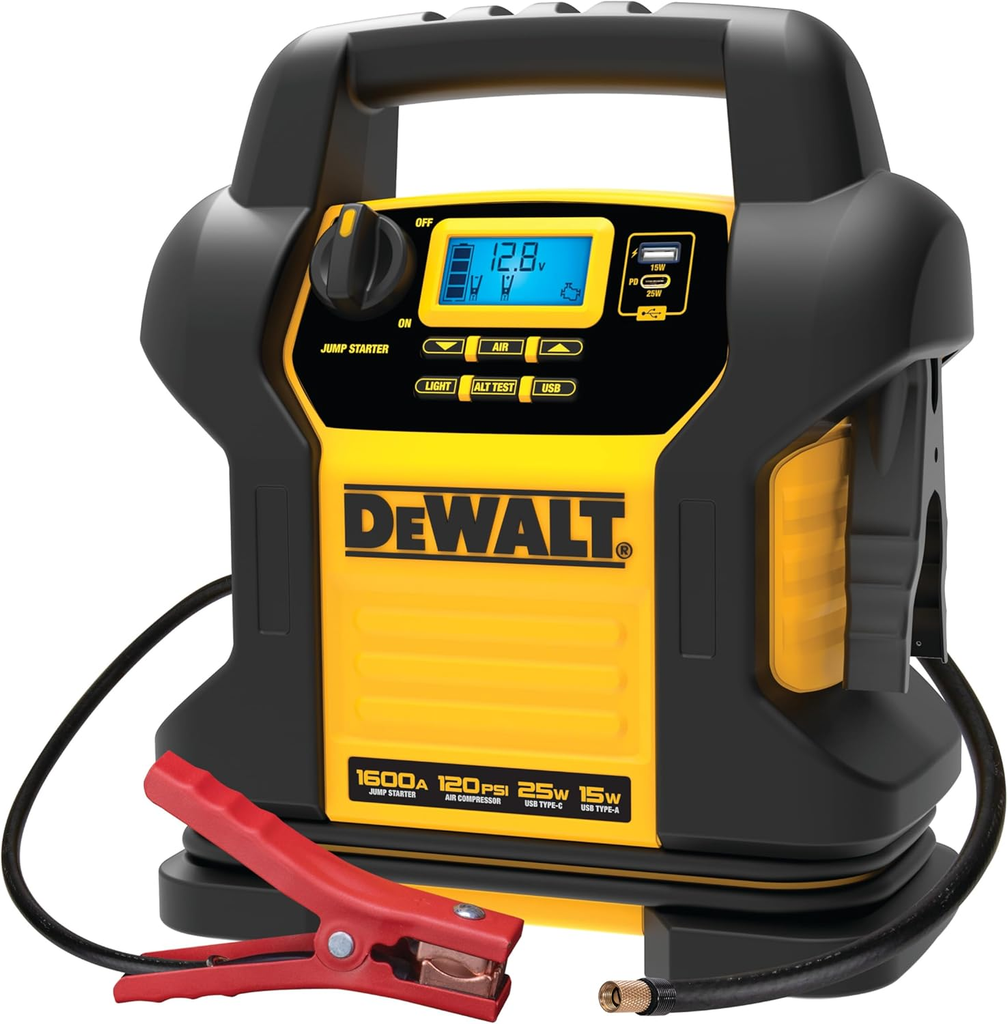
The DXAEJ14 is much larger than a pocket-size lithium jump starter. It is closer to a portable roadside power station.
The current Type 2 model linked here is rated at 1600 peak amps and includes a 120 PSI digital air compressor. It also provides USB power and an alternator-check function.
This format works well in a pickup, SUV, garage, work vehicle, or family vehicle where trunk space is not tight. The large body gives you an integrated handle and a compressor without needing separate equipment.
Its biggest disadvantage is obvious: size and weight. If you only need emergency starting power, a compact lithium jump starter is much easier to store.
Key specs
- 1600 peak amps
- 12V automotive jump starting
- 120 PSI digital compressor
- Automatic compressor shutoff
- USB-A and USB-C power
- Reverse-polarity warning
- Alternator-check function
Best for: Drivers who want an all-in-one emergency station instead of the smallest possible tool.
Skip it if: You have limited cargo space.
9. Clore Automotive Jump-N-Carry JNC660 — Best Heavy-Duty Garage Workhorse
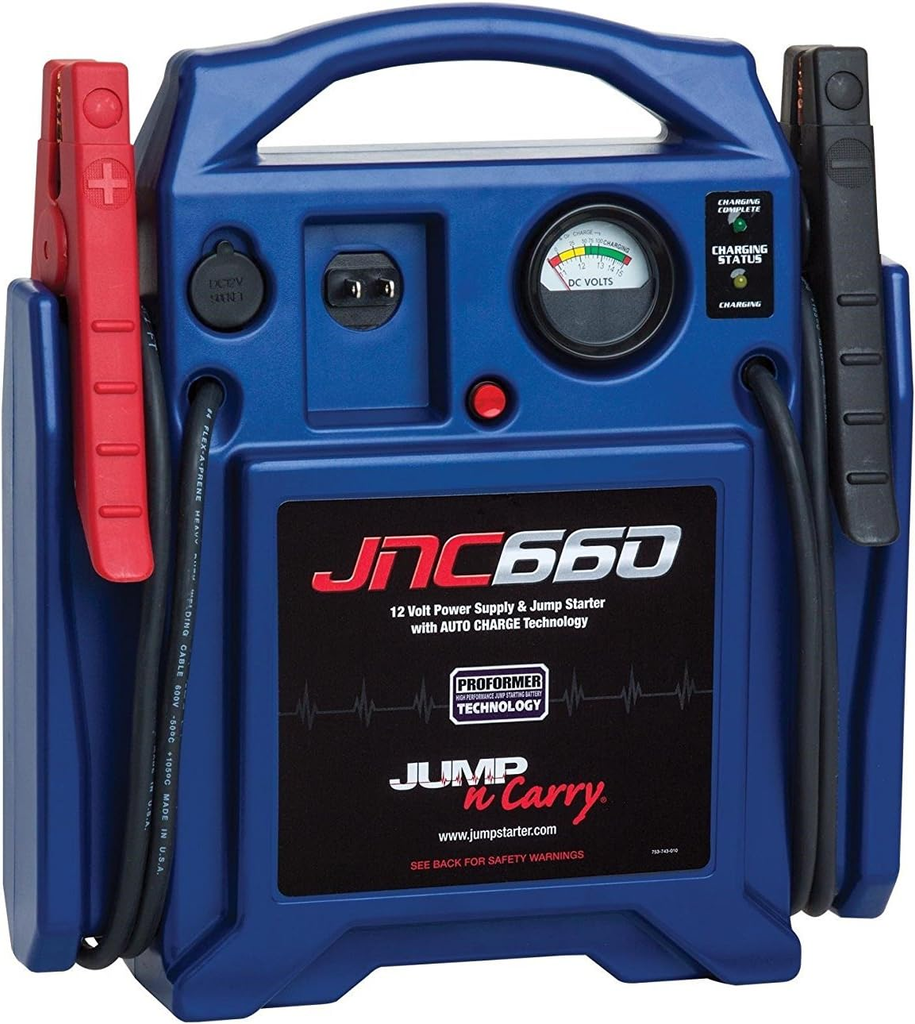
The JNC660 is built differently from today’s compact lithium packs. It uses a larger traditional jump-box design with long, heavy cables and a replaceable internal battery.
Clore rates it at 1700 peak amps and 425 cranking amps. More important for real garage use, it has 46-inch #2 AWG cables.
Longer cables can make a major difference when battery access is poor, the vehicle is parked awkwardly, or you are regularly jumping different cars and trucks.
At around 18 pounds, the JNC660 is not something you throw into a glove box. It is better suited to a garage, farm, fleet vehicle, towing operation, or workshop.
Its replaceable internal battery is also an advantage for buyers who would rather service a jump box than discard the whole unit when the battery eventually wears out.
Key specs
- 1700 peak amps
- 425 cranking amps
- 46-inch cables
- #2 AWG cable gauge
- Automatic charger
- Analog voltmeter
- Replaceable internal battery
- Approx. 18 lb
Best for: Garages, farms, fleets, roadside service, and buyers who prioritize heavy cables.
Skip it if: You want a lightweight lithium pack for a small car.
10. NOCO Boost HD GB70 — Best for Trucks and Larger Engines
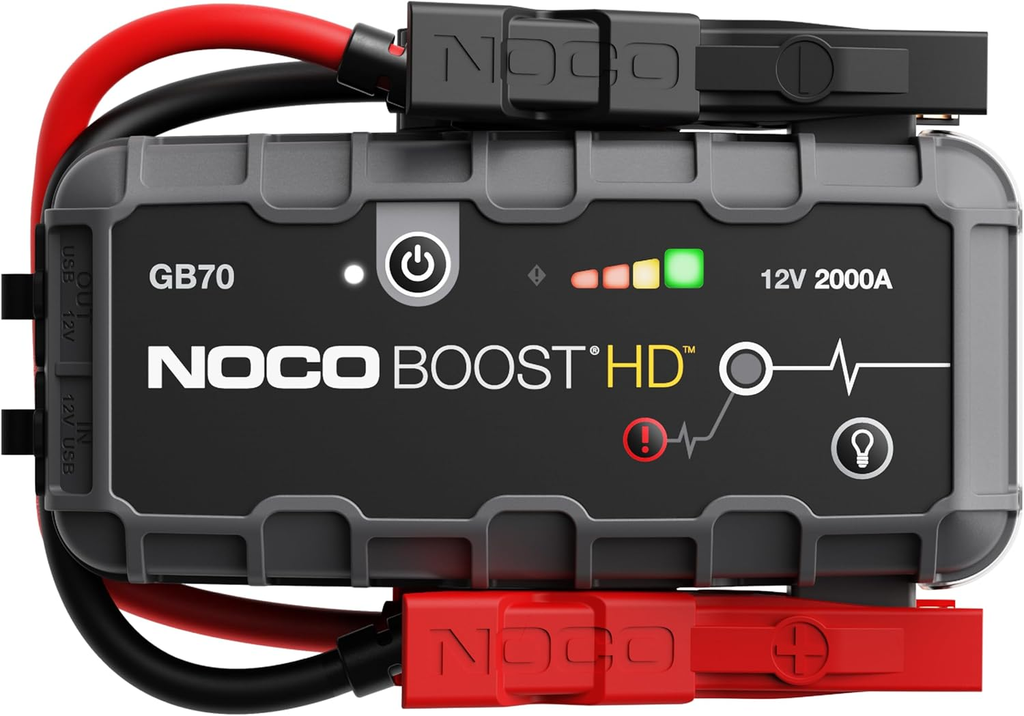
The GB70 is the step up from the GB40 for buyers who need more starting capability but still want a portable lithium design.
NOCO rates it at 2000A peak for gasoline engines up to 8.0 liters and diesel engines up to 6.0 liters. That makes it better suited to full-size SUVs, V8 vehicles, pickups, boats, and light-duty diesel trucks.
Like the GB40, it includes reverse-polarity and spark protection plus manual override for extremely low batteries. It also functions as a power bank and includes a built-in light.
The GB70 is larger and more expensive than the GB40, so there is little reason to buy it for a small four-cylinder car unless you specifically want extra starting reserve.
For larger vehicles, though, its engine rating is much more appropriate.
Key specs
- 2000A peak current
- Up to 8.0L gas
- Up to 6.0L diesel
- 12V lead-acid battery compatibility
- USB power-bank function
- Built-in LED light
- Manual override
Best for: Full-size SUVs, pickups, V8 vehicles, boats, and light-duty diesel owners.
Skip it if: A smaller GB40 already covers your engine size.
How to Choose a Portable Car Battery Charger
Start With Your Engine Size
Do not buy a jump starter just because it has the largest peak-amp number.
First, check your engine displacement and fuel type. Then choose a jump starter whose manufacturer explicitly rates it for that engine.
Diesel engines generally require more starting current than similar-size gasoline engines, especially in cold weather.
Buy Enough Capacity, Not Maximum Capacity
More capacity can be useful, but oversized equipment costs more and takes up additional space.
A compact 1000A-class jump starter may be perfectly adequate for a typical sedan or crossover. A diesel truck needs something more substantial.
Match the tool to the vehicle.
Pay Attention to the Clamps
Clamps are one of the parts you actually touch and depend on.
Look for:
- Strong spring pressure
- Enough jaw opening for your battery terminals
- Good cable strain relief
- Clearly marked positive and negative clamps
- Reverse-polarity protection
- Spark protection
- Adequate cable length
If your battery sits deep under a cover or in an awkward engine bay, cable reach matters more than it does on a vehicle with exposed terminals.
Understand Manual Override and Force Start
Smart jump starters normally check the battery connection before supplying high current.
If the vehicle battery is completely flat, the unit may not detect it. Manual override, boost mode, or force-start mode bypasses part of that automatic detection process.
That feature is useful, but it also means you need to verify the clamp polarity yourself. Never activate an override mode until you have confirmed the positive and negative connections.
USB-C Makes Recharging Easier
A jump starter that takes hours to recharge is easy to neglect.
Modern high-output USB-C models can be much more convenient because you may already carry a compatible USB-C charger for your phone, laptop, or tablet.
The NOCO GBX45 and GOOLOO GT6000 are stronger choices if recharge speed matters to you.
Decide Whether You Need an Air Compressor
A built-in tire inflator is worth having if you do not already carry one.
It can handle routine tire top-ups and give you enough air to reach a tire shop after a slow leak.
If you already own a reliable inflator, a separate jump starter will usually be smaller and lighter.
Check Storage Conditions
Lithium batteries do not like excessive heat.
Do not leave a jump starter on the dashboard in direct sun. Store it securely and stay within the temperature limits listed in the manual.
The same applies in extreme cold. A lithium pack that has been sitting in subzero temperatures may not deliver its normal output until it warms up.
Recharge It Before You Need It
A jump starter only helps if the internal battery has charge.
Check it:
- Before a road trip
- Before winter
- After every jump start
- Every few months during normal storage
If the manufacturer gives a specific recharge interval, follow that schedule.
Portable Jump Starter vs. Plug-In Battery Charger
A portable jump starter and a battery charger are not interchangeable.
A jump starter supplies high current for a few seconds so the starter motor can crank the engine.
A plug-in battery charger slowly restores energy to the vehicle battery. A smart maintainer can also keep a stored vehicle battery charged over weeks or months.
Choose a jump starter when you want roadside emergency starting.
Choose a smart charger or maintainer when a vehicle sits for long periods, the battery needs to be recharged properly, or you whttps://carcareguy.com/how-to-test-your-car-batterys-health/ant to maintain battery health during storage.
If your battery repeatedly goes dead, neither tool fixes the underlying problem. The vehicle may have a failing battery, charging-system problem, parasitic electrical drain, poor battery connection, or another fault that needs diagnosis.
Which Portable Car Battery Charger Should You Buy?
The Clore JNC325 is the strongest all-around pick for buyers who want substantial cables, good engine coverage, documented safety protections, and a 0V override mode.
For a normal commuter car, the NOCO GB40 is easier to store and covers the engine size most drivers need.
For larger diesel vehicles, the GOOLOO GT6000 provides significantly more rated engine capacity, while the NOCO GB70 is a strong alternative for trucks and larger SUVs.
If you also need a tire inflator, the LOKITHOR JA301 combines both tools in one package.
The best choice is not automatically the jump starter with the largest number printed on it. Buy for your engine size, storage space, charging habits, cable needs, and the type of roadside problems you actually want the tool to solve.
Frequently Asked Questions
What size portable jump starter do I need?
Check the maximum gas or diesel engine size specified by the jump-starter manufacturer. Your vehicle’s engine should fall within that rating. Leave some additional capacity if you drive in very cold weather or have a large diesel engine.
Can a portable jump starter fully charge my car battery?
No. Its primary job is to provide enough current to start the engine. Use a proper smart battery charger if you need to recharge a discharged battery fully.
How often should I recharge my jump starter?
Follow the manufacturer’s manual. As a practical habit, check the charge every few months, recharge after use, and inspect it before long trips.
Can I keep a lithium jump starter in my trunk?
Usually, yes, provided the trunk stays within the manufacturer’s specified storage-temperature range. Excessive heat can shorten lithium-battery life.
Are peak amps the most important specification?
No. Peak amps are useful, but they are not the only measure of real starting performance. Engine rating, cable quality, clamps, internal battery condition, temperature, and safety electronics matter too.
What happens if the vehicle battery is completely dead?
Some jump starters may not automatically detect a battery near 0 volts. Models with manual override, boost mode, or force-start can sometimes supply power in that situation. Follow the manufacturer’s directions carefully because those modes may bypass normal polarity detection.
Should I buy a jump starter with an air compressor?
Buy one if you do not already carry an inflator and want a single roadside tool for dead batteries and low tires. If you already own a good compressor, a dedicated jump starter is usually more compact.
Why does my car keep needing a jump?
Repeated dead-battery problems can point to an aging battery, an alternator problem, loose or corroded terminals, parasitic electrical drain, or another electrical fault. A jump starter is an emergency tool, not a repair.