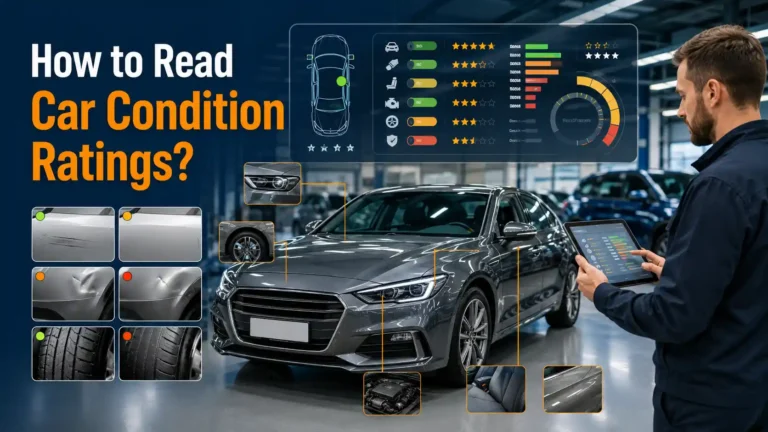
Car condition ratings are a key part of used-vehicle pricing because value estimates change with mileage, condition, options, and local market trends. Kelley Blue Book says trade-in values vary depending on condition, and its pricing model factors condition alongside mileage and other variables. Edmunds notes that most used vehicles fall into “clean” or “average” condition, while only a small share qualify as “outstanding.
” That makes condition ratings an important filter for buyers, sellers, and trade-in valuations, since even small differences in wear, damage, or reconditioning needs can change the final number.
What Is a Car Condition Rating?
A car condition rating is a standardized way to describe a vehicle’s overall physical and mechanical condition. It helps buyers, sellers, dealers, and pricing platforms estimate how well a vehicle has been maintained by evaluating factors such as exterior wear, interior condition, tire quality, mechanical performance, accident history, title status, and potential reconditioning needs.
The same vehicle can sometimes receive different condition descriptions across dealerships, auction platforms, and pricing websites because each company may follow slightly different grading standards and inspection methods. Some systems rely heavily on cosmetic appearance, while others place more importance on mechanical reliability or repair history. Because of this, a condition rating should be viewed as a general assessment rather than a complete representation of a vehicle’s actual quality or long term reliability.
What Are the Main Types of Car Condition Ratings?
Car condition rating systems are designed for different purposes, including private sales, dealership pricing, auctions, insurance evaluations, and collector vehicle markets. Some systems use simple labels that help everyday buyers understand a car’s overall condition, while others use detailed inspection scores intended for wholesalers, lenders, or professional vehicle appraisers.
Excellent, Good, Fair, and Poor Ratings
This is the most common rating format used by dealerships and vehicle pricing websites. Vehicles are usually categorized as excellent, very good, good, fair, or poor depending on their mechanical condition, cosmetic appearance, accident history, and maintenance quality.
Although the wording may vary between platforms like Kelley Blue Book and Edmunds, the purpose remains similar. Higher ratings generally indicate cleaner interiors, fewer mechanical issues, lower visible wear, and less reconditioning work. Lower ratings often reflect cosmetic damage, worn components, repair history, or mechanical concerns that may affect value and reliability.
Auction Grades and Inspection Sheet Scores
Vehicle auctions often use more detailed grading systems because buyers need a fast way to estimate repair costs and resale potential. Auction condition reports are typically created by trained inspectors who evaluate paint quality, structural damage, interior wear, tire condition, and operational performance.
Many auction companies also include numerical scores, damage severity categories, and indicators showing whether the vehicle starts, drives, or requires major repairs. These grading systems help dealers and wholesalers assess risk before purchasing vehicles in large volume markets.
Classic Car Condition Ratings
Classic and collector vehicles usually follow a separate condition scale because originality, restoration quality, rarity, and historical value are more important than mileage alone. Many collector car organizations use a numbered grading system ranging from near perfect showroom condition to heavily damaged or incomplete vehicles.
In the collector market, a vehicle with original parts, professional restoration work, and documented history often receives a much higher rating and market value than a similar vehicle with modifications or missing components.
Vehicle Condition Reports From Sellers and Lenders
Some condition reports focus more on ownership history, maintenance records, accident reports, and title information instead of assigning a simple overall grade. Services like CARFAX provide detailed vehicle history reports that include previous owners, reported accidents, service records, odometer readings, flood damage history, and title status.
Lenders and dealerships may also use separate inspection standards when determining trade in values or financing eligibility. In many cases, these evaluations assume the vehicle has already been cleaned, repaired, or reconditioned before resale.
How Do You Read an Excellent, Good, Fair, or Poor Rating?
Car condition ratings are mainly used to estimate how much wear, damage, or repair work a vehicle may already have. Higher ratings usually mean the vehicle needs little reconditioning and has been maintained well, while lower ratings often indicate cosmetic damage, mechanical issues, or higher future repair costs. Although different companies use slightly different grading terms, the general meaning behind each level is usually similar.
Excellent Condition
Vehicles rated as excellent condition are typically very close to new in both appearance and performance. These cars usually have clean paint, minimal interior wear, strong mechanical condition, and little to no visible damage. Most excellent-rated vehicles also have clean title histories, well-maintained tires, and complete service records. This rating is relatively uncommon in the used car market because very few older vehicles remain in near-perfect condition.
Good Condition
A good condition rating usually means the vehicle has normal signs of use but no major mechanical or cosmetic problems. Small scratches, light dents, or minor interior wear may still exist, but the car generally runs well and does not require major repairs. Many used vehicles listed by dealerships and pricing platforms fall into this category because it reflects realistic everyday wear without serious condition concerns.
Fair Condition
Fair condition vehicles usually show more visible wear and may require repairs or cosmetic correction. Common issues can include faded paint, worn tires, interior stains, mechanical aging, or previous repair history. While the vehicle is often still drivable, buyers should expect additional maintenance costs and lower overall resale value compared to higher-rated vehicles.
Poor Condition
Poor condition ratings are typically given to vehicles with major cosmetic damage, serious mechanical problems, or title related concerns such as salvage or flood history. These vehicles may require expensive repairs before they are safe or reliable for regular driving. Poor condition cars are often valued significantly lower because of the higher financial risk and restoration costs involved.
How Do You Read Auction Grades and Letter Codes?
Auction grades and letter codes are designed to help buyers quickly estimate a vehicle’s condition, repair needs, and resale potential before purchase. Unlike standard consumer ratings that mainly describe appearance and drivability, auction grading systems focus heavily on risk, reconditioning cost, structural condition, and overall market value.
Numeric Grades
Numeric grading systems usually rank vehicles from stronger condition to weaker condition. In many auction and collector car systems, higher quality vehicles receive better scores, while heavily damaged or lower quality vehicles receive weaker grades. These scores often consider paint condition, mechanical performance, structural integrity, mileage, and operational status.
Some auction platforms also separate vehicles by whether they start, run, or drive properly. Lower damage levels and fewer mechanical concerns generally place a vehicle into a stronger quality category, while severe accident damage or missing components reduce the overall grade.
Letter Grades
Letter grades are often used to place vehicles into broader condition categories such as clean, average, rough, or damaged. The exact meaning can vary between auction companies, dealerships, and pricing platforms because each organization follows its own inspection standards.
For example, a vehicle described as “good” condition may still contain small dents, scratches, or moderate wear, while “very good” condition usually indicates fewer cosmetic flaws and lower reconditioning needs. Because grading definitions vary, buyers should always review the full inspection details instead of relying only on the grade label itself.
Interior and Exterior Scores
Many professional inspection reports separate the vehicle into interior and exterior condition categories. This helps buyers identify where the vehicle’s strongest and weakest areas are located.
A vehicle may have a clean interior with well maintained seats and electronics but still contain exterior body damage or paint issues. In other cases, the exterior may appear attractive while hidden interior wear, odor problems, or mechanical concerns still exist. Separate scoring provides a more balanced understanding of the vehicle’s overall condition.
Special Marks and Inspection Notes
Special marks and inspection notes usually indicate important issues that affect vehicle value, safety, or future repair costs. These notes may include accident history, structural damage, flood exposure, airbag deployment, odometer inconsistencies, salvage branding, open recalls, or missing maintenance records.
Vehicle history services such as CARFAX commonly flag these issues because they can significantly change how a condition rating should be interpreted. Even a vehicle with a relatively strong cosmetic grade may still carry serious history-related concerns that affect long term reliability and resale value.
What Parts of the Car Are Usually Rated?
Car condition ratings usually evaluate both the vehicle’s physical appearance and mechanical condition. Inspectors commonly review the exterior paint, body panels, tires, wheels, interior surfaces, engine condition, transmission performance, brakes, lighting systems, and overall drivability. Many reports also consider accident history, title status, mileage accuracy, and signs of previous repairs because these factors can strongly affect resale value and long term reliability.
Exterior Condition
Exterior condition covers dents, scratches, rust, paint mismatch, glass chips, and panel fit. CARFAX recommends checking for these issues during a used-car inspection because they can reveal past damage or careless repairs.
Interior Condition
Interior condition includes seats, dashboard wear, trim damage, switches, smells, and how well features work. Edmunds says clean condition usually has only minimal fading and wear, while damaged condition may show serious interior problems.
Mechanical Condition
Mechanical condition looks at how the car starts, runs, brakes, shifts, and responds under load. Edmunds ties higher condition levels to no major mechanical problems, while CARFAX advises a mechanic check because some issues are not visible in a quick walk-around.
Frame, Structure, and Damage History
Frame and structure matter because hidden damage can affect safety and resale. CARFAX notes that damage history can include airbag deployment, structural damage, total loss, fire, or flood history, and these events can lead to title defects.
Mileage and Overall Wear
Mileage is not the only thing that matters, but it still changes the meaning of a rating. KBB and CARFAX both treat mileage as a major value factor, and Edmunds says outstanding condition is often reserved for older, low-mileage cars that are unusually well preserved.
How Does Car Condition Affect Price?
Car condition strongly affects vehicle value because buyers and dealerships consider repair costs, cosmetic appearance, maintenance history, and mechanical reliability before setting a price. Vehicles in better condition usually sell for more, while cars with damage, wear, or accident history often receive lower trade in and resale values.
Why Better Condition Usually Means Higher Value
Better condition usually means higher value because the next owner has less to fix. KBB says prices depend on mileage, condition, options, and regional trends, while CARFAX says vehicle-specific factors like age, mileage, and condition strongly shape wholesale pricing.
How Condition Changes Trade-In Value
Trade-in value changes because dealers price in repair and profit margin. KBB says trade-in value assumes the car is taken in as is, while Blue Book Lending Value assumes good condition or better and the cost of reconditioning and safety checks.
How Condition Changes Private Sale Value
Private-sale value can also shift fast when a car has visible wear, incomplete records, or accident history. CARFAX says its History-Based Value uses accident, damage, service, ownership, and usage data, showing that condition is not just cosmetic.
Why Two Similar Cars Can Have Different Prices
Two similar cars can differ because one has cleaner history, lower wear, or better maintenance. CARFAX says ownership history, service records, and accidents all matter, and KBB says options, regional variation, and market trends also change the final number.
What Should Buyers Check Beyond the Rating?
A car condition rating provides a general overview, but it should not be the only factor used when evaluating a vehicle. Many important problems may not appear fully in a simple rating score, which is why buyers often combine condition reports with service history, accident records, inspections, and test drives before making a decision.
Service History
Service history helps show how consistently the vehicle was maintained over time. Regular oil changes, tire rotations, brake servicing, and scheduled maintenance usually indicate better long term care and may reduce the risk of future mechanical problems.
Accident or Repair History
Accident and repair history can reveal hidden problems that may not appear in the vehicle’s current appearance. Structural damage, airbag deployment, flood damage, or major body repairs can affect safety, resale value, and long term reliability even if the car looks clean externally.
Tire, Brake, and Fluid Condition
Tires, brakes, and fluid levels often provide quick signs of overall maintenance quality. Uneven tire wear, worn brake components, dirty fluids, or leaking areas may indicate neglected servicing or possible mechanical concerns.
Test Drive Clues
A test drive can uncover problems that inspection reports sometimes miss. Unusual noises, steering vibration, rough shifting, weak braking, suspension movement, or engine hesitation may become noticeable only while driving under different speeds and road conditions.
Title Status and Ownership Records
Title status and ownership history are important because they reveal legal issues and previous vehicle usage. Salvage titles, flood branding, odometer inconsistencies, or frequent ownership changes can reduce vehicle value and increase potential ownership risk.
What Are the Red Flags in a Condition Rating?
A condition rating can be misleading if it hides problems that are not fully visible in the report or listing. Buyers should pay close attention when the vehicle’s appearance, history, or driving behavior does not match the condition grade being advertised.
Hidden Mechanical Problems
Mechanical issues are one of the biggest warning signs because they may not appear clearly in photos or cosmetic inspections. Warning lights, rough engine starts, unusual noises, weak acceleration, transmission hesitation, or steering vibration can indicate expensive repairs even if the vehicle looks clean externally.
Rust and Structural Damage
Rust and structural damage can seriously affect vehicle safety, durability, and resale value. Uneven body gaps, rust around wheel arches, paint bubbling, underbody corrosion, or signs of frame repair may indicate previous accidents or long term environmental damage.
Mismatched Reports and Photos
If the vehicle photos, inspection report, and written description do not match each other, buyers should investigate further. A high condition rating paired with poor quality photos, missing angles, or visible damage may suggest incomplete reporting or overly optimistic grading.
Signs the Rating Is Too Optimistic
A condition rating may be unrealistic when the car clearly needs cosmetic correction, tire replacement, paint repair, interior cleaning, or mechanical servicing. Dirty vehicle history reports, accident records, or failed test drive behavior can also indicate the actual condition is weaker than the advertised rating.
How Can You Compare Two Cars Using Ratings?
Vehicle ratings are most useful when combined with mileage, maintenance history, title status, and market pricing. Comparing only the condition score without reviewing the vehicle’s history can lead to misleading conclusions.
Comparing the Same Model Fairly
The most accurate comparisons happen when vehicles share the same model year, trim level, engine type, and major options. Different equipment packages and features can significantly change vehicle value even when condition appears similar.
Comparing Condition Against Mileage
Mileage should always be evaluated alongside condition. A lower mileage vehicle with poor maintenance may still be a weaker purchase than a higher mileage vehicle with excellent service history and cleaner condition.
Comparing Condition Against Maintenance Records
Maintenance records help explain why one vehicle may appear better preserved than another with similar mileage. Regular oil changes, brake servicing, tire rotations, and scheduled maintenance often support stronger long term reliability.
Comparing Condition Against Market Price
Market pricing helps determine whether a vehicle’s condition rating is realistic or overpriced. Comparing dealership listings, auction values, and fair market estimates can reveal whether the asking price properly matches the car’s actual condition and history.
How to Use Car Condition Ratings When Buying a Used Car
Car condition ratings work best as a starting point rather than a final buying decision. Smart buyers combine ratings with inspections, vehicle history reports, service records, and test drives before making an offer.
Before You Visit the Car
Review the listing carefully before seeing the vehicle in person. Buyers should check maintenance records, accident history, ownership details, mileage consistency, and title status to identify possible concerns early.
While Inspecting the Car
During the inspection, examine the paint, body panels, tires, brakes, interior wear, dashboard warning lights, and overall driving feel. A professional mechanic inspection is often recommended because hidden mechanical problems may not be obvious during a quick visual review.
Before You Make an Offer
Before negotiating, compare the asking price against the vehicle’s condition, repair needs, mileage, and market value. Cars needing cosmetic work or mechanical repairs usually justify lower offers because of future ownership costs.
When to Walk Away
Buyers should walk away if the condition rating seems inconsistent with visible damage, poor history records, or major title issues. Salvage titles, flood damage, structural repairs, or serious mechanical problems can create long term financial and safety risks.
Common Mistakes People Make When Reading Ratings
Many buyers misunderstand vehicle condition ratings because they focus only on the final score or description instead of reviewing the full report. A condition grade can be helpful, but it does not replace inspections, service records, accident history, or real driving evaluation.
Trusting the Rating Without Inspection
One of the most common mistakes is relying only on the rating without physically inspecting the vehicle. Photos and condition scores may not reveal hidden mechanical issues, underbody rust, suspension damage, or poor repair work. A proper inspection and test drive often provide a more accurate understanding of the car’s actual condition.
Confusing Cosmetic Condition With Mechanical Condition
A clean exterior does not always mean the vehicle is mechanically reliable. Some vehicles may have polished paint and detailed interiors while still suffering from engine, transmission, braking, or suspension problems. Cosmetic appearance and mechanical quality should always be evaluated separately.
Ignoring Minor Notes in the Report
Small notes in inspection or history reports are often overlooked, even though they may reveal important concerns. Service gaps, recall notices, previous repairs, warning lights, or repeated maintenance problems can indicate future reliability or safety risks.
Overlooking Title or Accident History
Ignoring title status or accident history is another major mistake. Salvage titles, flood damage, structural repairs, or airbag deployment records can significantly affect vehicle safety, insurance eligibility, resale value, and long term reliability even if the vehicle currently drives normally.
Conclusion
Car condition ratings help buyers, sellers, and dealerships estimate a vehicle’s value, reliability, and repair needs more accurately. However, a rating alone does not tell the complete story. Service history, accident records, maintenance quality, title status, mileage, and inspection results all play a major role in understanding a vehicle’s real condition. Using condition ratings alongside detailed inspections and market comparisons helps reduce buying risks, improve pricing accuracy, and support better long term ownership decisions.
FAQs
Are car condition ratings the same everywhere?
No, car condition ratings are not standardized across all platforms. Kelley Blue Book, Edmunds, auction companies, and collector car guides use different grading systems, inspection standards, and condition labels, so ratings should always be compared using the source’s own definitions.
Is a good rating always worth buying?
No, a good rating does not automatically guarantee a good purchase. A vehicle may still have accident history, poor maintenance records, hidden mechanical issues, or overpriced market value despite receiving a strong condition grade.
Can a car have a strong rating and still need repairs?
Yes, even vehicles with strong condition ratings may still require repairs, maintenance, or cosmetic correction. Tires, brakes, fluids, suspension parts, or hidden mechanical issues may not always be fully reflected in a basic condition score.
Are auction grades better than seller descriptions?
Auction grades are often more reliable because they usually follow standardized inspection systems performed by trained inspectors. However, they still depend on visible inspection results and may not capture every hidden mechanical or history related issue.
What is the most reliable way to judge condition?
The most reliable way to judge vehicle condition is by combining the condition rating with a history report, visual inspection, test drive, maintenance records, and professional mechanic evaluation. Using multiple sources provides a more complete picture of the vehicle’s actual condition and value.