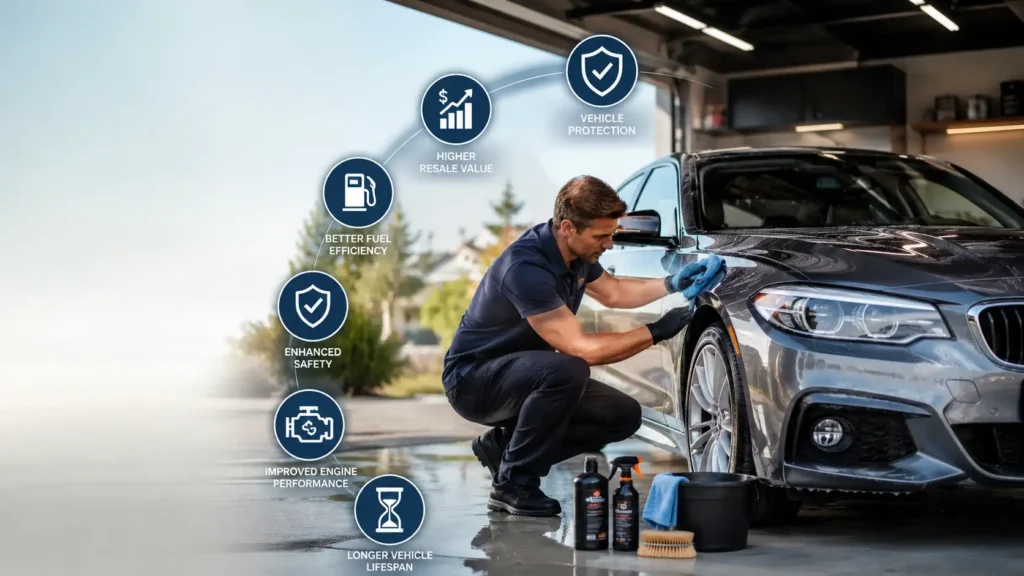
Vehicle maintenance plays a measurable role in road safety, operating costs, and long-term vehicle performance. The National Highway Traffic Safety Administration reports that tire condition, braking systems, and other vehicle factors directly influence crash risk, with tens of thousands of road fatalities recorded annually in the United States alone.
At the same time, poor maintenance increases fuel consumption and accelerates component wear, while preventive care is consistently linked to lower repair costs and improved reliability across transportation systems. Modern vehicles also rely on onboard diagnostic systems to detect faults early, making routine checks more data-driven than before. Together, these trends show that regular car care is a key factor in maintaining safety, efficiency, and overall vehicle value.
How Does Regular Car Care Improve Vehicle Safety?
Regular car care improves safety by ensuring that critical systems like braking, steering, and power delivery remain reliable. These systems work together, so even small issues can affect overall vehicle control and increase risk during driving.
Brakes, Tires, and Steering
Brakes, tires, and steering are the foundation of vehicle safety. When these components are properly maintained, they provide stable handling, shorter stopping distances, and better road grip.
NHTSA recommends checking tire pressure at least once a month, as underinflation is not always visible but can significantly affect safety. A worn tire or weak brake system rarely stays a minor issue and can quickly turn into a serious hazard.
Fluid Checks and Warning Lights
Fluids and warning systems act as early indicators of mechanical problems. Engine oil, coolant, and brake fluid support core functions, while dashboard alerts signal potential faults before they become critical failures.
EPA confirms that onboard diagnostics systems are standard in modern vehicles, making warning lights an important part of early problem detection rather than something to ignore.
Battery and Roadside Reliability
Battery condition directly impacts reliability, especially during starts and emergency situations. AAA identifies battery failure as one of the most common roadside issues, which highlights the importance of regular checks.
Simple inspections for corrosion, weak starting, or voltage drops can prevent unexpected breakdowns and reduce strain on other electrical components.
How Does Regular Car Care Improve Performance?
Regular maintenance keeps the vehicle operating within its designed limits, which improves efficiency, reduces engine strain, and ensures smoother driving performance over time.
Better Fuel Efficiency
Fuel efficiency improves when resistance is minimized and systems operate correctly. Properly inflated tires reduce rolling resistance, which directly affects fuel consumption.
NHTSA reports that correct tire pressure can save up to 11 cents per gallon, showing how small maintenance habits can lead to measurable cost and efficiency benefits.
Smoother Engine Operation
Engine performance becomes more stable when issues are identified early. Onboard diagnostic systems continuously monitor engine functions and detect irregularities before they worsen.
This early detection helps maintain smooth acceleration, reduces rough idling, and prevents minor faults from affecting overall engine performance.
Longer-Lasting Vehicle Systems
Maintained vehicles experience less wear because stress is distributed evenly across components. Parts such as tires, belts, and batteries last longer when they are regularly checked and serviced.
Industry data from IBM suggests that preventive maintenance can extend system lifespan by up to 20% to 40%, which directly applies to automotive components exposed to continuous use.
How Does Regular Car Care Save Money?
Regular car care reduces overall ownership costs by preventing damage, minimizing breakdowns, and extending the usable life of vehicle components. Delayed maintenance often leads to more expensive repairs due to compounded wear.
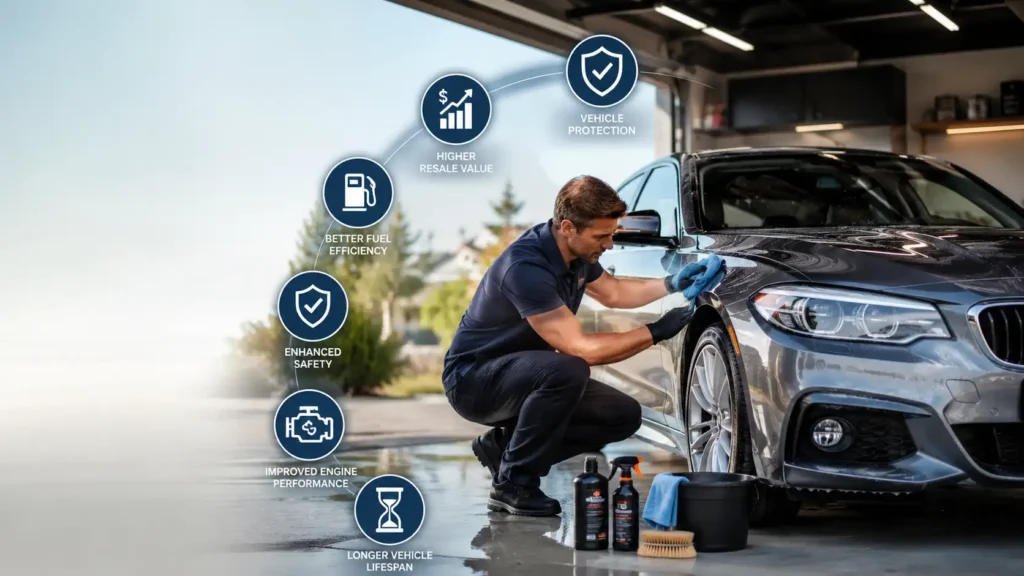
Key ways it saves money:
- Prevents minor issues from turning into major repairs
- Reduces the likelihood of emergency breakdown costs
- Extends the lifespan of expensive components
- Improves fuel efficiency and lowers running costs
Preventing Major Repairs
Major repairs are often the result of ignored minor issues. For example, maintaining proper tire pressure not only improves safety but also extends tire life by up to 4,700 miles, according to NHTSA.
Small adjustments made early help avoid larger system failures that require costly replacements.
Avoiding Emergency Breakdowns
Breakdowns create unexpected expenses, including towing, emergency labor, and lost time. AAA reports that battery failures, flat tires, and lockouts are among the most common roadside issues.
Regular checks reduce the likelihood of these situations and provide more predictable vehicle performance.
Extending Vehicle Lifespan
Well-maintained vehicles last longer because wear is managed consistently. Preventive maintenance strategies, as highlighted by IBM and McKinsey, improve asset longevity and reduce downtime.
This allows owners to delay replacement costs and get more value from their vehicle over time.
Does Regular Car Care Help Resale Value?
Yes, regular car care improves resale value by maintaining vehicle condition and providing documented proof of consistent maintenance. Buyers are more likely to trust and pay more for a well-maintained vehicle.
Service History and Buyer Trust
Service records demonstrate responsible ownership and reduce uncertainty for buyers. KBB and Carfax both highlight maintenance history as a key factor in determining resale value.
A documented history makes the vehicle more credible and easier to sell.
Condition of Key Components
The condition of tires, brakes, and engine systems strongly influences resale value. Buyers often inspect these components first, and visible wear can reduce perceived value.
Maintaining these parts ensures the vehicle remains competitive in the used market.
Appearance and First Impressions
Visual condition plays a major role in buyer decisions. A clean interior, maintained exterior, and organized engine bay suggest proper care and reduce concerns about hidden issues.
First impressions often determine whether a buyer continues the evaluation process or moves on to another vehicle.
What Problems Can Be Prevented With Regular Car Care?
Regular car care helps prevent common and costly vehicle problems by addressing wear early. The focus is to stop minor issues from turning into major failures, which improves reliability and reduces long-term repair costs.
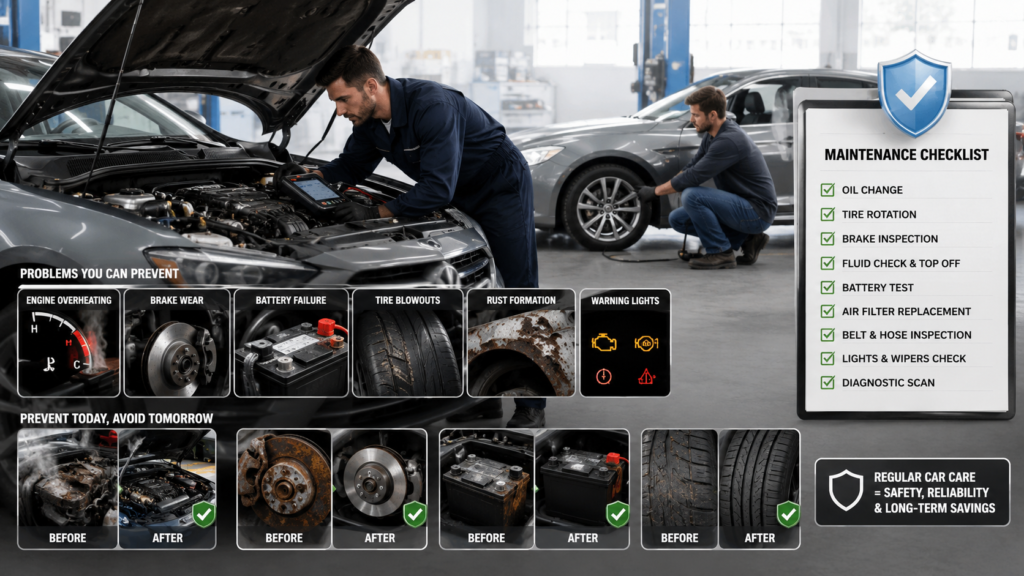
Engine Damage
Engine damage can often be avoided when fluid levels, service intervals, and warning signals are properly monitored. Modern diagnostic systems detect faults early, allowing drivers to take action before the issue escalates into expensive repairs.
Tire Wear and Blowouts
Tire-related issues increase when pressure, tread depth, and rotation schedules are ignored. NHTSA highlights that tires naturally lose air over time, and underinflation is not always visible.
Maintaining proper tire condition helps:
- Reduce uneven wear
- Improve road grip and safety
- Lower the risk of sudden blowouts
Brake Failure
Brake failure becomes less likely when pads, fluids, and warning signs are checked regularly. Gradual wear often shows early symptoms such as noise or reduced responsiveness.
Ignoring these signs can increase stopping distance and create serious safety risks, especially during emergency braking situations.
Battery Problems
Battery issues are one of the most common causes of roadside breakdowns. AAA data shows that many battery failures give early warning signs such as slow engine starts or visible corrosion.
Regular inspection helps:
- Detect weak battery performance early
- Prevent unexpected breakdowns
- Reduce strain on electrical systems
How Often Should Car Care Be Done?
Car care is most effective when done consistently rather than only when problems appear. A structured routine helps maintain performance, safety, and reliability without requiring complex maintenance schedules.
Daily and Weekly Checks
Short and frequent checks help identify visible issues early. Monitoring tire condition, dashboard warnings, fluid leaks, and battery behavior ensures small problems are detected before they grow.
These quick inspections are especially useful for vehicles used daily or under heavy driving conditions.
Monthly Maintenance Tasks
Monthly maintenance focuses on key performance areas such as tire pressure and fluid levels. NHTSA recommends checking tire pressure at least once a month when tires are cold.
This routine helps maintain:
- Fuel efficiency
- Tire lifespan
- Driving safety
Seasonal Maintenance Tasks
Seasonal maintenance prepares the vehicle for changes in weather and driving conditions. Temperature shifts can affect tire pressure, battery strength, and fluid performance.
A seasonal check ensures the vehicle remains reliable during long trips, extreme temperatures, and changing road conditions.
What Basic Car Care Tasks Should Owners Not Ignore?
Basic car care tasks that owners should not ignore include routine checks that directly impact safety, performance, and reliability. Regularly monitoring tire pressure, engine oil, coolant, battery condition, brake performance, and dashboard warning lights helps prevent small issues from turning into costly repairs.
These tasks ensure the vehicle operates efficiently, reduces the risk of breakdowns, and maintains overall driving safety without requiring complex maintenance routines.
Tire Pressure Checks
Tire pressure checks are essential for maintaining safety, fuel efficiency, and tire life. NHTSA recommends regular monitoring because underinflated tires can affect handling and increase wear.
Oil and Fluid Checks
Fluids support critical vehicle systems including the engine, cooling system, and brakes. Low or degraded fluids can quickly lead to overheating or system failure.
Routine checks help ensure smooth operation and prevent costly damage.
Battery Inspection
Battery inspection helps identify early signs of failure such as corrosion or slow starts. Since battery issues are a leading cause of roadside emergencies, regular checks improve reliability.
Brake Inspection
Brake systems should be monitored for wear, noise, and responsiveness. Early detection of brake issues helps maintain safe stopping distances and prevents further damage.
Dashboard Warning Lights
Dashboard warning lights provide direct alerts about system faults. OBD systems are designed to detect problems early, making it important to address warnings promptly rather than ignore them.
How Can Car Owners Make Maintenance Easier?
Car owners can make maintenance easier by using simple tools, following a consistent routine, and staying organized with basic tracking methods. Small habits like regular checks, timely servicing, and keeping records reduce effort, prevent unexpected issues, and help maintain vehicle performance without complex processes.
Using Basic Tools
Basic tools such as tire pressure gauges, flashlights, jumper cables, and OBD scanners make routine checks faster and more efficient. These tools help drivers identify and address common issues without delay.
Keeping a Maintenance Log
A maintenance log improves organization and helps track service history over time. Documenting repairs and inspections also supports resale value by showing consistent care.
Following the Owner’s Manual
The owner’s manual provides specific maintenance guidelines tailored to the vehicle. It outlines recommended service intervals, fluid types, and inspection points, making it one of the most reliable maintenance resources.
FAQs
What are the most important car maintenance checks?
The most important checks include tire pressure, engine oil, coolant levels, brake condition, and battery health. These directly affect safety, performance, and reliability, making them essential for preventing breakdowns and costly repairs.
Does regular maintenance increase car lifespan?
Yes, consistent maintenance helps extend vehicle lifespan by reducing wear on critical components. Industry research shows preventive maintenance can improve asset longevity by up to 20% to 40%, which applies to automotive systems as well.
Is it safe to do car maintenance at home?
Yes, basic maintenance tasks like checking fluids, tire pressure, and battery condition can be done safely at home. However, tasks involving lifting the vehicle or complex repairs require proper equipment and safety precautions.
What tools are needed for basic car care?
Basic tools include a tire pressure gauge, jumper cables, flashlight, socket set, and an OBD2 scanner. These tools help handle routine checks and common issues without requiring professional assistance.
How does regular car care improve safety?
Regular car care improves safety by ensuring brakes, tires, and steering systems function properly. Well-maintained vehicles respond better during braking and handling, reducing the risk of accidents.
Can ignoring small car issues lead to bigger problems?
Yes, small issues can quickly turn into major failures if ignored. For example, low tire pressure or worn brake pads can lead to unsafe driving conditions and expensive repairs over time.
Does regular car care affect resale value?
Yes, well-maintained cars typically have higher resale value. Buyers prefer vehicles with consistent service history and good condition, which reflects proper care and reliability.
Why is tire maintenance so important?
Tire maintenance is critical because tires directly impact safety, fuel efficiency, and handling. Proper inflation and regular checks reduce wear, improve grip, and lower the risk of blowouts.
Conclusion
Regular car care is a practical way to maintain safety, improve performance, and control long-term costs. Consistent checks of tires, fluids, brakes, and battery condition help prevent common failures and reduce the risk of unexpected breakdowns.
Over time, these small maintenance habits protect key components, support fuel efficiency, and extend the overall lifespan of the vehicle. They also contribute to better resale value by keeping the car in reliable and presentable condition.
In real-world driving conditions, consistent care is not just about maintenance. It is a simple approach to keeping the vehicle dependable, efficient, and ready for everyday use.