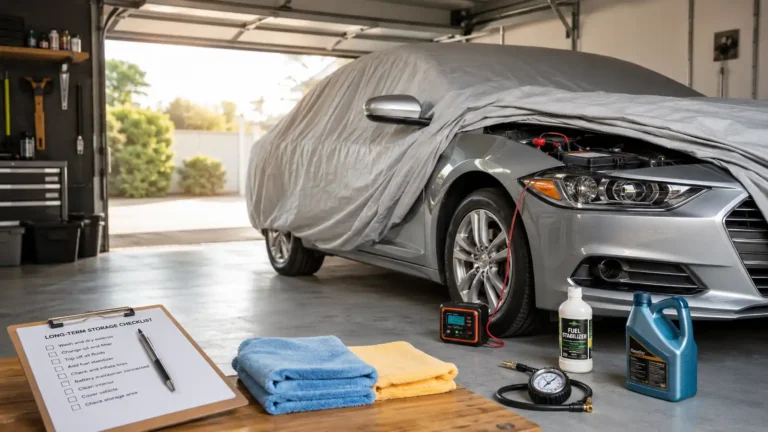
Maintaining a car that sits unused for weeks or months involves protecting the battery, tires, fuel system, and fluids from the specific kinds of damage that happen from inactivity rather than mileage. A parked car doesn’t wear out the way a driven one does, but sitting still creates its own set of problems, from flat-spotted tires to a battery that won’t hold a charge.
This guide covers what actually happens to a car during long-term storage, how to prepare it beforehand, what to check periodically while it sits, and what to do before driving it again.
Why Does a Parked Car Need Maintenance at All?
A car sitting idle experiences gradual deterioration in several systems even without a single mile added to the odometer. Fuel breaks down chemically over time, batteries self-discharge even when nothing is drawing power, tires develop flat spots from sustained weight on one contact patch, and rubber seals can dry out without the regular flexing that driving provides.
None of these issues happen quickly, which is why short-term parking, a week or two, rarely causes problems. Storage periods stretching beyond a month, and especially beyond several months, are where these issues become worth actively preventing.
How Should You Prepare a Car Before Long-Term Storage?
Preparing a vehicle properly before it sits unused for an extended period prevents most of the common problems that show up later.
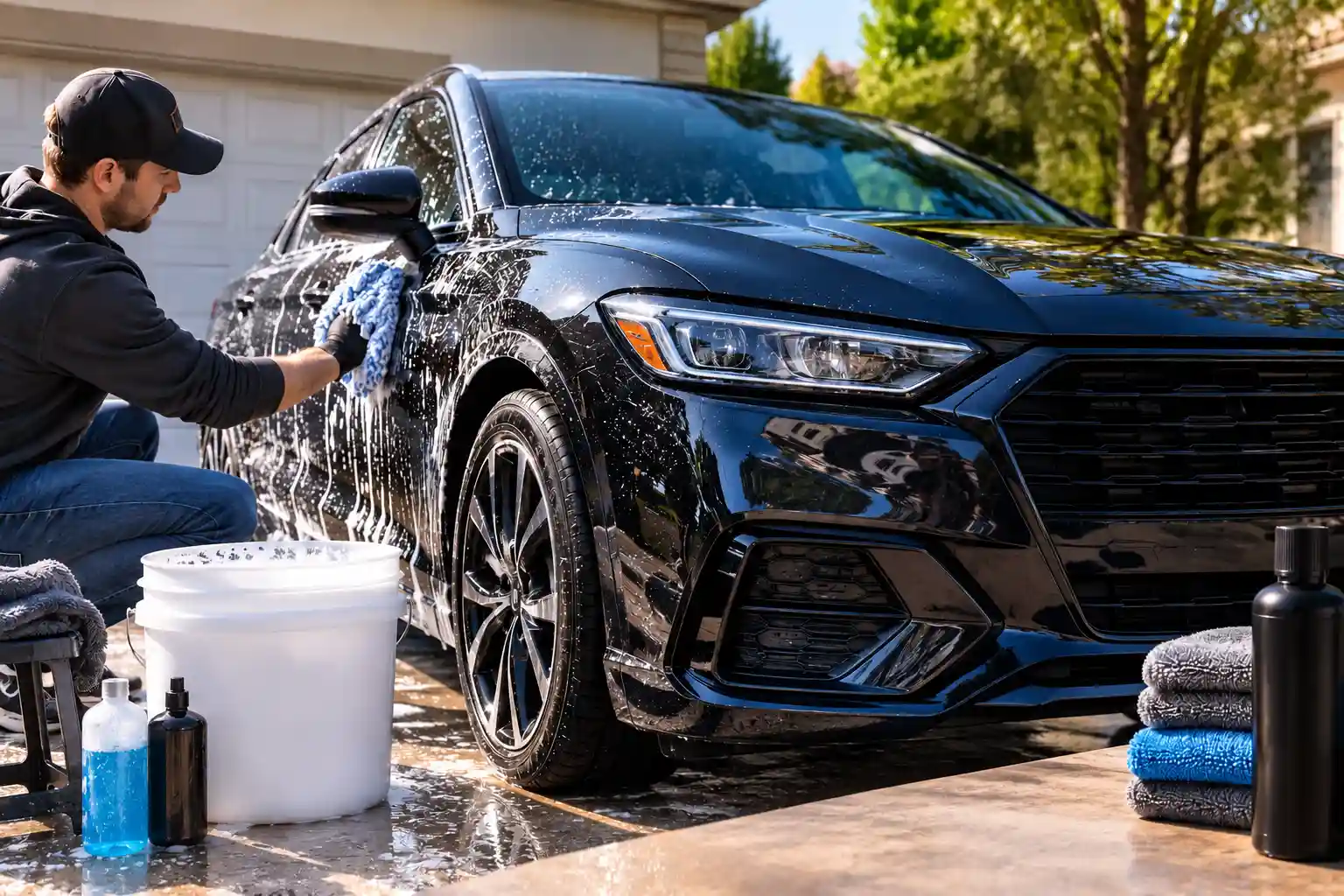
- Wash and dry the car thoroughly – removes contaminants like bird droppings, tree sap, and road salt that can damage paint over a long sitting period.
- Fill the gas tank completely – reduces the air space inside the tank, which limits moisture condensation and slows fuel oxidation.
- Add a fuel stabilizer – extends how long gasoline stays usable, since untreated fuel can start breaking down within 30 days.
- Change the oil if it’s due soon – used oil contains contaminants that can settle and cause more harm sitting in an idle engine than in one being driven regularly.
- Inflate tires to the upper end of their recommended pressure – helps reduce the severity of flat-spotting during a long, motionless period.
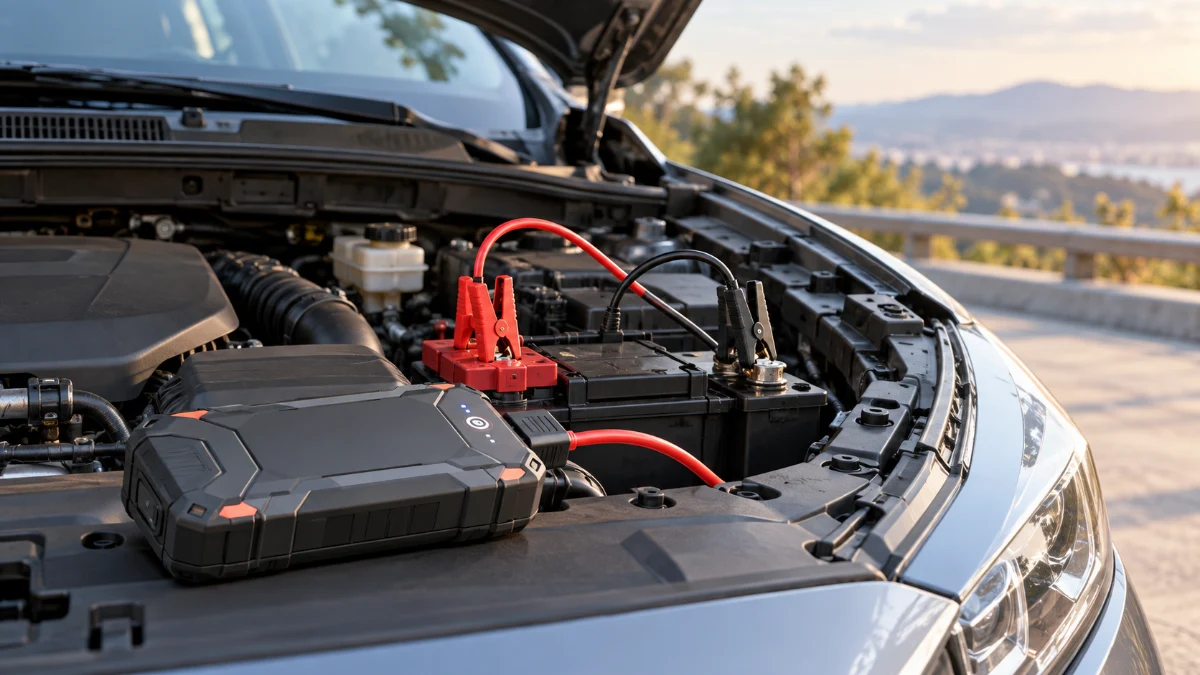
- Disconnect the battery or use a maintainer – prevents the battery from slowly draining to a damaging level over weeks or months.
Taking these steps before parking the car for an extended period is far easier than dealing with a fuel system flush, a dead battery, or misshapen tires afterward.
How Do You Protect the Battery During Storage?
A car battery loses charge gradually even when the vehicle is completely off, since small parasitic draws from the alarm system, clock, and onboard computers continue pulling power in the background. Over several weeks, this drain can leave a battery too weak to start the engine, and over several months, it can damage the battery permanently if it’s allowed to fully discharge.
Disconnecting the negative battery terminal is the simplest, lowest-cost solution, though it does mean resetting the clock and any saved settings once you reconnect it. A battery maintainer, sometimes called a trickle charger, is a better option for vehicles stored for months at a time, since it plugs into a standard outlet and keeps the battery topped off automatically without any manual disconnection.
How Do You Prevent Tire Damage While a Car Sits?
Tires develop flat spots when a vehicle’s full weight rests on the same small contact patch for weeks without moving, temporarily or sometimes permanently deforming that section of rubber. This is more pronounced in cold weather, since rubber becomes less flexible and more prone to holding a deformed shape.
Inflating tires to the higher end of their recommended pressure range before storage reduces how much the tire flexes under the car’s weight. For storage periods longer than a few months, moving the car a short distance every few weeks, even just rolling it forward and back a few feet, redistributes the weight to a different section of each tire and meaningfully reduces flat-spotting risk.
What Happens to Fuel During Extended Storage?
Gasoline begins breaking down chemically within about 30 days, losing volatility and forming gum-like deposits that can clog fuel lines, injectors, and the carburetor on older vehicles. Ethanol-blended fuel, common at most pumps, is particularly prone to absorbing moisture from the air over time, which can lead to phase separation where water settles at the bottom of the tank.
Adding a fuel stabilizer before storage slows this breakdown significantly, extending usable fuel life to potentially a year or more depending on the product and storage conditions. Filling the tank nearly full before adding stabilizer, rather than leaving it partially empty, minimizes the airspace where condensation can form.
Should You Start the Engine Periodically During Storage?
Starting the engine periodically, roughly every two to three weeks, is a common recommendation, but doing it correctly matters more than doing it often. Simply starting the engine and immediately shutting it off can actually cause more harm than good, since it allows condensation to form inside the exhaust system without ever reaching the temperature needed to burn it off.
If you do start the engine periodically, run it for at least 10 to 15 minutes, ideally with a short drive if possible, to bring it fully up to operating temperature. If a drive isn’t practical, running it in place for that same duration while keeping an eye on the temperature gauge achieves a similar benefit.
What Should You Check Before Driving the Car Again?
Before putting a stored vehicle back into regular use, a short pre-drive inspection helps confirm everything is still in safe working order.
- Check the tire pressure and look for visible flat-spotting or cracking – confirm tires are properly inflated and haven’t developed sidewall damage.
- Inspect fluid levels, including oil, coolant, and brake fluid – confirm nothing has leaked or dropped unexpectedly during storage.
- Test the battery voltage before attempting to start the engine – avoids straining a weak battery or getting stranded mid-attempt.
- Look underneath the car for signs of rodent activity – chewed wiring or nesting material is a common issue in vehicles stored in garages or rural areas.
- Check for visible fuel odor or discoloration if fuel wasn’t treated with a stabilizer – old, untreated fuel may need to be drained before running the engine.
Taking fifteen minutes for this inspection before your first drive after storage catches most issues before they turn into a breakdown or an expensive repair.
How Long Can a Car Realistically Sit Without Major Problems?
A well-prepared car, with a full tank of stabilized fuel, a maintained battery, and properly inflated tires, can often sit for six months to a year with minimal issues beyond the normal precautions described above. Vehicles stored without any preparation at all, on the other hand, can develop a dead battery within just a few weeks and fuel system issues within a couple of months.
Climate plays a meaningful role too, since extreme heat accelerates fluid and rubber degradation, while extreme cold makes tires and batteries more vulnerable to storage-related stress. A garage or covered storage area, even without climate control, significantly reduces the impact of weather on a parked vehicle compared to leaving it outdoors and fully exposed.
Conclusion
Proper long-term car storage is about preventing age-related damage rather than wear from driving. A few simple steps cleaning the vehicle, filling the fuel tank, adding a fuel stabilizer, maintaining the battery, and keeping the tires properly inflated can prevent many expensive repairs later. Periodic inspections also help catch issues like leaks, rodent damage, or low battery charge before they become serious problems. Whether your vehicle will sit for a few weeks or several months, following a consistent storage routine helps preserve its reliability, performance, and resale value. When it’s time to drive again, performing a quick pre-drive inspection ensures the car is safe, starts easily, and returns to the road without unnecessary mechanical surprises or avoidable maintenance costs.
Frequently Asked Questions
How do you maintain a car that isn’t driven for months?
To maintain a car during long-term storage, keep the fuel tank nearly full, add a fuel stabilizer, connect a battery maintainer or disconnect the battery, inflate the tires to the recommended maximum pressure, and store the vehicle in a dry, covered location. Check the vehicle every few weeks for leaks, tire pressure, and signs of rodents.
How long can a car sit without being driven?
Most modern cars can sit for 2–4 weeks without significant issues. With proper preparation including stabilized fuel, battery maintenance, and correct tire pressure a vehicle can remain stored for 6 to 12 months with minimal risk of damage.
Should you start a stored car every week?
No. Starting a car briefly every week is generally not recommended because the engine may not reach operating temperature, allowing moisture to accumulate. If you start the vehicle during storage, let it run for 10–15 minutes or take it for a short drive so the engine, transmission, and exhaust system fully warm up.
Will a car battery die if the car sits unused?
Yes. Even when parked, a car battery slowly loses charge due to normal self-discharge and small electrical loads from onboard electronics. A battery maintainer is the best solution for long-term storage, while disconnecting the negative battery terminal is a good alternative.
Can tires be damaged by long-term parking?
Yes. Tires can develop flat spots when they remain under the vehicle’s weight for weeks or months. Maintaining proper tire pressure and moving the vehicle slightly every few weeks helps prevent permanent tire deformation.
Should you fill the gas tank before storing a car?
Yes. A full fuel tank reduces condensation inside the tank, while adding a fuel stabilizer helps prevent gasoline from degrading and forming deposits that can clog fuel injectors and fuel lines during storage.
Is it better to store a car in a garage or outside?
A garage is the best place for long-term vehicle storage because it protects the car from UV rays, rain, snow, and extreme temperature changes. If indoor storage isn’t available, use a high-quality breathable car cover to reduce weather-related damage.
What should you inspect before driving a stored car again?
Before driving, check the battery, tire pressure, engine oil, coolant, brake fluid, and fuel condition. Look underneath the vehicle for leaks, inspect for rodent damage around wiring, and confirm all lights and brakes operate correctly before returning the car to regular use.