Keeping your car windows clean is about more than appearance; it’s essential for clear visibility and safer driving. Dirt, fingerprints, road grime, and other contaminants can quickly build up on the glass, causing streaks, glare, and reduced visibility.
Using a quality glass cleaner for car windows helps remove these deposits without leaving residue behind. Unlike some household cleaners, automotive glass cleaners are designed to deliver a crystal-clear, streak-free finish while remaining safe for tinted windows.
In this guide, you’ll learn how to clean car windows without streaks, how to choose the right product, and practical tips to keep your windows crystal clear.
How to Clean Car Windows Without Streaks
Achieving streak-free car windows isn’t just about using a good cleaner. Proper preparation, the right tools, and correct wiping techniques all play an important role in producing crystal-clear results.
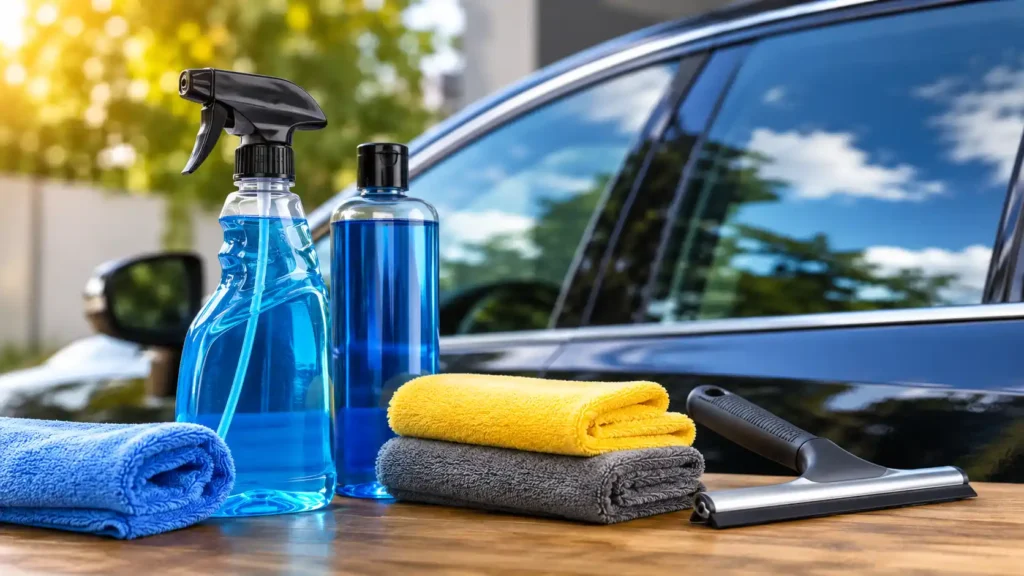
Step 1: Gather the Right Cleaning Supplies
Before you begin, collect everything you’ll need to avoid interruptions during the cleaning process.
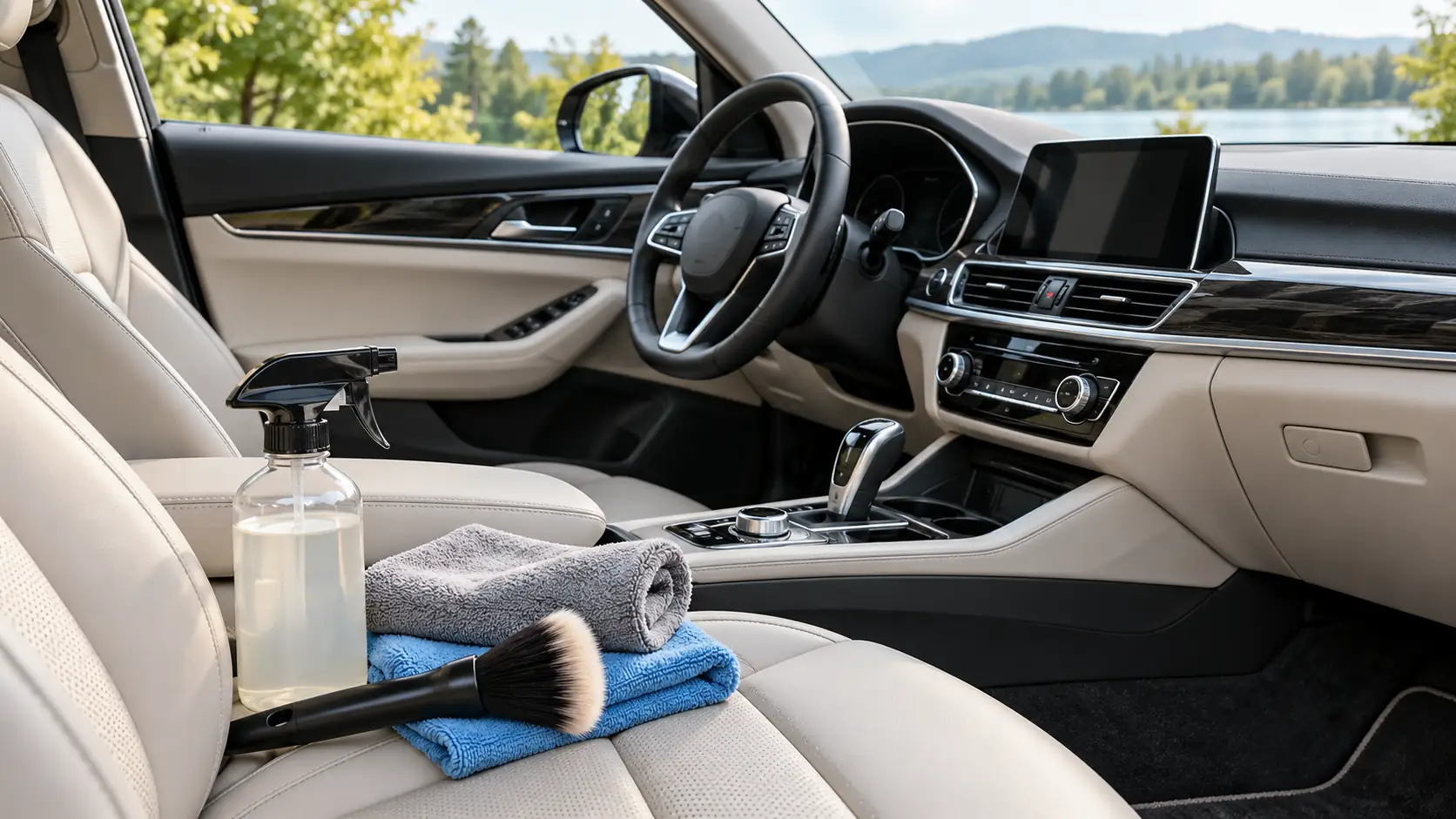
Recommended supplies include:
- Automotive glass cleaner
- Two clean microfiber glass towels
- A dry buffing microfiber cloth
- Soft detailing brush (optional)
- Glass cleaning tool for hard-to-reach areas (optional)
Microfiber towels are the preferred choice because they trap dirt without scratching the glass or leaving lint behind. Using separate towels for cleaning and buffing further reduces the risk of streaks.
If your towels have previously been used with waxes, dressings, or polish, avoid using them on glass. Residue left in the fabric can transfer onto the windows and create smears.
Preparing clean tools before starting makes the entire process more efficient and helps achieve a more consistent finish.
Step 2: Apply the Glass Cleaner Correctly
Applying the glass cleaner properly is just as important as choosing the right product. Incorrect application can leave streaks, smudges, or excess residue on the glass.
For the best results, park your vehicle in a shaded area before cleaning. Direct sunlight causes the cleaner to dry too quickly, making it difficult to wipe away dirt evenly.
Follow these tips when applying the cleaner:
- Spray a light, even mist across the glass instead of soaking the surface.
- For interior windows, spray the cleaner onto a microfiber cloth to avoid overspray on the dashboard and other interior surfaces.
- Clean one window at a time to prevent the cleaner from drying before you wipe it away.
- Allow the cleaner a few seconds to loosen dirt and fingerprints before wiping.
Applying the right amount of cleaner helps remove contaminants more effectively while minimizing streaks.
Step 3: Wipe with a Clean Microfiber Cloth
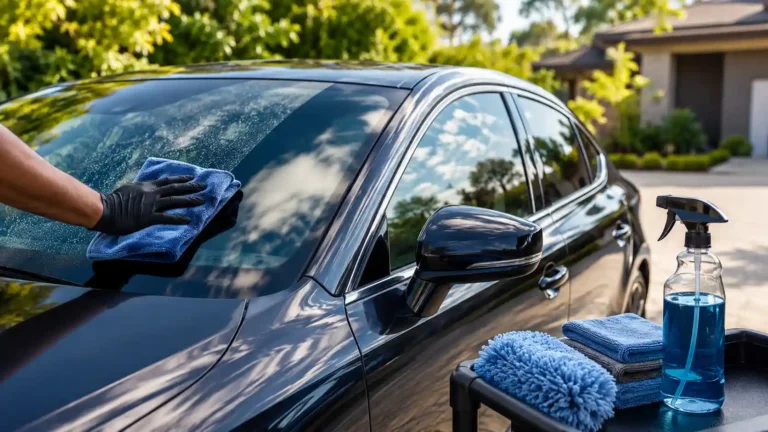
Once the cleaner has loosened the dirt, use a clean microfiber cloth to wipe the glass thoroughly. A high-quality microfiber towel lifts contaminants from the surface without scratching the glass or leaving lint behind.
For a streak-free finish, use the following technique:
- Wipe the glass using steady, overlapping strokes.
- Clean vertically on one side of the window and horizontally on the other to help identify any remaining streaks.
- Pay extra attention to the corners and edges where dirt often collects.
- Replace the towel if it becomes damp or dirty during the cleaning process.
Avoid applying excessive pressure. Let the cleaner do the work while the microfiber cloth safely removes dirt and residue.
Step 4: Buff the Glass for a Crystal-Clear Finish
The final buffing step removes any remaining moisture and gives your car windows a professional, streak-free shine.
Use a separate, completely dry microfiber towel to gently buff the entire glass surface until it feels dry and looks crystal clear.
For the best results:
- Buff using light, circular or straight-line motions.
- Check the glass from different angles to spot any missed streaks or smudges.
- If necessary, reapply a small amount of cleaner to stubborn areas and buff again with a clean section of the towel.
- Finish by inspecting both the interior and exterior of each window.
Taking a few extra minutes to buff and inspect your work ensures maximum clarity, improves visibility, and leaves your car windows with a spotless, professional-looking finish.
How to Choose the Best Glass Cleaner for Car Windows
With so many automotive glass cleaners available, selecting the right one can feel overwhelming. The best choice depends on where you’re cleaning and the specific needs of your vehicle.
Understanding the differences between products will help you achieve better results while protecting your car’s glass.
Interior Glass Cleaners
Interior windows collect a different type of contamination than exterior glass.
Instead of road grime, the inside of your windshield and side windows often develop fingerprints, dust, smoke residue, and a thin film created by dashboard materials releasing gases over time. This buildup is commonly known as interior haze.
Choose a cleaner that:
- Removes grease and fingerprints effectively
- Produces minimal overspray
- Leaves no residue
- Is safe around dashboards, trim, and electronics
When cleaning interior glass, spray the cleaner onto your microfiber towel rather than directly onto the window. This provides better control and helps prevent cleaner from reaching nearby surfaces.
Regular cleaning of interior glass improves visibility, especially when driving into bright sunlight or at night.
Exterior Glass Cleaners
Exterior windows face constant exposure to harsh environmental conditions.
Road dust, mud, rainwater, bug splatter, bird droppings, pollen, and traffic pollution all contribute to dirty glass. These contaminants often require a stronger cleaning formula than what’s needed for interior surfaces.
A good exterior glass cleaner should:
- Break down road film quickly
- Remove bug residue with minimal effort
- Leave a streak-free finish
- Work well with microfiber towels
Before using the glass cleaner, rinse away loose dirt if the windows are heavily soiled. This reduces the chance of rubbing abrasive particles across the glass during cleaning.
For routine maintenance, cleaning your exterior windows every couple of weeks helps maintain excellent visibility and keeps your vehicle looking well cared for.
Cleaners for Tinted Windows
If your vehicle has tinted windows, product selection becomes even more important.
Tint film can be damaged by cleaners containing ammonia or other harsh chemicals. Over time, these ingredients may weaken the adhesive, causing the film to fade, bubble, or peel.
For tinted windows, always choose products specifically labeled as:
- Ammonia-free
- Tint-safe
- Safe for automotive window film
It’s also important to use clean, soft microfiber towels. Rough fabrics or dirty cloths can create fine scratches or leave lint on the glass, reducing the appearance of the tint.
Following both the product instructions and proper cleaning techniques will help your tinted windows remain clear, attractive, and long-lasting.
Tips to Keep Car Windows Crystal Clear
Keeping your car windows crystal clear requires more than occasional cleaning. Regular maintenance helps prevent dirt, road film, fingerprints, and water spots from building up, improving visibility and reducing the need for intensive cleaning. By following a few simple habits, you can keep your windows streak-free for longer and make every drive safer.
The good news is that most of these habits take only a few minutes but can significantly extend the life of your clean, streak-free finish.
Clean Your Windows Regularly
Waiting until your windows look dirty can make contaminants harder to remove. Dust, pollen, road grime, fingerprints, and airborne pollutants gradually build up, reducing visibility over time.
For most vehicles, cleaning the windows every two to four weeks is enough to maintain clear glass. If you frequently drive on dusty roads, in rainy weather, or during winter, inspect and clean your windows more often.
Always Use Clean Microfiber Towels
Using dirty or contaminated towels is one of the most common causes of streaks.
Wash microfiber towels separately from other laundry to prevent lint transfer, and avoid fabric softeners because they leave residue that can smear the glass. It’s also best to dedicate specific microfiber towels exclusively to glass cleaning, as towels used for waxes, tire dressings, or polish may transfer oily residue.
Clean Windows in the Shade
Cleaning your car in direct sunlight causes glass cleaner to evaporate too quickly, increasing the chance of streaks and residue.
Whenever possible, wash your windows in a shaded area or during cooler times of the day, such as early morning or late afternoon. This allows the cleaner to stay on the surface long enough to break down dirt effectively.
Replace Worn Microfiber Cloths
Microfiber towels gradually lose their cleaning performance after repeated use and washing.
If your towels start leaving lint, streaks, or struggle to absorb moisture, replace them with new ones. Fresh microfiber cloths provide better cleaning results and help achieve a flawless finish.
Avoid Touching Clean Glass
Fingerprints and skin oils quickly reduce the clarity of freshly cleaned windows.
Avoid touching the inside of the glass whenever possible. If children or pets frequently ride in your vehicle, wipe away fingerprints regularly before they become difficult to remove.
Inspect Windows After Cleaning
A final inspection helps catch streaks or missed spots before they become a distraction while driving.
View the glass from different angles and in natural light whenever possible. If you notice any remaining smudges, buff the area with a clean, dry microfiber towel for a crystal-clear finish.
Quick Tip: Consistent maintenance is easier than removing heavy buildup. Cleaning your windows regularly with quality glass cleaner and clean microfiber towels will keep them clearer, improve driving visibility, and reduce cleaning time in the future.
Frequently Asked Questions
What is the best glass cleaner for car windows?
The best glass cleaner is one that is ammonia-free, safe for tinted windows, dries quickly, and leaves a streak-free finish. Automotive glass cleaners are generally a better choice than household products because they’re formulated specifically for vehicle glass and interior surfaces.
Can I use household glass cleaner on car windows?
Some household glass cleaners can be used on untinted glass, but they aren’t always ideal for vehicles. Products containing ammonia may damage window tint over time and can leave residue on automotive surfaces. For the safest and most consistent results, use a cleaner designed specifically for car windows.
Are ammonia-free glass cleaners better?
Yes. Ammonia-free glass cleaners are generally the preferred choice for automotive use. They are safe for tinted windows, produce less harsh odor, and effectively remove dirt, fingerprints, and grease without increasing the risk of damaging window film.
How do I prevent streaks when cleaning car windows?
To achieve a streak-free finish:
- Use a quality automotive glass cleaner.
- Clean the windows in the shade.
- Apply only a light amount of cleaner.
- Wipe with a clean microfiber towel.
- Finish by buffing the glass with a separate dry microfiber cloth.
- Replace dirty or saturated towels during the cleaning process.
Following these steps consistently will produce clearer, streak-free windows every time.
Conclusion
Keeping your car windows clean is about more than maintaining a polished appearance—it plays an important role in driving safety by improving visibility in bright sunlight, rain, and nighttime conditions. Using a high-quality automotive glass cleaner, clean microfiber towels, and the proper cleaning technique helps remove dirt, fingerprints, road film, and other contaminants without leaving streaks behind.
Whether you’re cleaning the windshield, side windows, rear glass, or tinted windows, choosing an ammonia-free formula provides effective cleaning while protecting delicate window films. Regular maintenance also prevents stubborn buildup, making future cleaning faster and easier.
By following the simple tips and best practices outlined in this guide, you can enjoy crystal-clear windows throughout the year with minimal effort. Adding window cleaning to your routine car care schedule not only enhances your vehicle’s appearance but also contributes to a safer and more comfortable driving experience every time you get behind the wheel.