Leather car seats are a major investment, and the global leather car seat market was valued at roughly $26.78 billion in 2025, climbing toward $28.31 billion in 2026 as more automakers add leather trim to mid-range trims.
That growth means more drivers than ever are responsible for keeping leather looking new. Sun exposure breaks down the natural oils in leather, which is why seats dry out, fade, and eventually crack if they’re never cleaned or conditioned.
This guide compares 13 of the best leather cleaners and conditioners for cars in 2026, explains what actually separates a good product from a bad one, and walks through the buying criteria, application steps, and common mistakes that ruin leather seats.
Quick Comparison: Top Leather Cleaners and Conditioners at a Glance
| Product | Best For | Format |
| Chemical Guys Leather Complete Kit | Best Overall | Spray cleaner + conditioner |
| Meguiar’s Gold Class | Best Budget Pick | 3-in-1 spray |
| Leather Honey Complete Kit | Best All-Natural Formula | Cleaner + cream conditioner |
| Lexol Leather Care Kit | Best Trusted Classic Brand | Cleaner + conditioner + applicators |
| TriNova Leather Conditioner and Cleaner | Best 2-in-1 Convenience | Single-bottle combo |
| Bickmore Bick 4 | Best for Cracked or Vintage Leather | Wax-free conditioner |
| Weiman Leather Cleaner and Conditioner | Best for Quick Spray-and-Wipe Care | 2-in-1 spray |
| Chamberlain’s Leather Milk | Best for Deep Conditioning Dry Leather | Cream conditioner |
| KevianClean Complete Kit | Best for Colored Leather Seats | 3-in-1 spray |
| Armor All Leather Care Spray | Best Budget Protectant Spray | Spray protectant |
| Adam’s Polishes Leather Care Kit | Best Detailer-Grade Kit | Cleaner + conditioner |
| Rain-X Leather Cleaner, Conditioner & Repellent | Best for Stain and Water Repellency | Spray, water-repelling finish |
| 3D Leather, Vinyl & Plastic Conditioner | Best Natural Matte Finish | Multi-surface conditioner |
13 Best Leather Cleaner and Conditioner for Cars in 2026
We grouped these 13 products by the situations they handle best, since the right choice depends more on your leather type and routine than on brand name alone.
1. Chemical Guys Leather Cleaner and Conditioner Complete Kit – Best Overall
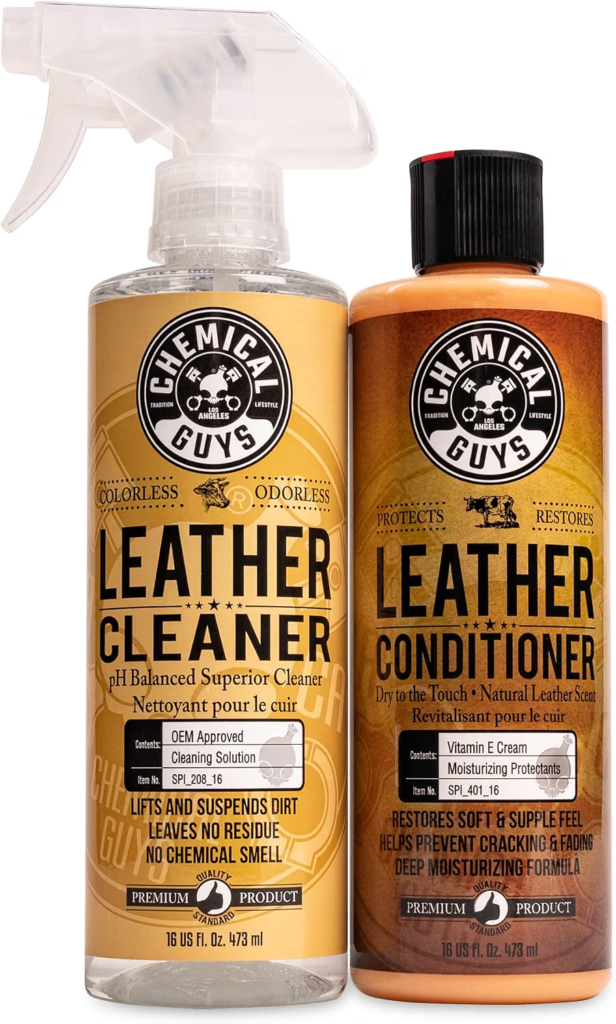
This kit pairs a colorless, odorless cleaner with a Vitamin E conditioner in separate sprayable bottles, which makes it one of the most balanced two-step systems on the market. The cleaner uses a pH-balanced formula that penetrates leather pores to lift dirt and grime without leaving discoloration behind.
It works across leather, vinyl, and even leather goods outside the car, which adds flexibility for households that also own leather furniture or bags. The main drawback some users report is a white residue if the cleaner is left to air-dry instead of being wiped off promptly.
2. Meguiar’s Gold Class Rich Leather Cleaner and Conditioning Spray – Best Budget Pick
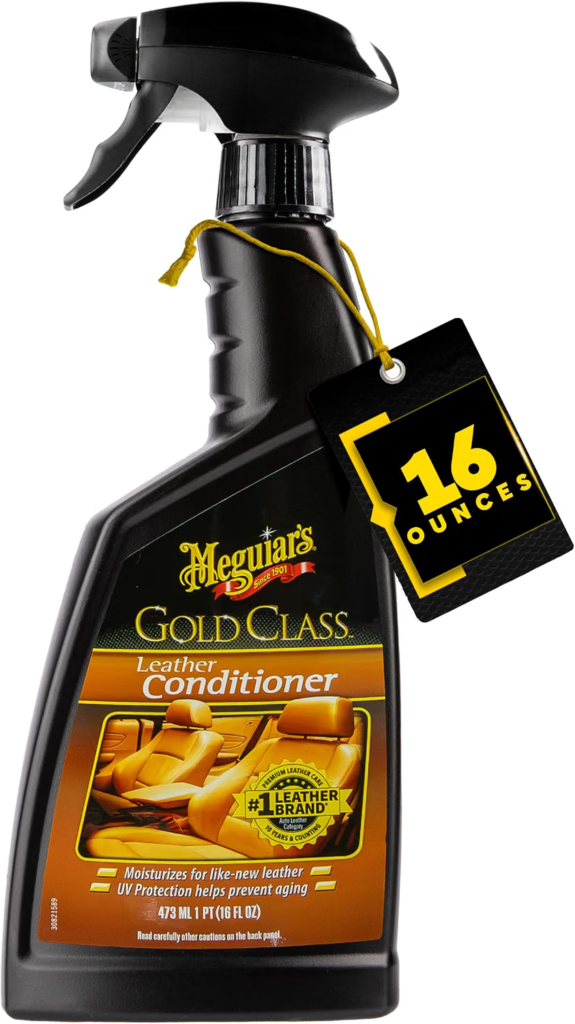
Meguiar’s Gold Class combines cleaning, conditioning, and UV protection into a single pH-balanced spray, making it a solid all-in-one option for drivers who don’t want to manage two separate bottles. It restores the leather’s original color without adding artificial shine.
Because it’s a lighter formula, some users find they need two to three coats on heavily soiled or very dry seats to see the full effect, which is worth factoring into the lower price.
3. Leather Honey Complete Leather Care Kit – Best All-Natural Formula
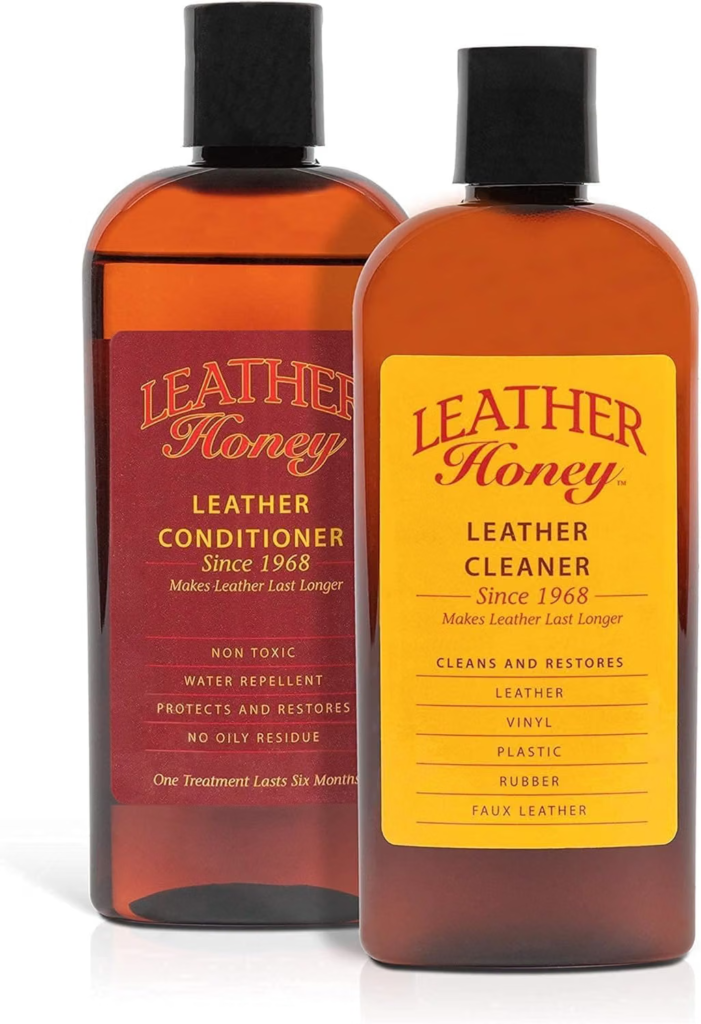
Leather Honey has been making leather care products since 1968, and its complete kit combines a chemical-free cleaner with a silicone-free, solvent-free conditioner. The conditioner is built to restore both old and dry leather without leaving the surface sticky.
It’s a strong option for households that want to avoid synthetic ingredients, though it’s not formulated for suede or nubuck, and a few users note it struggles with grime packed into tight seams or crevices.
4. Lexol Leather Conditioner and Cleaner Kit – Best Trusted Classic Brand
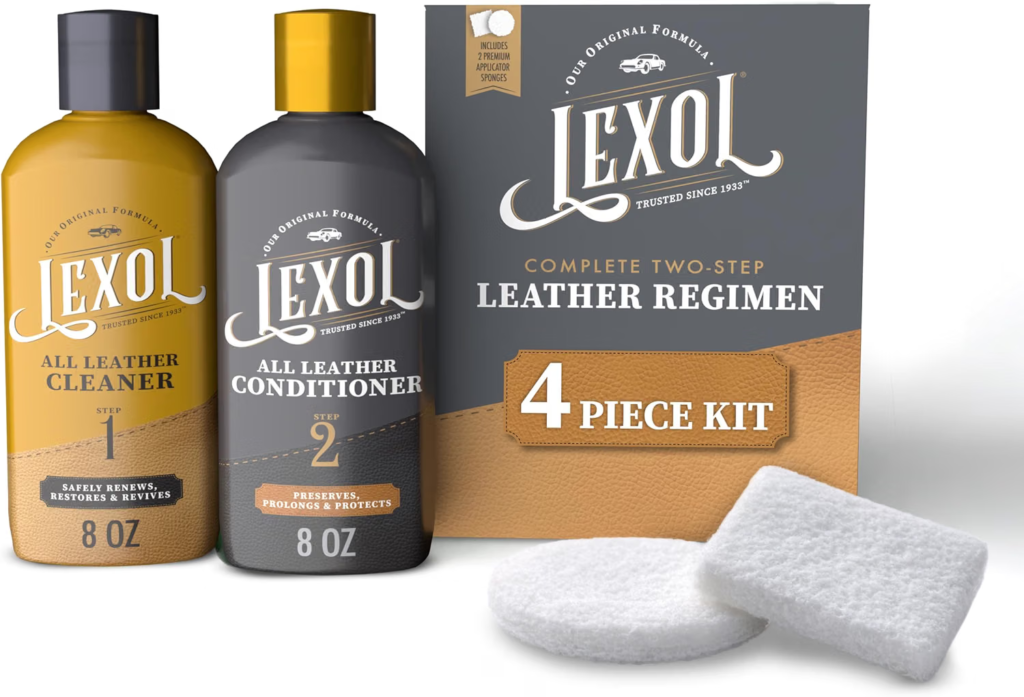
Lexol has been a fixture in leather care since 1933, and its kit includes a cleaner, a conditioner, and two applicator sponges designed for thorough, even coverage. The conditioner uses natural oils that absorb without leaving a sticky residue, which keeps seats from feeling slick after application.
The cleaner has a noticeable scent that not everyone enjoys, and using more than the recommended amount can lighten the color of darker leather over repeated applications.
5. TriNova Leather Conditioner and Cleaner –
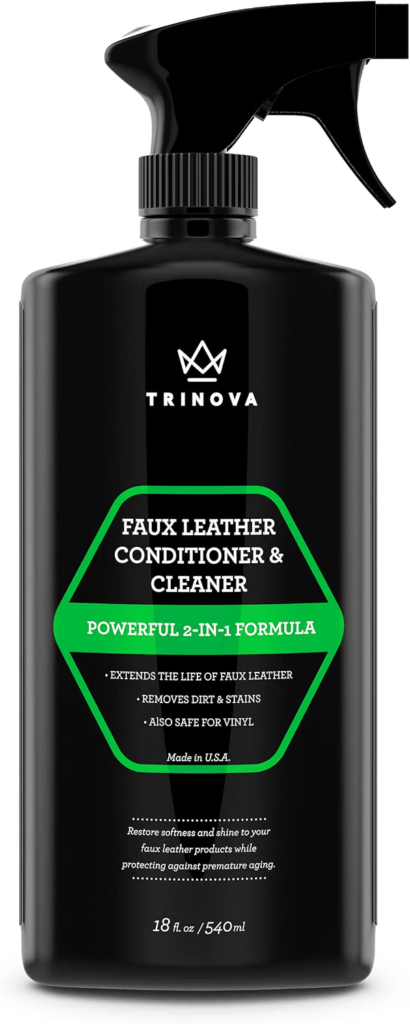
TriNova’s combined cleaner and conditioner restores color and shine in a single application, which makes it appealing for drivers who don’t want a multi-step routine. It comes with an applicator pad, so the full process is just wipe, apply, and buff.
Because cleaning and conditioning happen together rather than in separate steps, it isn’t as deep-cleaning as two-step systems on heavily soiled seats, and a portion of users report some color fading with frequent use.
6. Bickmore Bick 4 Leather Conditioner – Best for Cracked or Vintage Leather
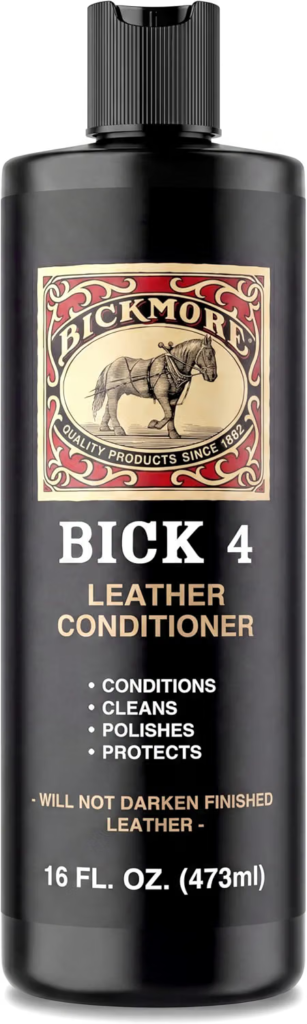
Bickmore has made leather care products since 1882, and Bick 4 is formulated to clean, condition, polish, and protect without using wax, which means it won’t build up a sticky coating over time. That wax-free approach makes it particularly effective on older leather that’s already showing signs of drying or cracking.
It doesn’t block the leather’s pores, so it maintains breathability, though the formula can turn watery if the bottle sits unused for long stretches, so it benefits from a shake before each use.
7. Weiman Leather Cleaner and Conditioner – Best for Quick Spray-and-Wipe Care
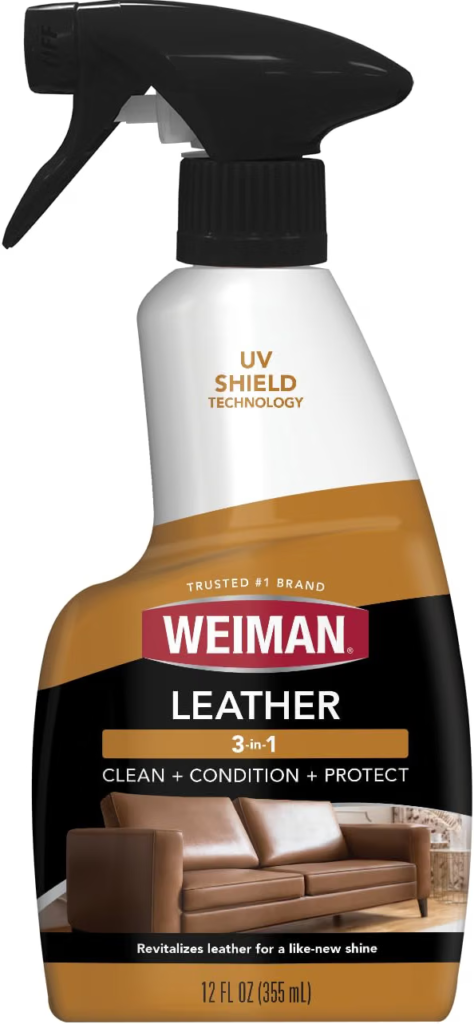
Weiman’s formula is enriched with six natural oils and applies in a single spray-and-wipe step, which makes it one of the fastest routines on this list. It’s non-toxic and budget-friendly, and it’s specifically built for finished leather rather than suede or unfinished hides.
Some users with dark-colored leather report it doesn’t perform as consistently as it does on lighter shades, so it’s worth a small patch test first.
8. Chamberlain’s Leather Milk Conditioner and Cleaner – Best for Deep Conditioning Dry Leather
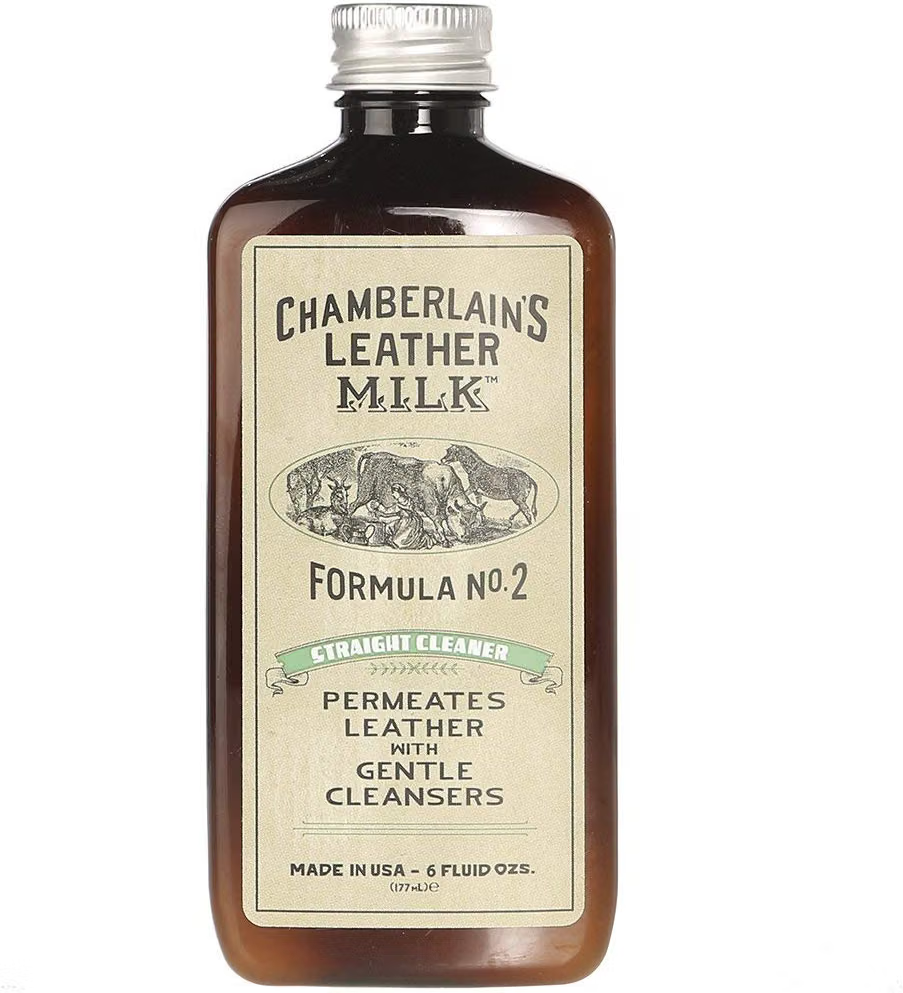
Leather Milk uses an all-natural, chemical-free emulsion of oils and water that’s designed to soak into dry, used, or scratched leather rather than just sit on the surface. It works across finished and unfinished leather alike, which is broader compatibility than most cleaner-conditioner combos offer.
It’s a strong pick for seats that already feel stiff or look dull, though a few users with lighter-colored interiors note the formula isn’t their first choice for very pale leather.
9. KevianClean Complete Leather Cleaner and Conditioner – Best for Colored Leather Seats
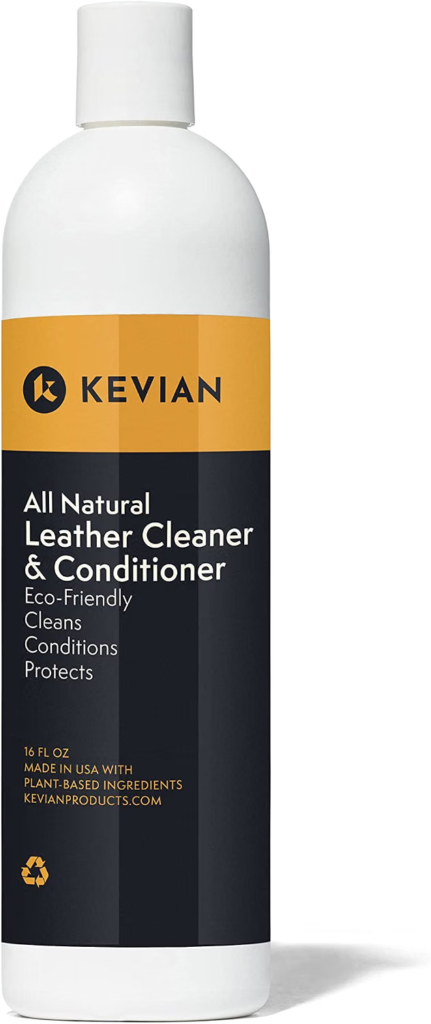
KevianClean is a 3-in-1 formula that cleans, conditions, and protects, and the brand specifically markets it as safe across a wide range of leather colors, from white and black to deeper tones like brown and tan. Its chemical-free formula is designed not to strip color during use.
It comes backed by a money-back guarantee if results fall short, though a handful of users note it’s less effective at lifting embedded body oils compared with grime or dust.
10. Armor All Car Leather Care Spray – Best Budget Protectant Spray
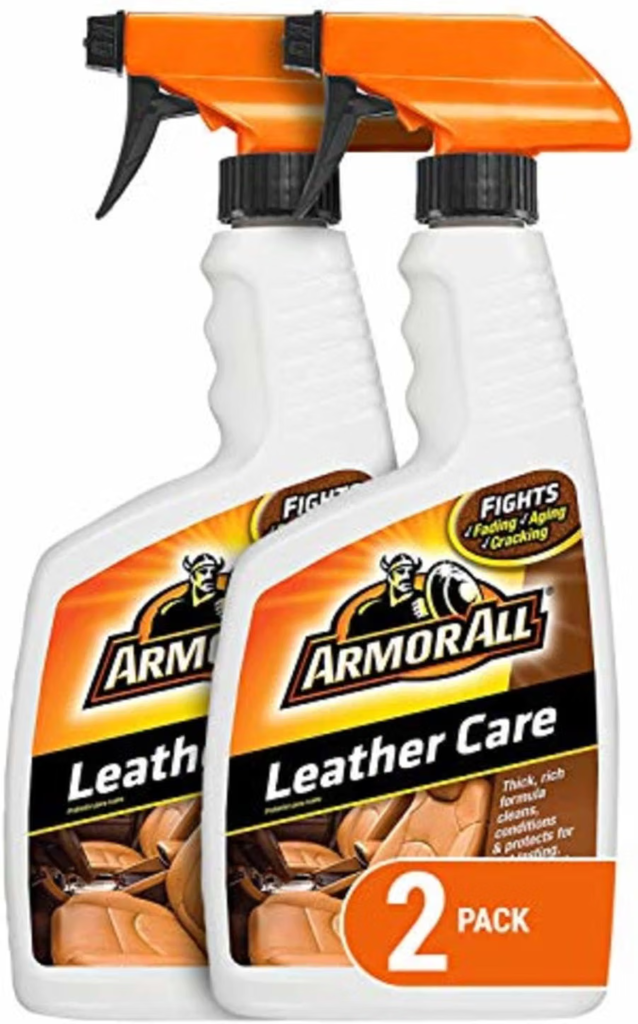
Armor All’s leather spray is built for simplicity: no mixing, no separate steps, just spray and wipe. It reaches into the leather’s grain to lift dirt while the conditioning agents restore softness and guard against fading from UV exposure.
It’s one of the more affordable options here, and works across car, motorcycle, and truck leather, with very few reported complaints beyond occasional scent preference.
11. Adam’s Polishes Leather Care Kit – Best Detailer-Grade Kit
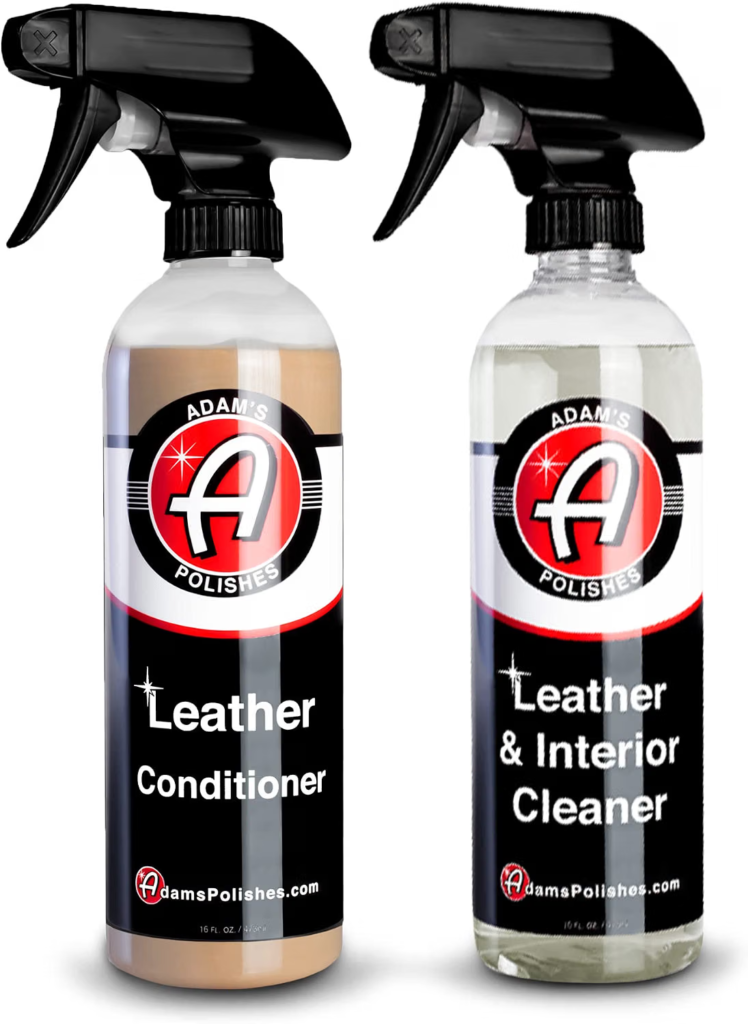
Adam’s Polishes kit pairs a sizable spray-bottle cleaner with a conditioner that includes UV blockers, giving it an edge for cars that spend a lot of time parked outdoors. The conditioner leaves a satin finish rather than an artificial shine, which detailers tend to prefer for a more natural look.
The cleaner has a noticeably strong scent that some users find overwhelming in an enclosed cabin, so cracking a window during application helps.
12. Rain-X Leather Cleaner, Conditioner & Repellent – Best for Stain and Water Repellency
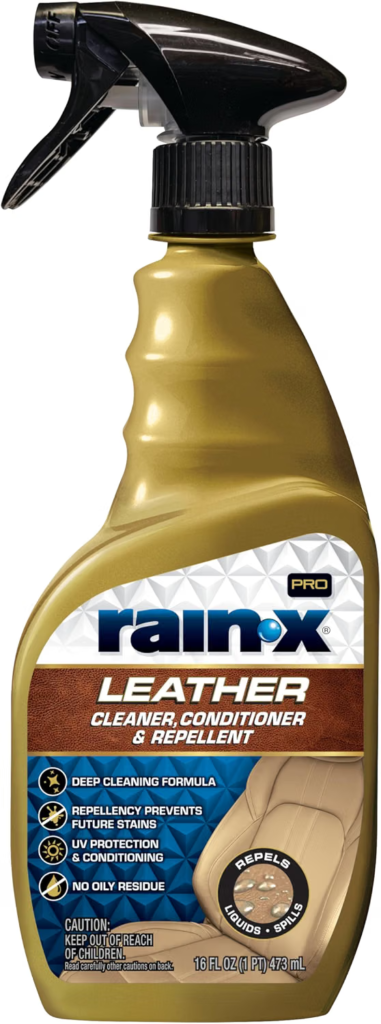
Rain-X brings its water-beading technology to leather care, so spills and moisture roll off the surface instead of soaking in immediately, giving drivers more time to wipe up a spill before it stains. It cleans, conditions, and adds a protective barrier in one product.
The non-greasy, residue-free finish makes it a good fit for daily drivers exposed to drink spills or wet weather, though like most repellent coatings, it needs reapplication every few weeks to stay effective.
13. 3D Leather, Vinyl & Plastic Interior Conditioner – Best Natural Matte Finish
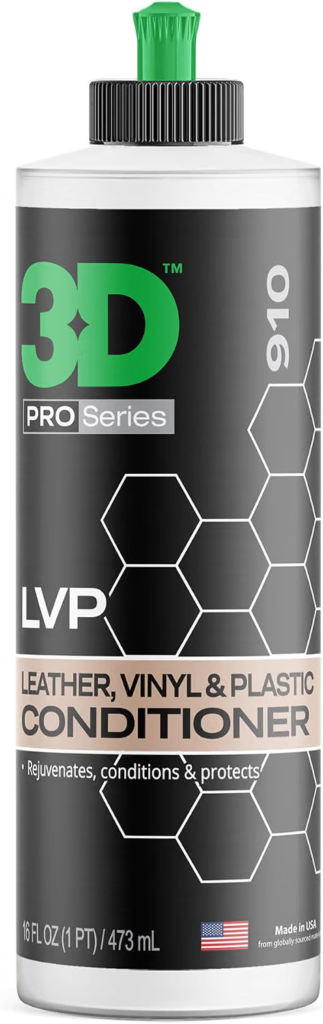
3D’s conditioner is built around natural mink oil and is formulated to leave a matte, non-glossy finish rather than the artificial shine some protectants produce. It works across leather, vinyl, plastic, and rubber trim, making it useful for an entire interior rather than just the seats.
It’s not suitable for nubuck, aniline leather, Alcantara, micro-suede, or velour, so it’s important to confirm seat material before applying it across the whole cabin.
What Counts as the Best Leather Cleaner and Conditioner for Cars?
The best leather cleaner and conditioner for cars is a pH-balanced formula that removes dirt without stripping color, then restores oils so the leather stays soft and flexible.
A product earns that label by passing four practical tests: it works on the leather type it claims to support, it doesn’t leave a sticky or greasy film, it holds up after repeated use without fading colored leather, and it’s priced reasonably against how long a bottle lasts. Many products marketed as “leather care” actually rely on silicone or heavy wax, which can build up over time and make leather feel slippery instead of supple. The picks in this guide were chosen because they avoid that trap.
Leather Cleaner vs. Leather Conditioner: What’s the Difference?
A leather cleaner removes dirt, oil, and grime from the surface, while a leather conditioner replaces lost moisture and keeps the material flexible. They solve two different problems, and most leather care routines need both.
Cleaning comes first because conditioner applied over dirt and grease just traps that buildup against the leather. Once the surface is clean, the conditioner’s job is to resupply the oils that everyday use, heat, and sunlight strip away. Skipping the conditioning step is one of the main reasons seats that are cleaned regularly still end up dry and cracked within a few years. Some products on this list combine both steps into a single 2-in-1 or 3-in-1 formula, which trades a bit of cleaning strength for convenience.
What to Look for Before You Buy
Before picking a product, it helps to know what actually matters for your specific seats. The four factors below decide whether a cleaner or conditioner performs well or causes problems.
Leather Type Compatibility (Finished, Nappa, Perforated, Faux/Vegan)
Most automotive leather is finished or coated leather, which has a protective top layer and tolerates standard cleaners well. Nappa and perforated leather, common in higher trim levels, are softer and more porous, so they need gentler, oil-rich formulas that won’t pool inside the perforation holes.
Faux leather and vinyl have a different chemical makeup entirely and can be damaged by harsh solvents made for genuine hide. Always check the label for “safe on perforated leather” or “safe on vinyl and faux leather” before buying, since not every product covers both categories.
pH Balance and Ingredient Safety
Leather has a naturally slightly acidic pH, and cleaners that are too alkaline strip the finish and dry out the hide faster than normal wear would.
Look for products labeled pH-balanced or pH-neutral, and avoid anything listing ammonia, bleach, or high concentrations of alcohol near the top of the ingredient list, since these compounds break down the leather’s natural oils. Silicone-based conditioners can make leather feel soft short-term, but the residue attracts dust and can leave seats feeling greasy within weeks.
Ease of Application (Spray, Cream, Wipe)
Spray formulas are the fastest option for quick maintenance, since they cover a wide area and just need a wipe-down. Creams and lotions, including the milk-style conditioners on this list, sit on the leather longer and tend to penetrate deeper, which suits seats that are already dry or cracking. Pre-moistened wipes are the easiest for spot-cleaning small marks but generally don’t condition as thoroughly as a dedicated formula.
Value and Cost Per Use
A bigger bottle isn’t always the better deal once you factor in how much product each application uses. Concentrated formulas that need diluting, like some cleaners listed below, often cost less per use even at a higher upfront price.
It’s also worth weighing the cost of a cleaner-and-conditioner kit against reupholstering damaged seats later, which professional shops typically price between $200 and $750 per seat, and considerably more for a full leather interior.
How Often Should You Clean and Condition Leather Car Seats?
There’s no single fixed schedule, since usage, climate, and seat color all change how fast leather dries out or gets dirty.
As a general guide, clean leather seats every two months if the car sees daily use, carries kids or pets, or sits in direct sun often. Cars that spend most of their time garaged can usually go closer to six months between cleanings.
Conditioning follows a similar pattern: every three months in hot, sunny climates, and every six months for lighter, infrequent use. Visible dryness, dullness, or early cracking is a sign to condition sooner regardless of the calendar.
How to Clean and Condition Leather Car Seats the Right Way
Cleaning leather correctly takes a few simple steps, and skipping any one of them is a common reason seats end up streaked or damaged.
Step 1: Remove Loose Debris
Brush or vacuum off dirt, crumbs, and grit first. Left in place, these particles act like sandpaper once you start wiping, scratching the surface during cleaning.
Step 2: Spot-Test the Cleaner
Apply a small amount to a hidden area, such as under the seat edge, and check after a few minutes for discoloration before treating the full seat.
Step 3: Clean the Surface
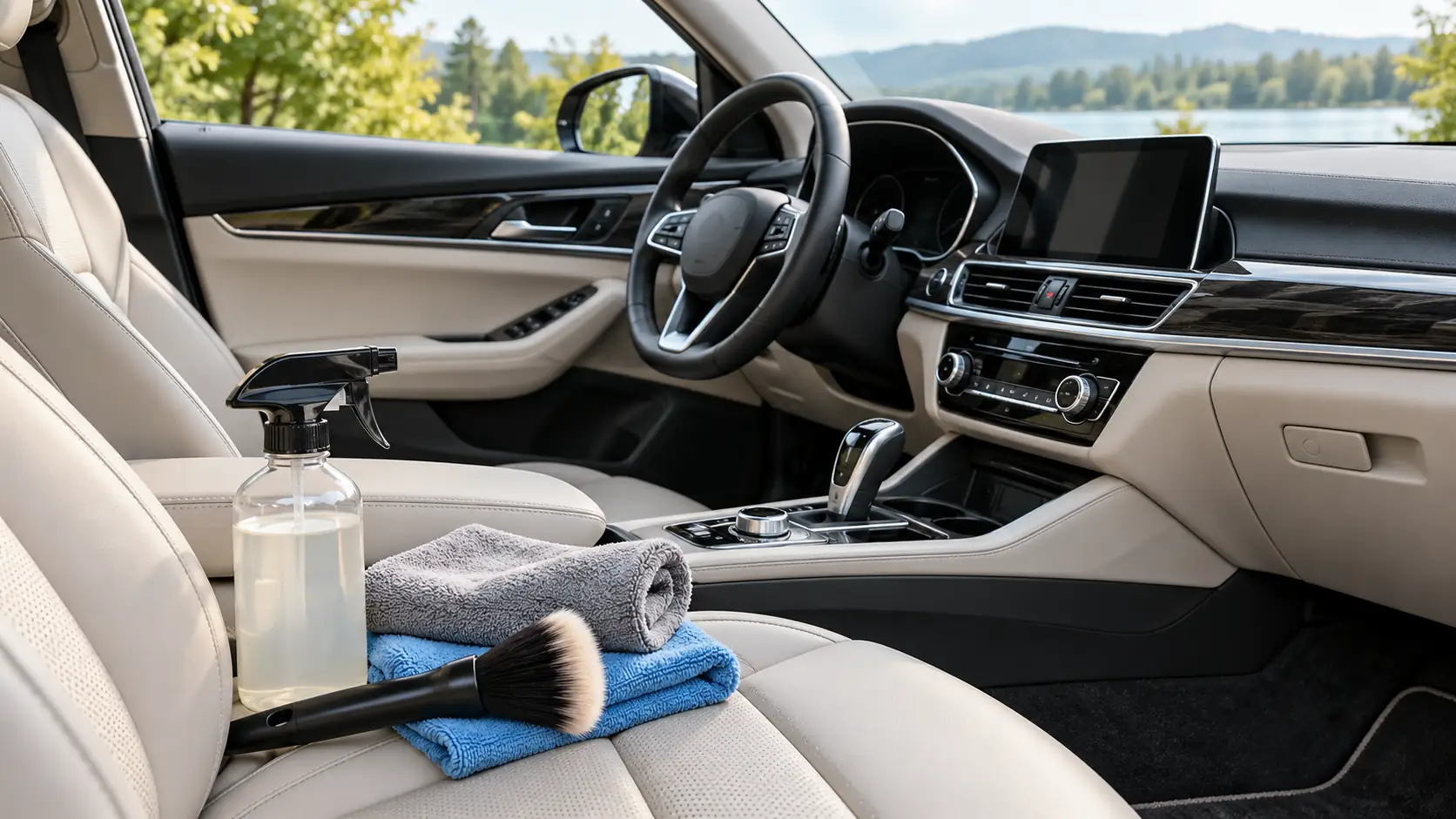
Spray or apply the cleaner to a microfiber cloth rather than directly onto the leather, then wipe in circular motions with light pressure, letting the leather absorb the product rather than scrubbing.
Step 4: Apply the Conditioner
Once the leather is dry, apply the conditioner with a clean applicator pad, working it evenly across the surface, including seams and bolsters that tend to dry out fastest.
Step 5: Buff and Dry
Use a dry microfiber towel to buff away any excess product, which prevents a greasy feel and helps the conditioner absorb fully rather than sitting on top of the leather.
Mistakes That Damage Leather Car Seats
A few habits are responsible for most premature leather damage, and most of them are easy to avoid once you know what to watch for.
- Using household glass cleaner or all-purpose cleaner on leather, since ammonia and alcohol in these products strip natural oils and dry out the surface.
- Applying conditioner over dirty leather, which traps grime against the seat instead of letting the conditioner absorb properly.
- Skipping the patch test, especially on colored or aniline leather, which risks visible discoloration on the whole seat.
- Letting cleaner air-dry instead of wiping it off, which can leave a white or hazy residue on darker leather.
- Parking long-term in direct sun without a windshield shade, since UV exposure is one of the main reasons leather dries, fades, and eventually cracks.
- Over-conditioning, since applying conditioner too frequently can leave seats feeling slick or attract more dust than usual.
How Car Care Guy Tests and Picks Leather Care Products
Every recommendation on Car Care Guy is built around the same evaluation process used across our buying guides: vehicle and material compatibility, real-world performance, durability, ease of use, safety, and overall value rather than price or popularity alone.
For leather care products specifically, that means checking ingredient lists for pH balance and harsh solvents, comparing manufacturer compatibility claims against the leather types they’re actually tested on, and weighing user-reported issues like residue, fading, or scent against the price per use.
We also factor in how each product fits into a broader maintenance routine, since a cleaner or conditioner rarely works in isolation from the rest of a car’s interior care. If you’re setting up a full detailing routine, our guides on car wash soaps, interior accessories, and detailing kits cover the rest of that process.
Frequently Asked Questions
Does leather conditioner clean leather?
No, conditioner restores moisture and flexibility but isn’t designed to lift dirt or grime on its own. Leather should always be cleaned first, since conditioning over a dirty surface just seals the buildup against the hide instead of removing it.
What household products can you use to clean leather car seats?
Mild dish soap diluted in water and applied with a damp microfiber cloth is the safest household option, followed by a light wipe with a dry towel. Vinegar and rubbing alcohol are sometimes suggested online, but both can dry out or discolor leather with repeated use, so a dedicated leather cleaner is the safer long-term choice.
Can leather cleaner be used on faux leather or vinyl seats?
Only if the label specifically says so. Genuine leather cleaners are formulated for animal hide, and some of those formulas are too harsh for the synthetic coatings used on faux leather and vinyl, which can lead to peeling or a tacky finish over time.
How long does a bottle of leather conditioner typically last?
For an average sedan with leather seats and a steering wheel, a 16-ounce bottle applied every three to six months typically lasts close to a year, though larger SUVs with more leather surface area will use product faster.
Is leather easier to maintain than cloth car seats?
In most cases, yes, since leather doesn’t absorb spills or hold odors the way cloth does, and a quick wipe handles most everyday messes. Leather does require periodic conditioning that cloth doesn’t need, so the maintenance is different rather than nonexistent.
Will leather cleaner remove deep scratches or cracks?
No, cleaners and conditioners address dirt buildup and surface dryness, not structural damage. Deep cracks or tears generally need a leather repair kit or professional reupholstering, which is significantly more expensive than routine maintenance.
Conclusion
For most drivers, the Chemical Guys Leather Cleaner and Conditioner Complete Kit is the strongest overall choice, since its two-step, pH-balanced system covers the widest range of leather types without the residue or fading issues some single-bottle combos report.
Budget-focused buyers get nearly the same outcome with Meguiar’s Gold Class, while anyone dealing with already-cracked or vintage leather will get more out of Bickmore Bick 4’s wax-free, deep-conditioning formula. Matching the product to your seat’s condition and color matters more than chasing a single “best” label, and the comparison table above is the fastest way to find the right fit for your car.